
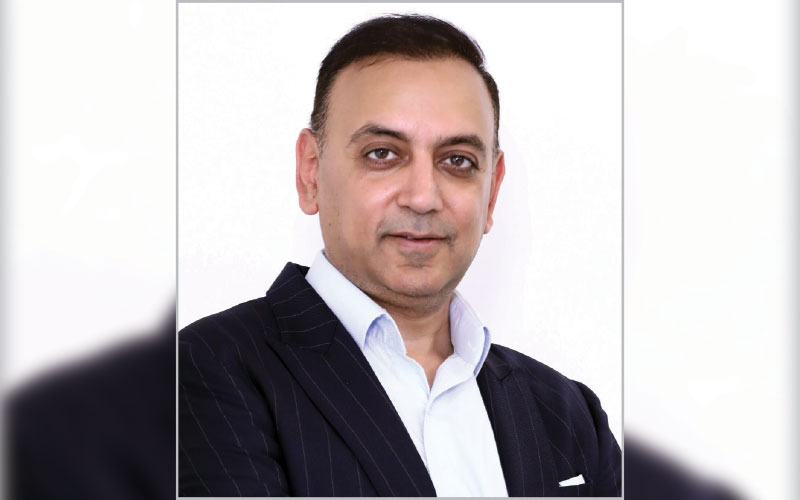
In an exclusive interview with Wire & Cable India, Mr. Vipul Nagpal, CMD, Orient Cables (India) Limited, outlines how the company is adapting to India’s shift toward 1.5 kV DC solar systems. He highlights the pivotal role of electron beam (E-beam) cross-linking, which enhances cables with superior thermal, mechanical, and chemical resistance. With an E-beam facility coming up in Bhiwadi, Rajasthan, Orient Cables is strengthening its quality ecosystem, export readiness, and future growth strategy.
Wire & Cable India: With India shifting to 1.5 kV DC systems in solar projects, how has your company adapted its solar cable technology?
Vipul Nagpal: Orient Cables has evolved its product offerings to match the changing requirements of India’s solar power landscape. Our E-Beam cables, which are at a trial stage, use accelerated high-energy electrons to enhance polymer properties like durability and resistance. E-beam cross-linking improves mechanical, thermal, and chemical resistance in cables, enabling higher current capacity, reduced overall thickness, and extended lifespan. This technology also enhances safety by preventing fires from overloads or short circuits. Their performance in extreme environment and extended service life reduces operational disruptions and maintenance costs, aligning well with the industry’s push for efficient, cost-effective balance of system (BOS) components.
Watch: Top Cable Companies in India
WCI: What is the role of electron beam (E-beam) technology in your solar cable manufacturing?
VN: Electron beam (E-beam) cross-linking plays a pivotal role in enhancing the quality and longevity of our solar cable range. It uses accelerated high-energy electrons to enhance material properties like durability and resistance.
Unlike traditional chemical cross- linking methods, E-beam technology allows for faster curing, reduced energy use and improved cable durability. E-beam irradiated cables are high performance cables created by exposing them to ionizing radiation.
This treatment causes the polymers to cross-link, resulting in enhanced physical and electrical properties that cannot be achieved through other methods. Enhanced properties include better thermal, mechanical, and chemical resistance enabling higher current capacity, reduced thickness and extended lifespan. This technology also enhances safety by preventing fires from overloads or short circuits.
We are in the process of setting up an E-beam Irradiated Cables facility at Unit II in Bhiwadi, Rajasthan, with approvals from the Atomic Energy Regulatory Board (AERB) and a no-objection certificate from the Radiation Applications Safety Division, AERB.
Electron beam (E-beam) cross-linking plays a pivotal role in enhancing the quality and longevity of our solar cable range. It uses accelerated high-energy electrons to enhance material properties like durability and resistance.
WCI: Can you elaborate on your quality assurance and certification ecosystem?
VN: Our quality assurance framework is anchored in advanced in-house testing facilities and globally recognized certifications. We operate state-of-the-art laboratories equipped with DCM cable testers, fluke cable analyzers, flammability and smoke testing devices, fiber geometry and chromatic dispersion analyzers, OTDRs, fusion splicers, environmental chambers, as well as specialized instruments such as carbon black content testers, drop point and flash point testers, abrasion testers, and crush testers.
We follow stringent BIS protocols and are certified under IS 17293:2020 for solar cables. Additionally, we have got our cables tested as per EN 50618:2014 and IEC 62930:2017 from TUV Rheinland. Our quality management systems are certified under ISO 9001:2015, ISO 14001:2015, and ISO 45001: 2018.
WCI: What trends are you seeing in raw materials, and how do you manage price volatility?
VN: Primary raw materials such as copper, aluminium, and engineered polymers form the core of our cable manufacturing process. The prices of copper are directly tied to the London Metal Exchange (LME), while polymer prices are impacted by fluctuations in global crude oil markets. Volatility in these input costs poses a challenge to maintaining steady pricing.
To safeguard against this, we have built long-term relationships with key suppliers, which helps ensure consistent availability and optimized procurement costs. Additionally, our manufacturing plants are located close to supplier hubs, which helps reduce logistics and inventory costs.
The Indian solar cable manufacturing sector faces several challenges, including high certification costs, volatile raw material prices, and increasing expectations from global buyers on technical specifications and compliance
WCI: Is there increasing global interest in Indian-made solar cables?
VN: There is a growing global appetite for cost-effective, high-quality solar cables manufactured in India, and Orient Cables is well-positioned to meet this demand. We undertake various sales and marketing activities and generate new leads and strengthen our long-term market presence through active participation in key domestic and international trade exhibitions.
Recent examples include Mobile World Congress Barcelona (2023), SCTE Denver, USA (2023), etc.
WCI: What are the key industry challenges and your strategy to address them?
VN: The solar cable manufacturing sector faces several challenges, including high certification costs, volatile raw material prices, and increasing expectations from global buyers on technical specifications and compliance. Apart from operating in an extremely competitive market, we also face challenges from fluctuations in prices of raw materials like copper and aluminium, and the transition of the industry into new technologies, as well as the adoption of new technologies like E-beam irradiation for enhanced durability. There are also challenges regarding disruptions in the supply chain due to geopolitical developments.
At Orient Cables, we address these by investing in technologies like E-beam cross-linking, which reduce long-term manufacturing costs while enhancing performance. We also maintain close working relationships with suppliers to ensure just-in-time delivery and better price predictability. Employee training is a continuous focus, especially around RoHS, CE, and REACH standards, to ensure our team is aligned with global norms.
Also Read: Rajoo Bausano: Revolutionising the Wire & Cable Compounding through Indo-Italian Expertise
WCI: How does India’s solar cable capability compare with global benchmarks?
VN: India’s solar cable capability is steadily aligning with global benchmarks through investments in newer technologies, advanced in-house testing infrastructure, and adherence to international certifications. At the same time, the pace of adoption is moderated by the challenges of establishing the ecosystem. Continued policy support, faster regulatory approvals, and public-private R&D collaboration are crucial for India to become a global hub for solar cable exports.
We follow stringent BIS protocols and are certified under IS 17293:2020 for solar cables. Additionally, we have got our cables tested as per EN 50618:2014 and IEC 62930:2017 from TUV Rheinland.