

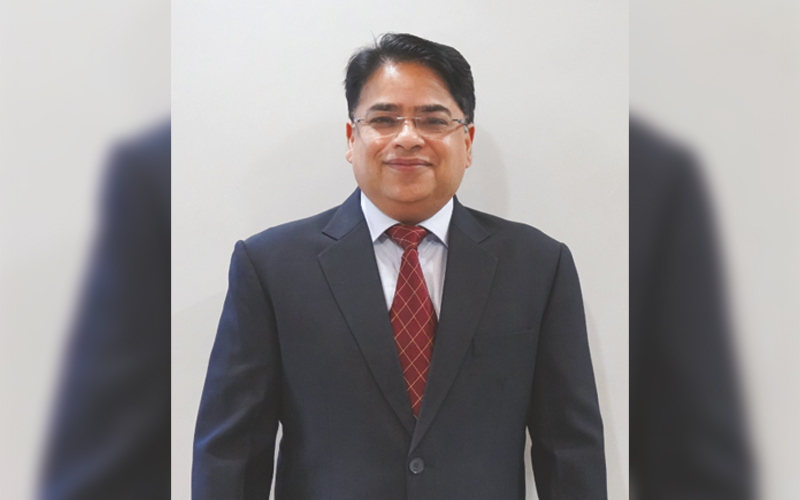
Takkar Polychem Private Limited offers a specialised portfolio of ZHFR and LSZH solutions engineered for the high-humidity and high-ambient-temperature conditions typical of the cable industry. In an exclusive interview with Wire & Cable India, Mr. Deepak Takkar, Managing Director, highlights their flagship ZHFR 516 UV fire-performance grade-an insulation compound that delivers flame resistance, low smoke generation, zero-halogen emissions and long-term stability for wires and cables. He also emphasises their Anti-Rodent & Anti-Termite Masterbatch ARAT 12006, which helps protect cables in environments prone to biological attack, ensuring long-term safety, consistent performance and extended service life in demanding applications. Looking ahead, the company plans to focus on next-generation LSZH formulations and explore bio-derived modifiers and low-impact additive packages, supporting the industry’s continued shift toward safer and environmentally responsible materials.
Wire & Cable India: As infrastructure projects like metro rails and smart cities expand with stricter fire safety protocols, which of your current compounds are specifically engineered to meet cable manufacturers’ fire performance requirements, and what cable types or sectors are they most suited for?
Deepak Takkar: India’s next decade of infra growth such as metros, tunnels, airports, data centres, smart buildings, demands cable materials that go far beyond basic FR performance. Cable OEMs today look for a combination of high LOI, low smoke, zero halogen, strong mechanicals, and UV stability for outdoor and semi-outdoor applications.
Based on the technical data sheets, Takkar Polychem currently offers a specialised ZHFR portfolio precisely engineered for these high-risk, compliance-driven installations. For high-risk, compliance-driven applications, such as metro rail systems, airports, tunnels, smart buildings and data centres, our flagship fire-performance grade ZHFR 516 UV is the preferred choice. It is engineered for premium insulation applications where flame resistance, low smoke, zero halogen emissions and long-term stability are critical.
Watch: Top Cable Companies in India
WCI: The transition toward halogen-free solutions continues in the cable industry despite processing challenges in tropical manufacturing environments. How are you leveraging halogen-free flame retardants, mineral fillers like ATH or MDH, or phosphorus-based systems in your fire-safe formulations to align with cable manufacturers’ processing capabilities and fire safety needs?
DT: We engineer our halogen-free formulations through a carefully balanced combination of flame-retardant minerals and synergistic additives that deliver both strong fire performance and reliable processability. Our focus is on achieving high LOI, low smoke emission and stable electrical properties, while ensuring the material runs efficiently on standard extrusion challenges such as high torque (smoother & more professional), moisture sensitivity or thermal stress.
By optimising melt flow, pre-heating behaviour and thermal stability, our ZHFR and LSZH systems are tailored to the realities of high-humidity, high-ambient-temperature manufacturing environments common across the cable industry.
We engineer our halogen-free formulations through a carefully balanced combination of flame-retardant minerals and synergistic additives that deliver both strong fire performance and reliable processability. Our focus is on achieving high LOI, low smoke emission and stable electrical properties, while ensuring the material runs efficiently on standard extrusion lines without issues like high torque, moisture sensitivity or thermal stress.
WCI: Cable manufacturers report varying levels of success with newer fire-resistant compounds in high-speed production environments. How do your fire-retardant compounds perform in high-speed extrusion or when used with crosslinking processes like e-beam or silane grafting?
DT: Our fire-retardant compounds are engineered to deliver stable melt behaviour, low torque and consistent output even at high extrusion speeds, allowing manufacturers to scale productivity without compromising cable geometry or surface quality.
For applications involving e-beam curing, XLPO or XLPE technologies, our functional masterbatches are formulated to integrate seamlessly into downstream crosslinking processes. They provide uniform dispersion, predictable curing response and stable mechanical performance after irradiation or silane grafting, enabling cable makers to achieve both high-throughput production and reliable long-term fire performance.
In parallel, solutions such as our Anti-Rodent & Anti-Termite Masterbatch ‘ARAT 12006’ help cable manufacturers enhance long-term protection in environments prone to biological attack, ensuring cables maintain both performance and service life in high-demand applications.
WCI: Metro rail projects increasingly specify low smoke and toxicity requirements alongside mechanical durability standards. What breakthroughs have you made to help cable manufacturers in reducing smoke density and toxicity without compromising mechanical integrity in LSZH compounds?
DT: We focus on next-generation LSZH formulations that optimise mineral synergy and polymer architecture to suppress smoke and acidic gas formation while maintaining strong tensile and elongation features.
Our approach enhances char formation, reduces volatile release during combustion and stabilises the polymer matrix so manufacturers achieve low smoke density and non-toxic gas performance without sacrificing mechanical strength.
These advancements allow LSZH compounds to meet metro-grade specifications while still delivering consistent extrusion stability and long-term durability in demanding operational environments.
WCI: Global export markets demand varying certification standards while domestic requirements continue evolving. Are your compounds developed and certified in direct response to cable manufacturers’ compliance needs for CPR Euroclass B2ca, C1A, or other international fire safety standards? How do you support them in regional compliance efforts?
DT: Our formulations are developed with a clear focus : to help manufacturers meet diverse regional fire-safety classifications such as CPR Euroclass B2ca, C1A and similar international requirements.
Among our portfolio, ZHFR 538 UV has a fire-performance profile that aligns strongly with the flame-spread, smoke-suppression and toxicity-control characteristics expected in these classifications. With a high LOI, IEC 60332-3 compliance and very low smoke and acidity levels, it gives cable designers a robust foundation for developing cables that target higher-grade safety categories.
To support manufacturers across geographies, we provide detailed technical data, processing guidance, extrusion optimisation support and property benchmarking. This helps them map their cable designs to regional compliance pathways, ensuring they can confidently approach new export markets with materials engineered for consistent, test-ready and specification-aligned performance.
Our R&D efforts increasingly focus on synergistic flame-retardant systems that complement traditional mineral approaches and enhance overall fire performance. This includes exploring micro- and nano-scale additives, improved char-forming agents and tailored polymer–additive interactions that help reduce flame spread, suppress smoke generation and stabilise the material during thermal stress.
WCI: Advanced material science applications are beginning to appear in commercial fire-resistant formulations. Are you working with nano-fillers, intumescent systems, or synergistic blends that go beyond traditional ATH-based flame retardants, specifically to enhance fire resistance in cables?
DT: Our R&D efforts increasingly focus on synergistic flame-retardant systems that complement traditional mineral approaches and enhance overall fire performance. This includes exploring micro- and nano-scale additives, improved char-forming agents and tailored polymer–additive interactions that help reduce flame spread, suppress smoke generation and stabilise the material during thermal stress.
These advancements allow us to strengthen fire resistance without compromising mechanical properties or extrusion stability, giving cable manufacturers access to formulations that are more robust and better suited for next-generation infrastructure requirements.
WCI: Circular economy principles are reshaping material selection processes throughout the value chain. How are you addressing environmental concerns in fire-retardant compounds-whether through halogen-free formulations, recyclable blends, or bio-based additives?
DT: We address these concerns by focusing on halogen-free fire-retardant systems, cleaner mineral combinations and formulations that support easier recyclability at the end of a cable’s service life. Our approach emphasises reducing corrosive emissions, lowering smoke generation and designing blends that maintain stability without relying on heavy additive loading that can complicate reprocessing.
We continue exploring bio-derived modifiers and low-impact additive packages that can enhance performance while aligning with the industry’s broader shift toward materials that are safer for both users and the environment.
Also Read: Strengthening Dialogue and Driving the Future of the Steel Wire Industry
WCI: The gap between laboratory certification and field performance remains a discussion point in industry forums. What kind of feedback do you typically receive from cable manufacturers regarding fire performance in terms of what works well, and what still needs improvement?
DT: Cable manufacturers consistently report strong performance in areas such as stable LOI values, low smoke generation, predictable ageing behaviour and smooth extrusion, even at higher production speeds. They also appreciate the uniformity of batches and the consistency of electrical and mechanical properties after installation, which helps them maintain reliability across large projects.
At the same time, manufacturers share helpful insights on how future iterations can evolve, such as enhancing long-duration heat stability or fine-tuning flow behaviour for newer, faster extrusion lines. This feedback guides our ongoing development work and helps ensure that our formulations continue to align closely with both laboratory expectations and real-world operating conditions.
WCI: Material science innovation continues driving performance advances while addressing processing challenges. From a compounder’s perspective, what’s the next big leap needed in fire-safety material science to meet the cable industry’s evolving needs?
DT: From our perspective, the next step forward is creating materials that deliver better fire performance while staying simple and dependable on the production floor. With our TPPL ZHFR compounds, we already work toward these balance-formulations that run smoothly, stay consistent over time and help manufacturers meet evolving safety expectations without added processing complexity.
The future will build on this direction through more efficient additive synergies, improved char-forming behaviour and better compatibility between polymers and flame-retardant systems. As requirements tighten, the priority is to keep making materials that help cable makers achieve reliable, high-quality results with greater ease.
Our functional masterbatches are formulated for applications in e-beam curing, XLPO or XLPE technologies, integrating seamlessly into downstream crosslinking processes.