
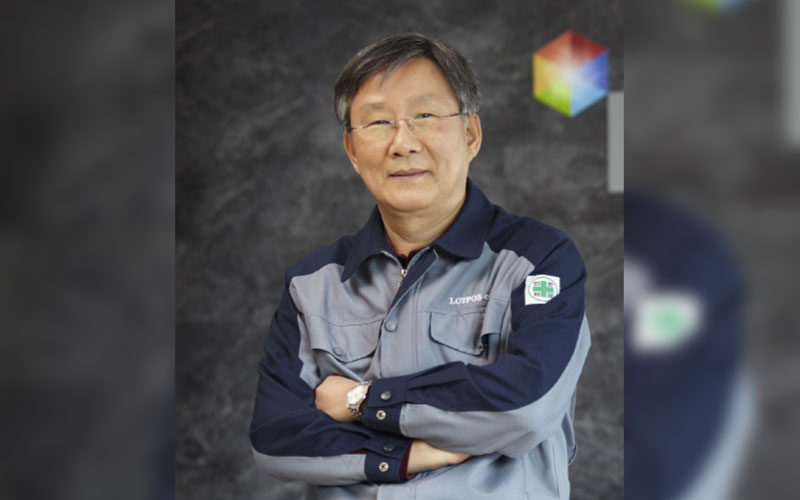
In an exclusive interaction with Wire & Cable India, Mr. Jungtae Kang, CEO, LOYPOS, shares that investment sentiment in India remains strong, driven by power-grid expansion, manufacturing growth, and telecom network upgrades. The demand for HVDC, OFC, and submarine cables is rising steadily, fueled by the rapid rollout of data centres, 5G, and FTTx networks. He adds that this momentum is creating strong synergies for LOYPOS in the market, with the company expecting the positive investment trend to sustain over the long term.
Wire & Cable India: Please briefly outline your company’s cable and wire industry product focus, including key technologies, product types, and principal end-use sectors.
Jungtae Kang: LOYPOS specializes in the production and supply of semi-conductive woven tapes essential for the manufacturing of HVDC cables, EHV cables, and submarine cables.
With more than 40 years of manufacturing experience, we have been delivering high‑quality products to customers across all continents. Since partnering with our agent SMEETS in 2002, we have been creating strong synergies in the global cable market, particularly in the areas of quality, delivery reliability, and customer service.
WCI: Within your core product segments, how would you characterise current demand conditions and order visibility?
JK: The demand for power cables remains solid, driven by ongoing power‑infrastructure expansion and the growth of renewable‑energy projects. In particular, the high‑voltage and extra‑high‑voltage cable segments are supported by many mid‑ to long‑term projects, which suggests that order visibility will remain stable going forward.
Watch: Top Cable Companies in India
WCI: Within your manufacturing offerings, how do you currently assess investment sentiment among wire and cable producers, particularly in emerging markets such as India?
JK: In emerging markets such as India, investment sentiment among cable manufacturers remains strong, driven by simultaneous expansion of power‑grid infrastructure, manufacturing‑sector growth initiatives, and upgrades in telecommunications networks. Demand for automation and high‑efficiency equipment is rising quickly, and we expect this positive investment trend to continue over the medium to long term.
WCI: Which customer or application requirements are currently exerting the greatest pressure to improve productivity and quality within your product range?
JK: To ensure the quality and reliability of HVDC and submarine cables, manufacturers are increasingly demanding improvements in the consistency of semi-conductive tape thickness and resistivity, stable workability even on high‑speed production lines, enhanced durability against long‑term thermal and electrical stress, and better compatibility with the overall cable structure.
WCI: Which manufacturing disciplines, automation measures, or quality-assurance practices have delivered the most tangible improvements in your yield or rework reduction?
JK: Automation measures such as precise process control to improve coating uniformity and resistivity stability, automated tension control and high‑speed winding, online quality monitoring, pre‑stabilization of base‑fabric quality, and process standardization to reduce operator dependency.
WCI: How are sustainability and decarbonisation goals translating into practical changes at your company?
JK: We are working to develop more energy‑efficient equipment, minimize waste within the production process, and expand the use of recycled materials. In addition, we are actively investing in production facilities that help reduce carbon emissions, guided by Life Cycle Assessment (LCA) principles.
WCI: How are cost pressures across raw materials, energy, or logistics being managed without compromising product reliability or compliance?
JK: We are stabilizing our cost structure by expanding process automation, improving energy efficiency, and diversifying our supply chain. At the same time, we never compromise on product reliability or regulatory compliance, maintaining strict quality standards for all critical components.
WCI: How has the wire and cable industry benefited, in practical terms, from automation or real-time digital control?
JK: We are seeing multiple benefits, including faster production speeds, lower defect rates, reduced operating costs, and improved worker safety. In particular, real‑time data‑driven process control has minimized quality variation and significantly improved our on‑time delivery performance.
Also Read: APAR Industries: Pioneering High-Performance Conductors for India and the World
WCI: Looking ahead three to five years, which wire & cable segments or applications are most likely to drive the next investment cycle?
JK: We expect the strongest growth to come from high‑voltage and extra‑high‑voltage cables – particularly HVDC and submarine cables – driven by power‑grid modernization. In addition, wires for electric vehicles and battery industries, as well as optical fibre cables for data centers, 5G, and FTTx networks, are also projected to be major growth drivers.
WCI: How do you see India as a market?
JK: India offers strong long‑term growth potential as power and telecom infrastructure continue to expand. However, due to uncertainties such as policy shifts and the pace of project execution, the market requires a cautious and balanced approach that considers both opportunities and risks.