
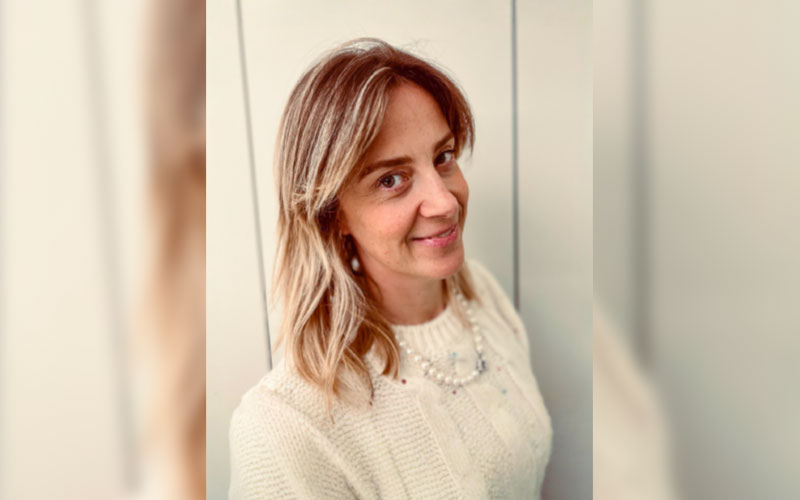
In an exclusive interaction with Wire & Cable India, Ms. Lucia Frigerio, Executive Vice President, MFL Group, says that the wire and cable segment is witnessing strong momentum, backed by sustained investments. Emerging markets such as India continue to be driven by infrastructure development, electrification, and telecom projects, with investments showing no signs of slowing down. MFL Group is addressing the evolving demands through its comprehensive portfolio of wire production technologies such as drawing, stranding, extrusion and heat treatment, further strengthened by its service arm, MFL Care, and digital division, MFL X, to ensure long-term partnerships and maximize production line performance.
Wire & Cable India: Please briefly outline your company’s cable and wire industry product focus, including key technologies, product types, and principal end-use sectors.
Lucia Frigerio: At Wire Düsseldorf, our focus is on showcasing our complete coverage of wire production technologies, from drawing and stranding to extrusion and treatment. With over 100 years of experience, we have always strived to meet our customers’ needs, embracing every technology to be the single partner they can rely on.
This year, we will introduce our latest innovations, including: the Combi-Line for the direct production of rebar from wire rod, eliminating intermediate processing steps and significantly increasing overall efficiency; the bead wire complete line, a fully integrated solution for bead wire manufacturing designed for high productivity and consistent quality; automation solutions, advanced systems that streamline production, reduce manual intervention, and improve overall line performance; the latest developments in our double-twist strander portfolio, designed to enhance performance and expand application ranges; the solar cable line, covering the entire process from rod breakdown to the tinning line to ensure efficient and reliable solar cable production; and the new annealer, optimized for large diameters, such as submarine cable conductors.
All these technologies are further supported by our service division, MFL Care, which will introduce our new service packages, designed to support customers throughout the entire lifecycle of their production lines. These packages are enabled by our digital division, MFL X, which provides the digital tools and data-driven solutions needed to ensure continuous partnership and maximize production line performance. On the MFL X stage, we will highlight machine vision applied to cable quality monitoring, showing how digital solutions further enhance our production expertise.
Watch: Top Cable Companies in India
WCI: Within your core product segments, how would you characterise current demand conditions and order visibility?
LF: Across our core product segments, demand in the wire & rope industry remains stable, with pockets of growth in specific markets and applications. In contrast, the wire & cable segment is experiencing strong momentum, supported by sustained investment.
WCI: Within your manufacturing offerings, how do you currently assess investment sentiment among wire and cable producers, particularly in emerging markets such as India?
LF: Investment sentiment among wire and cable producers in emerging markets like India is strong. The demand is driven by infrastructure, electrification, and telecom projects, and investments show no signs of slowing. Companies are actively expanding capacity and adopting modern manufacturing technologies. Overall, there’s clear confidence and momentum in the market, supporting ongoing capital expenditure.
India offers strong domestic demand, supportive policies, and long-term investment opportunities for wire & cable industries. The demand is fueled by infrastructure, housing, renewables, and 5G networks, supporting capacity expansion and technology upgrades.
WCI: Which manufacturing disciplines, automation measures, or quality-assurance practices have delivered the most tangible improvements in your yield or rework reduction?
LF: Several automation measures and digital solutions have significantly improved yield and reduced rework, mainly by eliminating manual handling and increasing process consistency.
A key example is our fully automatic rewinding and packaging line for coils up to 200 kg. This integrated system handles low- and high-carbon wire and strand and manages the entire downstream process—rewinding, cutting, threading, strapping, labeling, wrapping, and palletizing—without manual intervention. Only one operator is required for supervision.
Similar benefits come from our compacting and strapping system and from automated loading and unloading on stranding lines. Across our equipment, we continuously implement automation wherever it brings value, including automatic reel changeover, wire clamping, coil and spool handling, cutting, labeling, material sampling, reel extraction, and even automatic bearing greasing to support stable, low-maintenance operation.
On the digital side, MFL X plays a central role through Acumen, our IIoT platform that provides real-time monitoring, remote diagnostics, and performance analysis across the line. Acumen helps identify deviations early, supports predictive maintenance, and enables data-driven process optimization. This is complemented by Eagle, which continuously monitors wire and cable quality, allowing defects to be detected sooner and scrap to be reduced. Together, advanced automation and the MFL X digital ecosystem create a closed-loop approach that delivers higher productivity, lower rework, and more consistent quality.
WCI: How are sustainability and decarbonisation goals translating into practical changes at your company?
LF: Last year, we published our first voluntary sustainability report, reflecting a mindset that has been evolving for years. Back in 2014, we moved into a new headquarters designed with the environment in mind, an efficient facility that integrates systems to reduce energy and water consumption. In 2018, we achieved ISO 14001 certification, formalizing our commitment to responsible environmental management. In 2024, we further invested in clean energy with a photovoltaic system, while also working on environmental product declarations to measure the impact of our machinery. More broadly, our approach to engineering focuses on energy efficiency, and extended component durability, ensuring that every machine we produce contributes to reducing environmental impact throughout its lifecycle.
Caring for people has always been central to our approach. Over the years, we’ve improved workplace health and safety through updated procedures, better training, and certifications, including ISO 45001. We actively engage with schools and universities, believing that sharing knowledge and creating opportunities for young people is one of the most meaningful ways to generate long-term impact.
Integrity and good governance are also essential. Several years ago, we adopted the Organizational Model 231, reinforcing our focus on risk prevention and ethical practices. Through all these initiatives, sustainability is not an abstract goal, it is embedded in the way we operate every day.
Our latest innovations, including-the Combi-Line for the direct production of rebar from wire rod; the bead wire complete line for a fully integrated solution for bead wire manufacturing; our double-twist strander portfolio, designed to enhance performance and expand application ranges; the solar cable line for efficient and reliable solar cable production; and the new annealer, optimized for large diameters cable conductors.
WCI: How are cost pressures across raw materials, energy, or logistics being managed without compromising product reliability or compliance?
LF: Companies are strengthening relationships with suppliers and diversifying sourcing to reduce exposure to price volatility; optimize inventories and use lean manufacturing methods to reduce waste and inefficiencies; and invest in quality and process control systems that maintain consistency and compliance even under cost pressure.
WCI: How has the wire and cable industry benefited, in practical terms, from automation or real-time digital control?
LF: The wire and cable industry has seen tangible benefits from automation and real-time digital control, especially in a period of skilled workforce shortages and higher turnover. By automating critical production steps, companies can maintain productivity, reduce dependence on individual operator expertise, and improve process consistency. For example, our fully automatic rewinding & packaging line allows a single operator to manage a process that previously required three people, completing each cycle in just 120 to 150 seconds.
At the same time, digital control tools like our Acumen app provide real-time insights into machine performance, enabling operators to anticipate stoppages, spot inefficiencies, and compare performance differences across shifts and production mixes. This not only increases output but also ensures repeatable quality and efficiency.
WCI: Looking ahead three to five years, which wire & cable segments or applications are most likely to drive the next investment cycle?
LF: According to our experience, we think in wire & cable, growth will be led by fibre-optic and communication cables, renewable energy and smart-grid cables, low-voltage/building wires, and EV-related high-performance cables. In wire & rope, investment will focus on construction, industrial lifting, marine/offshore, and specialty ropes, particularly high-strength and corrosion-resistant solutions.
We also expect automation, digital control, and advanced materials to play an increasingly important role in these investments.
WCI: How do you see India as a market?
LF: Overall, India offers strong domestic demand, supportive policies, and long-term investment opportunities for both industries. In wire & cable, demand is fueled by infrastructure, housing, renewables, and 5G networks, supporting capacity expansion and technology upgrades. In wire & rope, growth comes from construction, industrial lifting, and transport projects, with strong infrastructure spending driving steady demand.