


In an exclusive interaction with Wire & Cable India, Mr. Prayag Bansal, Business Development Head, Ajex & Turner Wire Technologies shares that India’s integrated tooling ecosystems can optimize global production lines, fostering trust and opening doors for ‘Made in India’ solutions to solve complex manufacturing challenges across Europe and the Americas. Ajex & Turner contributes to this momentum by providing a center for sophisticated R&D, and delivering consistent quality in complex projects like TW trapezoidal die series. The company reinforces India’s reputation as a reliable, high-end global engineering hub capable of leading the industry’s next technological leap.
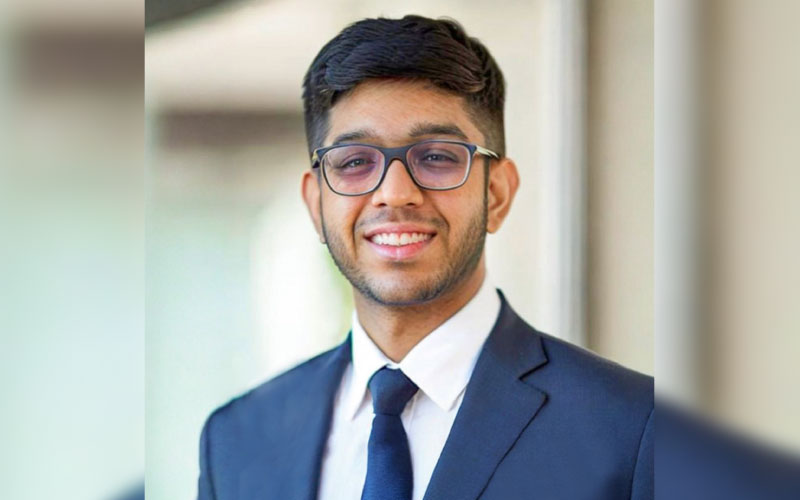
Wire & Cable India: What will you showcase at WIRE Düsseldorf to highlight India’s technological capabilities and manufacturing excellence to a global audience?
Prayag Bansal: At WIRE Düsseldorf 2026, Ajex & Turner will unveil our latest breakthroughs in high-performance tooling, specifically our new TW trapezoidal dies and nano split dies. These innovations are designed to meet the increasing global demand for complex conductor shapes and faster setup times. Alongside these, we will exhibit our specialized range of PCD dies and precision grinding and polishing machines. Our showcase is a testament to India’s capability to produce integrated, world-class engineering solutions that handle everything from ultra-fine drawing to the heavy-duty processing of alloy and stainless steel.
Watch: Top Cable Companies in India
WCI: International trade fairs play a crucial role in shaping industry collaborations. How do platforms like WIRE Düsseldorf help Indian manufacturers connect with global markets and customers?
PB: Platforms like WIRE Düsseldorf are essential for transforming Indian manufacturers from regional suppliers into global strategic partners. For Ajex & Turner, this fair is a launchpad to engage in deep technical dialogues with international engineers. It allows us to demonstrate how our integrated tooling ecosystems can optimize global production lines, fostering trust and opening doors for “Made in India” solutions to solve complex manufacturing challenges across Europe and the Americas.
WCI: From your participation at WIRE Düsseldorf, what key global market insights are you hoping to gain and bring back to strengthen India’s wire and cable manufacturing ecosystem?
PB: Our focus is on AI-assisted production planning and the evolution of digital twin technology in tooling maintenance. Furthermore, we are looking to gain critical insights into navigating Europe’s CBAM (Carbon Border Adjustment Mechanism) and ever-evolving environmental regulations. Understanding these global benchmarks will allow us to bring back strategies for building hyper-efficient, compliant supply chains, ensuring the Indian wire and cable ecosystem remains resilient and competitive in a decarbonizing global market.
The world is now looking to India for advanced turnkey solutions in die-shop management, and with projects like our TW trapezoidal dies, we are ready to take the next step in global leadership.
WCI: Over the years, how have you seen India’s representation evolve at international trade fairs, and how do you contribute to strengthening India’s image as a global engineering hub?
PB: Indian manufacturing has gathered incredible steam, moving rapidly from basic labor-intensive production to high-tech, capital-intensive engineering. At Ajex & Turner, we contribute to this momentum by proving that India is no longer just a “low-cost” alternative, but a center for sophisticated R&D. By delivering consistent quality in complex projects like our TW trapezoidal die series, we reinforce India’s reputation as a reliable, high-end global engineering hub capable of leading the industry’s next technological leap.
WCI: What core Indian manufacturing strengths differentiate you on the global stage? For what turnkey solutions is the world looking at India?
PB: The outdated notion that Indian manufacturing is “cheap and subpar” is being dismantled. At Ajex & Turner, we believe that cost is ultimately a function of the quality the customer chooses to receive. We differentiate ourselves by providing premium, world-class quality alongside free replacements at a very economical price point—a value proposition few can match. The world is now looking to India for advanced turnkey solutions in die-shop management, and with projects like our TW trapezoidal dies, we are ready to take the next step in global leadership.
Indian manufacturing has gathered incredible steam, moving rapidly from basic labor-intensive production to high-tech, capital-intensive engineering.
WCI: Technology partnerships and acquisitions are critical today. How are Indo-global collaborations helping reinforce India’s engineering leadership?
PB: Indo-global collaborations are pivotal in bridging the gap between cutting-edge design and efficient execution. We are looking forward to collaborating with European OEMs to fulfill their specialized tooling needs, especially as we expect a strong demand rebound in wire manufacturing worldwide. These partnerships allow us to merge international standards with Indian manufacturing agility, reinforcing our leadership in the global engineering landscape.
WCI: Which international regions do you see as strategic growth markets, and how is India positioned as your global manufacturing base to support these expansions?
PB: We see significant growth in the European, MENA, and Southeast Asian markets. India is perfectly positioned as our global manufacturing base due to its robust engineering talent and evolving infrastructure. Our facility’s ability to pivot between different material requirements—from non-ferrous alloys to high-carbon steel—enables us to support these diverse international regions with high-precision tools like our nano and TW dies efficiently.
WCI: How are cost pressures across raw materials, energy, or logistics being managed without compromising product reliability or compliance?
PB: We manage cost pressures through vertical integration and process innovation rather than compromising on quality. By manufacturing our own die-maintenance machinery—such as our grinders and polishers—we control our internal costs. This allows us to maintain the highest standards for our PCD and nano split dies while keeping the final product economical for the end user, ensuring that price remains a reflection of value rather than a compromise on reliability.
WCI: How are sustainability expectations from customers or regulators translating into changes in product design, manufacturing practices, or material choices?
PB: Sustainability is driving us toward “Extreme Longevity.” Our new nano and PCD dies are engineered for maximum wear resistance, which reduces industrial waste and downtime. Additionally, as we adapt to regulations like CBAM, we are focusing on more energy-efficient manufacturing processes. Our machines are now designed to help customers extend the life of their existing tools through precision polishing, directly supporting a more sustainable and circular manufacturing model.