


At a time when global supply chains are being reshaped by geopolitics, volatility, and shifting manufacturing priorities, India’s growing wire and cable industry is mapping its way on the global stage. In this in-depth interaction with Wire & Cable India, Mr. Sandeep Bhargava, Chief Procurement Officer, Havells India Limited, shares a candid perspective on the structural bottlenecks, strategic learnings, and transformative shifts defining procurement today. Drawing from his extensive experience across automotive and manufacturing ecosystems, he makes a compelling case for collaboration over competition, India-centric policymaking over profit-centric thinking, and quality-led growth over short-term cost advantages. From navigating raw material volatility and China-plus-one strategies to embedding sustainability, automation, and AI into procurement decisions, Mr. Bhargava outlines a pragmatic roadmap for building a resilient, globally competitive, and future-ready Indian manufacturing ecosystem.
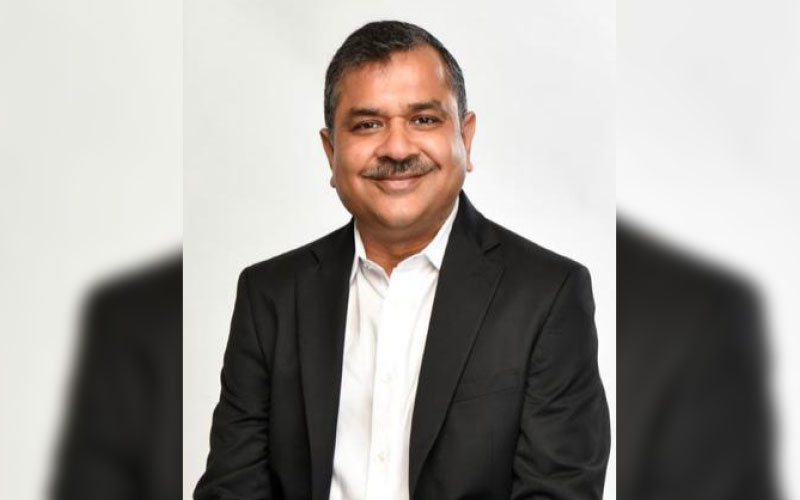
Wire & Cable India: Congratulations on your recent recognitions, including the Regional Procurement Icon of the Year, at the India Procurement Congress 2026 by ISCM, and being named among the Top 10 Chief Procurement Officers in the APAC region. Oftentimes, these milestones are backed by endless trials, errors, and never giving up. To start with, could you walk us through some of the key supply chain procurement bottlenecks which you recognised and overcame, and what has been your biggest learning?
Sandeep Bhargava: The biggest bottleneck that India faces in its supply chain is lack of proper infrastructure, plus the availability of good quality, competitive suppliers within the region. India is not self-sufficient in most commodities except aluminium. The majority of the products or commodities required in cables and wires are dependent on imports. Even the Indian suppliers are not India-centric, all of us are profit-centric. The largest smelters and producers of copper and aluminium influence the government to impose tariffs on good quality international suppliers, which in fact increases inflation.
If we focus on making India self-sufficient in raw materials, we would be able to compete globally. Today, that is not the case. Raw materials produced domestically are among the costliest in the world. We need to be India-centric, not company-centric. We need to work the way Japan does- Japan first, companies second. In India, unfortunately, it is the company first and then the country.
Watch: Top Cable Companies in India
WCI: What has been your biggest learning while maneuvering through the challenges, if you could share any one of them?
SB: We can be successful if we collaborate. I learned this during my time in the automotive industry, where I spent around 16 years, including 13 years in a Japanese company. Even the biggest competitors collaborate in the automotive sector. We have seen mergers and examples like Suzuki manufacturing vehicles sold as Toyota in India.
In procurement, we have adopted the same approach. We collaborate closely with our suppliers and encourage suppliers to collaborate with each other to serve us better. This has strengthened our supply chain and ultimately reduced overall costs.
WCI: Over the past decade, how have you seen India’s wire and cable supply chain system evolve in terms of scale, quality, and global competitiveness?
SB: Being a wire and cable manufacturer in India today is a boon because the Government of India has decided to invest heavily in infrastructure and power. The demand for cables is huge. An analysis I conducted about five years ago showed that the industry has no choice but to grow if we are to meet infrastructure and power requirements.
At the then-existing growth rate, nearly 25% of demand would have required imports by 2030. Fortunately, new players are entering the market, which helps balance demand and supply. This is not a threat to existing players. In fact, by around 2035, demand and supply are expected to balance out.
Even with ongoing capacity expansions expected to complete by 2029–30, the increased capacity will only just suffice domestic demand by 2035. All capacities will be fully utilised. Exports have not yet been pursued aggressively; current production primarily serves domestic demand and existing export commitments.

We collaborate closely with our suppliers and encourage suppliers to collaborate with each other to serve us better. This has strengthened our supply chain and ultimately reduced overall costs.
WCI: Volatility in raw material prices remains a major concern for the industry. How does Havells balance cost efficiency with supply security in such an environment?
SB: Volatility has existed since the 2008 global financial crisis, and traditional commodity fundamentals no longer apply. Banks now influence the London Metal Exchange. The only solution is risk management. At Havells, we maintain a mix of priced and unpriced materials. Imports from regions like Japan, the Middle East, and Southeast Asia are priced to avoid customs-related issues. Domestic purchases are largely unpriced under open pricing agreements with suppliers, allowing us to manage sudden price fluctuations.
This approach lowers the weighted average price. Our objective is not to earn through pricing but to protect margins. We have been successful in mitigating volatility risks, with no losses from price fluctuations. The only impact is a short delay, about two weeks, in passing increased costs to customers.
WCI: The Indian wire and cable industry is witnessing the entry of several new players. From your perspective, how is this impacting supplier ecosystems, pricing structures, and quality benchmarks? Do you foresee consolidation or increased specialisation?
SB: This development is actually a boon for the country. Increased competition, along with the entry of new smelters, will improve availability and lead to better pricing for consumers. Greater availability naturally drives competition, which ultimately benefits the end user.
WCI: How has the ‘Make in India’ initiative influenced procurement strategies across the wire and cable industry?
SB: In the current scenario, it is not just the ‘Make in India’ initiative, but also the evolving geopolitical situation across the globe that has compelled us to explore new ways to strengthen and improve our supply chains. The global shift towards a China-plus-one strategy has made India the most viable alternative, alongside Southeast Asia and Latin America. Today, both India and the world at large are recognising India’s growing importance.
As a result, we are seeing many of our global suppliers establish offices in India. At the same time, we are consciously avoiding sourcing from countries facing geopolitical unrest, adverse alignments, or strained relations with India. Our supply chains are increasingly aligned with countries that have strong and friendly ties with India, which has led to a significant reduction in lead times.
Additionally, with supplier offices setting up operations in India, warehouses are also being established locally. What earlier involved lead times of nearly 30 days has now been reduced to around seven days. This shift has also positively impacted our working capital cycle. Overall, the current geopolitical environment is working in India’s favour by reinforcing its importance globally, and we must capitalise on this opportunity.
WCI: Many global manufacturers are adopting the China-plus-one sourcing strategy. How do you see India’s role evolving in this shifting global landscape?
SB: Post-COVID, the anti-China sentiment in the West accelerated the search for alternatives. The three primary alternatives have been India, Southeast Asia, and Latin America. For the Eastern hemisphere, India is the first choice.
In the last four years, significant manufacturing has moved from China to India, supported by incentives such as those announced by the Japanese government. This shift has strengthened India’s ecosystem, benefiting sectors like automotive and machinery. India must now capitalise on this opportunity by simplifying regulations.
WCI: How are evolving trade policies, tariffs, and regional regulations influencing procurement decisions for Indian wire and cable manufacturers?
SB: We source primarily from friendly countries such as Japan and the Middle East, along with domestic suppliers. We are minimally affected by tariffs from the U.S. or elsewhere. Our exposure to China is limited to about 7.5–8% of purchases, and we reduced this dependence post-COVID. Natural events like earthquakes in Japan impact us more than trade tariffs. Overall, geopolitical alignment plays a key role in sourcing decisions.
We are working with Bain & Company, and within the next six months, AI will be integrated into our systems.
WCI: While sourcing from friendly countries, do you ever have to compromise on quality?
SB: No. By friendly countries, we primarily mean Japan. Even when sourcing from Southeast Asia, suppliers are often Japanese-controlled or Japanese-made. For air conditioners, copper tubes and other key materials come from Japanese suppliers. About 50–60% of our commodity spend is with Japanese suppliers. Aluminium sourced from Indonesia is also Japanese-controlled. We are extremely strict in supplier selection and adherence to specifications.
WCI: Sustainability is becoming a key focus area across global supply chains. How is this influencing procurement decisions?
SB: Sustainability is a reality. Our wire and cable division adopted sustainable practices even before regulations mandated them. All our compounds are halogen-free and lead-free, driven initially by export requirements to Europe and the U.S.
Currently, about 68% of our material value comes from sustainable sources, and we aim to reach 90% within two years. We are training 65 suppliers on sustainability, with plans to cover all suppliers. Havells is a strong proponent of sustainable mining and production.
WCI: With significant reliance on Japan, does dependence on one country pose long-term geopolitical risks?
SB: Copper sourcing options include Japan, Southeast Asia, Russia, China, Europe, Africa, and the U.S. The Western Hemisphere is logistically expensive, and Africa presents geopolitical challenges. Historically, we sourced from Russia, Africa, Southeast Asia, and Japan. Today, we focus on Southeast Asia and Japan due to strong India–Japan relations and aligned value systems. While sourcing from Russia is not prohibited, export considerations have led us to avoid it.
WCI: Looking ahead, what capabilities should Indian suppliers and manufacturers prioritise to strengthen India’s position as a global hub for the wire and cable industry?
SB: Quality competitiveness is critical. While price matters, the next generation, including Gen Z, is highly quality-conscious. Investment in good-quality machinery and process improvement is essential. Quality should be viewed as a cost that can be eliminated through better processes. Automation and advanced manufacturing, including dark factories with minimal human intervention and zero rejection, are the future. India needs to build an ecosystem that supports such capabilities.
Also Read: Bonton Cables India To Commission New Facility in Salarpur; Aims to Increase Capacity By Threefolds
WCI: AI is gaining importance across industries. How do you plan to use it to improve product quality?
SB: AI can help benchmark production costs globally and identify gaps in processes. It should be used as a tool for comparison and improvement, not as a replacement for human decision-making. We are working with Bain & Company, and within the next six months, AI will be integrated into our systems.
WCI: Would you like to give any closing remarks?
SB: These are good times for India. We need to build an India-first ecosystem through collaboration rather than competition. Demand will continue to grow, and there is enough opportunity for everyone. By collaborating, optimising efficiencies, and reducing costs, we can collectively strengthen India’s manufacturing ecosystem.