


India has emerged as an unmissable hotspot for the global wire and cable industry. Over the past 25 years, LAPP has evolved from being a cable supplier to becoming a complete technology and connectivity solutions provider, with India now ranked as its second-largest market after Germany. With revenues targeted at INR 2,700 crore by 2027, the company is deepening its roots with a strong “local for local” strategy that aligns with the government’s ‘Make in India’ vision. In an exclusive interaction with Wire & Cable India, Mr. Matthias Lapp, CEO, LAPP Group, shares why India is not just a growth engine but also a hub for innovation, localization, and sustainability across the global network. From the group’s only compounding facility in Bhopal, making India the center of polymer expertise, to the new accessories plant in Dharuhera that has reduced reliance on European imports, LAPP is embedding global competence with local strength. Looking ahead, LAPP sees India leading the charge in electric mobility and renewable energy, backed by its strong sustainability commitments. With a fourth production facility on the horizon and a 2030 roadmap in motion, LAPP’s vision is clear– to be seen not as a German exporter, but as a truly Indian company with global relevance.
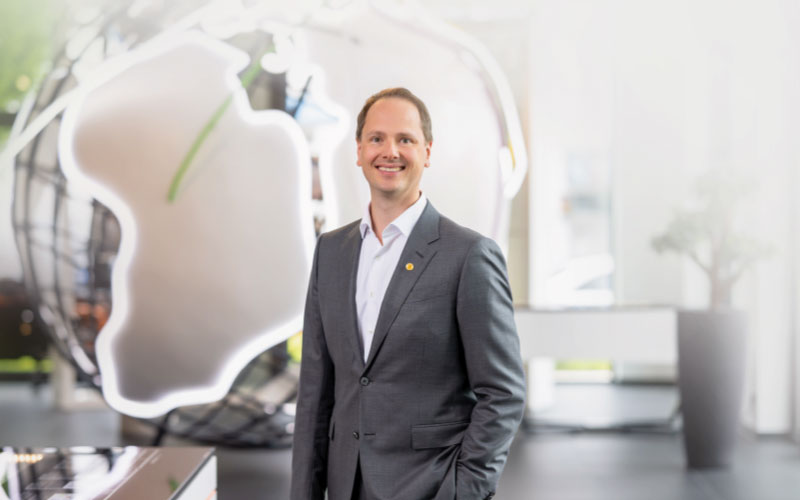
Wire & Cable India: LAPP has called India central to its long-term growth. What specific investments and milestones are you targeting here over the next 3–5 years? How do you see India’s role within LAPP’s global growth map?
Matthias Lapp: India is today our second-biggest market after Germany, and we feel a very special bond with the country. Our approach has always been “local for local,” aligned with ‘Make in India’, and we will continue to invest with this philosophy. Over the decades, India has evolved from being just a production base to becoming a true center of expertise. For instance, our only global compounding facility is in Bhopal, making India the hub for polymers and compounding know-how across the group. In addition, our Indian teams provide world-class IT and engineering capabilities that are leveraged worldwide.
India is a thriving and energetic market with a young population and a bright future. For LAPP, it is not just a sales destination — more than 80 percent of what we sell here is also developed and made locally. That makes India unique in our group and has helped us to be seen as a local company, not just a German exporter.
Looking ahead, India will play a much larger role not only in serving the domestic market but also in supporting exports to Nepal, Sri Lanka, Bangladesh, and increasingly to Asia-Pacific, the Middle East, and Africa. The strategy is to expand our footprint and establish India as a regional hub with global relevance. While I cannot share specific milestones, we are actively working on our 2030 roadmap, which will strengthen our product portfolio and drive our transition into complete solutions. Our aspiration is to be seen as one of the leading players in India, not just a supplier of products but as a trusted solution partner.
On a personal level, I feel deeply connected to India. Professionally, I see India as a market that could even overtake Germany one day to become our largest single market. Given its scale, resources, and innovation capability, that is not just possible, but very likely if we continue on this path.
Watch: Top Cable Companies in India
WCI: You’re evolving from a cable supplier to a complete connectivity solutions provider, with harnessing as a big growth area. Which industries in India, such as EV, renewable, automation, and so on, are shaping this shift? How are you building local capabilities to serve these industries?
ML: Our evolution into a connectivity solutions provider is being shaped by several industries. Electric mobility is a major focus: we already provide charging cables for two-wheelers and four-wheelers, and beyond that, we also serve EV battery factories that require extensive data, power, and automation connectivity. Renewable energy is equally important. We have been active in solar and wind from the very beginning, and solar in particular is a natural growth area in India given the abundant sunlight and its extremely low maintenance. If you install photovoltaic panels with the right LAPP cables, you can trust them to last 25 years with virtually no maintenance other than the occasional dusting. Solar power is clean, free, and reliable — unlike wind or traditional power plants, which require constant servicing. To me, every rooftop in the world should eventually be solar-powered, and India has the perfect conditions to lead this shift.
Automation and industrial verticals also play a central role. Here, our approach is to go deeper into vertical-specific requirements, including certifications and standards, to provide tailored solutions. To support these industries, we are broadening our portfolio and localizing more production in India. This means our Indian operations can now adapt designs faster, customize products for local needs, and provide truly integrated solutions such as plug-and-play harnessing, connectors, and glands, all available on time, at scale, and close to the customer.

Our aspiration is to be seen as one of the leading players in India, not just a supplier of products but as a trusted solution partner.
WCI: Your new Dharuhera plant focuses on accessories. How does it strengthen your “end-to-end” solution portfolio in India? What tangible advantages will customers see compared to earlier setups?
ML: Before Dharuhera, we had to import many accessories from Europe, which meant higher costs and longer waiting times. With the new plant, we are producing accessories locally and adding real strength to our end-to-end solution portfolio. The biggest benefit is proximity. Being close to customers means we can make modifications faster, react to design needs quickly, and reduce delivery times significantly. Time to market improves because we don’t need to wait for shipments to arrive by container or air cargo.
Local production also reduces transportation costs, making us far more competitive in pricing, and customers now have the flexibility to choose between locally manufactured products and European imports depending on their requirements. Importantly, we are not limiting ourselves to one production site — we already have three plants in India, and a fourth production unit is being discussed. This demonstrates our long-term commitment to scaling in India and to being right where the customer needs us.
To strengthen this even further, we are setting up logistics hubs and service centers across the country, with Dharuhera becoming one of our central distribution points.
WCI: Faster delivery and competitive pricing are at the core of your localization drive. Can you share how much lead-time reduction and local content you’re aiming for? How does that change the competitiveness of your India operations?
ML: Localizing production directly translates into faster lead times. Shipping products from Europe meant long planning cycles, customs clearances, and logistical delays. By producing in India, we avoid those bottlenecks and can supply customers much faster. To strengthen this even further, we are setting up logistics hubs and service centers across the country, with Dharuhera becoming one of our central distribution points.
With three production sites already in operation and a fourth in planning, we are significantly increasing local content and proximity to customers. This not only reduces waiting times but also builds trust, because customers know they can rely on us for availability and quick response. In a price-sensitive market like India, combining shorter lead times with competitive local pricing gives us a major edge and makes our operations far more competitive.
Also Read: Multi-Sectoral Upswing: Sustained Market Surge for Indian Wires and Cables
WCI: Sustainability is a stated priority for LAPP globally. What concrete targets have you set for your India operations, whether renewable energy use, product innovation, or carbon reduction? How do you balance your sustainability goals with the need for cost efficiency in a price-sensitive market like India?
ML: Sustainability for us rests on three pillars: energy, product design, and durability. On the energy side, we are investing heavily in renewables. In Bhopal, we already operate a 1 MW photovoltaic plant and have the potential to scale upto 3 MW, and wherever possible, we install solar panels on factory roofs. This is a clear commitment to producing a part of the energy we consume ourselves. Globally, our target is to be CO₂ neutral in Scope 1 and 2, and India is contributing strongly toward that.
On the product side, we are constantly optimizing to use less copper and polymers to reduce waste. Copper is a valuable raw material and can be recycled almost endlessly without losing quality, which makes it relatively straightforward to recover and reuse in new products. However, copper is also highly energy-intensive to mine and refine, and global demand continues to push prices up. That makes it not only a sustainability issue but also an economic one — reducing copper use helps us lower the environmental footprint while keeping products more cost-effective for customers.
Beyond materials, sustainability also means thinking about the lifespan of our products. A LAPP cable, for instance, can last up to twice as long as competing products. In bending cycles, if a normal cable fails after three million bends, ours will last six million. Over the life of a machine, that means fewer replacements, lower material use, and reduced overall environmental impact. I believe this is one of the most overlooked aspects of sustainability — making products that truly last.
Finally, sustainability is also about proximity. Every unnecessary shipment adds to the carbon footprint. By producing close to the customer, we not only serve them faster but also reduce emissions. That is exactly what ‘Make in India’ is about, and it is why we believe localization is as much a sustainability strategy as it is a business one.
By producing close to the customer, we not only serve them faster but also reduce emissions. That is exactly what ‘Make in India’ is about, and it is why we believe localization is as much a sustainability strategy as it is a business one. Globally, our target is to be CO2 neutral in Scope 1 and 2, and India is
contributing strongly toward that.