


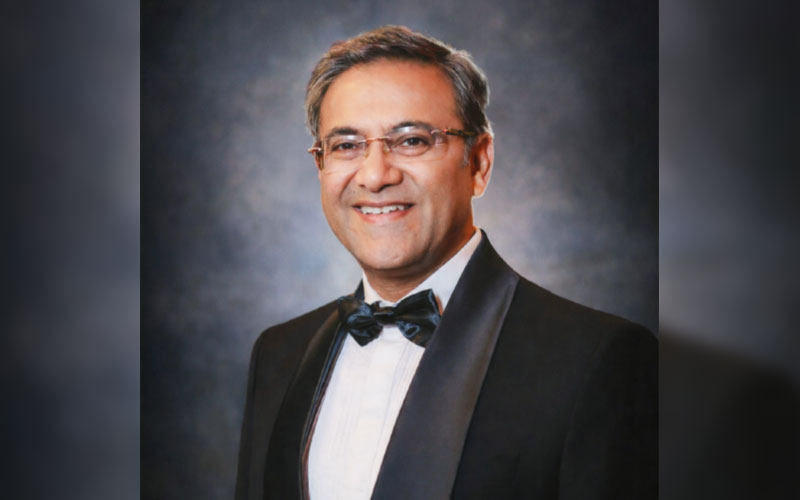
India’s wire and cable ecosystem is improving with new technologies, global quality standards, sustainability trends, and emerging applications. In an exclusive interaction with Wire & Cable India, Mr. Chetan Choudhari, Managing Director, Mangalchand Tubes Private Limited, shares how the company is adopting more energy-efficient processes, reducing waste, optimizing materials, and developing longer-lasting products, meeting global standards.
Wire & Cable India: What will you showcase at WIRE Düsseldorf to highlight India’s technological capabilities and manufacturing excellence to a global audience?
Chetan Choudhari: At WIRE Düsseldorf, Fibure, a brand of Mangalchand Tubes, will showcase advanced reinforcement and technical yarn solutions engineered specifically for optical cable applications.
Our focus is on high-modulus, low-elongation reinforcement yarns, fire-retardant materials, and application-specific engineered fibres designed for optical fibre cables like aramid ripcords, water swellable yarns, coated glass roving and zero-shrink binders.
WCI: International trade fairs play a crucial role in shaping industry collaborations. How do platforms like WIRE Düsseldorf help Indian manufacturers connect with global markets and customers?
CC: WIRE Düsseldorf brings global OEMs, designers, and decision-makers into one ecosystem. For Indian manufacturers like us, this enables validation of products against global benchmarks, early engagement in next-generation cable designs, and face-to-face technical discussions.
Watch: Top Cable Companies in India
WCI: From your participation at WIRE Düsseldorf, what key global market insights are you hoping to gain and bring back to strengthen India’s wire and cable manufacturing ecosystem?
CC: We aim to learn about new technologies, global quality standards, and emerging cable applications. Understanding future regulatory and performance requirements is essential to shaping our roadmap.
WCI: Over the years, how have you seen India’s representation evolve at international trade fairs, and how do you contribute to strengthening India’s image as a global engineering hub?
CC: India’s presence has evolved from being largely price-oriented to increasingly technology- and solution-focused. Fibure contributes by showcasing specialized, patent-pending yarns and fibres developed for global standards, reflecting our focus on innovation and new product development.
WCI: What core Indian manufacturing strengths differentiate you on the global stage? For what turnkey solutions is the world looking at India?
CC: Fibure leverages India’s strengths in process engineering, customization, and scalable manufacturing. We can quickly adapt yarn designs to specific cable constructions and performance needs. Cost efficiency is achieved through process optimization, not quality compromise.
WCI: Technology partnerships and acquisitions are critical today. How are Indo-global collaborations helping reinforce India’s engineering leadership?
CC: Indo-global collaborations accelerate learning on both sides. Global partners bring advanced standards and application exposure, while Indian manufacturers bring process innovation, agility, and scalable execution.
WCI: Which international regions do you see as strategic growth markets, and how is India positioned as your global manufacturing base to support these expansions?
CC: Europe, the Middle East, America, and Southeast Asia are focus regions for us, driven by infrastructure development, fibre expansion, and the rapid growth of AI data centres. India acts as a centralized manufacturing base, enabling us to support these regions with consistent quality, scale, and supply reliability.
WCI: How are cost pressures across raw materials, energy, or logistics being managed without compromising product reliability or compliance?
CC: Cost pressures are addressed through process optimization, material efficiency, and engineering-led analysis rather than dilution of specifications, ensuring that compliance and reliability remain non-negotiable.
WCI: How are sustainability expectations from customers or regulators translating into changes in product design, manufacturing practices, or material choices?
CC: Our manufacturing practices focus on waste reduction and resource optimization. Sustainability is viewed as a driver of better engineering, not a constraint.