


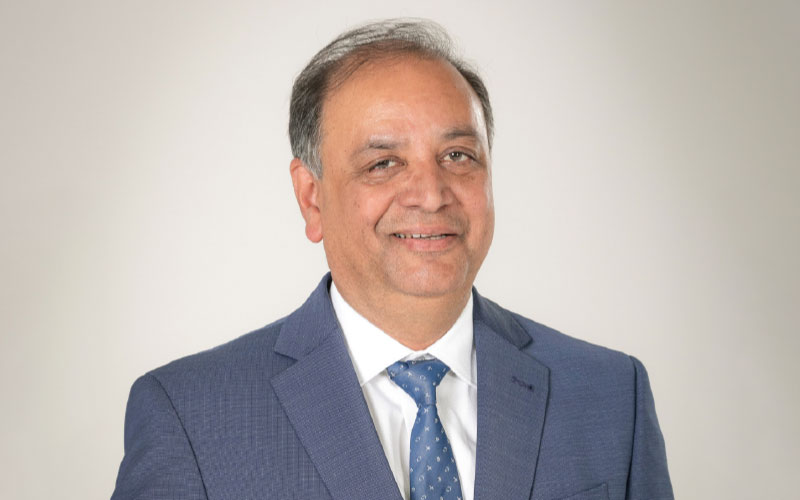
Stating India a high-growth market driven by strong domestic consumption, investment cycles, and expanding end-use segments, Mr. Pankaj Priyadarshi, Global Director – Business Development (Fibre Optics) and Director, South Asia, reflects on Rosendahl Nextrom’s journey in the country. The company, celebrating its Silver Jubilee with 25 years of operations in India, has continuously challenged itself over the years to raise the bar, making its machines adaptable to a wider range of raw materials, while driving standardization and economies of scale. Looking ahead, Rosendahl Nextrom is focusing on AI-driven planning and forecasting to reduce lead times, improve accuracy, and enhance yields.
Wire & Cable India: Please briefly outline your company’s cable and wire industry product focus, including key technologies, product types, and principal end-use sectors.
Pankaj Priyadarshi: Our focus at Rosendahl Nextrom has been on tracking the direction of technology and delivering solutions ahead of time. At the same time, we focus on developing technologies that solve chronic problems and long-standing requirements of the industry. Currently, a lot of our work is happening around large data and energy-carrying capacities required for data centers, e-mobility, and energy transmission.
WCI: Within your core product segments, how would you characterize current demand conditions and order visibility?
PP: As far as our order book is concerned, we have been very busy and are fully booked for the current year.
Watch: Top Cable Companies in India
WCI: Within your manufacturing offerings, how do you currently assess investment sentiment among wire and cable producers, particularly in emerging markets such as India?
PP: For us, India is an inspirational story. We see a very high confidence and enthusiasm for growth, fueled by India’s growth trajectory. With the dynamics of trade protectionism bringing uncertainty and volatility in export markets, India’s voracious domestic consumption has kept the industry healthy and growing.
Most companies we work with have clear growth plans. They are already through the first phase of their investment cycle, and are implementing the next stages of expansion. The outlook is very positive.
WCI: Which customer or application requirements are currently exerting the greatest pressure to improve productivity and quality within your product range?
PP: We see an upward trend in multiple technologies. AI -driven computing requirements are putting tremendous pressure on the development of specialty data cables. The house wire industry is taking sure steps to improve compliance with regulation as well as productivity. The optical fibre industry has been facing challenges on all fronts and has worked relentlessly on improving transmission efficiencies, developing smaller fibre sizes, and reducing production costs.

Most companies in India have clear growth plans. They are already through the first phase of their investment cycle, and are implementing the next stages of expansion.
WCI: Which manufacturing disciplines, automation measures, or quality-assurance practices have delivered the most tangible improvements in your yield or rework reduction?
PP: We see wider adoption of our RIO line control to improve quality and efficiency, and increase productivity. Beyond real-time quality control, significant savings can be achieved by automating process steps, enabling faster start-ups, and reducing material usage.
Cable production lines are highly complex, and advanced line control allows all components to work together in an optimized way. What is possible today is already impressive, and with AI-supported features—some of which we have already implemented—even greater accuracy, yield improvement, and rework reduction can be achieved.
WCI: How are sustainability and decarbonisation goals translating into practical changes at your company?
PP: Our clientele, especially in the Western hemisphere, has always been very conscientious about sustainability goals, which led to the development of sustainability modules within our line control. This allows the factory manager to closely monitor and control the carbon footprint of the production line. This feature is available in our India offering as well, and we are hopeful that we will see a higher rate of adoption going forward.
India is an inspirational story. We see a very high confidence and enthusiasm for growth, fueled by India’s growth trajectory. With the dynamics of trade protectionism bringing uncertainty and volatility in export markets, India’s voracious domestic consumption has kept the industry healthy and growing.
WCI: How are cost pressures across raw materials, energy, or logistics being managed without compromising product reliability or compliance?
PP: The geopolitical situation today is very dynamic and is putting pressure on costs and timelines. Our customers keep challenging us with newer targets, and this keeps us busy, making our machines adaptable to a wider range of raw materials, implementing standardization of equipment for economies of scale, and implementing AI driven planning and forecasting to reduce lead times.
WCI: How has the wire and cable industry benefited, in practical terms, from automation or real-time digital control?
PP: What we see in our latest generation lines is a very tangible improvement in production speeds, reduction in set up times, improvement in flexibility to take short runs, a quantum leap in process consistency, and overall stronger control over product quality.
Also Read: Bartell Machinery: India Moving Toward Scalability, Future-ready Technologies
WCI: Looking ahead three to five years, which wire & cable segments or applications are most likely to drive the next investment cycle?
PP: We are looking closely at data centers, e-mobility and energy distribution.
WCI: How do you see India as a market?
PP: In 2026, Rosendahl Nextrom will celebrate its Silver Jubilee on completion of 25 years in India.
We were in the Indian market when it was taking its first baby steps in manufacturing OF and OFC, energy and automotive cables, datacom cables and other products on Rosendahl machines.
It is a very satisfying and emotional feeling for us to see these machines still going strong and providing great service after all these years. For us, India is a study of ambition and resilience; it is a very important strategic market for us.
We were there when the Indian market was taking its first baby steps in the manufacturing of OF and OFC, energy and automotive cables, datacom cables and other products on Rosendahl machines, and it is very emotional and satisfying to see these machines are still going strong and providing great service over all these years.