


As global markets look to India for import-substitution and turnkey supply of specialized grades earlier sourced from high-cost regions, Mr. Ashwani Gupta, Executive Director, Vividh Wires Limited, tells Wire & Cable India that the company is contributing to this shift by prioritizing reliability over rapid expansion. With rigorous Kaizen-driven quality systems and consistent performance across export and domestic supplies, Vividh Wires is helping reinforce India’s position as a mature, technology-led engineering hub.
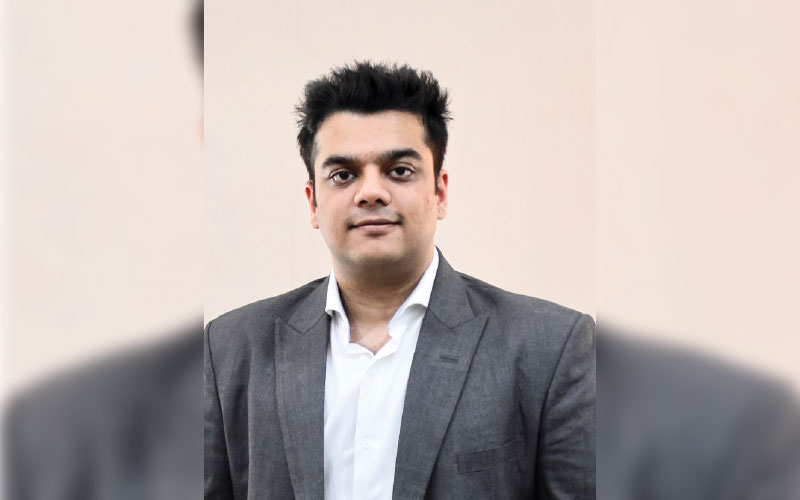
Wire & Cable India: What will you showcase at WIRE Düsseldorf to highlight India’s technological capabilities and manufacturing excellence to a global audience?
Ashwani Gupta: At WIRE Düsseldorf 2026, Vividh Wires will be showcasing the evolution of Indian manufacturing from “volume-driven” to “value-driven.” Specifically, we will highlight our specialized capabilities in high-nickel alloy wires and super-fine stainless steel wires (down to 0.04mm). These are segments where European and North American manufacturers have traditionally held a monopoly. By demonstrating that Indian manufacturers can achieve the same metallurgical precision and surface finish consistency as global leaders, we intend to position India as a hub for critical application wires—such as those used in aerospace fasteners, medical braiding, and high-performance filtration. Furthermore, we will be showcasing our “Green Wire” initiatives, highlighting our transition toward renewable energy in production, which is increasingly becoming a prerequisite for European buyers.
Watch: Top Cable Companies in India
WCI: International trade fairs play a crucial role in shaping industry collaborations. How do platforms like WIRE Düsseldorf help Indian manufacturers connect with global markets and customers?
AG: Platforms like WIRE Düsseldorf serve as a reality check and a bridge. For Indian manufacturers, they are the most effective way to dismantle the legacy perception that India is solely a “low-cost” destination. When a global customer walks into our booth and sees that our production tolerances and testing infrastructure mirror their own, the conversation shifts from price to partnership. These fairs allow us to bypass intermediaries and understand the direct pain points of end-users in Germany, Italy, or the Americas. It is about moving up the value chain—from being a vendor to becoming a strategic supply chain partner.
WCI: From your participation at WIRE Düsseldorf, what key global market insights are you hoping to gain and bring back to strengthen India’s wire and cable manufacturing ecosystem?
AG: My primary interest lies in observing the integration of Industry 5.0 and sustainability into the wire drawing process. Europe is often a few years ahead in adopting automation that complements human intelligence rather than just replacing it. I am keen to understand how European counterparts are managing carbon auditing and traceability, as these will soon become non-negotiable trade barriers (like CBAM). Bringing these insights back is crucial because, for Vividh Wires to remain competitive, we must not only match global quality but also global compliance and ethical standards.
India is perfectly positioned to support diversification of supply chain because we have achieved a sweet spot: our energy and labor costs are competitive, but our technical skills are advanced.
WCI: Over the years, how have you seen India’s representation evolve at international trade fairs, and how do you contribute to strengthening India’s image as a global engineering hub?
AG: The evolution has been stark. A decade ago, Indian pavilions were often visited for commodity products. Today, visitors come to us for complex, engineered solutions. The conversation has matured from “Can you make this cheaper?” to “Can you develop this specific grade for us?”
At Vividh Wires, we contribute to this image by prioritizing reliability over rapid expansion. We have always believed that one bad batch damages “Brand India” more than a missed shipment. By maintaining strict adherence to our Kaizen-driven quality protocols and ensuring our export-grade wires perform identically to domestic supplies, we reinforce the trust that India is a mature, technology-led engineering hub.
WCI: What core Indian manufacturing strengths differentiate you on the global stage? For what turnkey solutions is the world looking at India?
AG: India’s core differentiator today is agility combined with technical competence. Unlike some competing nations that operate on rigid, massive-scale models, Indian manufacturers like Vividh Wires offer the flexibility to customize chemical compositions and mechanical properties for niche applications without prohibitive minimum order quantities. The world is looking to India for “import substitution” solutions—turnkey supply of specialized grades (like Duplex and PH grades) that were previously sourced from high-cost geographies. We offer a “China Plus One” alternative that doesn’t compromise on quality or geopolitical reliability.
By demonstrating that Indian manufacturers can achieve the same metallurgical precision and surface finish consistency as global leaders, we intend to position India as a hub for critical application wires.
WCI: Technology partnerships and acquisitions are critical today. How are Indo-global collaborations helping reinforce India’s engineering leadership?
AG: Technology is no longer a guarded secret; it is a shared currency. Indo-global collaborations are helping us leapfrog the learning curve. Instead of spending decades perfecting a process through trial and error, partnerships allow us to import best practices in metallurgy and heat treatment. For Vividh Wires, these interactions—whether formal joint ventures or technical consultancies—have been instrumental in refining our processes for high-alloy wires. They validate our capabilities and give global OEMs the confidence that an Indian partner speaks the same technical language.
WCI: Which international regions do you see as strategic growth markets, and how is India positioned as your global manufacturing base to support these expansions?
AG: Europe remains a strategic priority due to the structural shift in their manufacturing base caused by high energy costs; they are increasingly outsourcing energy-intensive processes like wire drawing. Simultaneously, the North American market is opening up as they diversify supply chains. India is perfectly positioned to support this because we have achieved a sweet spot: our energy and labor costs are competitive, but our technical skills are advanced. With our recent capacity expansions in Greater Noida and our focus on forward integration, Vividh Wires serves as a reliable “backend” manufacturing engine for distributors and component makers in these high-growth regions.
WCI: How are cost pressures across raw materials, energy, or logistics being managed without compromising product reliability or compliance?
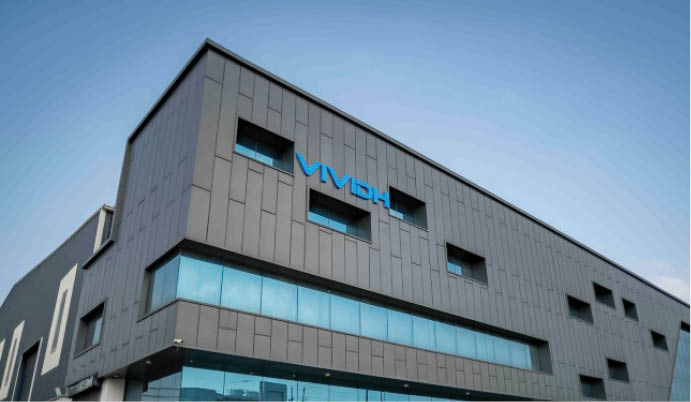
AG: We manage cost pressures through efficiency, not shortcuts. Our philosophy has always been to prioritize the bottom line through operational excellence rather than just chasing top-line revenue. We have invested heavily in captive solar power generation to insulate ourselves from fluctuating energy costs. On the material front, our long-standing relationships with primary steel mills allow us to hedge effectively. We use Lean Manufacturing and Kaizen principles to minimize waste. Every kilogram of scrap saved contributes to our competitiveness, allowing us to absorb some market volatility without passing it on to the customer or compromising on quality.
WCI: How are sustainability expectations from customers or regulators translating into changes in product design, manufacturing practices, or material choices?
AG: Sustainability is no longer a “good-to-have”; it is a license to operate. We are seeing a clear demand for “low-carbon” steel and fully recyclable packaging materials. At Vividh Wires, this has translated into tangible changes: we are aggressively increasing the share of renewable energy in our production mix and implementing Zero Liquid Discharge (ZLD) systems. Customers now ask for the “CO2 footprint per ton of wire,” and we have prepared our systems to provide that transparency. We view this not as a compliance burden, but as a future-proofing strategy for our business.
With our recent capacity expansions in Greater Noida and our focus on forward integration, Vividh Wires serves as a reliable “backend” manufacturing engine for distributors and component makers in these high-growth regions.