

The 6th Edition of the Cable & Wire Fair (CWF) was the event’s largest and most appreciated by the industry yet. Organized by Tulip 3P Media Pvt. Ltd., Cable & Wire Fair 2025 concluded on a high note showcasing the country’s fastest growing innovations and technologies by 424 exhibitors from 4-6 November 2025 at Halls- 2,3,4 & 5 of Pragati Maidan, New Delhi, India. The co-located event held in Hall 6 — Tube & Pipe Fair — witnessed participation from 133 exhibitors, taking the overall exhibitor count to 557. Spanning 35,000 sq. m gross area, it is India’s Largest International Expo for the Wire and Cable Industry witnessed a very strong visitor footfall of 16,393.
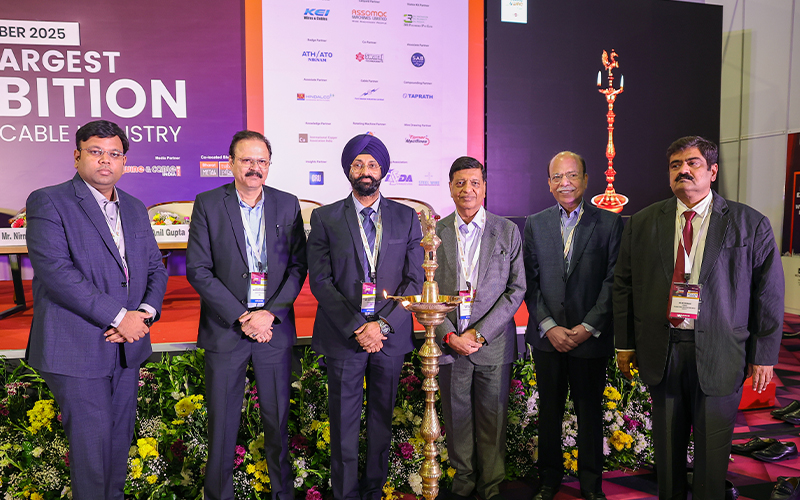
Since its debut a decade ago, CWF has evolved from 70 exhibitors in a modest 3,000 sq. m space to a flagship event now spanning 35,000 sq. m area and has grown 12x since its launch. The scale of CWF this year was unprecedented, reflecting not only the fair’s steady expansion but also the rising global stature of India’s wire and cable industry.
CEO Priyank Jain attributes this steady, rapid ascent to a focus on staying current—regularly surveying exhibitors and visitors to ensure that each edition meets technical needs and mirrors shifting market trends. Feedback has led to continual recalibration and innovation, making CWF the country’s fastest-growing showcase in the field.
Watch: Top Cable Companies in India
At the 2025 staging, the visitors saw the show floor packed with machinery, including equipment for drawing, extrusion, cabling, coiling, stranding and more. Attendees could analyze process efficiency, output quality, and technical specs firsthand, engaging directly with experts ready to field questions and discuss implementation. There was also a deep focus on materials: steel, copper, aluminum, specialty compounds, advanced polymers, and all manner of control, measurement, and testing systems were on display, along with finished product solutions such as steel wire, power cables, specialty cables and fibre optics.
CWF’s international profile continued to expand with 89 foreign exhibitors from 24 countries including Austria, Bahrain, Belarus, Belgium, Canada, China, Denmark, Estonia, France, Germany, Italy, Japan, Nepal, Netherlands, New Zealand, Norway, Oman, Singapore, South Korea, Spain, Sweden, Switzerland, UK, USA etc. For visiting professionals, it was a rare opportunity to benchmark competing global technologies, products, and solutions in one comprehensive venue.
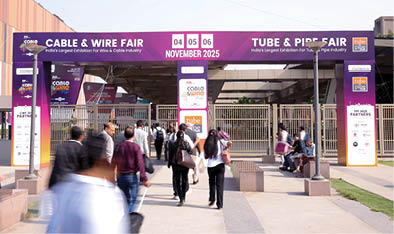
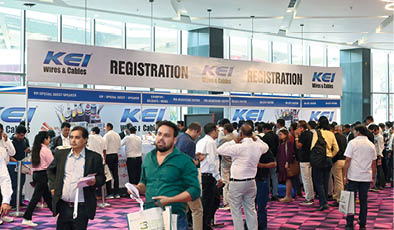
The show consistently draws a cross-section of the entire sector: management, plant owners, executives, senior engineers, R&D and procurement heads, and decision-makers from major cable users like railways, telecom, power, EPC, and renewables. CWF provides a balance between networking, business marketplace and a center for technical insight.
Another key asset is CWF’s two-day Technical Conference and CEO Conclave, which run parallel to the main exhibition. The conference agenda directly aligns with what’s happening on the show floor, with sessions focused on emerging themes such as- From ‘Make in India’ to ‘Made in India’: Competing in Global Cable Markets; Riding the Multi-Sector Growth Wave: Cable Demand Across India’s Expanding Economy; Future-Ready Power Networks: Smart, Safe, Green & Resilient; From BharatNet to 6G: Cabling the Next Wave of Connectivity; Steel Wire: Past, Present & Future – Building Strength Through Innovation; Smart Manufacturing: Technology and Material Science Behind Cables. These programs provide not only the latest knowledge but also a venue to network and brainstorm with industry leaders.
Also Read: Wire & Cable India Emagazine Nov-Dec Issue 2025
Jain said that what sets CWF apart is the balance of serious buyers and technical decision-makers—they can have detailed product discussions without filtering through multiple layers. The event draws both domestic and international visitors, and exhibitors often open new export channels. “We are thrilled with the outcome of Cable and Wire Fair 2025,” said Priyank Jain. “The enthusiasm from our exhibitors and attendees reflects the vibrant state of the cable and wire industry. This event not only showcases innovations but also fosters collaboration and knowledge-sharing that will drive the industry forward.”

The enthusiasm from our exhibitors and attendees reflects the vibrant state of the cable and wire industry. This event not only showcases innovations but also fosters collaboration and knowledge-sharing that will drive the industry forward.
As we look ahead, the Cable and Wire Fair 2027 dates will be out soon. We invite industry professionals to prepare themselves for another exciting event filled with learning, networking, and exploration of the latest trends and technologies.
DISCLAIMER
The information, including facts, figures, statements, and views presented herein has been reported directly from the CWF 2025 Conference, based on remarks made by the respective speakers. These details are reproduced in good faith and are intended solely for informational purposes. Any inadvertent errors, omissions, misinterpretation or discrepancies in facts, figures and ideas are unintentional and do not represent the views or opinions of the publication or its editorial team.
From ‘Make in India’ to ‘Made in India’: Competing in Global Cable Markets
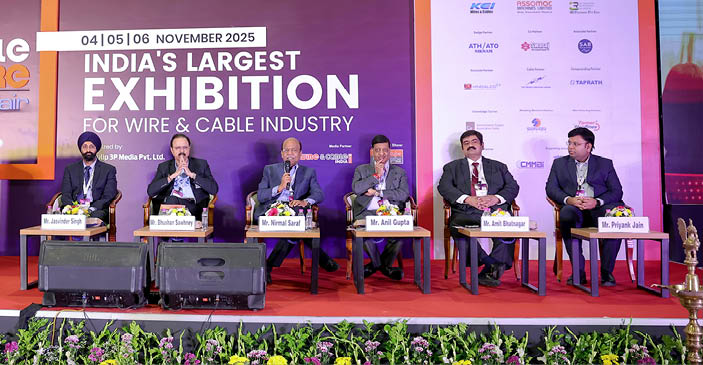
Today we are looking at a pivotal moment for India’s cable and wire industry, a point where the journey from ‘Make in India’ to ‘Made in India’ is no longer an aspiration but a national priority. The global supply-chain landscape is shifting, the China+1 opportunity is real, and the world is looking for reliable, competitive, innovation-driven partners. India has the scale, the talent, the capacity and the zeal to rise and fill up the industry gaps.
The session ‘From ‘Make in India’ to ‘Made in India’: Competing in Global Cable Markets’, held at CWF2025 Conference on November 04, shed light on how India can strengthen its manufacturing base, moving decisively from assembly-led growth to true indigenous design-to-delivery capabilities. The session explores how the industry can localize raw materials, tooling, and engineering; align products with global standards; and build export-ready competencies that meet the expectations of international buyers.
Panelists Mr. Anil Gupta, Chairman & Managing Director, KEI Industries Limited; Mr. Nirmal Saraf, Managing Director, Nirmal Wires; Mr. Bhushan Sawhney, Chief Revenue Officer, Aditya Birla Group; Mr. Jasvinder Singh, Managing Director, Supermac Industries (India) Limited; Mr. Amit Bhatnagar, Founder, Diamond Power Infrastructure Ltd., discussed the trade dynamics shaping competitiveness– from tariffs and FTAs to logistics efficiency and non-tariff barriers, and examine how Indian manufacturers can position themselves as trusted global suppliers through quality, compliance, and innovation. As specialty cables, high-performance products, and differentiated solutions become essential drivers of global market share, India must strengthen its supply chain, product quality, logistics, customer centric approach and after-sales support to serve diverse geographies with agility.
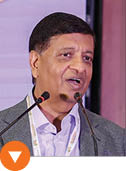
Mr. Anil Gupta, Chairman & Managing Director, KEI Industries Limited
“There were times when India used to feel threatened by neighboring small countries, but now time has changed and the new India makes eye-to-eye discussion with world’s leading economies”, firmly echoed Mr. Anil Gupta, in his naugural speech. Wire and cable is the backbone of the entire energy sector, and India is rapidly emerging as a global supplier in this sector. Mr. Gupta also drew attention on how important it is to strengthen the country politically and economically.
Emphasizing the importance of self-reliance, he highlighted that India’s long-term security and stability depend on strengthening its manufacturing and technological capabilities. “Until we build our economic might and technological strength, whether in artificial intelligence, information technology, or other emerging domains, we will continue to face external threats,” he noted.
He pointed to the defense sector as a strong example of the progress made under the ‘Make in India’ initiative. “One positive development in recent years is the significant momentum in the defense industry. India is now producing high-quality defense and wartime equipment– aircraft, missiles, and much more, under the Make in India banner,” he noted.
Further, drawing attention towards machinery manufacturers, while there are new players coming up in the industry, Mr. Gupta also put into perspective the importance of “getting the right machines, at the right price and also within the delivery time”. He noted, “The major problem that we face in India from the machine suppliers is the time commitment or delivery commitments are very poor and weak, which leads to a continued dependence on China, who can deliver the large machines maximum within six months at a much better price vis-a-vis Indian suppliers. And the quality is definitely undoubtedly good.”
He stressed that for ‘Make in India’ to become meaningful, the manufacturing ecosystem must evolve beyond intent. “Make in India can succeed only when machine manufacturers and cable producers strengthen their plant capabilities, vendor networks, and supply chains. They must be able to deliver equipment on time and at scale,” he added.
With a vision for the wire and cable industry, Mr. Anil Gupta talked about the development of the semiconductor industry after the government’s push for domesting chip manufacturing. “The government’s push for semiconductor manufacturing in India is finally taking shape, addressing the country’s massive annual imports. While initial production may not be high-end, significant infrastructure is now being built to support the future growth, design, and manufacturing of advanced semiconductors”, he said.
He stressed that the industry now carries a collective responsibility to build a quality-first culture. “Indian manufacturers are not just making products; we are creating a legacy of innovation. The quality mindset we build inside our factories is the foundation of a nation capable of exporting world-class products. We cannot have one standard for India and another for the world”, he emphasised.
“Our processes must be clearly defined, our quality assurance plans must be robust, and our in-process teams must be well trained. A good product is possible only when we check quality at every stage, from raw material to in-process checks to finished goods,” said Mr. Anil Gupta.
He highlighted that KEI’s journey is inseparable from the people who have built it over the years. “KEI’s growth story is also the story of every engineer, supplier, channel partner, employee, and electrician who has stood with us in powering the nation. Together, we’re creating impact at every level- from homes to highways, from cities to industries- pushing India toward becoming Viksit Bharat.”
With 40 years of experience, Mr. Anil Gupta urged the industry to be proficient in quality, to make it a part of our culture. “We have to benchmark someone. So, I think now is the time to benchmark our level of scale with China and level of quality with Europe. Then we’ll become a Viksit Bharat and a good ‘Make in India’ product”, concluded Mr. Gupta.
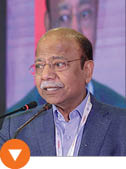
Mr. Nirmal Saraf, Managing Director, Nirmal Wires
“Dream like your customer and then make it a reality. That’s where success lies”, emphasised Mr. Nirmal Saraf, keeping customer needs paramount. He further drew attention towards what is actually the meaning and consequence of the ‘Made in India’ label for the manufacturers. “Once you have put the label of ‘Made in India’ on your product, you are putting the nation’s pride at stake. The product that has been made in India becomes primary, everything else becomes secondary. And that is the responsibility you take, that yes, I am putting my nation’s pride at stake, because if something goes wrong, if the product is not up to the mark, it is India’s name which is sullied. It is not just the brand”, said Mr. Nirmal Saraf.
Sharing the recipe of a ‘Made in India’ product, he said, “ There is one word which differentiates why your product will sell or why your product has got value. The difference between ‘also’ and ‘only’. Some things are also made in India, this product is also made in India, versus this product is only made in India. He elaborated that achieving this distinction requires complete self-reliance in design and manufacturing. “You have to do end-to-end designing and production here right from the basics,” he said. “When everything is done in-house, within the country, you gain the capability to make rectifications, to innovate continuously, and to keep improving your product.”
Emphasizing the essence of customer-centric innovation, Mr. Nirmal Saraf spoke about how the true success of ‘Made in India’ lies not only in meeting standards but in exceeding expectations and creating unmatched value. “Complying with a standard is like crossing a qualifying barrier,” he explained. “But to win the race, you have to go far beyond it. Business success comes when you consistently exceed your customer’s expectations.”
He further noted that innovation and value creation transcend trade barriers and pricing. “It doesn’t matter what your competition is doing or what tariffs exist,” he added. “If your product is truly innovative and valuable, customers will choose it regardless of cost. They will pay the price because the value you deliver outweighs it. Focusing on that value proposition is what will make ‘Made in India’ a resounding global success.”
Focusing on the importance of automation, he noted how humans are susceptible to making mistakes but while using automation, once the programmes are right, mistakes corrected once, cannot be repeated. “The more you automate, the more your quality is assured. There may be errors in programming or automation initially, but once rectified, they don’t recur. Human errors, however, can,” noted Mr. Saraf.
Highlighting an often-overlooked aspect of manufacturing excellence, Mr. Nirmal Saraf emphasized the role of packaging and supply chain management in defining product quality and customer experience. “It doesn’t matter how good a product is when it leaves the factory, what truly matters is the condition in which it reaches the end consumer. Your packaging and supply chain management ensure that the product arrives in perfect condition. No consumer will accept excuses like ‘the delivery person made an error.’ If a damaged product reaches the customer, the manufacturer bears the blame,” he noted.
He concluded by stressing the importance of robust systems that uphold product integrity through to delivery. “We must build strong delivery chains and design packaging that guarantees the product reaches the customer in flawless, usable form. Everyone else is part of the supply chain, but it’s the end consumer who truly matters.”
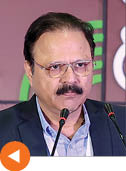
Mr. Bhushan Sawhney, Chief Revenue Officer, Aditya Birla Group
Mr. Bhushan Sawhney offered a fresh perspective of Swachh and Surakshit Bharat within the context of the wire and cable industry, emphasizing the critical importance of electrical safety. He urged the manufacturers to stop running towards speed, and focus on innovation and safety. Mr. Sawhney uniquely pointed out the need for customer awareness for the industry. Citing a relatable example on the importance of choosing the right product, he said, “I’ll not say that India doesn’t have a good product. It is available in the market. The real question is how aware are you about it. We buy a house worth INR 30 crore- INR 50 crore, maybe it is second-hand, maybe it is new- but nobody goes there and checks which wire is inside, how much load it can take. People are very particular about fancy tiles, about fittings, about decor, but not about the wire.”
Highlighting demand driven by electrician based influential selling, Mr Sawhney sights, “Eighty percent of the business is being run by the electricians. Selling is a good aspect, but I feel awareness is more important. When awareness will come, people will make decisions and buy the right product. Along with selling, it is also a moral duty to make people aware. Buy the right product.”
Having spent 25 years in the industry, Mr. Sawhney reflected on India’s progress in technology and innovation. “If you look around, you’ll see tremendous advancements– new machines, modern designs, and innovative solutions. But when we compare ourselves with international standards, we still find ourselves lagging behind,” he observed. Talking further about the future of technology in the wire and cable industry, he said, “ Imagine if the product itself could speak, it would say, ‘I’m going to burn, I’m losing my life.’ But that’s not the dream,” he said. “The future lies in innovation, in IoT-enabled cables that can communicate their condition, alert when replacements are needed, and ensure safety before failure occurs. This technology is not far away; we may soon see it in practice right here.”
In his closing remarks, Mr. Sawhney reflected on the enduring legacy of the Aditya Birla Group, which has stood strong for over 150 years. “As part of a 150-year-old legacy, we continue to live by the values that built this organisation,” he said. “It may be too early to define what we will do or how we will do it, but our purpose remains clear, to think beyond ourselves, to think about the nation, and to deliver the best products possible.”
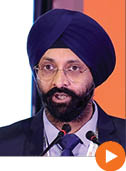
Mr. Jasvinder Singh, Managing Director, Supermac Industries (India) Limited
Mr. Jasvinder Singh began on a humble note, expressing his gratitude for being part of the remarkable transformation of India’s cable and wire machinery industry, a journey that has evolved from ‘Make in India’ to ‘Made in India’ since the initiative’s launched by PM Modi in 2014. Breaking the long-held stereotype that ‘Make in India’ equates to inferior quality, Mr. Singh highlighted the sector’s growth, potential, and promising future. He also urged manufacturers and suppliers to produce world-class products, emphasizing that the ‘Make in India’ movement is not just a matter of national pride but also one of trust and responsibility.
Drawing from his extensive industry experience, Mr. Jasvinder Singh emphasized that India’s manufacturing growth must go beyond capacity expansion to global brand recognition. “For a ‘Make in India’ product to truly become a ‘Made in India’ product, it must be built on trust in quality,” Mr. Singh remarked. “That trust comes from manufacturers’ unwavering commitment, not just to deliver, but to deliver on time and in line with the quality standards expected by customers worldwide.”
Mr. Jasvinder Singh noted the growing global acceptance of Indian manufacturing, while underscoring the need for continued progress and collaboration across the industry. “Indian cables and machinery are now being widely accepted around the world,” he said. “However, there is still a long way to go before we reach the benchmarks set by major European, Japanese, and American players. To achieve this, the entire industry must come together, each stakeholder must play their part in manufacturing, supplying, and delivering top-class products that meet the expectations of developed nations.”
Challenging the perception that ‘Make in India’ products imply inferior quality, Mr. Jasvinder Singh stressed the need to redefine this narrative. “Whenever the ‘Make in India’ concept is discussed globally, it is often associated with cheap products,” he said. “Yes, we enjoy a demographic advantage through affordable labour, but that should not translate into cheap quality. Instead, this advantage must be leveraged to produce superior-quality products at competitive costs– products that are more trustworthy, more innovative, and truly reflective of India’s manufacturing potential.”
Over the years, the government has played a pivotal role in supporting the cable industry through policy initiatives and infrastructure programs. From the launch of Smart Cities to new investments and development projects, these efforts have significantly contributed to the expansion of manufacturing capacities. However, Mr. Jasvinder Singh emphasized that growth must come with accountability. “It’s not just about expanding our capacities, we must also take greater responsibility,” he said.
Highlighting India’s growing presence on the global manufacturing map, Mr. Singh urged both manufacturers and suppliers to focus on quality excellence. “In the past, we relied on products made in Germany, Japan, or the USA. Today, we must build the same level of trust in products Made in India,” he stated. “That trust will come only when manufacturers produce with the genuine intent to deliver the best possible quality.”
In his concluding remarks, Mr. Jasvinder Singh called upon all stakeholders in the cable ecosystem, from suppliers to machinery manufacturers to unite in strengthening India’s global manufacturing identity. “I urge all my cable suppliers, cable machinery manufacturers, and allied partners to contribute towards building a ‘Made in India’ brand that earns global trust, one that stands at par with European, Japanese, or American products,” he said. “It is our national duty. Just as soldiers protect the nation at the borders, we have an equal responsibility to build a brand that is recognized and respected across the world.”
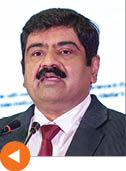
Mr. Amit Bhatnagar, Founder, Diamond Power Infrastructure Ltd.
Started off at the young age of 22 years, Mr. Amit Bhatnagar, with now 32 years of experience in the cable and wire industry, in his address focuses on the major bottlenecks of the sector, solutions, and an honest appeal to the manufacturers to trust more-and-more Indian suppliers and local vendors to strengthen and build a robust ecosystem which is truly ‘Made in India’.
Logistics, supply chain is considered the backbone of any business. Highlighting its importance, Mr. Bhatnagar said, “The biggest challenge our country faces is the cost of logistics and the time of logistics. How fast we can get our product out of the country and tell a global buyer that we are reliable and we’ll be on time.”
Emphasizing the need for technological self-reliance, he highlighted that India’s manufacturing ecosystem can advance only when large domestic manufacturers actively support Indian suppliers. “Technology is the second critical pillar,” he said. “Large manufacturers must become braver in supporting Indian suppliers. Unless we take the risk of using their products, our suppliers will never develop new technologies or invest in innovation because they believe Indian manufacturers won’t buy from them.” He explained that the reluctance often stems from specifications favoring international brands or a lack of confidence in domestic capabilities. “If major manufacturers collectively decide to promote Indian products, we can truly elevate the Indian supplier ecosystem to global standards,” he added. “A cable labelled Made in India cannot be truly Indian if 50% of its components are imported.”
Highlighting another critical pillar of industry advancement, Mr. Bhatanagar stressed the urgent need for focused skill development within India’s wire and cable sector. “After 32 years in this industry, I joined at the age of 22, I’ve realized that skill development is absolutely essential,” he noted. “Yet, we are not investing in it. There isn’t a single college in the country offering an ITI or diploma specifically in wire and cable technology, simply because the industry has not taken the initiative.”
Pointing to improvements already underway, he acknowledged the progress of domestic suppliers. “When I review production reports today compared to earlier years, the variation in output and quality has disappeared. Indian suppliers have matured. But unless we actively support them, they won’t grow– and if they don’t grow, neither will our competitiveness.”
He also highlighted scale as a crucial component for global relevance. “We must begin thinking in terms of volume and scale,” he said. “When I visited a cable company in China in 2016, I found that they had more CCV machines in a single facility than we had in the entire country. That scale is what drives global competitiveness, and that’s where we need to aspire to be.”
Mr. Bhatnagar emphasized that while challenges exist, the responsibility to transform India’s manufacturing landscape ultimately lies with industry stakeholders themselves. “There are many issues we need to address. We often say the government isn’t doing enough, but over the last 10–11 years, the government has been extremely proactive, doing far more than what was expected,” he said. “Now it’s our turn to open our minds, open our purses, embrace entrepreneurship, take bold steps, support Indian suppliers, and think at a global scale. Only then can we truly say our products are Made in India and globally competitive.”
He stressed that global competitiveness goes beyond cost. “Competitiveness is not just monetary. It’s about technology, product quality, presentation, delivery timelines, and overall customer experience,” he noted. “Across every input parameter, we are strong. What we lack is scale, logistics efficiency, and adequate encouragement for our suppliers. This must change.”
He called upon producers and manufacturers to take a holistic approach to growth. “The time has come to think in terms of global scale, ecosystem building, skill development, logistics, customer service, and more. If we move in this direction, I’m confident that as Modiji envisions, by 2047 we can achieve Viksit Bharat. And I hope that journey is driven by world-class, globally competitive ‘Made in India’ products.”