

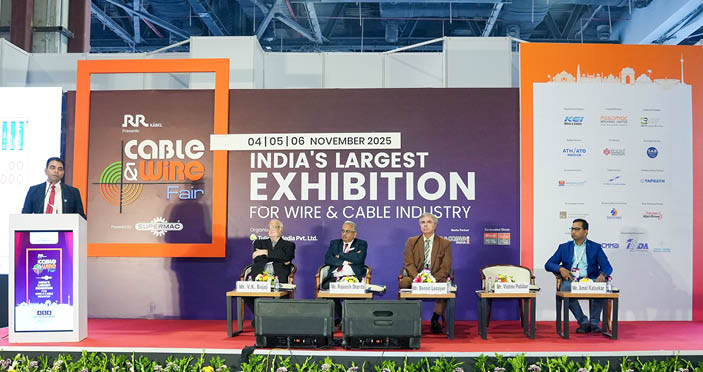
The session themed ‘Future-Ready Power Networks: Smart, Safe, Green & Resilient’ conducted on November 04, at CWF2025 Conference examined the need for resilience in india’s power networks amid the increasing demand across sectors. As the nation expands solar, wind and distributed energy systems, the reliability and flexibility of transmission and distribution (T&D) networks have become central to sustaining this transition. This session set the stage for a deep-dive into how modern power systems must evolve to meet the demands of a rapidly changing energy ecosystem.
To be ready for the demands of the decades ahead, the power networks today need to be truly smart, safe, green and resilient. In the session, panelists- Mr. V.K. Bajaj, Senior President & Chief Technology Officer, APAR Industries Limited; Mr. Rajeesh Sharda, Executive Director, Fort Gloster Industries Limited; Mr. Benoit Lecuyer, CEO, Prysmian India & ACPL; Mr. Vishnu Patidar, Senior Analyst, Base Metals, CRU and Mr. Amol Kalsekar, Director-Marketing, International Copper Association India, shared their years of wisdom, challenges and suggestions to make the industry better and safer.
Watch: Top Cable Companies in India
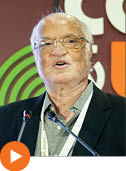
Mr. V. K. Bajaj, Senior President & Chief Technology Officer, APAR Industries Limited
Reflecting on APAR’s long journey since its establishment in 1958, Mr. V.K. Bajaj, shared that today the company has sales of around INR 20,000 crore, driven by three major verticals– oil and lubricant, overhead speciality conductors, and electrical and telecommunication cables. “Innovation is the hallmark for APAR… our tagline is ‘tomorrow’s solutions today’, and that is what is driving our innovative product solutions,” he emphasized.
Mr. Bajaj spoke at length about the future of aluminium conductors, particularly in low-voltage distribution. He explained how low-voltage cables, though not visible, form a crucial part of any network where reliability is essential. With rising copper prices globally, he noted a growing shift toward aluminium, but cautioned that aluminium presents its own challenges, especially at the contact points. He detailed how oxidation, heating and cooling cycles, thermal expansion, and the creep behaviour of aluminium can gradually degrade joints, increase contact resistance, and even lead to overheating or fire if not monitored. Explaining the concept of creep, he elaborated on how aluminium elongates under thermal cycles and does not fully return to its original shape, causing terminals to loosen over time.
He presented a comparison showing that while copper performs best, the 8000-series aluminium alloys behave far closer to copper than the commonly used EC-grade aluminium. He highlighted that countries like the USA have already switched 100% to 8176/8000-grade aluminium due to its superior mechanical strength, durability, corrosion resistance, and suitability for automotive and electrical applications. “In India, people are still using EC-grade aluminium… it is time we should look at 8000 series for long-term reliability and safer networks,” he advised.
Mr. Bajaj then shifted to the second major aspect– XLPE insulation. He pointed out that while Indian cables rely on 90°C insulation, the USA commonly uses 105°C insulation, which significantly impacts performance in high-temperature regions like Delhi or Rajasthan. “If insulation is 105-degree rated, then you have a cushion available to work even during the summer… 105-degree can actually give you more than 10% extra current carrying capacity,” he explained. He added that Indian specifications currently do not allow 105°C insulation and recommended working with BIS to enable customer choice.
Concluding his discussion, Mr. Bajaj reinforced his recommendation for the future: the adoption of 8000-series aluminium and 105°C insulation. “These can reduce O&M cost for network users and offer higher current carrying capacity,” he stated, adding that while the initial cost may rise by 3–4%, the long-term benefits far outweigh it. “If the circuit is down, the loss of revenue is much, much more than what we are talking.”
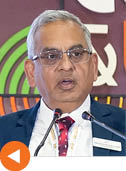
Mr. Rajeesh Sharda, Executive Director, Fort Gloster Industries Limited
Mr. Rajesh Sharda opened his address by briefly setting the backdrop of Fort Gloster, noting that the company belongs to the House of Bangurs, one of India’s oldest and most diversified industrial groups with strong leadership positions across cement, paper, jute, fashion jute and graphite. He underlined the company’s heritage by highlighting, “We were established in 1958, but incorporated in 1873, 74 years before independence. We have seen three centuries.” He also recalled the organisation’s pioneering role in the evolution of cable manufacturing in India, saying, “The first CCV line was brought into the country in 1979 by us. We partnered with Sumitomo Electric to bring the first cross-linking line when it became a global innovation.” Fort Gloster was also the first in India to produce 132 kV cables in 1989, and he credited the legacy to the group leadership: “It belongs to House of Bangurs and the Executive Chairman is Mr. Hemant Bangur.” The company today manufactures the full spectrum of power cables including LT, HT, control cables, aerial bunch and covered conductors.
He connected the theme of the session- smart, safe, green and resilient power networks, to the organisation’s own philosophy. “Our vision and mission statements talk about safety as a hallmark, concern for society and giving back to society,” he said, adding that Fort Gloster has invested INR 600 crore to modernise its entire facility. Entering the broader context, he emphasised that India today is expanding at an unprecedented pace, “If the globe is growing at 4%, we are almost growing at 8 to 10%.” He referenced the scale of investment saying, “We have INR 9 trillion planned between now and 2032, think about the kind of investment that is coming to India.” While this rapid progress offers tremendous opportunities, he pointed out that it also places enormous responsibility on the ecosystem to ensure that networks remain “safe, secure, smart, reliable and green.”
He focused on two major themes- trends and drivers. The first, he said, is India’s emergence as a digitally powered economy, where data mobility and smart grid investments are expanding rapidly. “There is mounting investment happening in the smart grid,” he pointed out. He reiterated that the national renewable policy’s target of 600 GW by 2032 is transforming the power landscape and creating new opportunity clusters. Calling data centres the fastest growing element of the digital backbone, he remarked, “Data centres are coming in a very big way, including AI, and the power networks of today and the future have a very deep impact on the overall economy.” With INR 2 lakh crore expected to flow into Indian data centres by 2030, he noted that even if only 2% of that capex goes to cables and wires, it translates into INR 4,000 crore of opportunity. But he cautioned that this 2% has disproportionate influence. “If this network is not going to be safe and secure and smart enough, it is going to lead to a lot of disruptions in the economy,” noted Mr. Sharda.
Mr. Sharda described smart networks as those with high reliability, strong safety and continuous monitoring capability. He emphasised that India must adopt real-time data, digital automation and predictive technologies similar to those used in Europe. “Smartness comes with continuous monitoring of the networks,” he said. He listed distributed time pressure sensing, DTS, partial discharge systems and dynamic line rating among others as essential tools for resilient grid performance. He explained how underground cable networks face thermal gradients that directly affect joints and terminations, leading to failure, flooding and prolonged outages. “Take the example of Bangalore, a highly underground network city, but we see the network going down for six to eight hours,” he said, noting that without real-time monitoring large urban centres will continue to face outages.
He observed that India is significantly behind global best practices. “The tenders in India do not have dynamic line rating concepts. Monitoring is seen as an add-on. We treat sensors as optional,” noted Mr. Sharda. He called cables “blind assets” unless we really monitor them well and underlined that BIS and CEA standards need to evolve to mandate rather than suggest smart monitoring. There is also a human capital gap, he said, “There is a lack of trained staff who can collate and analyse the data. We do not have SCADA integration.”
On safety, Sharda noted that while many compounds exist, including low smoke and zero halogen, their usage remains limited. “Ninety percent of the fires in India happen because of short circuits,” he reminded the audience, urging mandatory adoption of halogen-free jackets across metros and urban corridors. He recommended that India align with global fire safety standards such as IEC 60332, 61034 and 60754, and emphasised that safety depends not only on product technology but also on laying technology and EPC practices. “A lot of standards and SOPs have to be worked out. A lot of handbooks have to be created,” he said.
He then moved to the “green” dimension of power networks, calling it essential despite inherent challenges. Renewable energy’s intermittency, he said, introduces instability. “Green energy is not continuous energy, it creates a lot of imbalance in the system,” he cautioned. He argued for a full life-cycle perspective, saying India needs benchmarks similar to global construction product regulation guidelines to ensure reliability of XLPE insulation over 15–20 years. He advocated deeper policy changes including carbon footprint disclosure per kilometre of cable, use of bio-based polymers, discouraging lead and encouraging aluminium overlays. “Recyclability is one of the factors that we should emphasise,” he added.
He reiterated that India must move beyond L1 procurement. “India must move beyond lowest price tendering and reverse sustainability to align with net zero 2070 goals,” he said, stressing that reliability cannot be sacrificed for cost. A holistic resilience strategy, he emphasised, should involve cyclone-proof and flood-proof joint bays, hybrid overhead-plus-underground corridors and secure underground feeders for critical infrastructure. “This would ensure our grid can withstand cyclones, floods and security threats while keeping cost manageable.”
He concluded with a call to action, to standardise smart monitoring, mandate halogen-free jackets, localise LSZH advanced compounds, align with global certification models and prioritise skilling for digital power management. He ended with a reminder that the scale of growth must not overshadow quality, “Cables are the invisible backbone of a future-ready India and the choice we make today will decide whether our grid in 2047- Viksit Bharat, will be truly smart, safe, green and resilient.”
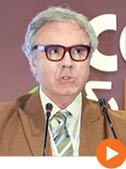
Mr. Benoit Lecuyer, CEO, Prysmian India & ACPL
Mr. Benoit Lecuyer began by introducing himself as the Head of Prysmian India and Associated Cables, explaining that the company operates through three structures in India, a factory in Chiplun near Ratnagiri, imports of cables from Turkey, Oman and Malaysia, and a joint venture near Pune which will soon become 100% Prysmian. He reiterated Prysmian’s global and domestic intent by adding, “We are living today in a very abrupt world, but we try to be an architect of the electrified world and shape a better future.” According to him, the last five years have transformed the industry dramatically. “Disruption brings energy, and when there is energy, there are opportunities,” he said, signalling a positive lens amid uncertainty.
He stressed that the first mega risk the world faces is longer power interruptions due to ageing grids. “The grid is like a backbone and we are asking from this backbone much more effort, muscle, brain and very often the bones break.” Large economies such as France, India and the US still operate grids that are 60–70 years old, exposing significant vulnerabilities. The second risk is longer outages driven by extreme weather caused by climate change, and he highlighted “towns totally devastated, whether it is in Dehradun, Valencia in Spain, in the US, in Canada.” These disruptions, he said, force the industry to imagine new solutions, much more resilient, technologically advanced, in order to withstand those adversities.
Mr. Lecuyer then highlighted the accelerating global shift toward electrification and the pressure it places on natural resources. “For the first time, we are speaking about resource shortage because copper is not renewable,” he said, warning that by 2032, 10–20% of global demand for aluminium and copper may remain unmet. “It will put a lot of pressure on the demands that all the projects have in India,” he cautioned. He spoke of a paradox that the industry must urgently solve, the coexistence of unemployment and a shortage of skilled labour. “There will be availability, but sometimes the mobility of the people is not optimum,” he remarked, adding that Prysmian is itself participating in developing skilled manpower through educational partnerships.
He underlined that cost has become one of the toughest challenges for the industry. Space constraints also play a defining role in energy infrastructure decisions. “Everybody wants wind energy, but no one wants to have near his garden those nacelles turning,” he remarked, describing why offshore wind is emerging as the most feasible and socially acceptable renewable solution.
He then shifted to opportunities that will dominate the next decade. Electricity demand worldwide, and especially in India is expected to grow sixfold by 2035. “It will require to build, in terms of generation, transmission, distribution, massive investments that we have not seen during the last decade,” he said. He noted that a new phenomenon, data centres, now absorbs staggering amounts of power. “All the information, the data, are kept on the cloud– and data centres consume a massive amount of energy,” he said, explaining why optical fibre and Cat7 cables have seen dramatic demand acceleration. With this, the market for cables is “going to grow every year more by six to seven percent.” He also highlighted growing consciousness around fire safety, “Consultants specify more and more fire-safe cables versus PVC, which will, of course, help us because the turnover will be much higher.”
He pointed to renewable energy and electric mobility as the biggest engines of demand expansion. Electric buses and rickshaws are soaring, and India is already the world leader in electric rickshaws. He added, “Electric water pumps, all of this massive element of renewable energy, will give a tremendous boost to our energy.” Alongside, geopolitical risk is fuelling defence and aerospace growth. “One of the major industries in defence which is growing is drones,” he said, describing drones, aircraft, nuclear submarines and aerospace cables as rapidly scaling opportunities. “In aerospace, our very light cables are multiplied by two,” he added.
Urban aesthetic goals and scarcity of land will also push utilities toward underground cabling. “Underground cables of 66 up to 400 kilovolt will skyrocket,” he predicted. He announced that Prysmian’s latest tests have concluded installation capability of superconductive cables “up to 600 kilovolt HVDC, which has far less losses than HVAC.” He highlighted the growing adoption of solar rooftops, saying, “The consumer can produce his own energy, maybe he can also sell to the grid. Who would have thought about that 10 years ago?” On offshore wind, he said, “The government is doing a tremendous job to improve the ports,” but also acknowledged a bottleneck, “When you want to create offshore wind farms, you need vessels with a carousel of 5000 kilometres, and today these vessels are fully booked until 2030.”
Artificial intelligence, according to him, is reshaping the landscape, both positively and negatively. “Artificial intelligence has reached a moment which is becoming huge opportunities, but also a danger,” he observed. For the cable industry, AI increases demand for “low voltage, Cat6, Cat7 optical fibre,” while also enabling predictive maintenance and virtual plants. On the risk side, “cyber engineers criminal work” and cyberattacks require robust preventive strategies. He emphasised that preventive maintenance is absolutely critical because installation failures often originate not in the cable but in the accessories. “A very sensitive element is not so much the cables, it is the joint and the termination. Very often, it can blast and create massive fires.” He spotlighted Prysmian’s PRICAM monitoring technology in India, which anticipates failure risk through corona and partial discharge detection.
He warned that grid obsolescence is accelerating, and the high intermittency of renewable sources makes grid management even more complex. He cited a study showing daily global electricity demand variation reaching 85 gigawatts which can again create outages and major cuts. He recalled that “Spain and Portugal were almost totally blacked out because the grid could not manage the mix between renewable, DC, AC, wind, solar and traditional.” This is why he called energy storage a non-negotiable need: “Sometimes they make so much energy that they are sitting at a loss because they don’t know what to do with it.” He said future electricity consumers may be paid to absorb and return energy, highlighting, “You should ask EV owners to charge during the night and during the day give back electricity to the grid.”
He concluded by saying that the pace of change itself is the most striking trend. “All these mega trends and opportunities were not known four years ago, and I am sure if I am young enough to return in four years, there will be many new things.” He then announced Prysmian’s upcoming innovations in India: Alessia drum management, Pre-cam partial discharge technology and luminescent cables for mines. Of the life-saving potential of the latter, he said, “With 10× luminescent cables they can easily find the exit because everything will be fluorescent, phosphorescent, and they will be able to live longer.” He ended the session with appreciation, “What I have mentioned here is also thanks to the fact that we work with a lot of universities and researchers worldwide, including in India.”
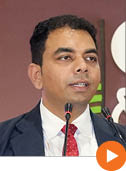
Mr. Vishnu Patidar, Senior Analyst – Base Metals, CRU
Mr. Vishnu Patidar, opened his presentation by expressing his pleasure at joining the audience. Before starting the market analysis, he offered an overview of CRU, noting its long-standing presence in global market intelligence. He said, “The headquarters of the company is in London, the company was established in 1969, and we provide services related to market research, cost, pricing analysis and consulting in metals, mining and fertiliser.” He emphasised CRU’s extensive commodity coverage, remarking that “we cover a broad spectrum of commodities- copper, aluminium, steel, tin, lead, nickel, you name it and we provide comprehensive research and analysis services to manufacturers, refiners, machinery producers and major industry participants.”
Mr. Patidar highlighted CRU’s long experience in the wire and cable sector. He said, “For the last 30 years, we have been studying this particular market, and a lot of copper, aluminium and steel goes into the metallic wire and cable industry, so we work on that as well.” He added that CRU’s global wire and cable team operates from multiple regions including India, Europe, China and North America, covering everything from winding wires to low-, medium-, high-voltage and extra-high-voltage cables, as well as optical fibre, a segment where CRU has a strong reputation.
He then shifted to the global market outlook, stating, “The global metallic wire and cable industry is expected to grow by 2.8%, and the overall consumption in volume terms is expected to reach around 23,600 kiloton conductors.” Moving region by region, he described South Asia as the fastest-growing segment, saying, “South Asia’s consumption is expected to grow by 10.2% year on year, and a major chunk of that actually comes from India.” He noted that Southeast Asia is expected to grow by 5.5%, while the Middle East continues its pattern of more than 5% annual growth due to infrastructure investments. On Europe, he added, “The demand in Western Europe is expected to recover and grow by 1%, while Eastern Europe is expected to grow much higher at 1.9%.” He described the US market as flat for the year, highlighting several reasons: “One of the major factors is the tariff-related uncertainties. After the imposition of tariffs, product costs went high, inflation went high and consumer confidence weakened.” He further said, “The US has also removed a lot of subsidies from electric vehicles, which is impacting demand from charging and EV infrastructure, and the downscaling of some offshore wind projects has hampered the demand for HV and EHV cable.”
Turning to China, Mr. Patidar noted its dominant presence, saying, “China consists of around 41% of global demand, and we think the Chinese market is expected to grow by 3.1% year-on-year this year because of huge infrastructure projects and demand for high-voltage and extra-high-voltage cable.” He then shifted to India’s macroeconomic backdrop, explaining how it shapes future cable demand. He said, “India’s GDP is expected to grow at a robust pace of more than 6% in 2025. Car production is expected to grow by more than 5%, and construction output is still growing at a steady pace, though a bit slower than GDP.” He acknowledged recent shocks, saying, “Global economic headwinds and the disruption we had in the region in mid-2025 have shaken consumer confidence,” but added that the government has responded with measures such as interest-rate cuts, GST reforms and income-tax adjustments. “The inflation is at its lowest in the last five to six years, and these factors are expected to contribute to industrial production,” he said.
Discussing India’s wire and cable market, he said, “India’s insulated wires and cables demand is expected to grow by around 10.2% year on year, and production is expected to grow by 11.5% to reach around 1,600 kiloton conductors.” He described it as the fourth consecutive year of double-digit growth and said CRU expects the sector to maintain that momentum. He also presented mid-year projections showing high single-digit growth, aligning closely with other speakers at the conference.
Speaking on the energy transition and its impact on cable demand, Mr. Patidar said, “Electricity generation in India is expected to grow by 5% in 2025 to reach around 2,200 terawatt-hours, and it is expected to keep growing at 5% until 2030 to cross 2,800 terawatt-hours.” This expansion, he noted, directly drives the requirement for transmission and distribution infrastructure. Based on CRU’s projections, he said, “In 2025, the bare overhead conductor demand in India is expected to grow by 7.8%, copper power cables by 17.8%, and aluminium power cables by 5.6%, and all three categories are expected to grow robustly between 5% and 8% until 2030.”
He then highlighted the rapidly expanding data-centre sector, describing it as a major global demand driver. “This sector is very energy-intensive and requires a robust power-cable infrastructure to operate. Apart from power cables, you require a lot of low-voltage cables and winding wires within the data centre,” he said. He pointed out that “the demand from this sector globally for metallic wire and cable is expected to grow by 32.3% year on year in 2025 to reach 751 kiloton conductors, which is half of India’s total consumption.” Looking ahead, he added, “In the next five years, we expect the sector to consume around 1,120 kiloton conductors,” signalling strong opportunities for producers worldwide.
Mr. Patidar also spoke about India’s export performance, describing it as increasingly competitive. He said, “Indian exports of metallic insulated wires and cables grew by 9% in 2024 and are expected to grow even faster in 2025. In the first half of 2025 alone, exports grew by 29% year on year.” Europe, the US, Australia and the Middle East remain the largest markets, with Europe and the US together taking more than half of all Indian exports. He emphasised the impact of US tariffs, noting, “Because of tariff-related uncertainties, in the first half of 2025 itself, Indian producers exported more to the US than they exported in the entire year of 2024.”
He stressed the importance of certification and compliance to access these markets, saying producers are increasingly securing UL and CPR certifications to leverage global sourcing shifts such as the China-plus-one strategy. He noted that CRU works closely with many global wire and cable manufacturers, analysing performance and helping expand business horizons.
Mr. Patidar concluded by summarising the major global demand drivers, saying that sectors such as high-voltage systems and data centres are growing at 22-25% annually, while offshore wind, EVs, solar PV and onshore wind continue to expand steadily. He emphasised that “electricity transition, e-mobility, digital infrastructure and effective transmission and distribution systems are driving global demand for wires and cables.
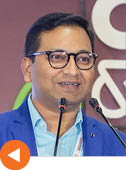
Mr. Amol Kalsekar, Director – Marketing, International Copper Association India (ICAI)
Mr. Amol Kalsekar opened his address by introducing the organisation as a not-for-profit body representing the copper industry. He explained that ICA India works extensively to support the UN Sustainable
Development Goals and to strengthen India’s electrical safety, clean energy transition and circular economy goals. Speaking about stakeholder engagement, he said, “We are working with various ministries like the Bureau of Indian Standards, Ministry of Renewable Energy, Bureau of Energy Efficiency and many others, and under our Green and Healthy Building Initiative we train more than 10,000 electricians, contractors and consultants across India on safe electrical installation practices.”
Drawing a comparison between India’s rapid economic rise and its troubling safety record, Mr. Kalsekar noted that although India is emerging as one of the top three global economies, the country is simultaneously placed among the top three nations with the highest electrical accidents. Highlighting this contrast, he said, “As far as electrical accidents in our country are concerned, we are amongst the top three countries where the accidents are more, but when we talk about the economy, we are aiming to be amongst the largest three.” Referring to NCRB data, he stressed the severity of the issue, stating, “Around 13,000 fire incidents were registered in India during 2020–23, and approximately 14,300 people died due to electrical accidents.” He described this as a “sad state of affairs” directly linked to the poor condition of electrical infrastructure.
Speaking about the role of wires and cables, he reminded the gathering that they are “the veins of all electrical infrastructure,” and therefore central to the safety of both buildings and non-building structures. He outlined four major reasons behind electrical failures- faulty design, defective materials, workmanship and lack of verification, while clarifying that his focus would remain on the first two factors. Emphasising the importance of proper design, he said electrical systems must consider current-carrying capacity, derating, choice of insulation and conductor class, and should follow the guidelines set out in the National Electrical Code of India and the National Building Code of India.
Mr. Kalsekar highlighted one critical misconception in the market related to cable sizing. He said, “There is a myth in the system that for a particular load a certain size is fine, but that is just a myth. We need to select the size of cables depending upon the short-circuit capability and the tripping time of protection devices.” He also underscored an important safety mandate from NEC and NBC regarding aluminium conductors. “Our National Electrical Code of India and the National Building Code of India specifically say that aluminium conductor sizes less than 16 square millimetres cause termination problems leading to heating at the terminal and hence the possibility of fire, and so they say only copper conductor should be used for conductor sizes less than or equal to 16 square millimetres,” said Mr. Kalsekar.
He pointed out another key requirement regarding emergency systems, stating that circuit integrity or fire survival cables must be used for emergency lighting, lifts and firefighting systems. He reinforced the importance of adhering to standards by citing a powerful line from regulatory documents. “The current carrying capacity as claimed by the manufacturer under normal conditions may reduce up to 50% depending on the situation and method of installation,” he said. This, he stressed, places significant responsibility on consultants, installers and consumers to choose the right cable for the right application.
Mr. Kalsekar also addressed widespread confusion over cable categories such as FR, FRLSH, HFFR and FS, noting that such terminology is uniquely prevalent in India. He explained that internationally cables are broadly classified into halogen-free and fire survival types, and said, “There is always confusion created in the market, whether to take FR, FRLSH, HFFR or FS cables because normal audiences are not aware of these terminologies.” He clarified the differences among these types, stressing that HFFR cables, governed by IS 17048, offer “no smoke and no spread of fire,” making them far safer than conventional FR and FRLSH categories.
Discussing the copper-versus-aluminium debate, he referred to ICA India’s thermographic studies in commercial and residential buildings aged 5 to 30 years. He said, “We found issues such as overheating, oxidation, hot spots, termination clearance problems, expansion and contraction and various other parameters highlighting the risk of short circuit when aluminium conductors were used compared to copper.” He reiterated that NEC and NBC advise exclusive use of copper conductors in conductor sizes up to 16 sq. mm and in high-risk buildings such as hospitals, airports and metro stations where human density is high.
Mr. Kalsekar then addressed the widespread belief that copper cables are expensive, countering it with data from construction economics. He said, “The cost of wires in any building is not more than 1 to 1.5 percent of the total construction cost, yet wires and cables are responsible for more than 70 percent of fire incidents in the building. So the idea that copper cables are costly is a myth.”
Also Read: Wire & Cable India Emagazine Nov-Dec Issue 2025
Turning to compliance issues, he pointed out that despite standards like IS 17293 for solar DC cables and IS 17505 for fire survival cables being mandatory under the Quality Control Order, many tender documents, both government and private, still fail to follow them. He emphasised that non-adherence to mandatory standards is a punishable offence. He then presented an example of misleading market practices, citing a cable manufacturer that labelled its product as “HRFR LSH E-beam aluminium conductor class 5 as per IS 694.” Calling this out, he said, “IS 694 clearly says that the conductor shall consist of plain or tinned annealed copper conductor and does not allow aluminium for class 5, and there is no mention of E-beam technology in IS 694. Something is really wrong in our system if such mislabelling is allowed to reach the market.”
Mr. Kalsekar concluded with a strong reminder about the legal and safety implications of non-compliance, saying, “If we do not follow the standards, codes and regulations, it can severely impact us in terms of safety as well as jurisdiction.” He urged manufacturers, consultants, developers and installers to prioritise correctness over convenience, and to ensure that electrical systems are designed and installed in full alignment with Indian standards to prevent avoidable fire tragedies in the future.