

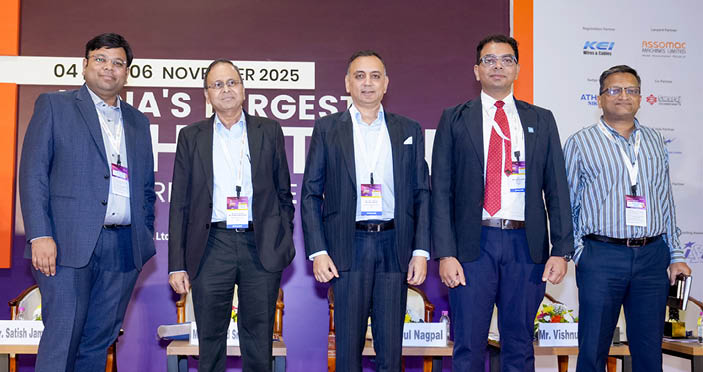
The session addressed the theme ‘BharatNet and the Futuristic Promise of 6G Technology’ on November 04 at CWF 2025 where panelists Mr. Pramod Srivastava, Chief Executive Officer, Westcoast Optilink; Mr. Vipul Nagpal, Founder & Managing Director, Orient Cables India Limited; Mr. Vishnu Patidar, Senior Analyst, Base Metals, CRU; and Mr. Deepak Sanghi, Executive Vice President & Head – IP & Transport, Wireline Network, Bharti Airtel; discussed about the different phases of BharatNet and its contribution to the optical fiber and optical cable industry. They also examined 6G technology and how it will push the telecom infrastructure and will increase data speed and connectivity at unprecedented rate that has never been imagined before.
Watch: Top Cable Companies in India
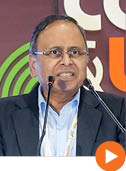
Mr. Pramod Srivastava, Chief Executive Officer, Westcoast Optilink
Mr. Pramod Srivastava opened his address on the topic ‘BharatNet and the futuristic promise of 6G technology’. He began by recalling the evolution of BharatNet that originally started in 2011 under a different name, the National Optical Fiber Network (NOFN). The initial objective of NOFN was to connect blocks to gram panchayats across the country. Under this initiative, 250,000 gram panchayats were to be connected through a linear optical fibre topology. The project was entrusted to various public sector undertakings (PSUs) for execution. The phase one of the NOFN project was completed, with 100,000 gram panchayats connected with it. Following this, the project was put to hold, and the entire working model of this project was discussed. The discussion suggested involving private companies to co-built this network and create a model with viability gap funding. It was believed that monetization of the network could be done by leasing the dark fiber, or by selling the bandwidth. The government decided to pay the difference between the capex and the monetization.
With the ‘Digital India’ drive coming into picture, the government once again started thinking about this ambitious project. There was a rebirth of this project and it was renamed as BharatNet from NOFN.
This time there was a noteworthy idea of the public-private partnership (PPP) model and the involvement of the progressive states, that could come forward and build this network. A few states came forward and decided to share the cost to try to build this network. And that’s how BharatNet came into existence in 2017. Certain states like Maharashtra, Telangana and Gujarat tried to build their own network. So Maharashtra came up with the ‘Mahanet’ project, Telangana came up with the ‘T-Fiber’ project and Gujarat came up with the ‘Gujarat Fibernet’ project. That’s how the implementation of phase 2 started. This phase also took its own time to further connect the blocks, gram panchayats, and the district headquarters in the ring topology.
A lot of discussion happened about the technology, switching and routing. Some preferred IP-based MPLS technology, while others talked about MPLS-TP technologies. And finally, there was a mix of these technologies which has gone in phase two that continued till March 2025.
One significant development that happened during this time was the boom in e-commerce as well as the UPI payment. This required connectivity even in the remotest part of India, including villages. So, while formulating the strategies for phase three, it has been considered that the project must not stop at the gram panchayat level but transcend to the villages. More than 600,000 villages in the country get connected to the gram panchayat in phase 3. ‘‘For this, the country needs to deploy 1.4 million kilometers of cable additionally in three years’ time and further, operations and maintenance of this project will take another seven years,’’ says Mr. Pramod.
There is a growing interest from the large infra players and the project got awarded to a lot of diversified industrial houses, including EPC players, system integration players and large infra players. ‘‘The requirements for this project have already started flowing in. So this will bring a lot of positivity for the optical fiber industry and cable industry in general,’’ he says.
Taking the discussion forward, he says, ‘‘This national asset which is being built across the country is not only going to improve India’s GDP, but is also going to contribute towards the digital economy. We expect India to become the world’s third largest digital economy by 2030, and this project is definitely going to prove itself as a very strong vehicle for this vision.’’
He further says, there has been a discussion in the last few years about 6G technology or the sixth generation technology, which is definitely going to bring real speed in communication. ‘‘The speed in 4G was around 100 Mbps, which would be close to 10 Gbps. From there, we are going to leap to 1 Tbps connectivity in the 6G network, which is going to drastically increase the surfing or net downloading time for the users.’’
Talking about the fusion between BharatNet and 6G technology, he says, the government is spending a lot of time and effort to develop and build 6G capability in India, and supply this technology across the globe. The government has already set up different subcommittees, and global capability centers (GCCs) that are working to bring 6G technology in the country. Once we get a robust optical fiber network in place, then riding 6G technology on that optical fiber connectivity is really going to give Indian users a true feeling about the connectivity and next generation application that people, especially the Gen-Zs are dreaming about.
‘‘Optical fiber is an important element of this 6G experience and to provide true 6G experience to the masses, we have recently started an optical fiber project in Hyderabad. We have our second cable manufacturing facility in Hyderabad after Mysore. So, we have two manufacturing facilities for cable and optical fiber as backward integration. Being a part of the large SK Bangur group, a legacy-rich and highly respected industrial house, we are quite committed to this revolution in the country,’’ he concludes.

Mr. Vipul Nagpal, Founder & Managing Director, Orient Cables India Limited
Mr. Vipul Nagpal gave a macro view on the cable industry, and explained the overall demands for the cables, particularly the optical fiber cables and networking cables (broadband cables). He said that India is a shining beacon of growth today. “If you compare India, vis-a-vis major economies, our GDP growth rate is the highest in the world, roughly about 6.5% and projected to grow at about similar levels in the next few years. If you look at per capita GDP, the growth rates of India vis-a-vis the USA, Germany, China, or the UK, it is roughly about 8.5%, compared to around 3% for some of these countries.”
He adds that one might think that it is an overhang of the COVID-19. When the world was shut down, suddenly there was a boom in cable demands and now one is unsure whether such demand will be possible in the future. “Well, the good news is that the demand will continue, in fact the growth rate projected for the next five years is from 5.3% to 5.6%, for the overall wire and cable market. And if we talk about optical fiber cables within that, it is about 5% of this entire market, that’s about USD 11.1 billion, which is projected to nearly double in the next five years to about USD 20 billion. The broadband cable market in itself grew at about 10% in the last six years and is projected to grow at about 10.5 % in the next five years. So it means that in the next five or six years, the market size is going to double. And if we go into the geographic distribution of this demand, it is coming from the Middle East region and the South American region,where the growth rates are somewhere highest. There is also a large quantum of business coming from this APAC region, primarily from India and China.”
So drilling down to this trend, the broadband cable market is divided into two segments, optical fiber cable and the networking cable. He says, “Today, the optical fiber cables are roughly about three-fourths or 75% of the entire broadband cable market and going forward, it will carry a lion’s share in business, and within that the growth rate for optical fiber cables is about 16%, and networking cables is close to about 20%. And the market for optical fiber cables is supposed to double in the next five years.”
There are millions of broadband subscriptions, fixed wireline networks. “The number for India is 39.3, whereas the similar number for China is 636. That is a staggering number. So this number is roughly about 18 to 19 times in China.” So there’s a huge headway for us as a country to see the growth of broadband, wireline, fixed broadband connections.
“If you see the percentage of fixed broadband in India in terms of number of households, as compared to other countries, one can observe that in France, the percentage is 49%, in Germany, it is about 46%, in China, it is about 45%, but in India, it’s less than 5%. So, less than 5% of Indian households today are connected with broadband connections.” So one can only imagine what is the trajectory for growth in the coming years. Again, this equates to higher demand for cables, optical fibers, networking towers, hardware, and everything that goes along with this ecosystem.
“Apart from residential and commercial applications of optical cables, one point that I want to particularly highlight is the growth of data centers.” With the Government of India mandating that the country’s data must remain within national borders, there has been a surge of development of data centers in India. India, being a vast nation with the world’s largest population, is driving an enormous need for robust, high-capacity digital infrastructure. A lot of investments are directed towards data centers with Reliance, Amazon and Google setting up data centres on the domestic soil. This is creating a very dense space for cables. And not only data centres, but the entire ecosystem that needs to be built up around it also requires cables.
Talking about the number of fixed broadband subscribers, “In FY 2019, there were 18.5 million wired broadband subscribers and then it reached 40.41 million in FY24 and is expected to double to 96-108 million in the next five years. So it’s a massive 19 to 22% growth in this segment.” Not only that, within households, the amount of data consumption is increasing exponentially. As the appetite for data is increasing at a staggering rate due to Netflix and other OTT platforms, the DTH is vanishing. Further, video calls are driven by data, and all these trends will surge with the coming of 6G technology. Not only that, a lot of new applications will be supported by this dynamic technology, running several gigabytes (tetrabytes) per second.
Moving forward, he highlights how Reliance and Airtel are doing a great job in the 5G and fixed wireless domain, in terms of their investments. These two companies are constantly increasing their network by going to remote areas for building connectivity. The government is also doing its fair share. With initiatives, like BharatNet, the government is bridging the digital divide between cities and rural areas. Further, a National Broadband Mission has been launched to ensure that data is available to every single person in the country. Locally, some schemes are formulated to incentivize ISPs that are actively providing data, FTTH connection, and wireless/ wireline connections to rural, low paying customers.
There’s also some speculation around Starlink with people wondering why was BharatNet even needed when Starlink is already creating market disruptions? One could easily connect a village via Starlink, and then distribute it through a local ISP. Although there are a lot of advantages to this technology such as last mile inclusion in remote areas, and in cases of disaster relief, or accidents, the biggest challenge in this new technology is the cost. “The monthly subscription of Starlink is about USD 120 dollars with an additional cost for hardware. People in India are used to Airtel and Jio having monthly plans for INR 400-500 with zero cost upfront. So, I believe that this new technology is great but it’s going to have a limited impact on the wireline broadband and the traditional model.”

Mr. Vishnu Patidar, Senior Analyst, Base Metals, CRU
Mr. Vishnu Patidar shared the global perspective about the developments in the optical fiber cable industry. He says “In 2025, the global optical fiber cable market will grow by 1.7%. This growth is actually followed after two years of contraction. The overall consumption of optical fiber cable around the world this year is expected to be around 533 million FKM. For next year (in 2026), the market is projected to grow by 4.4% while the overall consumption is expected to cross 556 million FKM.’’
China, holds the biggest share in both optical fiber and optical cable production and consumption. However, it has been contracting consistently because of the saturation both in production and consumption, which is impacting the global dynamics. He emphasized that it is the time for the global industry to actually closely monitor the situation. The Western European market is expected to remain flat, while Eastern Europe is expected to see a modest growth, from the Czech Republic, Balkan countries, and Hungary. But, in general, the growth of Eastern European countries is miniscule volume-wise. ‘‘If I talk about the Middle East, it is growing consistently in terms of optical cable demand because of the infrastructure investments, their IoT, and oil and gas related requirements.’’
He adds, North America is actually the best performing region as the demand in the North American market is growing at a single digit this year (2025) and expected to grow at the double digit for the next year (2026). It is one of the best performing markets that has actually caught the attention of the global producers around the world and everybody trying to cater to this particular market. The major factors driving the demand in the North American market is the consistent investment from the telecommunication companies towards fiber network build outs, especially in the US and the data center related developments. The US is far ahead in terms of data center sectors than any other country in the world.
The Asia Pacific region is expected to grow by 4.5 % year on year in 2025, with India being one of the major contributors to this growth, having around 27% share in the regional demand. We expect the Indian market to grow this year as well.
China and Western Europe are mainly witnessing contraction in production activities, due to the lower demand in the major countries there. The cost of production is another factor which is driving this contraction. A lot of global producers have actually mouthballed their optical fiber and optical fiber cable production units. A lot of them are in the process of shifting those units to Eastern European countries where we have also seen a lot of cluster building, especially in countries like Poland and Hungary. Poland is one of the biggest markets for this segment as the resources are readily available. So companies are shifting their bases from Western Europe to Eastern Europe, which enables them to enjoy a much lower cost of production.
The Middle East, Saudi Arabia, UAE, and Kuwait are also driving the demand. In the recent past, there has been an influx of new factories in these regions. For example, Atmel, a Scottish producer, has built a new factory in Abu Dhabi. Local producers like Arabic Fiber Optic Cable Company (AFOC), and Taihan Cable and Solutions have set up their factory in Kuwait and recently ZTT has initiated its optical cable production facility as there are strict local content mandates in those countries. The global producers that aim to cater to the Middle Eastern market need to have their presence in the region.
‘‘If I talk about other Asia Pacific, the optical cable production is expected to grow by 7% year-on-year in 2026. Focusing on India, the country’s total internet subscribers, based on the recent government data, has actually crossed the 100-crore mark. The composition includes 94.5% mobile wireless subscribers, 4.6% wired internet subscribers, and 0.9%, (almost 1%,) FWA subscribers,’’ he says.
Among the total internet subscribers, over 2 crore are narrowband subscribers and 97 crore are broadband subscribers. Urban Internet subscribers are around 57.94 crores while rural subscribers are also not far behind, which is more than 42 crores in India.
As of December 2024, the infrastructure of the telecommunication towers is around 1 million and there are 3 million BTS units installed. The operators are actually shifting their focus to 5G-enabled BTS installation. Initially the pace of installation was quite high. But in the recent past, the pace has slowed down a little bit. The Indian demand is projected to grow by 5.4% year-on-year in 2025 and is expected to reach around 17.6 million FKM.
This projection is actually adjusted. Earlier this year, we were expecting double digit growth because of some of the developments like BharatNet projects. But the demands have been subdued due to the slow procurement activities from telcos and slow execution of BharatNet has actually prompted the downward revision. Reliance Jio’s procurement remains slow as they are focusing on FTTH that requires low fiber-count cables. Their procurement is also slow in terms of FKM volume. Airtel, on the other hand, is actually procuring at a steady pace but they have recently concluded their bidding for a FY 25-26 procurement cycle, after several months of delays. This delay is expected to be due to some kind of implication in the domestic demand as well. However, one of the major factors for the subdued demand has been the slow execution of BharatNet phase 3. Even now, some of the packages are still at the bidding stage. And that is one of the major things concerning the industry. However, prior to this project, there was no demand in the industry. The companies had to venture out of India to keep their machines running and at the same time were also facing duties from one of the major markets like Europe. Amid those kinds of developments, BharatNet phase 3 actually actually brought little relief for the optical fiber cable industry in India.
‘‘This year, we expect the optical fiber production in India to contract by 4.7%. The optical cable production in 2025 is expected to rebound and to grow by 1.6 % year-on-year.’’
In CRU, we also tracked the global prices of fiber types, especially the prices for G.652.D and G.657.A1 fibers. By complying with International Organization of Securities Commissions (IOSCO) norms, and working with the global producers and consumers of optical fiber around the world, our last bimonthly survey assesses the global fiber pricing index, which has been studied for more than six months. The assessment states that the global fiber prices in the US, China, Europe, and India, have gone up which is good news for the industry, but not for the cable producers, especially those based in India.
In China, we have seen the prices of G652D have grown by 10%. In India, the fiber prices have grown by 5.4%. In Europe, the fiber prices increased by 2.8%, and in the US, where the fiber prices are already three times higher than that of China, the prices again went up by 1.5%. Being one of the biggest markets, China has its influence in the global prices. There is an interesting trend which is going on in China where a certain demand of G65782 fiber type has picked up and in order to cater to that demand, almost all the producers in China, has actually allocated half of their fiber drawing capacity to produce G65782 fiber, which has created an artificial supply crunch for G652D, thereby increasing the fiber prices in the country. At the same time, fiber prices around the world are growing as well.
In India, future projections indicate a positive demand for cables. However, cable prices are not increasing at the same pace, while raw material costs continue to rise rapidly. This is putting significant pressure on manufacturers, leaving them with very narrow margins. It’s a trend that warrants close monitoring moving forward. The Indian exports have seen substantial contraction of both-optical fibers and cables. The contraction is around 27% contraction in 2023, and around 32% contraction in 2024. In 2025, the exports is recovered, but we need to keep in mind that the base number in 2024 was quite low. Indian producers have seen anti-dumping duties as one of the biggest support. But even after having countervailing duties, I don’t think it is going to have a drastic material impact. If we talk about the influx of Indian products into the European market. This again is going to hamper the margins of the producers who are actually catering to that particular market.
However, Indian producers in the recent past have actually seen a good momentum of exporting their products to the US market. They are actually riding on the growth phase of the US, driven by the data centers demand. A lot of producers, especially those who can offer the cables for DCI (data center interconnect) application, with products like Intermittently Bonded Ribbon (IBR) cable, have seen a huge surge of exporting from India to the US market.
Data centers are one of the factors driving the demand for optical fiber cable around the world. The optical fiber cable consumption is expected to grow in this particular application by 52%. Around 32.6 million FKM is expected to grow only to cater to the demand of data centers around the world.
A lot of investment is happening in the US market, especially from the major hyperscalers like Amazon, Google, Meta, and Microsoft, who are investing heavily in this particular sector. This will increase the demand of optical fiber cable, not only in the US market, but also in the Chinese market, and hopefully in the Southeast Asia market as well. ‘‘We expect that a lot of investment from hyperscalers will also come to the Indian market as well, ‘’ he concludes.
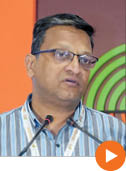
Mr. Deepak Sanghi, Executive Vice President & Head – IP & Transport, Wireline Network, Bharti Airtel
Mr. Deepak Sanghi talks about the bandwidth consumption and demand side of the story. He said that being part of Airtel, since the last eight years, he has seen consistent growth in data on the B2C side, roughly 30% annual incremental growth in data, and it’s only bound to increase in the coming times.
During this journey, there has been an evolution of the B2C side, including mobile internet and fixed internet that have evolved from 2G, 3G, 4G, and now currently in the 5G phase. ‘‘With every generation, we have seen at least a 10x growth in requirement and this trend is likely to continue with the 6G network. A similar trend is visible in data speeds. Earlier, users operated at just a few kilobytes per second. Today, 1 Gbps plans have become routine, and with technologies like XGS-PON, we may soon see 10 Gbps speeds delivered directly to homes through FTTH networks,’’ says Mr. Deepak.
On the B2B side, there is a similar evolution. The lease line requirements have jumped from some 100 of Mbps to 100 of Gbps and even terabits. ‘‘So this 10x factor just continues after every 2 to 3 years. We are seeing that the bandwidth growth is exploding on multiples of 10, and the next three years will not be an exception.’’
Talking about the 6G technology, he highlights that there is a large set of consumers which are yet to adopt 5G in true sense. The masses in rural India are yet to have a feel of 5G in true sense. He says, ‘‘We still carry a large chunk of 4G subscribers across Airtel, Jio, Vodafone India, even BSNL. So there is a good chunk of the population that still has to witness benefits and utilization of 5G technology.’’
He further emphasized on fiber saying that it is a major aspect that is gaining traction in India and around the globe. Even satellite constellations like Starlink or Amazon’s Project Kuiper, cannot sustain without fiber at the backend. So fiber is the second most strategic asset after spectrum.
He adds, there are four principal aspects in fiber that I would like to put on the table. First, coverage, which is the most popular and relevant parameter that is needed to cover every nook and corner of the world, connecting homes and even data centers. Talking about the fiber kilometers, he says, ‘‘In India, the fiber kilometres on a per capita basis is pretty low. So there is a lot of headroom even if we include the BharatNet program into the picture.’’
The second most important aspect is the capacity of fibre. The bandwidth is growing, and the physics of optics is touching its limits. There is no readily available equipment that can pack more capacity in the same fibre strand now. ‘‘Earlier, we used to see 4X growth every 2 to 3 years in the same fiber strand. But now that journey has stopped and we have come to a standstill. So, if the capacity has to increase, we need to have more fiber pairs in a single strand.’’ The cables with 12 pairs or 48 pairs of fibers will not be enough. There will be a need for more cables with more fibers.
The third aspect about building fiber is the quality. He says, ‘‘In India, we witness a highly unstable public infrastructure, and a large chunk of fiber networks are getting destroyed and damaged every year due to uncontrolled construction, and unregulated construction. So this needs to be strengthened.’’
Finally, he talks about the last aspect, that is, sustainability. He says, BharatNet, with its timespan of nearly 15 years, has lost in terms of speed and sustainability. The concept was great and probably one of the most ambitious projects around the globe at the time of conception. But over time, it has lost on the sustainability aspect. On the evolution side, fiber capacities are running out. There is a limited capacity that can be packed in a fiber strand. There are new inventions taking place such as ‘holo-core fiber’ that gives a promise of increased capacities as well as lower latency. ‘‘Latency is not a hot topic today but it will be a topic of debate in time to come, especially when data centers are flowing and flocking to India.’’
He further says, India is 20% of the global population and we see more and more data centers coming to India because we represent a good chunk of the population and an even higher chunk of data percentage globally. So data centers have to have land in India.
FTTH is another critical aspect of fiber and largely responsible for growth in volumes. India is largely under-penetrated on the FTTH side. BharatNet has seen a long journey. The architecture and some of the aspects of the project could have been put right from day one but nevertheless things have improved in phase two and phase three. The isolated build from Tehsil to DHQ has almost been fixed and stitched with the BSNL backbones, paving the way for proper commercialization and usage of BharatNet.
Also Read: Wire & Cable India Emagazine Nov-Dec Issue 2025
On the challenge side, fiber is tough, but Right of Way (ROW) is a bigger challenge. It is the legal right to pass through public or private land to build infrastructure like fiber optic cables. There are massive opportunities to combine our effort across industry, particularly entities that enjoy ROW, be it railways, roads, or power and gas. ‘‘Today, large companies are operating in silos, and if we continue to do so, we continue to bear the damage of roads and constructions,which in turn damage a lot of fibers. As a result, India as a country will suffer because we are devoid of stable infrastructure.’’ He adds, there have been a lot of efforts from the Centres of Influence (COI) recently to bring everybody together. ‘‘We see traction in power lines where entities, state transcos have started leveraging their OPGW builds. Many of those transcos today have laid cables that are only 12-pair or maybe 24-pair. But we anticipate that most of these power lines are going to get upgraded very soon to 96-fibre or maybe more.’’ The same is true on the gas pipeline side and even railways. NHAI has initiated a very aspirational project after large debates whereupon they are planning to put fiber all along the national highways which is a comparable if not bigger project than BharatNet.
‘‘Lastly, I believe, we are at a turning point in India. As operators, we continue to build roughly around 50,000 to 60,000 kilometers of fiber lines every year and I don’t see any stoppage in this in the time to come. On the 5G front, we have a fraction of our sites laid with fiber but for 6G, we will need fiber on every site for sure. This means that the requirement for fiber cables will increase three to four folds in the future.’’
He adds, ‘‘The time has come where we all need to put our energies across industries and on the supply side. We also need to focus on some of the aspects that probably we haven’t touched, particularly on the services side, which is equally a big industry as manufacturing of cable.’’
There is a big chunk being spent on the services side. The challenge today is not whether one can build cables, but the speed and the volume of cable rollouts. The industry needs to focus their energies on India-specific rollout technology and evolution, that will add to the speed along with volumes, in the wire and cable industry.