

In an exclusive interaction with Wire & Cable India, Mr. Joshua Bruni, Foreign Sales Manager, Fainplast shares that many Indian companies are growing fast in technology and quality- resulting in global competition. He sights this as the engine of business giving foreign players the kick to innovate to stay competitive. Fainplast has implemented new technology, sensors and measurement systems together with more powerful softwares and AI to improve the quality of its compounds and reduced percentage of non-conform products for high quality wires and cables.
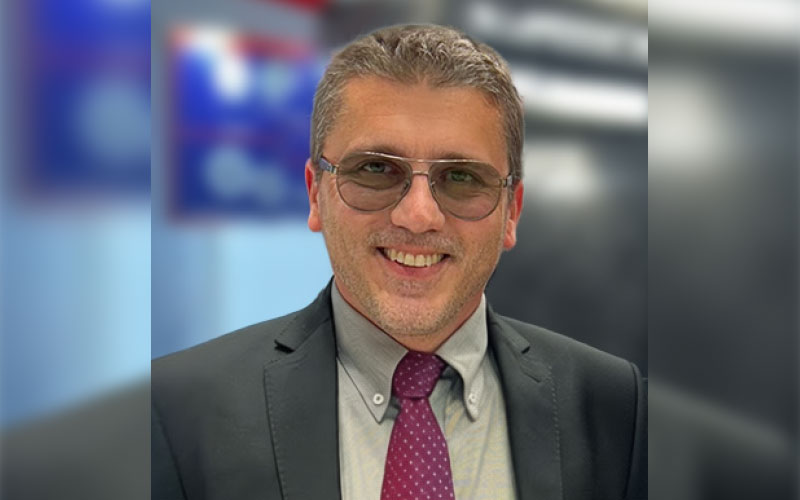
Wire & Cable India: Please briefly outline your company’s cable and wire industry product focus, including key technologies, product types, and principal end-use sectors.
Joshua Bruni: Fainplast is highly focused on plastic compounds for cables, being in this major market for several years. Besides the production of specialty PVC compounds for cables, Fainplast is a global leader in the production and supply of LSZH thermoplastic and crosslinkable compounds that find an increasing use in many types of cables with specific focus on power and signal cables for public buildings, renewable energy and data centers.
Watch: Top Cable Companies in India
WCI: Within your core product segments, how would you characterise current demand conditions and order visibility?
JB: Despite the global geopolitical uncertainty and the high cost of conductive metals that is influencing the demand for cables and its isolating materials, we see a long term positive uptrend for this industry driven by the global increase in per capita energy consumption and growing use of digital technology.
However, as the uncertainty and high costs remain, long term projects and main infrastructure projects struggle to take off.

Many cable manufactures now understand how it is important to invest in new technology to improve productivity, cable performance and increase their product portfolio towards segments with higher margins.
WCI: Within your manufacturing offerings, how do you currently assess investment sentiment among wire and cable producers, particularly in emerging markets such as India?
JB: I think the wire & cable sector has a bright future with new and established companies and strong investments in production capacity is fulfilling the growing demand for cables.
Many cable manufactures now understand the importance of investing in new technology to improve productivity, cable performance and increase their product portfolio towards segments with higher margins.
The growing idea of globalism, as we have known it, is getting to an end of course and influencing their decision to invest or buy locally and import raw material and machines.
The result of this is a major focus on local supplies and this helps the regional market to be more integrated. As a matter of fact, we see many Indian companies growing fast in technology and quality and we face more competition but this is the engine of business and gives us the input to stay always ahead of the market.
WCI: Which customer or application requirements are currently exerting the greatest pressure to improve productivity and quality within your product range?
JB: The customers always push for more performing materials to gain competitive advantages and reduce costs. So this is a mega trend that is always there since I remember but of course in this moment, we see a specific request for materials having higher flame retardancy or products that are formulated with more sustainable, less dangerous raw materials or with raw materials that have a better and safer supply chain.
Additionally the customers are investing on new technology to improve their productivity and also search for materials that are able to perform well at high line speed.
WCI: Which manufacturing disciplines, automation measures, or quality-assurance practices have delivered the most tangible improvements in your yield or rework reduction?
JB: The implementation of new technology, more sensors and measurement systems together with more powerful softwares and in some cases AI has improved the quality and reduced percentage of non conform products but has also had a devastating impact on the right evaluation of human competence.
In 2026, we still think there is no specific technology that can have a higher impact on quality and productivity than the human capital of a company.
Fibre optics and data cables will get benefit with massive investments in AI and data centers and it’s possible there will be a more intensive use of cables as the automotive industry move towards EV.
WCI: How are sustainability and decarbonisation goals translating into practical changes at your company?
JB: The megatrend of sustainability and decarbonization is doing its part within the cable industry. We see many major cable manufactures putting a lot of emphasis on reducing their carbon footprint and selecting their partners based on such principles, and in Fainplast we have done the same in the last couple of years.
We have taken giant steps towards reduction of our carbon footprint. But on the other hand, we see a very pragmatic approach in the cable industry that is typical of B2B markets where the physical, thermal and electrical properties of the materials have always been a priority. A cable must be a “green” cable but still must guarantee its performance in time. With more emphasis for sustainability, we see instead in markets where the products have a short lifetime and the performance in time of the materials is not so important.
WCI: How are cost pressures across raw materials, energy, or logistics being managed without compromising product reliability or compliance?
JB: We work daily to find alternative sources of raw materials, to improve our logistics costs and we have massively invested to reduce our energy costs.
In 2025 we have completed the installation of rooftop solar panels for a total energy production capacity of 3.5 MW that together with our cogeneration plant helps reduce our energy costs and dependence from the power grid.
We see a specific request for materials having higher flame retardancy or products that are formulated with more sustainable, less dangerous raw materials or with raw materials that have a better and safer supply chain.
WCI: How has the wire and cable industry benefited, in practical terms, from automation or real-time digital control?
JB: Automation and real-time digital control is helping the cable industry deliver more reliable cables and reduce inefficiency.
WCI: Looking ahead three to five years, which wire & cable segments or applications are most likely to drive the next investment cycle?
JB: In the next few years, I do not think there will be a specific cable segment that will drive the market. Of course it’s possible that some segments will gain bigger shares of the market.
I think, for example, fibre optics and data cables will get benefit with massive investments in AI and data centers and it’s possible there will be a more intensive use of cables as the automotive industry move towards EV, but in general, I think there will be a big need of cables in many regions of the world that are still not fully electrified or in developed countries where the current infrastructures are not adequate and need to be replaced with more powerful networks.
WCI: How do you see India as a market?
JB: India is the most populous country in the world, so of course there are big expectations for this market to grow. I think the political stability in the last few years has helped India towards this growth but I think there are still many cultural and ideological challenges that India must face. Every time I visit India, I see a country that is rapidly growing but still deeply bound to its history and traditional values so I think India must find its own path towards modernization. A path that hopefully will not be just a path of brutal capitalism where a few become very rich and poor people remain poor but where better living conditions and some wealth can come for everyone and western stereotypes do not cancel the heritage and peculiar beauty of Indian civilization.