


As India’s power and telecom infrastructure scales up, APAR Industries Limited is advancing innovation focused on high-ampacity, low-loss, and green solutions. In an exclusive interview with Wire & Cable India, Mr. Manish Agrawal, CEO, Conductor & Telecom Businesses, APAR Industries Limited, & MD, APAR T&D Projects Pvt. Ltd., discusses APAR’s innovation-led product portfolio and the role of reconductoring with advanced HTLS conductors in increasing capacity, enhancing reliability, and enabling N-1/N-2 redundancies across existing transmission corridors.
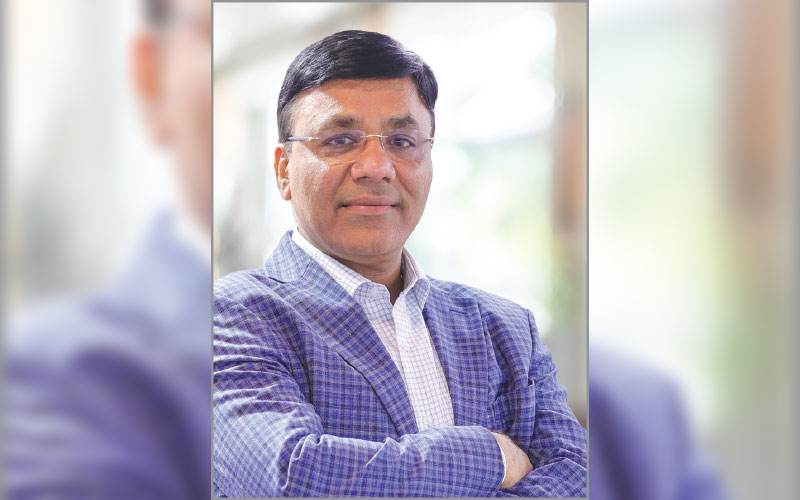
Wire & Cable India: To begin with, could you tell us what’s new in the conductor and telecom division at APAR?
Manish Agrawal: We are expanding our manufacturing capacities in India to meet growing domestic demand under the Make in India and Atmanirbhar Bharat initiatives, while also targeting opportunities in export markets.
APAR’s Product-Led Innovations Strengthening Power Networks: Our focus remains on developing innovative, high-performance conductor solutions for next-generation transmission needs. For new lines, we have introduced advanced AL59 solutions, including AL59 Plus, offering high ampacity, low losses, and reliable performance in harsh environments; and have been proposed to the CEA for upcoming greenfield renewable projects. Shaped-wire designs—round, trapezoidal, and Z-shaped—utilise over 85% of conductor diameter, enhancing ampacity, reducing losses, and optimising line efficiency.
APAR’s coated conductor technology improves thermal performance by enhancing emissivity and absorptivity characteristics, enabling up to 25% higher current-carrying capacity while significantly reducing transmission losses.
Our ACCC Info Core design has integrated optical fibres into its core to continuously monitor core integrity, ensuring defect-free installation and reliable operation.
Through HTLS reconductoring, we are upgrading existing transmission corridors efficiently, leveraging current infrastructure for faster, cost-effective capacity enhancement.
Our MVCC solutions up to 33 kV enhance efficiency, reduce losses, and improve network safety and reliability. With UV-resistant XLPE insulation, they are ideal for challenging environments—including monsoons, high winds, coastal or polluted areas, forests, and residential or commercial corridors.
APAR’s Optical Phase Conductors (OPPC) combine power transmission and optical communication, enabling cost-effective last-mile and large-scale fibre expansion across 11–33 kV medium-voltage networks, particularly in urban and space-constrained corridors where OPGW or ground wires are absent.
This year, we plan to offer extra-high-voltage underground turnkey cabling solutions, while continuing our focus on developing next-generation, greener conductor solutions with high ampacity and low losses.
Speaking about our Telecom Solutions business, we continued to broaden our reach, delivering end-to-end OFC networks for leading private telecom operators, while also marking our presence in the Railways sector. In partnership with Indian Railways, we are building robust telecom infrastructure—fibre networks and towers along railway corridors—to support the safety-critical Kavach system, reinforcing secure and reliable rail operations.
Further, we created a new business vertical—GridComm—focused on operating and monetising existing OPGW dark fibre assets through PPP frameworks to unlock additional value for the telecom and digital infrastructure ecosystem. Under this, we secured our first order from Karnataka Power Transmission Corporation Limited (KPTCL), covering the operations and monetisation of approximately 6,100 km of fibre network for a period of 15 years.
Watch: Top Cable Companies in India
WCI: Which products are currently the most exciting for you, both for present and future markets?
MA: As stated earlier, the solutions that stand out today and for the future are those delivering high ampacity and lower losses, driving both performance and value for our customers. Aligned with this, our portfolio—including ACCC (trapezoidal and Z-shaped), AL-59 Plus, and coated conductors—is highly innovative and advanced.
Complementing these are our ESG-driven green products—CTC, PICC, and ACCC-ULS—which improve transmission efficiency, reduce carbon emissions, and extend asset life. Notably, CTC, introduced a few years ago, has now been mandated by the CEA for transformer windings above 400 A, creating strong domestic and export potential.
On the optical front, OPGW and OPPC solutions address high-speed data and telecom needs in medium-voltage, urban, and space-constrained networks. In addition, hybrid and submarine cables are emerging as high-growth strategic segments, driven by 5G expansion, data centers, and global connectivity, offering significant long-term opportunities domestically and internationally.

Reconductoring offers a faster, scalable alternative by leveraging existing corridors to increase power transfer capacity—often up to two times—while reducing losses and extending asset life by 25–30 years, without the complexities of new land acquisition.
WCI: What kind of global market footprint does APAR have today?
MA: Our global footprint spans 140+ countries and some of our largest export markets include North America, South America, Middle East, Europe, Africa, and SAARC countries.
WCI: Have the recent sanctions impacted your business in the North American market?
MA: Yes, there was an initial impact. The U.S. imposed a 50% duty on our products, which put us at a disadvantage compared to manufacturers from countries such as Bahrain and a few others, who were able to price their products more competitively.
Following a review, the authorities applied Section 232 tariffs uniformly across all supplying countries, including Bahrain and others.
As a result, all exporters are now subject to the same 50% duty, regardless of country of origin. The earlier 40–50% cost disadvantage we faced has now significantly narrowed, effectively restoring a level playing field.
With this parity in place, we have started receiving RFQs and orders again, and the market impact today is substantially lower than it was earlier. In fact, momentum has begun to pick up, and business activity is gaining traction once again.
This year, we plan to offer extra-high-voltage underground turnkey cabling solutions, while continuing our focus on developing next-generation, greener conductor solutions with high ampacity and low losses.
WCI: Looking ahead, what developments can we expect from APAR in the conductor division?
MA: With respect to developments, our focus is on ESG, ensuring that our products and operations contribute to lower carbon emissions, higher energy efficiency, and long-term environmental responsibility. We are also embracing automation across manufacturing and operational processes to improve precision, productivity, and quality while reducing lead times.
In terms of solutions, we have been developing high-ampacity, low-loss solutions that enhance performance and reliability across transmission and distribution networks. These innovations are designed to meet evolving power demands while optimising efficiency and network resilience.
In the railways copper segment, we have introduced Copper–Magnesium (Cu-Mg) catenary wires and Copper–Silver (Cu-Ag) contact wires. APAR is the largest Indian supplier of copper conductors to Indian Railways and the first Indian company to develop and supply copper conductors for the high-speed bullet train project.
WCI: Why is reconductoring particularly important for India at this stage?
MA: Reconductoring is especially critical for India today because transmission expansion is constrained far more by land availability and approvals than by technology. With a population nearing 140 crore, acquiring new Right-of-Way (RoW) for greenfield lines has become time-consuming, costly, and uncertain. This is reflected in recent execution gaps—only 81 per cent of planned transmission line additions were achieved during the 13th Five-Year Plan, with similar shortfalls continuing thereafter due to RoW and land acquisition delays. Reconductoring offers a faster, scalable alternative by leveraging existing corridors to increase power transfer capacity—often up to two times—while reducing losses and extending asset life by 25–30 years, without the complexities of new land acquisition.
Regulatory developments are now reinforcing this shift. The Central Electricity Authority has revised RoW norms for HTLS conductors, clearly defining reduced corridor requirements across voltage levels and terrains, making reconductoring administratively smoother and quicker to implement. Together, persistent RoW constraints, execution challenges in conventional expansion, and enabling regulations place India at a pivotal point where reconductoring emerges as one of the most practical and cost-effective pathways for grid augmentation.
Technologies such as HTLS-ACCC® support this transition by enabling capacity expansion within existing infrastructure while facilitating renewable integration and long-term reliability. Going forward, reconductoring should be evaluated as the first option for capacity enhancement, with its feasibility assessed before undertaking any greenfield transmission expansion.
Also Read: Havells Building Resilient Supply Chain Through Collaboration & Quality Focus
WCI: Are there any policy recommendations or forms of government support that you believe would benefit the industry?
MA: Yes, there are several policy measures that could meaningfully strengthen the industry and accelerate India’s power transmission ambitions. First, reinforcing the Make in India and nation-building agenda through higher minimum local content requirements would help build resilient domestic manufacturing capabilities and reduce import dependence. Second, faster conclusion and rationalisation of Free Trade Agreements (FTAs) would improve market access and enhance the global competitiveness of Indian manufacturers.
Additionally, policy support to encourage the adoption of HTLS conductors for new transmission lines—particularly in urban and forested areas—would enable higher capacity deployment with lower Right-of-Way impact. Enhanced export incentives are also important to allow Indian players to compete effectively with subsidised global suppliers, especially from China. Finally, regulatory recognition and support for loss capitalisation would improve project economics and encourage utilities to invest in high-efficiency technologies.
In partnership with Indian Railways, we are building robust telecom infrastructure—fibre networks and towers along railway corridors—to support the safety-critical Kavach system, reinforcing secure and reliable rail operations.