

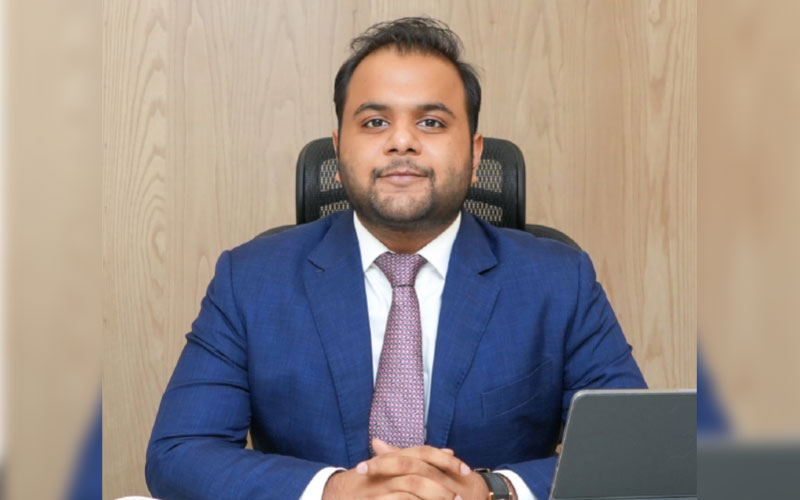
In an exclusive interaction with Wire & Cable India, Mr. Pranav Bansal, MD & CEO, Bansal Wire Industries Limited, highlights that India’s strength lies in its ability to combine large-scale manufacturing, deep engineering expertise, operational agility, and a competitive cost structure. At Bansal Wire Industries, this positioning is reinforced through continuous investments in advanced galvanising and surface treatment technologies, process automation, and robust testing infrastructure, laying a clear roadmap to scale capacity to 6 lakh MTPA. The company also collaborates closely with customers during product development and qualification stages, delivering customised wire solutions tailored for high-performance and demanding applications.
Wire & Cable India: What will you showcase at WIRE Düsseldorf to highlight India’s technological capabilities and manufacturing excellence to a global audience?
Pranav Bansal: At WIRE Düsseldorf 2026, we will showcase how Indian manufacturing has moved decisively from being a cost-driven sector to being technology-led and application-focused industry. Our emphasis will be on high-performance steel wire solutions for power transmission, renewable energy, automotive and specialised industrial applications, where consistency, fatigue performance and long service life are critical.
From our perspective, we will highlight our new-generation manufacturing infrastructure, including our roadmap to scale towards 6 lakh MTPA of capacity. Equally important will be our capabilities in advanced galvanising, surface engineering and precision process control, which enable longer spans, lower sag and superior corrosion resistance for demanding grid and infrastructure projects.
We also intend to demonstrate how Indian companies are building robust quality systems, traceability and certification readiness to meet global procurement standards. The larger message is that India is now capable of delivering not only scale, but engineering depth, customised solutions and long-term reliability positioning the country as a serious manufacturing and technology partner for global customers.
Watch: Top Cable Companies in India
WCI: How do platforms like WIRE Düsseldorf help Indian manufacturers connect with global markets and customers?
PB: Global trade platforms such as WIRE Düsseldorf create a unique opportunity for Indian manufacturers to move beyond transactional engagement and build strategic, long-term relationships with international customers. They allow direct interaction with OEMs, EPC players, utilities, distributors and technology partners who are actively evaluating new supply chains and manufacturing bases.
For Indian companies, these platforms are particularly valuable in demonstrating engineering capability, production maturity and compliance readiness in a transparent and credible environment. Customers are increasingly interested in understanding how suppliers manage quality systems, sustainability practices, digital manufacturing and scalability areas where Indian manufacturers have made significant progress. Such exhibitions also enable deeper technical discussions around application requirements, qualification cycles and regional regulatory frameworks.
At a time when global customers are consciously diversifying sourcing and building resilient supply networks, platforms like these play a catalytic role in integrating Indian manufacturers into global value chains and positioning India as a reliable alternative manufacturing hub.
WCI: What key global market insights are you hoping to gain and bring back from WIRE Düsseldorf?
PB: Our primary objective is to gain early insight into how global customers are redefining performance expectations for wires and cables in the context of energy transition, digital infrastructure and advanced industrial applications. We are keen to understand emerging requirements related to higher operating temperatures, longer service life, improved fatigue behaviour and enhanced corrosion protection.
Another important area of learning will be regulatory and compliance evolution, covering sustainability reporting, product traceability, environmental performance and responsible sourcing. These factors are increasingly influencing supplier qualification and long-term contracts. We also look forward to learning from global technology providers on advances in wire drawing, coating technologies, energy-efficient processes and digital quality systems.
Equally valuable will be insights into how customers are approaching supply-chain resilience, localisation strategies and multi-country sourcing models. Our intent is to bring these market perspectives back into our investment planning, R&D priorities and capability development so that the Indian wire and cable manufacturing ecosystem remains aligned with future global demand, rather than reacting to it after the fact.

Indian companies are increasingly presenting themselves through the lens of engineering capability, quality assurance, application expertise and long-term reliability.
WCI: How has India’s representation evolved at international trade fairs, and how do you contribute to strengthening India’s image as a global engineering hub?
PB: India’s presence at international trade fairs has evolved significantly over the past decade. Earlier, the focus was largely on capacity and pricing. Today, Indian companies are increasingly presenting themselves through the lens of engineering capability, quality assurance, application expertise and long-term reliability. We contribute to this shift by consistently positioning ourselves as a technology-driven manufacturer rather than a commodity supplier. Our investments in modern equipment, advanced galvanising and surface treatment technologies, process automation and testing infrastructure reflect this approach.
We also work closely with customers during product development and qualification stages, enabling customised wire solutions for demanding applications such as power transmission, renewable energy and automotive. In addition, strong governance practices, transparent quality systems and growing sustainability integration help build trust with global partners.
WCI: What core Indian manufacturing strengths differentiate you on the global stage? For what turnkey solutions is the world looking at India?
PB: India’s strongest differentiator lies in its ability to combine large-scale manufacturing, deep engineering talent and operational flexibility within a competitive cost framework. This allows Indian manufacturers to efficiently serve both high-volume programmes and specialised, application-driven requirements.
Our integrated manufacturing model, strong domestic sourcing ecosystem and multi-product capabilities enable us to offer consistent quality across diverse end-use segments such as power, infrastructure, automotive and industrial engineering. Another major strength is India’s rapidly maturing supplier and tooling ecosystem, which supports faster prototyping, localisation and continuous product improvement.
Globally, India is now being looked at for turnkey manufacturing solutions that go beyond production alone. These include application engineering support, customised processing, testing and certification readiness, scalable manufacturing and dependable supply continuity making India a strategic manufacturing and engineering base rather than only a low-cost sourcing destination.
India is increasingly well positioned to act as our global manufacturing base due to its expanding industrial infrastructure, improving logistics connectivity and a supportive manufacturing and export policy environment.
WCI: How are Indo-global collaborations helping reinforce India’s engineering leadership?
AG: Indo-global collaborations are playing a critical role in accelerating technology adoption and strengthening engineering practices across Indian manufacturing. Partnerships with international equipment suppliers, technology firms and global customers provide access to advanced processes, materials knowledge and digital manufacturing frameworks.
For companies like ours, these collaborations help shorten development cycles and enable the production of wire solutions that meet evolving global performance and compliance standards. They also expose Indian teams to international qualification systems, documentation practices and product validation processes, which are essential for deeper integration into global supply chains. Over time, such collaborations allow Indian manufacturers to contribute to product and process innovation, rather than only executing predefined specifications. This transition is vital for reinforcing India’s position as an engineering leader and for ensuring that the country plays a more active role in shaping future industrial technologies.
Indian teams are exposed to international qualification systems, documentation practices and product validation processes, which are essential for deeper integration into global supply chains. Such collaborations allow Indian manufacturers to contribute to product and process innovation, and this transition is vital for reinforcing India’s position as an engineering leader and for ensuring that the country plays a more active role in shaping future industrial technologies.
WCI: Which international regions are strategic growth markets, and how is India positioned as your global manufacturing base?
PB: We see Europe, the Middle East, Southeast Asia and selected African markets as key growth regions, driven by investments in power infrastructure, renewable energy, urban development and industrial expansion. Each of these markets presents different regulatory and performance expectations, but all require reliable and scalable supply partners.
India is increasingly well positioned to act as our global manufacturing base due to its expanding industrial infrastructure, improving logistics connectivity and a supportive manufacturing and export policy environment. The availability of skilled engineering talent and a strong domestic raw-material ecosystem further strengthens this advantage.
Our India-centric manufacturing strategy allows us to centralise technology investments, quality systems and process innovation, while serving multiple international markets with consistent performance standards. Similar is the case with our modular capacity planning and diversified product portfolio, providing flexibility to respond to quick project-based demand and regional growth cycles. This combination of scale, flexibility and engineering depth makes India a resilient and competitive manufacturing hub for supporting our international expansion.
WCI: How are cost pressures being managed without compromising product reliability or compliance?
PB: In today’s environment, sustainable cost management requires structural efficiency rather than short-term cost reduction. Our focus is on productivity improvement, energy efficiency, material optimisation and higher equipment utilisation to address inflationary pressures across inputs and logistics.
We are investing in automation and digital process controls to reduce variability, rework and wastage, which directly supports both cost competitiveness and quality consistency. Strategic supplier partnerships and improved demand forecasting also help stabilise procurement and reduce supply-side volatility. Importantly, we do not dilute testing protocols, certification processes or process discipline to manage costs. In fact, robust quality systems reduce long-term costs by minimising failures, claims and requalification cycles.
Our approach is to treat operational excellence and compliance as cost enablers rather than cost burdens. Predictable, well-controlled manufacturing processes ultimately provide the most reliable pathway to managing input pressures while continuing to meet global reliability and regulatory expectations.
Also Read: Group Nirmal: India Emerges As a Dependable Engineering Base for Wires & Cables Sector
WCI: How are sustainability expectations translating into changes in product design and manufacturing practices?
PB: Sustainability is increasingly influencing both customer purchasing decisions and regulatory frameworks. This is driving tangible changes across product development, manufacturing operations and supply-chain practices. We are prioritising reductions in energy intensity, improvements in material yield and process optimisation to lower the environmental footprint of our operations. New investments are being aligned with energy-efficient equipment, improved waste recovery systems and responsible water management practices.
From a product perspective, customers are seeking longer-life solutions, better corrosion protection and designs that reduce maintenance and replacement cycles. This directly shapes our R&D focus, coating technologies and surface engineering capabilities. We are also strengthening traceability and documentation systems to support growing expectations around responsible sourcing and sustainability reporting. Sustainability is not only a compliance requirement. It is a long-term competitiveness driver that enhances operational resilience, strengthens customer confidence and supports sustained access to global markets.