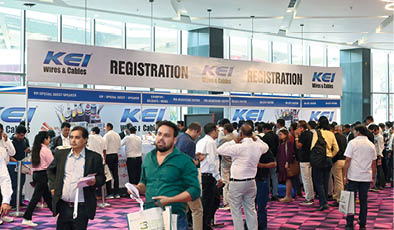


The 6th Edition of the Cable & Wire Fair (CWF) was the event’s largest and most appreciated by the industry yet. Organized by Tulip 3P Media Pvt. Ltd., Cable & Wire Fair 2025 concluded on a high note showcasing the country’s fastest growing innovations and technologies by 424 exhibitors from 4-6 November 2025 at Halls- 2,3,4 & 5 of Pragati Maidan, New Delhi, India. The co-located event held in Hall 6 — Tube & Pipe Fair — witnessed participation from 133 exhibitors, taking the overall exhibitor count to 557. Spanning 35,000 sq. m gross area, it is India’s Largest International Expo for the Wire and Cable Industry witnessed a very strong visitor footfall of 16,393.
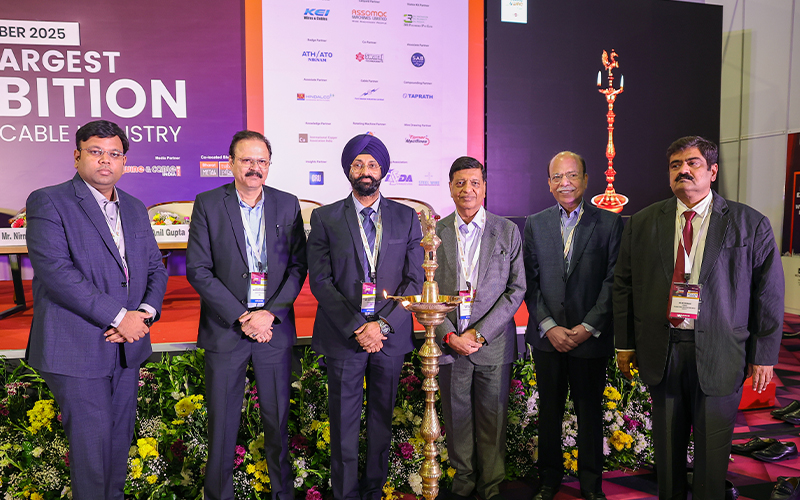
Since its debut a decade ago, CWF has evolved from 70 exhibitors in a modest 3,000 sq. m space to a flagship event now spanning 35,000 sq. m area and has grown 12x since its launch. The scale of CWF this year was unprecedented, reflecting not only the fair’s steady expansion but also the rising global stature of India’s wire and cable industry.
CEO Priyank Jain attributes this steady, rapid ascent to a focus on staying current—regularly surveying exhibitors and visitors to ensure that each edition meets technical needs and mirrors shifting market trends. Feedback has led to continual recalibration and innovation, making CWF the country’s fastest-growing showcase in the field.
Watch: Top Cable Companies in India
At the 2025 staging, the visitors saw the show floor packed with machinery, including equipment for drawing, extrusion, cabling, coiling, stranding and more. Attendees could analyze process efficiency, output quality, and technical specs firsthand, engaging directly with experts ready to field questions and discuss implementation. There was also a deep focus on materials: steel, copper, aluminum, specialty compounds, advanced polymers, and all manner of control, measurement, and testing systems were on display, along with finished product solutions such as steel wire, power cables, specialty cables and fibre optics.
CWF’s international profile continued to expand with 89 foreign exhibitors from 24 countries including Austria, Bahrain, Belarus, Belgium, Canada, China, Denmark, Estonia, France, Germany, Italy, Japan, Nepal, Netherlands, New Zealand, Norway, Oman, Singapore, South Korea, Spain, Sweden, Switzerland, UK, USA etc. For visiting professionals, it was a rare opportunity to benchmark competing global technologies, products, and solutions in one comprehensive venue.
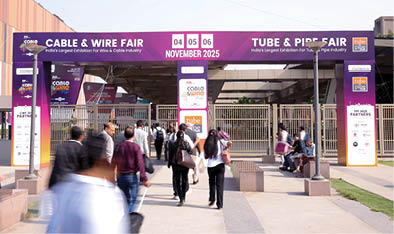
The show consistently draws a cross-section of the entire sector: management, plant owners, executives, senior engineers, R&D and procurement heads, and decision-makers from major cable users like railways, telecom, power, EPC, and renewables. CWF provides a balance between networking, business marketplace and a center for technical insight.
Another key asset is CWF’s two-day Technical Conference and CEO Conclave, which run parallel to the main exhibition. The conference agenda directly aligns with what’s happening on the show floor, with sessions focused on emerging themes such as- From ‘Make in India’ to ‘Made in India’: Competing in Global Cable Markets; Riding the Multi-Sector Growth Wave: Cable Demand Across India’s Expanding Economy; Future-Ready Power Networks: Smart, Safe, Green & Resilient; From BharatNet to 6G: Cabling the Next Wave of Connectivity; Steel Wire: Past, Present & Future – Building Strength Through Innovation; Smart Manufacturing: Technology and Material Science Behind Cables. These programs provide not only the latest knowledge but also a venue to network and brainstorm with industry leaders.
Also Read: Wire & Cable India Emagazine Nov-Dec Issue 2025
Jain said that what sets CWF apart is the balance of serious buyers and technical decision-makers—they can have detailed product discussions without filtering through multiple layers. The event draws both domestic and international visitors, and exhibitors often open new export channels. “We are thrilled with the outcome of Cable and Wire Fair 2025,” said Priyank Jain. “The enthusiasm from our exhibitors and attendees reflects the vibrant state of the cable and wire industry. This event not only showcases innovations but also fosters collaboration and knowledge-sharing that will drive the industry forward.”

The enthusiasm from our exhibitors and attendees reflects the vibrant state of the cable and wire industry. This event not only showcases innovations but also fosters collaboration and knowledge-sharing that will drive the industry forward.
As we look ahead, the Cable and Wire Fair 2027 dates will be out soon. We invite industry professionals to prepare themselves for another exciting event filled with learning, networking, and exploration of the latest trends and technologies.
DISCLAIMER
The information, including facts, figures, statements, and views presented herein has been reported directly from the CWF 2025 Conference, based on remarks made by the respective speakers. These details are reproduced in good faith and are intended solely for informational purposes. Any inadvertent errors, omissions, misinterpretation or discrepancies in facts, figures and ideas are unintentional and do not represent the views or opinions of the publication or its editorial team.
From ‘Make in India’ to ‘Made in India’: Competing in Global Cable Markets
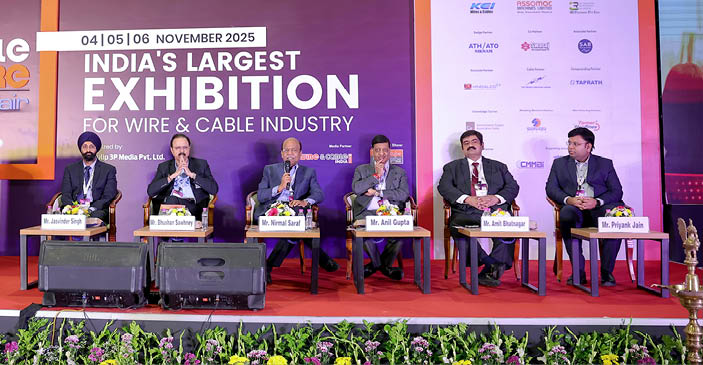
Today we are looking at a pivotal moment for India’s cable and wire industry, a point where the journey from ‘Make in India’ to ‘Made in India’ is no longer an aspiration but a national priority. The global supply-chain landscape is shifting, the China+1 opportunity is real, and the world is looking for reliable, competitive, innovation-driven partners. India has the scale, the talent, the capacity and the zeal to rise and fill up the industry gaps.
The session ‘From ‘Make in India’ to ‘Made in India’: Competing in Global Cable Markets’, held at CWF2025 Conference on November 04, shed light on how India can strengthen its manufacturing base, moving decisively from assembly-led growth to true indigenous design-to-delivery capabilities. The session explores how the industry can localize raw materials, tooling, and engineering; align products with global standards; and build export-ready competencies that meet the expectations of international buyers.
Panelists Mr. Anil Gupta, Chairman & Managing Director, KEI Industries Limited; Mr. Nirmal Saraf, Managing Director, Nirmal Wires; Mr. Bhushan Sawhney, Chief Revenue Officer, Aditya Birla Group; Mr. Jasvinder Singh, Managing Director, Supermac Industries (India) Limited; Mr. Amit Bhatnagar, Founder, Diamond Power Infrastructure Ltd., discussed the trade dynamics shaping competitiveness– from tariffs and FTAs to logistics efficiency and non-tariff barriers, and examine how Indian manufacturers can position themselves as trusted global suppliers through quality, compliance, and innovation. As specialty cables, high-performance products, and differentiated solutions become essential drivers of global market share, India must strengthen its supply chain, product quality, logistics, customer centric approach and after-sales support to serve diverse geographies with agility.
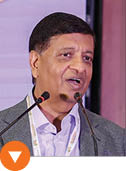
Mr. Anil Gupta, Chairman & Managing Director, KEI Industries Limited
“There were times when India used to feel threatened by neighboring small countries, but now time has changed and the new India makes eye-to-eye discussion with world’s leading economies”, firmly echoed Mr. Anil Gupta, in his naugural speech. Wire and cable is the backbone of the entire energy sector, and India is rapidly emerging as a global supplier in this sector. Mr. Gupta also drew attention on how important it is to strengthen the country politically and economically.
Emphasizing the importance of self-reliance, he highlighted that India’s long-term security and stability depend on strengthening its manufacturing and technological capabilities. “Until we build our economic might and technological strength, whether in artificial intelligence, information technology, or other emerging domains, we will continue to face external threats,” he noted.
He pointed to the defense sector as a strong example of the progress made under the ‘Make in India’ initiative. “One positive development in recent years is the significant momentum in the defense industry. India is now producing high-quality defense and wartime equipment– aircraft, missiles, and much more, under the Make in India banner,” he noted.
Further, drawing attention towards machinery manufacturers, while there are new players coming up in the industry, Mr. Gupta also put into perspective the importance of “getting the right machines, at the right price and also within the delivery time”. He noted, “The major problem that we face in India from the machine suppliers is the time commitment or delivery commitments are very poor and weak, which leads to a continued dependence on China, who can deliver the large machines maximum within six months at a much better price vis-a-vis Indian suppliers. And the quality is definitely undoubtedly good.”
He stressed that for ‘Make in India’ to become meaningful, the manufacturing ecosystem must evolve beyond intent. “Make in India can succeed only when machine manufacturers and cable producers strengthen their plant capabilities, vendor networks, and supply chains. They must be able to deliver equipment on time and at scale,” he added.
With a vision for the wire and cable industry, Mr. Anil Gupta talked about the development of the semiconductor industry after the government’s push for domesting chip manufacturing. “The government’s push for semiconductor manufacturing in India is finally taking shape, addressing the country’s massive annual imports. While initial production may not be high-end, significant infrastructure is now being built to support the future growth, design, and manufacturing of advanced semiconductors”, he said.
He stressed that the industry now carries a collective responsibility to build a quality-first culture. “Indian manufacturers are not just making products; we are creating a legacy of innovation. The quality mindset we build inside our factories is the foundation of a nation capable of exporting world-class products. We cannot have one standard for India and another for the world”, he emphasised.
“Our processes must be clearly defined, our quality assurance plans must be robust, and our in-process teams must be well trained. A good product is possible only when we check quality at every stage, from raw material to in-process checks to finished goods,” said Mr. Anil Gupta.
He highlighted that KEI’s journey is inseparable from the people who have built it over the years. “KEI’s growth story is also the story of every engineer, supplier, channel partner, employee, and electrician who has stood with us in powering the nation. Together, we’re creating impact at every level- from homes to highways, from cities to industries- pushing India toward becoming Viksit Bharat.”
With 40 years of experience, Mr. Anil Gupta urged the industry to be proficient in quality, to make it a part of our culture. “We have to benchmark someone. So, I think now is the time to benchmark our level of scale with China and level of quality with Europe. Then we’ll become a Viksit Bharat and a good ‘Make in India’ product”, concluded Mr. Gupta.
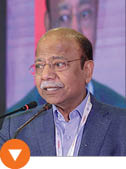
Mr. Nirmal Saraf, Managing Director, Nirmal Wires
“Dream like your customer and then make it a reality. That’s where success lies”, emphasised Mr. Nirmal Saraf, keeping customer needs paramount. He further drew attention towards what is actually the meaning and consequence of the ‘Made in India’ label for the manufacturers. “Once you have put the label of ‘Made in India’ on your product, you are putting the nation’s pride at stake. The product that has been made in India becomes primary, everything else becomes secondary. And that is the responsibility you take, that yes, I am putting my nation’s pride at stake, because if something goes wrong, if the product is not up to the mark, it is India’s name which is sullied. It is not just the brand”, said Mr. Nirmal Saraf.
Sharing the recipe of a ‘Made in India’ product, he said, “ There is one word which differentiates why your product will sell or why your product has got value. The difference between ‘also’ and ‘only’. Some things are also made in India, this product is also made in India, versus this product is only made in India. He elaborated that achieving this distinction requires complete self-reliance in design and manufacturing. “You have to do end-to-end designing and production here right from the basics,” he said. “When everything is done in-house, within the country, you gain the capability to make rectifications, to innovate continuously, and to keep improving your product.”
Emphasizing the essence of customer-centric innovation, Mr. Nirmal Saraf spoke about how the true success of ‘Made in India’ lies not only in meeting standards but in exceeding expectations and creating unmatched value. “Complying with a standard is like crossing a qualifying barrier,” he explained. “But to win the race, you have to go far beyond it. Business success comes when you consistently exceed your customer’s expectations.”
He further noted that innovation and value creation transcend trade barriers and pricing. “It doesn’t matter what your competition is doing or what tariffs exist,” he added. “If your product is truly innovative and valuable, customers will choose it regardless of cost. They will pay the price because the value you deliver outweighs it. Focusing on that value proposition is what will make ‘Made in India’ a resounding global success.”
Focusing on the importance of automation, he noted how humans are susceptible to making mistakes but while using automation, once the programmes are right, mistakes corrected once, cannot be repeated. “The more you automate, the more your quality is assured. There may be errors in programming or automation initially, but once rectified, they don’t recur. Human errors, however, can,” noted Mr. Saraf.
Highlighting an often-overlooked aspect of manufacturing excellence, Mr. Nirmal Saraf emphasized the role of packaging and supply chain management in defining product quality and customer experience. “It doesn’t matter how good a product is when it leaves the factory, what truly matters is the condition in which it reaches the end consumer. Your packaging and supply chain management ensure that the product arrives in perfect condition. No consumer will accept excuses like ‘the delivery person made an error.’ If a damaged product reaches the customer, the manufacturer bears the blame,” he noted.
He concluded by stressing the importance of robust systems that uphold product integrity through to delivery. “We must build strong delivery chains and design packaging that guarantees the product reaches the customer in flawless, usable form. Everyone else is part of the supply chain, but it’s the end consumer who truly matters.”
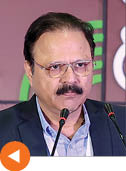
Mr. Bhushan Sawhney, Chief Revenue Officer, Aditya Birla Group
Mr. Bhushan Sawhney offered a fresh perspective of Swachh and Surakshit Bharat within the context of the wire and cable industry, emphasizing the critical importance of electrical safety. He urged the manufacturers to stop running towards speed, and focus on innovation and safety. Mr. Sawhney uniquely pointed out the need for customer awareness for the industry. Citing a relatable example on the importance of choosing the right product, he said, “I’ll not say that India doesn’t have a good product. It is available in the market. The real question is how aware are you about it. We buy a house worth INR 30 crore- INR 50 crore, maybe it is second-hand, maybe it is new- but nobody goes there and checks which wire is inside, how much load it can take. People are very particular about fancy tiles, about fittings, about decor, but not about the wire.”
Highlighting demand driven by electrician based influential selling, Mr Sawhney sights, “Eighty percent of the business is being run by the electricians. Selling is a good aspect, but I feel awareness is more important. When awareness will come, people will make decisions and buy the right product. Along with selling, it is also a moral duty to make people aware. Buy the right product.”
Having spent 25 years in the industry, Mr. Sawhney reflected on India’s progress in technology and innovation. “If you look around, you’ll see tremendous advancements– new machines, modern designs, and innovative solutions. But when we compare ourselves with international standards, we still find ourselves lagging behind,” he observed. Talking further about the future of technology in the wire and cable industry, he said, “ Imagine if the product itself could speak, it would say, ‘I’m going to burn, I’m losing my life.’ But that’s not the dream,” he said. “The future lies in innovation, in IoT-enabled cables that can communicate their condition, alert when replacements are needed, and ensure safety before failure occurs. This technology is not far away; we may soon see it in practice right here.”
In his closing remarks, Mr. Sawhney reflected on the enduring legacy of the Aditya Birla Group, which has stood strong for over 150 years. “As part of a 150-year-old legacy, we continue to live by the values that built this organisation,” he said. “It may be too early to define what we will do or how we will do it, but our purpose remains clear, to think beyond ourselves, to think about the nation, and to deliver the best products possible.”
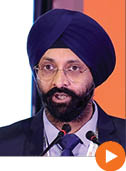
Mr. Jasvinder Singh, Managing Director, Supermac Industries (India) Limited
Mr. Jasvinder Singh began on a humble note, expressing his gratitude for being part of the remarkable transformation of India’s cable and wire machinery industry, a journey that has evolved from ‘Make in India’ to ‘Made in India’ since the initiative’s launched by PM Modi in 2014. Breaking the long-held stereotype that ‘Make in India’ equates to inferior quality, Mr. Singh highlighted the sector’s growth, potential, and promising future. He also urged manufacturers and suppliers to produce world-class products, emphasizing that the ‘Make in India’ movement is not just a matter of national pride but also one of trust and responsibility.
Drawing from his extensive industry experience, Mr. Jasvinder Singh emphasized that India’s manufacturing growth must go beyond capacity expansion to global brand recognition. “For a ‘Make in India’ product to truly become a ‘Made in India’ product, it must be built on trust in quality,” Mr. Singh remarked. “That trust comes from manufacturers’ unwavering commitment, not just to deliver, but to deliver on time and in line with the quality standards expected by customers worldwide.”
Mr. Jasvinder Singh noted the growing global acceptance of Indian manufacturing, while underscoring the need for continued progress and collaboration across the industry. “Indian cables and machinery are now being widely accepted around the world,” he said. “However, there is still a long way to go before we reach the benchmarks set by major European, Japanese, and American players. To achieve this, the entire industry must come together, each stakeholder must play their part in manufacturing, supplying, and delivering top-class products that meet the expectations of developed nations.”
Challenging the perception that ‘Make in India’ products imply inferior quality, Mr. Jasvinder Singh stressed the need to redefine this narrative. “Whenever the ‘Make in India’ concept is discussed globally, it is often associated with cheap products,” he said. “Yes, we enjoy a demographic advantage through affordable labour, but that should not translate into cheap quality. Instead, this advantage must be leveraged to produce superior-quality products at competitive costs– products that are more trustworthy, more innovative, and truly reflective of India’s manufacturing potential.”
Over the years, the government has played a pivotal role in supporting the cable industry through policy initiatives and infrastructure programs. From the launch of Smart Cities to new investments and development projects, these efforts have significantly contributed to the expansion of manufacturing capacities. However, Mr. Jasvinder Singh emphasized that growth must come with accountability. “It’s not just about expanding our capacities, we must also take greater responsibility,” he said.
Highlighting India’s growing presence on the global manufacturing map, Mr. Singh urged both manufacturers and suppliers to focus on quality excellence. “In the past, we relied on products made in Germany, Japan, or the USA. Today, we must build the same level of trust in products Made in India,” he stated. “That trust will come only when manufacturers produce with the genuine intent to deliver the best possible quality.”
In his concluding remarks, Mr. Jasvinder Singh called upon all stakeholders in the cable ecosystem, from suppliers to machinery manufacturers to unite in strengthening India’s global manufacturing identity. “I urge all my cable suppliers, cable machinery manufacturers, and allied partners to contribute towards building a ‘Made in India’ brand that earns global trust, one that stands at par with European, Japanese, or American products,” he said. “It is our national duty. Just as soldiers protect the nation at the borders, we have an equal responsibility to build a brand that is recognized and respected across the world.”
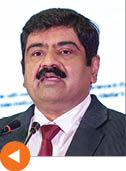
Mr. Amit Bhatnagar, Founder, Diamond Power Infrastructure Ltd.
Started off at the young age of 22 years, Mr. Amit Bhatnagar, with now 32 years of experience in the cable and wire industry, in his address focuses on the major bottlenecks of the sector, solutions, and an honest appeal to the manufacturers to trust more-and-more Indian suppliers and local vendors to strengthen and build a robust ecosystem which is truly ‘Made in India’.
Logistics, supply chain is considered the backbone of any business. Highlighting its importance, Mr. Bhatnagar said, “The biggest challenge our country faces is the cost of logistics and the time of logistics. How fast we can get our product out of the country and tell a global buyer that we are reliable and we’ll be on time.”
Emphasizing the need for technological self-reliance, he highlighted that India’s manufacturing ecosystem can advance only when large domestic manufacturers actively support Indian suppliers. “Technology is the second critical pillar,” he said. “Large manufacturers must become braver in supporting Indian suppliers. Unless we take the risk of using their products, our suppliers will never develop new technologies or invest in innovation because they believe Indian manufacturers won’t buy from them.” He explained that the reluctance often stems from specifications favoring international brands or a lack of confidence in domestic capabilities. “If major manufacturers collectively decide to promote Indian products, we can truly elevate the Indian supplier ecosystem to global standards,” he added. “A cable labelled Made in India cannot be truly Indian if 50% of its components are imported.”
Highlighting another critical pillar of industry advancement, Mr. Bhatanagar stressed the urgent need for focused skill development within India’s wire and cable sector. “After 32 years in this industry, I joined at the age of 22, I’ve realized that skill development is absolutely essential,” he noted. “Yet, we are not investing in it. There isn’t a single college in the country offering an ITI or diploma specifically in wire and cable technology, simply because the industry has not taken the initiative.”
Pointing to improvements already underway, he acknowledged the progress of domestic suppliers. “When I review production reports today compared to earlier years, the variation in output and quality has disappeared. Indian suppliers have matured. But unless we actively support them, they won’t grow– and if they don’t grow, neither will our competitiveness.”
He also highlighted scale as a crucial component for global relevance. “We must begin thinking in terms of volume and scale,” he said. “When I visited a cable company in China in 2016, I found that they had more CCV machines in a single facility than we had in the entire country. That scale is what drives global competitiveness, and that’s where we need to aspire to be.”
Mr. Bhatnagar emphasized that while challenges exist, the responsibility to transform India’s manufacturing landscape ultimately lies with industry stakeholders themselves. “There are many issues we need to address. We often say the government isn’t doing enough, but over the last 10–11 years, the government has been extremely proactive, doing far more than what was expected,” he said. “Now it’s our turn to open our minds, open our purses, embrace entrepreneurship, take bold steps, support Indian suppliers, and think at a global scale. Only then can we truly say our products are Made in India and globally competitive.”
He stressed that global competitiveness goes beyond cost. “Competitiveness is not just monetary. It’s about technology, product quality, presentation, delivery timelines, and overall customer experience,” he noted. “Across every input parameter, we are strong. What we lack is scale, logistics efficiency, and adequate encouragement for our suppliers. This must change.”
He called upon producers and manufacturers to take a holistic approach to growth. “The time has come to think in terms of global scale, ecosystem building, skill development, logistics, customer service, and more. If we move in this direction, I’m confident that as Modiji envisions, by 2047 we can achieve Viksit Bharat. And I hope that journey is driven by world-class, globally competitive ‘Made in India’ products.”

Riding the Multisector Growth Wave: Cable Demand Across India’s Expanding Economy

The session ‘Riding the Multisector Growth Wave: Cable Demand Across India’s Expanding Economy’ held on November 04, at CWF 2025 examined the rise in cable demand driven by concurrent growth in infrastructure, renewable energy, EV ecosystem, telecom/data, and real estate. Panelists Mr. Sandeep Aggarwal, Managing Director and Promoter, Paramount Communications Limited; Mr. Shashi Amin, Chief Executive Officer, Apar Cable Solutions, Apar Industries Limited; Mr. Saurabh Khedkar, President and CEO, Specialty Aluminas and Speciality Chemicals, Hindalco Industries Limited; and Mr. Abhishek Jain, Director Operations, Chandresh Cables Limited (AVOCAB) gave deep insights about the cable sector diversification, increasing opportunities for specialization and giving an understanding of sector-specific technical standards and procurement cycles that is key for cable manufacturers and suppliers.
India today stands at the cusp of infrastructural and renewable transformation with the wire and cable industry being the core of this change. The multi sectoral growth wave across India’s expanding economy is creating a huge demand and opportunity for the wire and cable manufacturers, suppliers and industry as a whole.
Mr. Sandeep Aggarwal, Managing Director and Promoter, Paramount Communications Limited
According to Mr. Sandeep Aggrawal, India currently stands at the threshold where the country’s manufacturing capability meets international standards. “So, today an Indian manufacturer is not afraid of competing with China, US, Germany or any other country.”
“India is now a USD 4 trillion economy with USD 900 billion coming out of export. Out of which USD 400 billion is the value added in the manufacturing sector. This is almost about 10%. But if you look closely, the total is close to 16%. Now the manufacturing sector needs to grow from 16% in 2025 to 25% in 2035 as per the government of India ambition and various schemes are coming to promote the ‘Make-in-India’ initiative in every sector, and in every possible way. So the manufacturing in the next 10 years has to go up by 15% minimum. That is the kind of growth rate which the manufacturing sector is eyeing. Each sector of India, from EV to solar to steel to power, will require huge amounts of technologically superior and new design cables. Each product which we will manufacture is going to add to the growth of Indian GDP and showcase the story of India, ’’ says, Mr. Sandeep.
Mr. Shashi Amin, Chief Executive Officer, Apar Cable Solutions, Apar Industries Limited
As per Mr. Shashi Amin, most of the cable companies are expanding their capacity. “The size of the cable industry is around INR 75,000 crore in FY24. The numbers of FY25 are yet to be finalized.”
He reports, ‘‘If you see the market product composition, 48% of the total composition is the low voltage cables, light duty cables constitute around 34%, medium and EHV cable around 13%, and the elastomeric cable is around 5%. And if one sees the CAGR growth for each and every segment, LV cable has grown at around 14%, MV cables is at 11%, EHV has witnessed a slight dip in FY20, but in the last three years, this trend is also moving in the upward trajectory. All put together, the CAGR growth of cables is around 12%.’’
Considering the growth of the wire and cable industry which currently stands at USD 9 billion, can easily become a USD 14 to USD 15 billion industry as there are various projects coming up within India. ‘‘As a manufacturer, and as a compound supplier, I think we need to enhance our capacity. Today, with the ‘China+1 strategy’, a lot of countries internationally are looking at India.’’
He further says, ‘‘If you look at the US consumption, it is around USD 50 billion as opposed to USD 9 billion in India. The EU along with the UK is around USD 42 billion dollars. We can expand our focus to international markets as there is a significant opportunity for us to capture. However, to make the most of it, we must consistently deliver high-quality products and ensure timely supply. Many customers in Europe and the US are increasingly looking towards India as a reliable sourcing destination.’’
As far as India is concerned, the government has set ambitious targets. The country aims to achieve 800 gigawatts of power generation capacity by 2030, reflecting a projected growth rate of around 6% CAGR. Additionally, the urban population is expected to rise from 31% to 40% by then. To support this growth, the government has already announced major initiatives — such as the National Transmission Plan including the grid strengthening program, and an INR 3 lakh crore RDSS project. Phase one of the RDSS project is nearing completion, and phase two is about to commence. These projects will generate substantial demand for cables, presenting significant opportunities for suppliers in this segment.
These figures represent the planned investment that will be directed towards strengthening the country’s infrastructure and power sector. For instance, while airports such as Jewar and Navi Mumbai are being commissioned, many other airports across the country are undergoing a major revamp. Additionally, several new metro lines are being developed nationwide. Overall, India’s infrastructure landscape is rapidly improving, and the government is actively investing in this segment to drive growth and modernization. The government is also planning to approve around 500 gigawatts of solar power projects. Notably, a 30-gigawatt solar plant is being developed in Gujarat by Adani, NTPC, and others. The government has also launched the Pradhan Mantri KUSUM scheme, which is driving demand for rooftop solar installations. As a result, the requirement for cables and wires—particularly panel and string wires, as well as evacuation cables for large-scale projects—is set to rise significantly. These are some of the major developments shaping India’s solar energy landscape.
Now coming to the wind sector, India currently has an installed capacity of around 40 to 50 gigawatts, and the government plans to increase this to 100 gigawatts by 2030. The sector is receiving strong policy support through measures such as wind RPO mandates, ISTS charge waivers, and generation-based incentives. The wind projects are significantly driving the demand for cables. Each wind tower typically requires cables worth INR 40–50 lakh, including tower cables, nacelle cables, and auxiliary cables, for this segment. Moreover, the government is focusing on both onshore and offshore wind projects, which will further accelerate growth opportunities in the sector.
In the Indian Railways sector, the government has set an ambitious target of achieving 100% railway electrification by 2030, which will substantially increase the demand for catenary wires. An investment of around INR 2.5 lakh crore has been earmarked for this purpose.
Alongside this, the Mumbai–Ahmedabad High-Speed Rail Corridor and bullet train project is progressing, and the government is also exploring the development of high-speed rail networks in different states.
The government plans to introduce 800 Vande Bharat trains — a significant jump from the 46 trains in operation. Furthermore, the development of Gati Shakti terminals for freight movement is also underway. In addition to it, India has about 1,200 kilometers of operational metro lines, and this network is expected to double within the next five years. These initiatives collectively highlight the government’s strong push toward modernizing and expanding the nation’s transportation infrastructure.
Another major area of focus is electric vehicles (EVs). The government has set a target for 30% of private cars, 70% of commercial vehicles, and 100% of buses to be electric by 2030. Achieving these ambitious goals will require a robust charging infrastructure across the country, which in turn requires a lot of cables. The government is actively seeking reliable suppliers to power the charging networks, making this another key growth segment.
Another segment that cable manufacturers should seriously consider is the defence sector. Under the Atmanirbhar Bharat initiative, the government is encouraging Indian companies to step forward and indigenize various imported products. Currently, a significant volume of cables is imported from countries such as Russia, Austria, and France. However, the government is now focused on promoting domestic manufacturing for these products. By 2028, it aims to ban the import of around 4,000 items across the Army, Navy, and Air Force, creating substantial opportunities for local suppliers in the Military, Navy or Air Force. The major expansions in the defence sector also includes new air freight carriers and the addition of 24 submarines — up from the current 12. This means the submarine fleet alone is set to triple in size, reflecting a significant increase in overall defence capacity.
The real estate sector is also booming. Property prices are rising, and consumer spending has also increased. The people are increasingly investing in luxury lifestyles. The government is also allocating about INR 1.5 lakh crore annually towards urban housing and Smart City projects, underscoring the sector’s growth potential.
In addition to this, a significant wave of data centers is coming up across the country. Global tech giants like Amazon, Google, and Microsoft, along with leading Indian players such as Yotta, CapitaLand, and CtrlS, are driving this expansion. Around 150 to 200 megawatts of new data center capacity is expected to be installed over the next 12 to 24 months. ‘‘Considering all these developments, I firmly believe that the cable industry is on the right track as far as growth momentum is concerned.’’
‘‘Even if we don’t achieve a 12% CAGR and instead grow at around 10%, the cable industry would still reach a size of USD 14–15 billion. However, one thing we must remain absolutely clear is the focus on quality products. Whatever we produce must meet the highest safety and performance standards. Safety is a critical aspect, and as an industry, we will need the continued support and collaboration of all suppliers and machinery manufacturers to work closely with cable manufacturers in enhancing both the quality and safety of cable products,’’ he concludes.
Mr. Saurabh Khedkar, President and CEO, Specialty Aluminas and Speciality Chemicals, Hindalco Industries Limited
Moving forward, Mr. Saurabh Khedkar said that the wire and cable is at a very interesting play point at this time. Anything and everything in the world, and humanity in general, is driving the growth of wire and cable. Particularly in India, the infrastructure, renewable energy and sustainability, telecom, processing power, AI, machine learning, electricity, housing, is working through the wires and cables. The growth in any of these sectors means the need for ample high quality, high performance,and technologically advanced wire and cables.
Talking about fire safety, he said that one out of 5 fire incidents happen in India. There are multiple incidents that have happened recently. The economic impact of these incidents, beyond the impact on life, is colossal. From there comes the need for fire safety and the need for flame retardants.
Flame retardant materials are essentially of two types. One is a halogenated flame retardant material, which is a high smoke flame retardant material, essentially made from chlorinated organic compounds as well as brominated organic compounds. But the more popular one globally is the non-halogenated flame retardant, which is the low smoke variant, made from aluminum trioxide, magnesium hydroxide and organophosphorus compounds. We, at Hindalco, are in the first part of this step, making the aluminum trihydrate.
Mr. Saurabh cited that the global flame retardants market is valued at USD 2.8 billion in 2024, and it is expected to reach USD 3.8 billion by 2033. Within this, the ATH segment accounts for around 40%, while brominated and chlorinated compounds make up about 20%. The remaining share comprises halogen-free flame retardant materials. Globally, the market is projected to grow at around 8%, but in India, the growth rate is significantly higher—estimated at 12–14%, and potentially reaching up to 15% if the current expansion plans materialize.
In India, however, the situation is quite challenging, as there was major dependence on imports for this material. Supplies primarily come from Europe and China, leading to variability and frequent disruptions. In recent years, factors such as the COVID-19 pandemic, global supply chain disturbances, container shortages, freight rate fluctuations, and geopolitical tensions have severely impacted the market. As a result, many domestic users have been forced to maintain high inventory levels to ensure business continuity and sustain operations.
Talking about the development in Hindalco, he says, ‘‘Hindalco has built India’s first and only precipitated superfine hydrate plant at Belagavi. We started working in the flame retardancy space about 10 years ago and back then, it was a protected technology held only by few people in Europe. And therefore, we decided to build this from scratch in the lab. So this is a flask to factory technology that we’ve built with our inventors at the Aditya Birla Science and Technology Company and at our Hindalco Innovation Center who have put it together. From the state of 100% import dependence for this important product, we have transitioned, and are hopeful that the market also transitions and grows to the domestic supply of Hindalco’s PPT-ATH production.’’
He further says, the cable industry is witnessing multi-sectoral demands leading to a double-digit growth. But growth alone is not enough. ‘‘As an industry, we will have to come together to make and deliver safer wires and cables to the world. We’ll have to work together on building the right standards such as IEC and the BIS certifications, which will stand the test of scrutiny across the world. The growth for the safe material will depend on the switch and the adoption of HFFR as a material of choice by the wire and cable manufacturers.’’
Value chain integration is another important aspect in the wire and cable industry. ‘‘We lose a lot of value in the movement of the material across the country. So co-locating facilities, making sure that we are always available to the clients is very important. It is imperative that we as an industry work together to develop and deliver the promise of global export excellence, focusing on the Make in India and Made in India labels.’’
‘‘I think the wire and cable industry is seeing a lot of growth, and the raw material suppliers are also catching up. Players like ourselves have invested heavily in making safer aluminum, copper, and aluminum trihydrate for usage by the wire and cable industry. So, let’s come together and deliver the promise of Swadeshi products under the leadership of our Prime Minister Modi and his vision for India,’’ he concludes.
Mr. Abhishek Jain, Director Operations, Chandresh Cables Limited (AVOCAB)
Mr. Abhishek Jain further walks us through India’s rapid expansion across multiple industries including energy mobility, data, real estate, that is driving a multi-sector demand wave for cables and how AVOCAB or any other manufacturer is taking benefit or should take a benefit out of it.
The market size of the cable industry in India is currently valued at USD 21 billion and is projected to grow to USD 33 billion by 2030, at a CAGR of around 9%. The country is not just growing, it’s transforming. Over the past decade, we’ve shifted from a consumption-led economy to an investment-led and infrastructure-driven economy. The GDP of the country has grown from USD 2 trillion in 2014 to USD 3.6 trillion today, and we are driving towards a USD 5 trillion economy in 2027, aiming for a USD 30 trillion economy under the Viksit Bharat Vision of 2047. Infrastructure capex is projected to rise from INR 3 lakh crore to INR 10 lakh crore by 2025. The National Infrastructure Pipeline projects worth INR 111 lakh crore are planned across key sectors such as energy, transport, housing, and logistics. India’s growth is not a headline, It’s a hardware story where every rupee of CAPEX translates into kilometers of wiring cable.
He says, ‘‘When we talk about wiring India’s growth story, cables form the nervous system of infrastructure — carrying energy and data and powering India’s growth engine. The country’s journey from a USD 4 trillion to a USD 30 trillion economy by 2047 will be built on connectivity, with cables at its very core. As India develops new highways, power grids, and digital infrastructure, our industry plays a vital role in ensuring safety, reliability, and efficiency every step of the way.’’
In 2025, India generated 1,821 billion units of electricity — a 5% increase over the previous year. ‘‘Our per capita power consumption has risen to 1,395 kilowatt-hours, marking a 46% jump over the past decade, though it still stands at just one-third of the global average. The country’s grid network has expanded to over 4.6 lakh circuit kilometers and is expected to reach 6 lakh by 2030, with transmission investments projected to exceed INR 10 lakh crore by 2032. This growth aligns with India’s ambitious commitment to achieving 500 gigawatts of non-fossil fuel capacity by 2030.’’
He further emphasized that cables are quite literally the arteries of this expansion. Every metro line, data center, and solar array translates into kilometers and kilometers of aluminum and copper conductors and cables — underscoring the immense scale and vital role of the cable industry in powering India’s growth. The global wire and cable market stands at around 28 million tonnes per year. India accounts for only about 6% of this, despite representing 18% of the world’s population. ‘‘Our per capita cable consumption is just 5–6 kg, compared to 15 kg in South Korea and 20 kg in Saudi Arabia — clearly showing how much potential lies ahead for India to reach developed-economy levels. In many ways, India is still underwired — and this gap between India and global consumption represents one of our greatest opportunities.’’
Earlier, cable demand was largely driven by utilities and power projects. Today, however, the scope has diversified into a robust, multi-sector ecosystem powered by five key growth engines — infrastructure, renewable energy, the EV ecosystem, telecom and data, and real estate.This broad-based demand ensures resilience and sustained growth for the cable industry in India, making it one of the most dynamic sectors driving the nation’s progress.
The demand for specialized cables — such as HFFR, fire-survival, and low-smoke halogen-free (LSHF) cables for metros and airports — has surged. Over the past six to seven years, technical specifications have become increasingly stringent, pushing manufacturers to upgrade their skill sets, technology, and innovation capabilities to stay relevant.
Looking at the renewable sector, the solar DC cables, which were non-existent 10 years ago in India, have started contributing significantly in the energy sector. Similarly, flexible and tinned copper cables for EVs and instrumentation cables for process industries are witnessing strong demand.
The design conversation is winning in today’s market with early engagement with consultants, EPCs, and OEMs to ensure specification approval and compliance even before the tender stage. It’s not just important to educate customers, but equally important to bring awareness among the consultants and stakeholders about the latest technologies and innovations available in the market — and how these can benefit them in the long run. ‘‘Often, the Indian mindset focuses on short-term cost savings rather than long-term value. As manufacturers, it is our responsibility to bridge that gap by demonstrating that while an advanced or innovative product may cost slightly more upfront, it delivers substantial savings and reliability over time. This proactive, collaborative approach builds trust and clearly differentiates us from commodity players. We don’t just supply products — we co-engineer solutions with our partners to deliver lasting value.’’
He further says, ‘‘When we talk about delivering a truly Make in India and Made in India product, it’s not just about serving the domestic market — it’s equally about catering to global demand.’’ Indian quality today commands global trust, and that’s reflected in the growing export footprint of Indian manufacturers. ‘‘AVOCAB, for instance, exports to over 20 countries across Africa, the Middle East, and Southeast Asia, where our products are being widely adopted. It is not just about traditionally following IEC or BS standards, but manufacturers around the world have begun accepting Indian standards as well. This not only validates the quality of Indian products but also gives us a natural edge in terms of both performance and cost competitiveness. So cables are not just a product, they are India’s industrial ambassadors to the world.’’
Viksit Bharat 2047 envisions a developed and energy-secure India, a mission led by our Hon’ble Prime Minister The initiative aims to achieve: 24/7 reliable power for all, net zero emissions by 2070 and 50% non-fossil energy capacity by 2030. Meeting these ambitious goals will require next-generation cables and cutting-edge technologies.
Building export-ready specs as per IEC and BS standards, the future of cable is not just about conductivity, it’s about intelligence, sustainability and performance. Every megawatt of energy transferred, every byte of data transmitted is travelled through a cable that is safe, smart and sustainable. Whenever energy flows, data travels, and infrastructure grows, there are always cables that enable it. India’s transformation is no longer about potential. It’s about the execution of powering a smarter world. So, let’s together wire India’s future.
Future-Ready Power Networks: Smart, Safe, Green & Resilient

The session themed ‘Future-Ready Power Networks: Smart, Safe, Green & Resilient’ conducted on November 04, at CWF2025 Conference examined the need for resilience in india’s power networks amid the increasing demand across sectors. As the nation expands solar, wind and distributed energy systems, the reliability and flexibility of transmission and distribution (T&D) networks have become central to sustaining this transition. This session set the stage for a deep-dive into how modern power systems must evolve to meet the demands of a rapidly changing energy ecosystem.
To be ready for the demands of the decades ahead, the power networks today need to be truly smart, safe, green and resilient. In the session, panelists- Mr. V.K. Bajaj, Senior President & Chief Technology Officer, APAR Industries Limited; Mr. Rajeesh Sharda, Executive Director, Fort Gloster Industries Limited; Mr. Benoit Lecuyer, CEO, Prysmian India & ACPL; Mr. Vishnu Patidar, Senior Analyst, Base Metals, CRU and Mr. Amol Kalsekar, Director-Marketing, International Copper Association India, shared their years of wisdom, challenges and suggestions to make the industry better and safer.
Mr. V. K. Bajaj, Senior President & Chief Technology Officer, APAR Industries Limited
Reflecting on APAR’s long journey since its establishment in 1958, Mr. V.K. Bajaj, shared that today the company has sales of around INR 20,000 crore, driven by three major verticals– oil and lubricant, overhead speciality conductors, and electrical and telecommunication cables. “Innovation is the hallmark for APAR… our tagline is ‘tomorrow’s solutions today’, and that is what is driving our innovative product solutions,” he emphasized.
Mr. Bajaj spoke at length about the future of aluminium conductors, particularly in low-voltage distribution. He explained how low-voltage cables, though not visible, form a crucial part of any network where reliability is essential. With rising copper prices globally, he noted a growing shift toward aluminium, but cautioned that aluminium presents its own challenges, especially at the contact points. He detailed how oxidation, heating and cooling cycles, thermal expansion, and the creep behaviour of aluminium can gradually degrade joints, increase contact resistance, and even lead to overheating or fire if not monitored. Explaining the concept of creep, he elaborated on how aluminium elongates under thermal cycles and does not fully return to its original shape, causing terminals to loosen over time.
He presented a comparison showing that while copper performs best, the 8000-series aluminium alloys behave far closer to copper than the commonly used EC-grade aluminium. He highlighted that countries like the USA have already switched 100% to 8176/8000-grade aluminium due to its superior mechanical strength, durability, corrosion resistance, and suitability for automotive and electrical applications. “In India, people are still using EC-grade aluminium… it is time we should look at 8000 series for long-term reliability and safer networks,” he advised.
Mr. Bajaj then shifted to the second major aspect– XLPE insulation. He pointed out that while Indian cables rely on 90°C insulation, the USA commonly uses 105°C insulation, which significantly impacts performance in high-temperature regions like Delhi or Rajasthan. “If insulation is 105-degree rated, then you have a cushion available to work even during the summer… 105-degree can actually give you more than 10% extra current carrying capacity,” he explained. He added that Indian specifications currently do not allow 105°C insulation and recommended working with BIS to enable customer choice.
Concluding his discussion, Mr. Bajaj reinforced his recommendation for the future: the adoption of 8000-series aluminium and 105°C insulation. “These can reduce O&M cost for network users and offer higher current carrying capacity,” he stated, adding that while the initial cost may rise by 3–4%, the long-term benefits far outweigh it. “If the circuit is down, the loss of revenue is much, much more than what we are talking.”
Mr. Rajeesh Sharda, Executive Director, Fort Gloster Industries Limited
Mr. Rajesh Sharda opened his address by briefly setting the backdrop of Fort Gloster, noting that the company belongs to the House of Bangurs, one of India’s oldest and most diversified industrial groups with strong leadership positions across cement, paper, jute, fashion jute and graphite. He underlined the company’s heritage by highlighting, “We were established in 1958, but incorporated in 1873, 74 years before independence. We have seen three centuries.” He also recalled the organisation’s pioneering role in the evolution of cable manufacturing in India, saying, “The first CCV line was brought into the country in 1979 by us. We partnered with Sumitomo Electric to bring the first cross-linking line when it became a global innovation.” Fort Gloster was also the first in India to produce 132 kV cables in 1989, and he credited the legacy to the group leadership: “It belongs to House of Bangurs and the Executive Chairman is Mr. Hemant Bangur.” The company today manufactures the full spectrum of power cables including LT, HT, control cables, aerial bunch and covered conductors.
He connected the theme of the session- smart, safe, green and resilient power networks, to the organisation’s own philosophy. “Our vision and mission statements talk about safety as a hallmark, concern for society and giving back to society,” he said, adding that Fort Gloster has invested INR 600 crore to modernise its entire facility. Entering the broader context, he emphasised that India today is expanding at an unprecedented pace, “If the globe is growing at 4%, we are almost growing at 8 to 10%.” He referenced the scale of investment saying, “We have INR 9 trillion planned between now and 2032, think about the kind of investment that is coming to India.” While this rapid progress offers tremendous opportunities, he pointed out that it also places enormous responsibility on the ecosystem to ensure that networks remain “safe, secure, smart, reliable and green.”
He focused on two major themes- trends and drivers. The first, he said, is India’s emergence as a digitally powered economy, where data mobility and smart grid investments are expanding rapidly. “There is mounting investment happening in the smart grid,” he pointed out. He reiterated that the national renewable policy’s target of 600 GW by 2032 is transforming the power landscape and creating new opportunity clusters. Calling data centres the fastest growing element of the digital backbone, he remarked, “Data centres are coming in a very big way, including AI, and the power networks of today and the future have a very deep impact on the overall economy.” With INR 2 lakh crore expected to flow into Indian data centres by 2030, he noted that even if only 2% of that capex goes to cables and wires, it translates into INR 4,000 crore of opportunity. But he cautioned that this 2% has disproportionate influence. “If this network is not going to be safe and secure and smart enough, it is going to lead to a lot of disruptions in the economy,” noted Mr. Sharda.
Mr. Sharda described smart networks as those with high reliability, strong safety and continuous monitoring capability. He emphasised that India must adopt real-time data, digital automation and predictive technologies similar to those used in Europe. “Smartness comes with continuous monitoring of the networks,” he said. He listed distributed time pressure sensing, DTS, partial discharge systems and dynamic line rating among others as essential tools for resilient grid performance. He explained how underground cable networks face thermal gradients that directly affect joints and terminations, leading to failure, flooding and prolonged outages. “Take the example of Bangalore, a highly underground network city, but we see the network going down for six to eight hours,” he said, noting that without real-time monitoring large urban centres will continue to face outages.
He observed that India is significantly behind global best practices. “The tenders in India do not have dynamic line rating concepts. Monitoring is seen as an add-on. We treat sensors as optional,” noted Mr. Sharda. He called cables “blind assets” unless we really monitor them well and underlined that BIS and CEA standards need to evolve to mandate rather than suggest smart monitoring. There is also a human capital gap, he said, “There is a lack of trained staff who can collate and analyse the data. We do not have SCADA integration.”
On safety, Sharda noted that while many compounds exist, including low smoke and zero halogen, their usage remains limited. “Ninety percent of the fires in India happen because of short circuits,” he reminded the audience, urging mandatory adoption of halogen-free jackets across metros and urban corridors. He recommended that India align with global fire safety standards such as IEC 60332, 61034 and 60754, and emphasised that safety depends not only on product technology but also on laying technology and EPC practices. “A lot of standards and SOPs have to be worked out. A lot of handbooks have to be created,” he said.
He then moved to the “green” dimension of power networks, calling it essential despite inherent challenges. Renewable energy’s intermittency, he said, introduces instability. “Green energy is not continuous energy, it creates a lot of imbalance in the system,” he cautioned. He argued for a full life-cycle perspective, saying India needs benchmarks similar to global construction product regulation guidelines to ensure reliability of XLPE insulation over 15–20 years. He advocated deeper policy changes including carbon footprint disclosure per kilometre of cable, use of bio-based polymers, discouraging lead and encouraging aluminium overlays. “Recyclability is one of the factors that we should emphasise,” he added.
He reiterated that India must move beyond L1 procurement. “India must move beyond lowest price tendering and reverse sustainability to align with net zero 2070 goals,” he said, stressing that reliability cannot be sacrificed for cost. A holistic resilience strategy, he emphasised, should involve cyclone-proof and flood-proof joint bays, hybrid overhead-plus-underground corridors and secure underground feeders for critical infrastructure. “This would ensure our grid can withstand cyclones, floods and security threats while keeping cost manageable.”
He concluded with a call to action, to standardise smart monitoring, mandate halogen-free jackets, localise LSZH advanced compounds, align with global certification models and prioritise skilling for digital power management. He ended with a reminder that the scale of growth must not overshadow quality, “Cables are the invisible backbone of a future-ready India and the choice we make today will decide whether our grid in 2047- Viksit Bharat, will be truly smart, safe, green and resilient.”
Mr. Benoit Lecuyer, CEO, Prysmian India & ACPL
Mr. Benoit Lecuyer began by introducing himself as the Head of Prysmian India and Associated Cables, explaining that the company operates through three structures in India, a factory in Chiplun near Ratnagiri, imports of cables from Turkey, Oman and Malaysia, and a joint venture near Pune which will soon become 100% Prysmian. He reiterated Prysmian’s global and domestic intent by adding, “We are living today in a very abrupt world, but we try to be an architect of the electrified world and shape a better future.” According to him, the last five years have transformed the industry dramatically. “Disruption brings energy, and when there is energy, there are opportunities,” he said, signalling a positive lens amid uncertainty.
He stressed that the first mega risk the world faces is longer power interruptions due to ageing grids. “The grid is like a backbone and we are asking from this backbone much more effort, muscle, brain and very often the bones break.” Large economies such as France, India and the US still operate grids that are 60–70 years old, exposing significant vulnerabilities. The second risk is longer outages driven by extreme weather caused by climate change, and he highlighted “towns totally devastated, whether it is in Dehradun, Valencia in Spain, in the US, in Canada.” These disruptions, he said, force the industry to imagine new solutions, much more resilient, technologically advanced, in order to withstand those adversities.
Mr. Lecuyer then highlighted the accelerating global shift toward electrification and the pressure it places on natural resources. “For the first time, we are speaking about resource shortage because copper is not renewable,” he said, warning that by 2032, 10–20% of global demand for aluminium and copper may remain unmet. “It will put a lot of pressure on the demands that all the projects have in India,” he cautioned. He spoke of a paradox that the industry must urgently solve, the coexistence of unemployment and a shortage of skilled labour. “There will be availability, but sometimes the mobility of the people is not optimum,” he remarked, adding that Prysmian is itself participating in developing skilled manpower through educational partnerships.
He underlined that cost has become one of the toughest challenges for the industry. Space constraints also play a defining role in energy infrastructure decisions. “Everybody wants wind energy, but no one wants to have near his garden those nacelles turning,” he remarked, describing why offshore wind is emerging as the most feasible and socially acceptable renewable solution.
He then shifted to opportunities that will dominate the next decade. Electricity demand worldwide, and especially in India is expected to grow sixfold by 2035. “It will require to build, in terms of generation, transmission, distribution, massive investments that we have not seen during the last decade,” he said. He noted that a new phenomenon, data centres, now absorbs staggering amounts of power. “All the information, the data, are kept on the cloud– and data centres consume a massive amount of energy,” he said, explaining why optical fibre and Cat7 cables have seen dramatic demand acceleration. With this, the market for cables is “going to grow every year more by six to seven percent.” He also highlighted growing consciousness around fire safety, “Consultants specify more and more fire-safe cables versus PVC, which will, of course, help us because the turnover will be much higher.”
He pointed to renewable energy and electric mobility as the biggest engines of demand expansion. Electric buses and rickshaws are soaring, and India is already the world leader in electric rickshaws. He added, “Electric water pumps, all of this massive element of renewable energy, will give a tremendous boost to our energy.” Alongside, geopolitical risk is fuelling defence and aerospace growth. “One of the major industries in defence which is growing is drones,” he said, describing drones, aircraft, nuclear submarines and aerospace cables as rapidly scaling opportunities. “In aerospace, our very light cables are multiplied by two,” he added.
Urban aesthetic goals and scarcity of land will also push utilities toward underground cabling. “Underground cables of 66 up to 400 kilovolt will skyrocket,” he predicted. He announced that Prysmian’s latest tests have concluded installation capability of superconductive cables “up to 600 kilovolt HVDC, which has far less losses than HVAC.” He highlighted the growing adoption of solar rooftops, saying, “The consumer can produce his own energy, maybe he can also sell to the grid. Who would have thought about that 10 years ago?” On offshore wind, he said, “The government is doing a tremendous job to improve the ports,” but also acknowledged a bottleneck, “When you want to create offshore wind farms, you need vessels with a carousel of 5000 kilometres, and today these vessels are fully booked until 2030.”
Artificial intelligence, according to him, is reshaping the landscape, both positively and negatively. “Artificial intelligence has reached a moment which is becoming huge opportunities, but also a danger,” he observed. For the cable industry, AI increases demand for “low voltage, Cat6, Cat7 optical fibre,” while also enabling predictive maintenance and virtual plants. On the risk side, “cyber engineers criminal work” and cyberattacks require robust preventive strategies. He emphasised that preventive maintenance is absolutely critical because installation failures often originate not in the cable but in the accessories. “A very sensitive element is not so much the cables, it is the joint and the termination. Very often, it can blast and create massive fires.” He spotlighted Prysmian’s PRICAM monitoring technology in India, which anticipates failure risk through corona and partial discharge detection.
He warned that grid obsolescence is accelerating, and the high intermittency of renewable sources makes grid management even more complex. He cited a study showing daily global electricity demand variation reaching 85 gigawatts which can again create outages and major cuts. He recalled that “Spain and Portugal were almost totally blacked out because the grid could not manage the mix between renewable, DC, AC, wind, solar and traditional.” This is why he called energy storage a non-negotiable need: “Sometimes they make so much energy that they are sitting at a loss because they don’t know what to do with it.” He said future electricity consumers may be paid to absorb and return energy, highlighting, “You should ask EV owners to charge during the night and during the day give back electricity to the grid.”
He concluded by saying that the pace of change itself is the most striking trend. “All these mega trends and opportunities were not known four years ago, and I am sure if I am young enough to return in four years, there will be many new things.” He then announced Prysmian’s upcoming innovations in India: Alessia drum management, Pre-cam partial discharge technology and luminescent cables for mines. Of the life-saving potential of the latter, he said, “With 10× luminescent cables they can easily find the exit because everything will be fluorescent, phosphorescent, and they will be able to live longer.” He ended the session with appreciation, “What I have mentioned here is also thanks to the fact that we work with a lot of universities and researchers worldwide, including in India.”
Mr. Vishnu Patidar, Senior Analyst – Base Metals, CRU
Mr. Vishnu Patidar, opened his presentation by expressing his pleasure at joining the audience. Before starting the market analysis, he offered an overview of CRU, noting its long-standing presence in global market intelligence. He said, “The headquarters of the company is in London, the company was established in 1969, and we provide services related to market research, cost, pricing analysis and consulting in metals, mining and fertiliser.” He emphasised CRU’s extensive commodity coverage, remarking that “we cover a broad spectrum of commodities- copper, aluminium, steel, tin, lead, nickel, you name it and we provide comprehensive research and analysis services to manufacturers, refiners, machinery producers and major industry participants.”
Mr. Patidar highlighted CRU’s long experience in the wire and cable sector. He said, “For the last 30 years, we have been studying this particular market, and a lot of copper, aluminium and steel goes into the metallic wire and cable industry, so we work on that as well.” He added that CRU’s global wire and cable team operates from multiple regions including India, Europe, China and North America, covering everything from winding wires to low-, medium-, high-voltage and extra-high-voltage cables, as well as optical fibre, a segment where CRU has a strong reputation.
He then shifted to the global market outlook, stating, “The global metallic wire and cable industry is expected to grow by 2.8%, and the overall consumption in volume terms is expected to reach around 23,600 kiloton conductors.” Moving region by region, he described South Asia as the fastest-growing segment, saying, “South Asia’s consumption is expected to grow by 10.2% year on year, and a major chunk of that actually comes from India.” He noted that Southeast Asia is expected to grow by 5.5%, while the Middle East continues its pattern of more than 5% annual growth due to infrastructure investments. On Europe, he added, “The demand in Western Europe is expected to recover and grow by 1%, while Eastern Europe is expected to grow much higher at 1.9%.” He described the US market as flat for the year, highlighting several reasons: “One of the major factors is the tariff-related uncertainties. After the imposition of tariffs, product costs went high, inflation went high and consumer confidence weakened.” He further said, “The US has also removed a lot of subsidies from electric vehicles, which is impacting demand from charging and EV infrastructure, and the downscaling of some offshore wind projects has hampered the demand for HV and EHV cable.”
Turning to China, Mr. Patidar noted its dominant presence, saying, “China consists of around 41% of global demand, and we think the Chinese market is expected to grow by 3.1% year-on-year this year because of huge infrastructure projects and demand for high-voltage and extra-high-voltage cable.” He then shifted to India’s macroeconomic backdrop, explaining how it shapes future cable demand. He said, “India’s GDP is expected to grow at a robust pace of more than 6% in 2025. Car production is expected to grow by more than 5%, and construction output is still growing at a steady pace, though a bit slower than GDP.” He acknowledged recent shocks, saying, “Global economic headwinds and the disruption we had in the region in mid-2025 have shaken consumer confidence,” but added that the government has responded with measures such as interest-rate cuts, GST reforms and income-tax adjustments. “The inflation is at its lowest in the last five to six years, and these factors are expected to contribute to industrial production,” he said.
Discussing India’s wire and cable market, he said, “India’s insulated wires and cables demand is expected to grow by around 10.2% year on year, and production is expected to grow by 11.5% to reach around 1,600 kiloton conductors.” He described it as the fourth consecutive year of double-digit growth and said CRU expects the sector to maintain that momentum. He also presented mid-year projections showing high single-digit growth, aligning closely with other speakers at the conference.
Speaking on the energy transition and its impact on cable demand, Mr. Patidar said, “Electricity generation in India is expected to grow by 5% in 2025 to reach around 2,200 terawatt-hours, and it is expected to keep growing at 5% until 2030 to cross 2,800 terawatt-hours.” This expansion, he noted, directly drives the requirement for transmission and distribution infrastructure. Based on CRU’s projections, he said, “In 2025, the bare overhead conductor demand in India is expected to grow by 7.8%, copper power cables by 17.8%, and aluminium power cables by 5.6%, and all three categories are expected to grow robustly between 5% and 8% until 2030.”
He then highlighted the rapidly expanding data-centre sector, describing it as a major global demand driver. “This sector is very energy-intensive and requires a robust power-cable infrastructure to operate. Apart from power cables, you require a lot of low-voltage cables and winding wires within the data centre,” he said. He pointed out that “the demand from this sector globally for metallic wire and cable is expected to grow by 32.3% year on year in 2025 to reach 751 kiloton conductors, which is half of India’s total consumption.” Looking ahead, he added, “In the next five years, we expect the sector to consume around 1,120 kiloton conductors,” signalling strong opportunities for producers worldwide.
Mr. Patidar also spoke about India’s export performance, describing it as increasingly competitive. He said, “Indian exports of metallic insulated wires and cables grew by 9% in 2024 and are expected to grow even faster in 2025. In the first half of 2025 alone, exports grew by 29% year on year.” Europe, the US, Australia and the Middle East remain the largest markets, with Europe and the US together taking more than half of all Indian exports. He emphasised the impact of US tariffs, noting, “Because of tariff-related uncertainties, in the first half of 2025 itself, Indian producers exported more to the US than they exported in the entire year of 2024.”
He stressed the importance of certification and compliance to access these markets, saying producers are increasingly securing UL and CPR certifications to leverage global sourcing shifts such as the China-plus-one strategy. He noted that CRU works closely with many global wire and cable manufacturers, analysing performance and helping expand business horizons.
Mr. Patidar concluded by summarising the major global demand drivers, saying that sectors such as high-voltage systems and data centres are growing at 22-25% annually, while offshore wind, EVs, solar PV and onshore wind continue to expand steadily. He emphasised that “electricity transition, e-mobility, digital infrastructure and effective transmission and distribution systems are driving global demand for wires and cables.
Mr. Amol Kalsekar, Director – Marketing, International Copper Association India (ICAI)
Mr. Amol Kalsekar opened his address by introducing the organisation as a not-for-profit body representing the copper industry. He explained that ICA India works extensively to support the UN Sustainable
Development Goals and to strengthen India’s electrical safety, clean energy transition and circular economy goals. Speaking about stakeholder engagement, he said, “We are working with various ministries like the Bureau of Indian Standards, Ministry of Renewable Energy, Bureau of Energy Efficiency and many others, and under our Green and Healthy Building Initiative we train more than 10,000 electricians, contractors and consultants across India on safe electrical installation practices.”
Drawing a comparison between India’s rapid economic rise and its troubling safety record, Mr. Kalsekar noted that although India is emerging as one of the top three global economies, the country is simultaneously placed among the top three nations with the highest electrical accidents. Highlighting this contrast, he said, “As far as electrical accidents in our country are concerned, we are amongst the top three countries where the accidents are more, but when we talk about the economy, we are aiming to be amongst the largest three.” Referring to NCRB data, he stressed the severity of the issue, stating, “Around 13,000 fire incidents were registered in India during 2020–23, and approximately 14,300 people died due to electrical accidents.” He described this as a “sad state of affairs” directly linked to the poor condition of electrical infrastructure.
Speaking about the role of wires and cables, he reminded the gathering that they are “the veins of all electrical infrastructure,” and therefore central to the safety of both buildings and non-building structures. He outlined four major reasons behind electrical failures- faulty design, defective materials, workmanship and lack of verification, while clarifying that his focus would remain on the first two factors. Emphasising the importance of proper design, he said electrical systems must consider current-carrying capacity, derating, choice of insulation and conductor class, and should follow the guidelines set out in the National Electrical Code of India and the National Building Code of India.
Mr. Kalsekar highlighted one critical misconception in the market related to cable sizing. He said, “There is a myth in the system that for a particular load a certain size is fine, but that is just a myth. We need to select the size of cables depending upon the short-circuit capability and the tripping time of protection devices.” He also underscored an important safety mandate from NEC and NBC regarding aluminium conductors. “Our National Electrical Code of India and the National Building Code of India specifically say that aluminium conductor sizes less than 16 square millimetres cause termination problems leading to heating at the terminal and hence the possibility of fire, and so they say only copper conductor should be used for conductor sizes less than or equal to 16 square millimetres,” said Mr. Kalsekar.
He pointed out another key requirement regarding emergency systems, stating that circuit integrity or fire survival cables must be used for emergency lighting, lifts and firefighting systems. He reinforced the importance of adhering to standards by citing a powerful line from regulatory documents. “The current carrying capacity as claimed by the manufacturer under normal conditions may reduce up to 50% depending on the situation and method of installation,” he said. This, he stressed, places significant responsibility on consultants, installers and consumers to choose the right cable for the right application.
Mr. Kalsekar also addressed widespread confusion over cable categories such as FR, FRLSH, HFFR and FS, noting that such terminology is uniquely prevalent in India. He explained that internationally cables are broadly classified into halogen-free and fire survival types, and said, “There is always confusion created in the market, whether to take FR, FRLSH, HFFR or FS cables because normal audiences are not aware of these terminologies.” He clarified the differences among these types, stressing that HFFR cables, governed by IS 17048, offer “no smoke and no spread of fire,” making them far safer than conventional FR and FRLSH categories.
Discussing the copper-versus-aluminium debate, he referred to ICA India’s thermographic studies in commercial and residential buildings aged 5 to 30 years. He said, “We found issues such as overheating, oxidation, hot spots, termination clearance problems, expansion and contraction and various other parameters highlighting the risk of short circuit when aluminium conductors were used compared to copper.” He reiterated that NEC and NBC advise exclusive use of copper conductors in conductor sizes up to 16 sq. mm and in high-risk buildings such as hospitals, airports and metro stations where human density is high.
Mr. Kalsekar then addressed the widespread belief that copper cables are expensive, countering it with data from construction economics. He said, “The cost of wires in any building is not more than 1 to 1.5 percent of the total construction cost, yet wires and cables are responsible for more than 70 percent of fire incidents in the building. So the idea that copper cables are costly is a myth.”
Turning to compliance issues, he pointed out that despite standards like IS 17293 for solar DC cables and IS 17505 for fire survival cables being mandatory under the Quality Control Order, many tender documents, both government and private, still fail to follow them. He emphasised that non-adherence to mandatory standards is a punishable offence. He then presented an example of misleading market practices, citing a cable manufacturer that labelled its product as “HRFR LSH E-beam aluminium conductor class 5 as per IS 694.” Calling this out, he said, “IS 694 clearly says that the conductor shall consist of plain or tinned annealed copper conductor and does not allow aluminium for class 5, and there is no mention of E-beam technology in IS 694. Something is really wrong in our system if such mislabelling is allowed to reach the market.”
Mr. Kalsekar concluded with a strong reminder about the legal and safety implications of non-compliance, saying, “If we do not follow the standards, codes and regulations, it can severely impact us in terms of safety as well as jurisdiction.” He urged manufacturers, consultants, developers and installers to prioritise correctness over convenience, and to ensure that electrical systems are designed and installed in full alignment with Indian standards to prevent avoidable fire tragedies in the future.
From BharatNet to 6G: Cabling the Next Wave of Connectivity

The session addressed the theme ‘BharatNet and the Futuristic Promise of 6G Technology’ on November 04 at CWF 2025 where panelists Mr. Pramod Srivastava, Chief Executive Officer, Westcoast Optilink; Mr. Vipul Nagpal, Founder & Managing Director, Orient Cables India Limited; Mr. Vishnu Patidar, Senior Analyst, Base Metals, CRU; and Mr. Deepak Sanghi, Executive Vice President & Head – IP & Transport, Wireline Network, Bharti Airtel; discussed about the different phases of BharatNet and its contribution to the optical fiber and optical cable industry. They also examined 6G technology and how it will push the telecom infrastructure and will increase data speed and connectivity at unprecedented rate that has never been imagined before.
Mr. Pramod Srivastava, Chief Executive Officer, Westcoast Optilink
Mr. Pramod Srivastava opened his address on the topic ‘BharatNet and the futuristic promise of 6G technology’. He began by recalling the evolution of BharatNet that originally started in 2011 under a different name, the National Optical Fiber Network (NOFN). The initial objective of NOFN was to connect blocks to gram panchayats across the country. Under this initiative, 250,000 gram panchayats were to be connected through a linear optical fibre topology. The project was entrusted to various public sector undertakings (PSUs) for execution. The phase one of the NOFN project was completed, with 100,000 gram panchayats connected with it. Following this, the project was put to hold, and the entire working model of this project was discussed. The discussion suggested involving private companies to co-built this network and create a model with viability gap funding. It was believed that monetization of the network could be done by leasing the dark fiber, or by selling the bandwidth. The government decided to pay the difference between the capex and the monetization.
With the ‘Digital India’ drive coming into picture, the government once again started thinking about this ambitious project. There was a rebirth of this project and it was renamed as BharatNet from NOFN.
This time there was a noteworthy idea of the public-private partnership (PPP) model and the involvement of the progressive states, that could come forward and build this network. A few states came forward and decided to share the cost to try to build this network. And that’s how BharatNet came into existence in 2017. Certain states like Maharashtra, Telangana and Gujarat tried to build their own network. So Maharashtra came up with the ‘Mahanet’ project, Telangana came up with the ‘T-Fiber’ project and Gujarat came up with the ‘Gujarat Fibernet’ project. That’s how the implementation of phase 2 started. This phase also took its own time to further connect the blocks, gram panchayats, and the district headquarters in the ring topology.
A lot of discussion happened about the technology, switching and routing. Some preferred IP-based MPLS technology, while others talked about MPLS-TP technologies. And finally, there was a mix of these technologies which has gone in phase two that continued till March 2025.
One significant development that happened during this time was the boom in e-commerce as well as the UPI payment. This required connectivity even in the remotest part of India, including villages. So, while formulating the strategies for phase three, it has been considered that the project must not stop at the gram panchayat level but transcend to the villages. More than 600,000 villages in the country get connected to the gram panchayat in phase 3. ‘‘For this, the country needs to deploy 1.4 million kilometers of cable additionally in three years’ time and further, operations and maintenance of this project will take another seven years,’’ says Mr. Pramod.
There is a growing interest from the large infra players and the project got awarded to a lot of diversified industrial houses, including EPC players, system integration players and large infra players. ‘‘The requirements for this project have already started flowing in. So this will bring a lot of positivity for the optical fiber industry and cable industry in general,’’ he says.
Taking the discussion forward, he says, ‘‘This national asset which is being built across the country is not only going to improve India’s GDP, but is also going to contribute towards the digital economy. We expect India to become the world’s third largest digital economy by 2030, and this project is definitely going to prove itself as a very strong vehicle for this vision.’’
He further says, there has been a discussion in the last few years about 6G technology or the sixth generation technology, which is definitely going to bring real speed in communication. ‘‘The speed in 4G was around 100 Mbps, which would be close to 10 Gbps. From there, we are going to leap to 1 Tbps connectivity in the 6G network, which is going to drastically increase the surfing or net downloading time for the users.’’
Talking about the fusion between BharatNet and 6G technology, he says, the government is spending a lot of time and effort to develop and build 6G capability in India, and supply this technology across the globe. The government has already set up different subcommittees, and global capability centers (GCCs) that are working to bring 6G technology in the country. Once we get a robust optical fiber network in place, then riding 6G technology on that optical fiber connectivity is really going to give Indian users a true feeling about the connectivity and next generation application that people, especially the Gen-Zs are dreaming about.
‘‘Optical fiber is an important element of this 6G experience and to provide true 6G experience to the masses, we have recently started an optical fiber project in Hyderabad. We have our second cable manufacturing facility in Hyderabad after Mysore. So, we have two manufacturing facilities for cable and optical fiber as backward integration. Being a part of the large SK Bangur group, a legacy-rich and highly respected industrial house, we are quite committed to this revolution in the country,’’ he concludes.
Mr. Vipul Nagpal, Founder & Managing Director, Orient Cables India Limited
Mr. Vipul Nagpal gave a macro view on the cable industry, and explained the overall demands for the cables, particularly the optical fiber cables and networking cables (broadband cables). He said that India is a shining beacon of growth today. “If you compare India, vis-a-vis major economies, our GDP growth rate is the highest in the world, roughly about 6.5% and projected to grow at about similar levels in the next few years. If you look at per capita GDP, the growth rates of India vis-a-vis the USA, Germany, China, or the UK, it is roughly about 8.5%, compared to around 3% for some of these countries.”
He adds that one might think that it is an overhang of the COVID-19. When the world was shut down, suddenly there was a boom in cable demands and now one is unsure whether such demand will be possible in the future. “Well, the good news is that the demand will continue, in fact the growth rate projected for the next five years is from 5.3% to 5.6%, for the overall wire and cable market. And if we talk about optical fiber cables within that, it is about 5% of this entire market, that’s about USD 11.1 billion, which is projected to nearly double in the next five years to about USD 20 billion. The broadband cable market in itself grew at about 10% in the last six years and is projected to grow at about 10.5 % in the next five years. So it means that in the next five or six years, the market size is going to double. And if we go into the geographic distribution of this demand, it is coming from the Middle East region and the South American region,where the growth rates are somewhere highest. There is also a large quantum of business coming from this APAC region, primarily from India and China.”
So drilling down to this trend, the broadband cable market is divided into two segments, optical fiber cable and the networking cable. He says, “Today, the optical fiber cables are roughly about three-fourths or 75% of the entire broadband cable market and going forward, it will carry a lion’s share in business, and within that the growth rate for optical fiber cables is about 16%, and networking cables is close to about 20%. And the market for optical fiber cables is supposed to double in the next five years.”
There are millions of broadband subscriptions, fixed wireline networks. “The number for India is 39.3, whereas the similar number for China is 636. That is a staggering number. So this number is roughly about 18 to 19 times in China.” So there’s a huge headway for us as a country to see the growth of broadband, wireline, fixed broadband connections.
“If you see the percentage of fixed broadband in India in terms of number of households, as compared to other countries, one can observe that in France, the percentage is 49%, in Germany, it is about 46%, in China, it is about 45%, but in India, it’s less than 5%. So, less than 5% of Indian households today are connected with broadband connections.” So one can only imagine what is the trajectory for growth in the coming years. Again, this equates to higher demand for cables, optical fibers, networking towers, hardware, and everything that goes along with this ecosystem.
“Apart from residential and commercial applications of optical cables, one point that I want to particularly highlight is the growth of data centers.” With the Government of India mandating that the country’s data must remain within national borders, there has been a surge of development of data centers in India. India, being a vast nation with the world’s largest population, is driving an enormous need for robust, high-capacity digital infrastructure. A lot of investments are directed towards data centers with Reliance, Amazon and Google setting up data centres on the domestic soil. This is creating a very dense space for cables. And not only data centres, but the entire ecosystem that needs to be built up around it also requires cables.
Talking about the number of fixed broadband subscribers, “In FY 2019, there were 18.5 million wired broadband subscribers and then it reached 40.41 million in FY24 and is expected to double to 96-108 million in the next five years. So it’s a massive 19 to 22% growth in this segment.” Not only that, within households, the amount of data consumption is increasing exponentially. As the appetite for data is increasing at a staggering rate due to Netflix and other OTT platforms, the DTH is vanishing. Further, video calls are driven by data, and all these trends will surge with the coming of 6G technology. Not only that, a lot of new applications will be supported by this dynamic technology, running several gigabytes (tetrabytes) per second.
Moving forward, he highlights how Reliance and Airtel are doing a great job in the 5G and fixed wireless domain, in terms of their investments. These two companies are constantly increasing their network by going to remote areas for building connectivity. The government is also doing its fair share. With initiatives, like BharatNet, the government is bridging the digital divide between cities and rural areas. Further, a National Broadband Mission has been launched to ensure that data is available to every single person in the country. Locally, some schemes are formulated to incentivize ISPs that are actively providing data, FTTH connection, and wireless/ wireline connections to rural, low paying customers.
There’s also some speculation around Starlink with people wondering why was BharatNet even needed when Starlink is already creating market disruptions? One could easily connect a village via Starlink, and then distribute it through a local ISP. Although there are a lot of advantages to this technology such as last mile inclusion in remote areas, and in cases of disaster relief, or accidents, the biggest challenge in this new technology is the cost. “The monthly subscription of Starlink is about USD 120 dollars with an additional cost for hardware. People in India are used to Airtel and Jio having monthly plans for INR 400-500 with zero cost upfront. So, I believe that this new technology is great but it’s going to have a limited impact on the wireline broadband and the traditional model.”
Mr. Vishnu Patidar, Senior Analyst, Base Metals, CRU
Mr. Vishnu Patidar shared the global perspective about the developments in the optical fiber cable industry. He says “In 2025, the global optical fiber cable market will grow by 1.7%. This growth is actually followed after two years of contraction. The overall consumption of optical fiber cable around the world this year is expected to be around 533 million FKM. For next year (in 2026), the market is projected to grow by 4.4% while the overall consumption is expected to cross 556 million FKM.’’
China, holds the biggest share in both optical fiber and optical cable production and consumption. However, it has been contracting consistently because of the saturation both in production and consumption, which is impacting the global dynamics. He emphasized that it is the time for the global industry to actually closely monitor the situation. The Western European market is expected to remain flat, while Eastern Europe is expected to see a modest growth, from the Czech Republic, Balkan countries, and Hungary. But, in general, the growth of Eastern European countries is miniscule volume-wise. ‘‘If I talk about the Middle East, it is growing consistently in terms of optical cable demand because of the infrastructure investments, their IoT, and oil and gas related requirements.’’
He adds, North America is actually the best performing region as the demand in the North American market is growing at a single digit this year (2025) and expected to grow at the double digit for the next year (2026). It is one of the best performing markets that has actually caught the attention of the global producers around the world and everybody trying to cater to this particular market. The major factors driving the demand in the North American market is the consistent investment from the telecommunication companies towards fiber network build outs, especially in the US and the data center related developments. The US is far ahead in terms of data center sectors than any other country in the world.
The Asia Pacific region is expected to grow by 4.5 % year on year in 2025, with India being one of the major contributors to this growth, having around 27% share in the regional demand. We expect the Indian market to grow this year as well.
China and Western Europe are mainly witnessing contraction in production activities, due to the lower demand in the major countries there. The cost of production is another factor which is driving this contraction. A lot of global producers have actually mouthballed their optical fiber and optical fiber cable production units. A lot of them are in the process of shifting those units to Eastern European countries where we have also seen a lot of cluster building, especially in countries like Poland and Hungary. Poland is one of the biggest markets for this segment as the resources are readily available. So companies are shifting their bases from Western Europe to Eastern Europe, which enables them to enjoy a much lower cost of production.
The Middle East, Saudi Arabia, UAE, and Kuwait are also driving the demand. In the recent past, there has been an influx of new factories in these regions. For example, Atmel, a Scottish producer, has built a new factory in Abu Dhabi. Local producers like Arabic Fiber Optic Cable Company (AFOC), and Taihan Cable and Solutions have set up their factory in Kuwait and recently ZTT has initiated its optical cable production facility as there are strict local content mandates in those countries. The global producers that aim to cater to the Middle Eastern market need to have their presence in the region.
‘‘If I talk about other Asia Pacific, the optical cable production is expected to grow by 7% year-on-year in 2026. Focusing on India, the country’s total internet subscribers, based on the recent government data, has actually crossed the 100-crore mark. The composition includes 94.5% mobile wireless subscribers, 4.6% wired internet subscribers, and 0.9%, (almost 1%,) FWA subscribers,’’ he says.
Among the total internet subscribers, over 2 crore are narrowband subscribers and 97 crore are broadband subscribers. Urban Internet subscribers are around 57.94 crores while rural subscribers are also not far behind, which is more than 42 crores in India.
As of December 2024, the infrastructure of the telecommunication towers is around 1 million and there are 3 million BTS units installed. The operators are actually shifting their focus to 5G-enabled BTS installation. Initially the pace of installation was quite high. But in the recent past, the pace has slowed down a little bit. The Indian demand is projected to grow by 5.4% year-on-year in 2025 and is expected to reach around 17.6 million FKM.
This projection is actually adjusted. Earlier this year, we were expecting double digit growth because of some of the developments like BharatNet projects. But the demands have been subdued due to the slow procurement activities from telcos and slow execution of BharatNet has actually prompted the downward revision. Reliance Jio’s procurement remains slow as they are focusing on FTTH that requires low fiber-count cables. Their procurement is also slow in terms of FKM volume. Airtel, on the other hand, is actually procuring at a steady pace but they have recently concluded their bidding for a FY 25-26 procurement cycle, after several months of delays. This delay is expected to be due to some kind of implication in the domestic demand as well. However, one of the major factors for the subdued demand has been the slow execution of BharatNet phase 3. Even now, some of the packages are still at the bidding stage. And that is one of the major things concerning the industry. However, prior to this project, there was no demand in the industry. The companies had to venture out of India to keep their machines running and at the same time were also facing duties from one of the major markets like Europe. Amid those kinds of developments, BharatNet phase 3 actually actually brought little relief for the optical fiber cable industry in India.
‘‘This year, we expect the optical fiber production in India to contract by 4.7%. The optical cable production in 2025 is expected to rebound and to grow by 1.6 % year-on-year.’’
In CRU, we also tracked the global prices of fiber types, especially the prices for G.652.D and G.657.A1 fibers. By complying with International Organization of Securities Commissions (IOSCO) norms, and working with the global producers and consumers of optical fiber around the world, our last bimonthly survey assesses the global fiber pricing index, which has been studied for more than six months. The assessment states that the global fiber prices in the US, China, Europe, and India, have gone up which is good news for the industry, but not for the cable producers, especially those based in India.
In China, we have seen the prices of G652D have grown by 10%. In India, the fiber prices have grown by 5.4%. In Europe, the fiber prices increased by 2.8%, and in the US, where the fiber prices are already three times higher than that of China, the prices again went up by 1.5%. Being one of the biggest markets, China has its influence in the global prices. There is an interesting trend which is going on in China where a certain demand of G65782 fiber type has picked up and in order to cater to that demand, almost all the producers in China, has actually allocated half of their fiber drawing capacity to produce G65782 fiber, which has created an artificial supply crunch for G652D, thereby increasing the fiber prices in the country. At the same time, fiber prices around the world are growing as well.
In India, future projections indicate a positive demand for cables. However, cable prices are not increasing at the same pace, while raw material costs continue to rise rapidly. This is putting significant pressure on manufacturers, leaving them with very narrow margins. It’s a trend that warrants close monitoring moving forward. The Indian exports have seen substantial contraction of both-optical fibers and cables. The contraction is around 27% contraction in 2023, and around 32% contraction in 2024. In 2025, the exports is recovered, but we need to keep in mind that the base number in 2024 was quite low. Indian producers have seen anti-dumping duties as one of the biggest support. But even after having countervailing duties, I don’t think it is going to have a drastic material impact. If we talk about the influx of Indian products into the European market. This again is going to hamper the margins of the producers who are actually catering to that particular market.
However, Indian producers in the recent past have actually seen a good momentum of exporting their products to the US market. They are actually riding on the growth phase of the US, driven by the data centers demand. A lot of producers, especially those who can offer the cables for DCI (data center interconnect) application, with products like Intermittently Bonded Ribbon (IBR) cable, have seen a huge surge of exporting from India to the US market.
Data centers are one of the factors driving the demand for optical fiber cable around the world. The optical fiber cable consumption is expected to grow in this particular application by 52%. Around 32.6 million FKM is expected to grow only to cater to the demand of data centers around the world.
A lot of investment is happening in the US market, especially from the major hyperscalers like Amazon, Google, Meta, and Microsoft, who are investing heavily in this particular sector. This will increase the demand of optical fiber cable, not only in the US market, but also in the Chinese market, and hopefully in the Southeast Asia market as well. ‘‘We expect that a lot of investment from hyperscalers will also come to the Indian market as well, ‘’ he concludes.
Mr. Deepak Sanghi, Executive Vice President & Head – IP & Transport, Wireline Network, Bharti Airtel
Mr. Deepak Sanghi talks about the bandwidth consumption and demand side of the story. He said that being part of Airtel, since the last eight years, he has seen consistent growth in data on the B2C side, roughly 30% annual incremental growth in data, and it’s only bound to increase in the coming times.
During this journey, there has been an evolution of the B2C side, including mobile internet and fixed internet that have evolved from 2G, 3G, 4G, and now currently in the 5G phase. ‘‘With every generation, we have seen at least a 10x growth in requirement and this trend is likely to continue with the 6G network. A similar trend is visible in data speeds. Earlier, users operated at just a few kilobytes per second. Today, 1 Gbps plans have become routine, and with technologies like XGS-PON, we may soon see 10 Gbps speeds delivered directly to homes through FTTH networks,’’ says Mr. Deepak.
On the B2B side, there is a similar evolution. The lease line requirements have jumped from some 100 of Mbps to 100 of Gbps and even terabits. ‘‘So this 10x factor just continues after every 2 to 3 years. We are seeing that the bandwidth growth is exploding on multiples of 10, and the next three years will not be an exception.’’
Talking about the 6G technology, he highlights that there is a large set of consumers which are yet to adopt 5G in true sense. The masses in rural India are yet to have a feel of 5G in true sense. He says, ‘‘We still carry a large chunk of 4G subscribers across Airtel, Jio, Vodafone India, even BSNL. So there is a good chunk of the population that still has to witness benefits and utilization of 5G technology.’’
He further emphasized on fiber saying that it is a major aspect that is gaining traction in India and around the globe. Even satellite constellations like Starlink or Amazon’s Project Kuiper, cannot sustain without fiber at the backend. So fiber is the second most strategic asset after spectrum.
He adds, there are four principal aspects in fiber that I would like to put on the table. First, coverage, which is the most popular and relevant parameter that is needed to cover every nook and corner of the world, connecting homes and even data centers. Talking about the fiber kilometers, he says, ‘‘In India, the fiber kilometres on a per capita basis is pretty low. So there is a lot of headroom even if we include the BharatNet program into the picture.’’
The second most important aspect is the capacity of fibre. The bandwidth is growing, and the physics of optics is touching its limits. There is no readily available equipment that can pack more capacity in the same fibre strand now. ‘‘Earlier, we used to see 4X growth every 2 to 3 years in the same fiber strand. But now that journey has stopped and we have come to a standstill. So, if the capacity has to increase, we need to have more fiber pairs in a single strand.’’ The cables with 12 pairs or 48 pairs of fibers will not be enough. There will be a need for more cables with more fibers.
The third aspect about building fiber is the quality. He says, ‘‘In India, we witness a highly unstable public infrastructure, and a large chunk of fiber networks are getting destroyed and damaged every year due to uncontrolled construction, and unregulated construction. So this needs to be strengthened.’’
Finally, he talks about the last aspect, that is, sustainability. He says, BharatNet, with its timespan of nearly 15 years, has lost in terms of speed and sustainability. The concept was great and probably one of the most ambitious projects around the globe at the time of conception. But over time, it has lost on the sustainability aspect. On the evolution side, fiber capacities are running out. There is a limited capacity that can be packed in a fiber strand. There are new inventions taking place such as ‘holo-core fiber’ that gives a promise of increased capacities as well as lower latency. ‘‘Latency is not a hot topic today but it will be a topic of debate in time to come, especially when data centers are flowing and flocking to India.’’
He further says, India is 20% of the global population and we see more and more data centers coming to India because we represent a good chunk of the population and an even higher chunk of data percentage globally. So data centers have to have land in India.
FTTH is another critical aspect of fiber and largely responsible for growth in volumes. India is largely under-penetrated on the FTTH side. BharatNet has seen a long journey. The architecture and some of the aspects of the project could have been put right from day one but nevertheless things have improved in phase two and phase three. The isolated build from Tehsil to DHQ has almost been fixed and stitched with the BSNL backbones, paving the way for proper commercialization and usage of BharatNet.
On the challenge side, fiber is tough, but Right of Way (ROW) is a bigger challenge. It is the legal right to pass through public or private land to build infrastructure like fiber optic cables. There are massive opportunities to combine our effort across industry, particularly entities that enjoy ROW, be it railways, roads, or power and gas. ‘‘Today, large companies are operating in silos, and if we continue to do so, we continue to bear the damage of roads and constructions,which in turn damage a lot of fibers. As a result, India as a country will suffer because we are devoid of stable infrastructure.’’ He adds, there have been a lot of efforts from the Centres of Influence (COI) recently to bring everybody together. ‘‘We see traction in power lines where entities, state transcos have started leveraging their OPGW builds. Many of those transcos today have laid cables that are only 12-pair or maybe 24-pair. But we anticipate that most of these power lines are going to get upgraded very soon to 96-fibre or maybe more.’’ The same is true on the gas pipeline side and even railways. NHAI has initiated a very aspirational project after large debates whereupon they are planning to put fiber all along the national highways which is a comparable if not bigger project than BharatNet.
‘‘Lastly, I believe, we are at a turning point in India. As operators, we continue to build roughly around 50,000 to 60,000 kilometers of fiber lines every year and I don’t see any stoppage in this in the time to come. On the 5G front, we have a fraction of our sites laid with fiber but for 6G, we will need fiber on every site for sure. This means that the requirement for fiber cables will increase three to four folds in the future.’’
He adds, ‘‘The time has come where we all need to put our energies across industries and on the supply side. We also need to focus on some of the aspects that probably we haven’t touched, particularly on the services side, which is equally a big industry as manufacturing of cable.’’
There is a big chunk being spent on the services side. The challenge today is not whether one can build cables, but the speed and the volume of cable rollouts. The industry needs to focus their energies on India-specific rollout technology and evolution, that will add to the speed along with volumes, in the wire and cable industry.
Steel Wire: Past, Present and Future– Building Strength Through Innovation
In the steel wire panel discussion at CWF2025, Mr. Sidharth Agrawal, Managing Director, Systematic Industries Ltd., beautifully stitched together the journey of India’s steel wire industry through three different phases- past, present and future, with panelists Mr. Mahesh Poddar, Chairman, Miki Wire Works Pvt. Ltd., Mr. Sunil Chordia, Founder & Promoter, Rajratan Global Wire Ltd. and Mr. Ashit Patni, Chief Marketing Officer, ESL Steel Limited. The session highlighted the journey of the Indian steel wire industry dating back from the resilient 1950s, to the present day world of automation and digitisation, offering a rare, comprehensive view of India’s steel wire evolution.
THE PAST: FOUNDATION OF INDIA’S STEEL WIRE INDUSTRY
Sidharth Agrawal: Sir, you have witnessed the wire industry from its early days. How did it all begin in India? What defining moments shaped the evolution of the Indian wire industry?
Mahesh Poddar “The real journey of the steel wire industry in India started somewhere in the 1950s. During British rule, most steel came from England, and wire mostly from Germany and Italy.” He explained that India’s first organised wire factory emerged in Jamshedpur under Indian Steel and Wire Products, not Tata Steel. The post-independence decades were marked by scarcity of resources, restricted imports, bureaucratic controls, and limited technology. “In the 1960s, even wire nails were being imported. The wire that was made locally was rolled in Calcutta in small 100-kg coils..,” he added.
He highlighted several major turning points in the evolution of the Indian steel wire rod and wire products industry, beginning with the formation of Hindustan Steel, which later became SAIL, marking the earliest phase of organised steelmaking in the country. This was followed by the emergence of the Bhilai plant, which introduced 600-kg wire rod coils, an important shift in scale and capability.
The industry then witnessed the rise of dedicated wire rope manufacturers through the 1960s and 1970s, laying the foundation for a more diversified downstream sector. Over time, high-carbon wire rod began entering the market, albeit slowly, signalling a transition toward more specialised and higher-performance applications. The landscape changed more decisively in the 1980s with the arrival of controlled-cooling wire rod mills, established by companies such as Mukand Limited, Usha Martin, and Modi Steel, which significantly elevated product quality and positioned India for more advanced industrial demand.
Recalling the struggle of new entrants, he said, “When I started high-carbon wire in the late ’80s, it took intense persuasion to get an allocation of just 50 tonnes per month.” The 1990s marked a shift when Rashtriya Ispat Nigam Limited (RINL) started rolling high-carbon wire rods, democratizing access and breaking monopolies.
“Availability of raw material was the biggest defining moment for India’s wire industry.” He also emphasized the impact of infrastructure expansion, metro railways, and the explosion of the automotive components sector, which created demand for alloy, spring, and high-tensile wire.
He reflected on the financial and structural challenges, “Funding was a big constraint. Only Birlas and Tatas could go for public issues.” He noted the rise of induction-route steel producers in the last 20 years, “Today nearly 50% of mild steel wire rod comes from small manufacturers who never existed 25 years back.” He emphasized that India’s entrepreneurial wave post-liberalization propelled the industry forward.
THE PRESENT: CHALLENGES, INNOVATION & TECHNOLOGY
Sidharth Agrawal: What are the biggest challenges and opportunities in the steel wire industry today? How do you balance innovation with cost pressure?
Sunil Chordia Mr. Chordia began by reflecting on his 35-year journey in the industry, noting how “from a small INR 30-lakh investment in 1991, we have become a INR 2,500-crore company,” a transformation that mirrors the evolution of India’s wire and wire rod ecosystem itself.
He underscored the structural challenges that continue to shape the sector- raw material volatility that accounts for nearly 50-70% of product cost, rising energy expenses, tightening environmental norms, and the growing pressure to produce greener bead wire amid increasing global disruptions, logistics imbalances, and shifting tariff regimes in markets like the US. At the same time, he emphasised that India’s massive and rapidly expanding market has created unprecedented opportunities, with wire demand rising almost tenfold over the past three decades, supported by a China+1 sourcing shift and accelerating consumption of high-value, specialty, and performance-critical wires. He noted that this shift toward sustainability is not just regulatory but commercially rewarding, adding that “customers are willing to pay 15-25% premium if you make a sustainable product.”
Drawing from his earlier observations on the industry’s technological evolution- from the era of basic mills to today’s controlled-cooling plants and specialised high-carbon manufacturing, he explained how Rajratan has embraced TPM, TQM, automation, data-driven shop-floor operations, and inter-plant learning as core drivers of competitiveness. “There are no registers on the shop floor now. Everything flows through ERP and digital systems,” he said, emphasising that digitalisation, waste-heat recovery, and continuous innovation have enabled profitability despite rising input costs. He reinforced that the future will belong to companies that invest in quality, sustainability, automation, and global compliance, as the Indian wire industry moves from capacity-driven growth to capability-driven leadership.
THE FUTURE: GUIDANCE, GROWTH & INDUSTRY EVOLUTION
Sidharth Agrawal: Ashit ji, since you have been closely involved with the wire industry for the past five to six years despite being a wire rod manufacturer. What is your assessment of where the industry is heading? How has the journey been, what has changed, and what future do you foresee for the wire ecosystem?
Ashit Patni “The industry which was earlier a very unfragmented, unorganised one has turned into a largely organised one focusing on automation, quality and sustainability.”
He highlighted that automation has sharply improved productivity saying, “Automation has helped in improving process time and reduction in losses.” He pointed out that upskilling and structured quality systems have played an equal role: “Upscaling has helped in improving the quality again.”
Ashit added that the shift toward TPM, TQM, and circular economy practices is now visible across the sector. “These are all pivotal for sustainability in the future, which is also a requirement of global wire manufacturing.” He also acknowledged the government’s role, saying, “There has been good support in terms of PLI schemes, Make in India, and pushing the industry for new specialty products.”
He emphasised that India has now begun manufacturing several specialty wires– automotive, high tensile, and high-impact grades, resulting in a sharp reduction in imports. Confident about the long-term outlook, he said, “I am very confident that the Indian wire industry is capable of sustaining its global presence with good quality and sustainable operations, and I foresee at least a CAGR growth of 8% for the next five years.”
Vision for steel and wire rod sector in India over the coming decade
“India is on a journey of growth, we are in a nation-building phase with the aspiration to become a developed economy.” He explained that this ambition is anchored in macro strength, “Our steel demand to GDP has a multiplier of 1.6, and the key drivers remain building and construction, infra, automobile and renewable sectors.”
He stressed that none of this is possible without wires. “This could not have been possible without wire because to achieve all our infra projects, wire is the connecting dot.” Over the last five years, he noted, the wire rod industry has grown at nearly double digits.
Discussing structural triggers, he pointed to the government’s roadmap. “The National Steel Policy (NSP) lays out a vision of 230 million tonnes of steel production by 2030, and all plants have gone for capacity additions.” He added that with current progress, “There is a possibility that India may surpass it with the kind of capacities and demand coming in.”
He detailed the infrastructure surge. “There are projects worth USD 2.6 trillion in the pipeline.” He also cited the government’s massive capex thrust. “The capex this year itself was INR 11.21 lakh crores for infra– roads, connectivity, metros and ports, where speciality steel will be required.”
On automotive and renewables, he said, “India is likely to be the second largest producer of automobiles by 2032.” “Renewables will reach almost 550 gigawatts by 2032,” he added.
He emphasised that these sectors demand high-quality wires, and the industry is at a pivot point. “Today the wire industry is at a point of inflexion- rapid urbanisation and renewable energy demand are pushing the need for high-quality wires.” He assured readiness on the supply side, “We as manufacturers are aligned, and we assure we will work together to provide high-quality wire rod for strong wire manufacturers.”
Bottlenecks in the Indian wire industry today
He outlined the key hurdles in the industry, noting that “raw material volatility has remained a question we have always been discussing,” while “upscaling is something where wire manufacturers can improve the quality further.” He added that “automation has been largely implemented and new machines have improved productivity and quality,” yet challenges persist because “this is a very fragmented market where quality consciousness is low, and big players get impacted.”
Emphasising the importance of differentiation, he stressed that “more branding in wire will help manufacturers going forward,” and highlighted sustainability as a critical priority, stating that “circular economy is something all can implement and effective waste utilisation can be improved.” He closed with optimism and confidence in the industry’s trajectory, saying, “All these will enable us to come out with solutions and have a strong global presence.”
Mr. Sidharth Agrawal wrapped the panel discussion with shared objectives- the future belongs to technology, sustainability, high-value products, and globally integrated supply chains. With India’s demand surge and shifting global sourcing patterns, the coming years presents the biggest opportunity in the industry’s history, provided the ecosystem evolves together.
Smart Manufacturing: Technology and Material Science Behind Cables
The technical session “Smart Manufacturing: Technology and Material Science Behind Cables” held on November, 05 at CWF25 featured presentations by Mr. David Costabile (MFL Group), Mr. Xander Pierik (Borouge), Mr. Michael Biller (Mikro Diamond Tools), Mr. Ranjit Balachandran (Shakun Polymers), and Mr. Suren Shah (Shakun Polymers). The session examined energy efficiency in extrusion, advanced material behaviour, degassing science, wire drawing precision, and high-voltage compound development, highlighting how manufacturing technology and material science jointly shape cable performance, sustainability, and reliability.
Mr. David Costabile, Area Sales Manager, MFL Group
Mr. David Costabile talks about the energy consumption in the wire and cable machineries, especially extrusion machineries and provides patented solutions like EXA and EXB extruders, along with extrusion screw profile to help cable and wire manufacturers minimize energy consumption.
He begins by addressing that there has been increasing regulation on energy use and motor efficiency in India, promoting industrial decarbonisation through national programmes like ‘Perform, Achieve And Trade.’ and the ‘Net Zero 2070 mission.’ These initiatives encourage manufacturers to adopt energy efficient machinery that helps lower emission and improve overall performance.
He says,‘‘Energy represents a large part of extrusion lines. Sustainability goals, and energy efficiency helps meet corporate ESG targets and reduce carbon footprints. Cost saving is another target for companies. Making energy efficient equipment is not just a cost saving choice, but a step towards regulatory compliance.’’
Talking about the extrusion line, he cites that in the extrusion line, the primary sources of energy consumption are the barrel heating system and the screw drive. Maintaining the barrel at the required process temperature demands significant energy, and the motor driving the screw is another major consumer, especially when operating at high torque and speed. In addition, downstream equipment—such as cutting, cooling, and accumulators—as well as ancillary systems like vacuum pumps and air compressors, also contribute noticeably to overall energy use.
Another factor that affects energy efficiency could be the material that the manufacturers are using such as halogen free flame retardant (HFFR) compounds or low smoke zero halogen (LSZH) compounds that often require higher temperature and longer residence times, increasing the consumption.
These compounds fall under the high friction materials category. They are halogen-free and self-extinguishing types used for conductor insulation or for the filling and sheathing of multipolar cables.
Line configuration also impacts energy consumption. Factors such as whether the line uses a single-layer or multi-layer setup, as well as the machine’s age and maintenance condition, play a significant role. Older machines generally operate less efficiently due to outdated motor controls and mechanical wear.
Using energy-efficient motors—such as IE3 or IE4 class motors—along with frequency inverters significantly improves overall efficiency. Enhanced barrel insulation, including thermal insulation jackets, helps reduce heat loss and maintain stable process temperatures. Advanced temperature control systems with PID control and smart heating zones further minimize energy waste. Optimizing vacuum degassing through sensors and intelligent control systems ensures effective venting while avoiding unnecessary energy use. Regenerative drives can also capture energy generated during acceleration and feed it back into the system, contributing to additional savings.
With IoT-based monitoring and digitalization, real-time tracking of energy consumption across each section of the line becomes possible. This level of visibility enables targeted optimization and supports predictive maintenance, helping identify inefficiencies and prevent unplanned downtime.
He further says, with the introduction of strict regulations on cable performance under flame conditions, plastic material manufacturers have significantly increased the use of inert fillers. These fillers help prevent flame propagation and limit plastic dripping during combustion. Due to this change, it has been observed that during the high-speed extrusion process, a large amount of friction is generated, which turns into heat from within the extrusion cylinder. The challenge therefore is to cool the extrusion cylinder effectively to counteract the heating effect caused by friction generated inside the cylinder. ‘‘If, during the extrusion process, the reaction temperature of the metallic hydrates in the compound is accidentally reached, the material will activate prematurely, compromising the cable’s properties. As a result, the cable becomes unusable and must be scrapped.’’
Notably, HFFR, based on aluminium or magnesium, has a very specific working temperature limit behind which the material decomposes, releasing water molecules that delay flame spread. At the same time, the melt temperature must be controlled very quickly so it never exceeds the material’s decomposition point. Even when the line slows down (deaccelerates) or speeds up (accelerates), such as during coil changes in the extrusion line.
He discusses MFL’s patented technology as a solution provider. He says, ‘‘The patented solution adopted in our company is EXB extruder range that is aimed at maintaining the plastic in the best processing condition and achieving high production output. To accomplish this, we have also designed an extrusion screw profile capable of delivering high output at a low rotation speed, significantly reducing shear stress of material.’’
He adds, ‘‘Additionally, our extrusion cylinder features a larger sternum cooling surface and unlike other solutions in the market, the cooling air is forced directly onto the extrusion cylinder, enabling direct cooling without passing through other surfaces.’’ The barrel heating system features a larger sternum cooling surface and cooling air forced directly onto the extrusion bar, enabling direct cooling.
‘‘So, in our machine, the thermocouple is placed directly in contact with the melt, allowing it to detect any temperature change quickly and accurately, eliminating any possibility of delay in reading. We are not only controlling the temperature of the extrusion cylinder, but are also performing melt thermoregulation.’’
In traditional construction, the thermocouple is positioned on the extrusion barrel, away from the melt. This is just to give you an example of the difference in traditional thermocouple and compared with our system.
‘‘All solutions that we have adopted have allowed us to achieve superior performance in terms of both the quality and output of the extruder products.’’ In this type of extruder,energy consumption is not driven by electrical heaters as they are practically not used during the operation. ‘‘In our EXB extruder, electrical power is used to run the motors that turn the extrusion screw and power the fans that generate the cooling air.’’
Additionally, low friction materials like FAP, PEEK and PPSU are materials that are typically melted at a temperature of 350 degrees, without generating significant amounts of friction. In this case, the heat required for melting is provided almost exclusively by electrical heaters, placing contact with the extrusion barrel, while cooling is carried out simply by turning off heaters.
‘‘Unlike EXB range, where the goal is to have a high effect in cooling, our EXA extruders are designed to heat the extrusion barrel very quickly to minimize energy consumption. The thermocouple in this case is mounted in contact with the extrusion cylinder to quickly detect the temperature supplied by heaters. The outer surface, in this case, of the extrusion cylinder is smooth, so as to have a large exchange surface and speed up the temperature transfer to the melt. To prevent corrosion, the extrusion cylinder is made with internal armoring to prevent the aggression on chemical parts, while the extrusion screw is made entirely from anti-corrosive material. In the end, to minimize the electrical consumption required for heating and increase the working life of components in this type of machinery, we are using infrared heaters, which provide saving up to 30 %, as compared to the traditional Joule effect resistor,’’ he concludes.
Mr. Xander Pierik, Manager, Application Marketing Energy Solutions, Borouge, Asia- South
Mr. Xander talks about the efficient degassing process for the low carbon future. He says that in high voltage cables, degassing is not a one-dimensional process. It’s much more complex, and covers many different aspects.
He emphasized, these days, high voltage cables like 132 kV to 220 kV, even 400 kV cables, are produced with XLPE and Semicon layers. All high voltage XLPE cables require degassing. Degassing involves removal of volatile by-products released from XLPE compounds. This takes place after the insulation process, and is typically done in a heated chamber called a curing tube.
The chemicals and the byproducts generated in the curing tube, eventually, need to be removed. One of the major byproducts is methane. The degassing chamber is like a sauna for cable drums at the temperature between 60 to 70 degrees.
He further talks about how methane and other byproducts are released in the crosslinking process. He said that the chemical composition of XLPE starts with dicumyl peroxide. The dicumyl peroxide creates several byproducts, like methane, acetophenone, and cumyl alcohol that helps in cross-linking. But several small methane bubbles that appear in the insulation material need to be removed as it causes pressure between XLPE and aluminum and lead sheets, which is not wishful. Secondly, the small methane bubbles do not have very good dielectric properties. During an electrical test and a factory acceptance test (FAT), the cable will fail and one has to reproduce it. Also, methane is flammable in nature and can escape during cable installation, which can cause fire. Methane can migrate from the cable conductor to the joint that can cause electrical failure. So it’s important to remove the methane from the cables.
In the degassing chambers, there are several variables that impact the degassing behavior such as degassing temperature, insulation thickness, conductor construction, material selection and degassing room conditions. One can play around with all these different variables to improve the degassing time as degassing time is costly, and if increased, it does not allow cable manufacturers to invoice the cables and ship them on time.
Degassing temperature is a critical aspect. ‘‘If you degass the cable at 60, 65, 70 degrees, it would require a cable drum. The cables are winded on the cable drums and being rolled into the degassing chamber. It is important to note that cables on the outer side of the winding will degass first and the cables in the center core, close to the steel drum belly, will degas much later. So when we produce a degassing study, we take a sample from the outer winding because it’s the easiest to capture, but it might not give the full information.’’
Degassing will also depend on insulation thickness and conductor construction. The thicker the insulation, the more peroxide will be present, and the longer it will take for degassing. Material selection is also an important and critical parameter. There are different types of degassing room conditions depending upon the number of heaters, the composition, and the airflow that affects the phenomena.
He further said that the XLPEs for high voltage and medium voltage cables are completely different, but we cannot see it with our eyes. It’s based on the chemical structure and the design of XLPE.
He compares classical crosslinking technology with supercure crosslinking technology. He states that in a classical cross-linking process, one peroxide bond creates one cross-link. So if you need to create more cross-links, you need more peroxide. However, the peroxide will create more byproducts, which will need longer degassing. In the Borealis, Borlink, and Borouge, we use supercure crosslinking technology where one peroxide bond creates more than one crosslink. So basically, less peroxide will create the same amount of crosslinking, taking less degassing time, making it a chemical innovation.
He moved on to a case study in Malaysia where he tested a 132KV cable with a competitor XLPE type, having the same cable construction, and same insulation thickness. The degassing time for this cable was seven days at 60 degrees. But with the Borlink technology (Borlink™ LS4201S), the same cable degasses within four days at 60 degrees.
This technology can bring significant efficiency in the degassing process for cable manufacturers. Not only can they save on power consumption as they only have to heat up the room for four days instead of seven days, but they can also ship out their cable drums faster to the power utility and get the cash flow running earlier. So the energy savings will be close to 4.3 megawatt.
He revealed that this technology can save up to 900 kg of CO2, which is quite a lot for just one kilometer of cable. So for one kilometer of cable, the cable manufacturer can save USD 283 on power cost. Furthermore, completing the degassing process three days earlier can yield USD 88 per metric tonne. So it brings a lot of additional benefits to the cable manufacturers. But there are many factors at play in the degassing process. So it must be mentioned that the cable manufacturer needs to test it themselves.
He shared that the best way to test methane content is through gas chromatography technology. It’s a time consuming method , but gives a precise value. When one starts doing this study, one can collect all the data, include it in Copilot or AI to extrapolate the data, and understand different cable types and what their expected values are going to be in the future. He recommended the cable manufacturer to not follow one example, or one research study, because there are multiple different factors playing a role.
He concludes by saying, ‘‘degassing looks quite simple, but it is not. There are multiple factors that play a role. And we don’t need to oversimplify it, because it can lead to electrical breakdowns on site and some hazardous health and safety issues. The degassing is a dynamic process and we need to take into account different factors and conditions to improve the degassing performance.’’
Mr. Michael Biller, Sales Director- Germany, Mikro Diamond Tools
Introducing himself as a seasoned professional with “18 years working in the field of wire and cable industry,” Mr. Michael Biller explained that he represents Mikrotek, part of the Mikro Group—headquartered in Bangalore and supported by nearly 400 employees. For over three decades, Mikrotek has specialised in manufacturing natural diamond dies, PCD dies, shaped dies, diamond-coated dies, extrusion tools, and die-making machinery. He explained that the company begins its process by “collecting and selecting a diamond– a natural diamond or a PCD,” emphasising that jewellery-grade stones are unsuitable because wire drawing requires far superior purity, consistency, and structural strength.
Before diving into technicalities, he reminded the audience that wire drawing quality is never the outcome of a single component. “If you want to produce a wire, you need a tool,” he said, but added that blaming only the die is misleading. “It’s not the tool or the machine or the lubricant. It’s a combination of all five,” referring to the tool, the machine, the lubricant, operator discipline, and overall process control. This holistic view serves as the foundation for why die quality, lubrication, machine condition and geometry must all be synchronised for consistent output.
Mr. Biller described Mikrotek’s product spectrum in detail. The company produces dies ranging from rod breakdown sizes to ultra-fine wire dies as small as 10 microns, noting, “Your hair has a thickness of 80 microns.” He highlighted the fast-growing demand for shaped wire dies in the European automotive and EV sectors, along with specialty dies, compacting dies, bunching and stranding dies, and diamond-coated dies, calling the latter “a fantastic tool to reduce the friction in your drawing process.” He also emphasised that Mikrotek provides a complete die repair and re-polishing ecosystem, extending die life and ensuring consistent geometry, which he described as essential for cost control and operational stability.
Transitioning to the historical section of his PPT, Mr. Biller offered the audience what he called “a small tour back to the history of wire drawing.” Wire, he explained, dates back 5,000 years to ancient Egypt, where metal was lengthened by hammering, stamping and cutting- primitive but effective methods long before the modern drawing process existed. Wire drawing as we know it began about 1,000 years ago in Europe where metal was pulled through oak plates and later brass plates. A major leap occurred around 1870 when craftsmen first drilled diamonds, and an even greater revolution came in 1974 with the introduction of PCD (Polycrystalline Diamond), which brought unprecedented durability and consistency to wire drawing dies.
Using his PPT visuals, Mr. Biller then explained the internal geometry of a die– entrance, reduction cone, meeting point, bearing, back relief, and exit. He stressed that consistency of geometry is the single most important parameter for preventing wire breakages. “The main characteristic to reduce wire breakages is consistency,” he said. In multi-wire machines, even a 1% elongation variation can cause chaos: “If you draw one metre of wire and have only one percent change… the wire gets one centimetre longer or shorter, and this is a big problem.” He explained the significance of the “meeting point”, the first contact location between wire and die, and how drawing rings formed there allow operators to “read a die like in a book” to diagnose problems within the process.
Mr. Biller compared drawing copper vs aluminium using insights from his PPT. Although the die geometry remains the same, aluminium demands exceptionally smooth polishing and flawless internal blending. Without “fantastic polishing inside the die,” aluminium fines accumulate, friction increases, scratches form, and the wire becomes unsellable. He highlighted how blending, the transition between the reduction cone and the bearing, must be precise and mirror-polished to maintain low friction levels.
Lubrication and filtration formed another key theme. The alignment, spray angle, and flow distribution of lubricant jets greatly influence heat removal and friction levels. If lubrication fails to reach the critical zone, fines bake inside the die, heat skyrockets, and breakages become inevitable. He reminded the audience that die geometry and lubrication must always be considered together not separately.
The final and most crucial factor he addressed was temperature. “The critical point in a drawing die with a diamond inside is the temperature,” he stressed. Although dies are ideally meant to run around 80°C, real conditions often push them beyond 100–120°C. If lubrication is blocked, temperatures can spike to 200–400°C. Under such stress, even small temperature shocks can crack the die. Drawing a vivid analogy, he said: “If you take a glass from the dishwasher and put it into ice water, it breaks immediately.” The same phenomenon creates horizontal cracks inside a diamond die, the most common and destructive mode of die failure.
Summarising his PPT’s final section, he explained that wire breaks typically arise from incorrect die diameter, poor geometry, improper bearing length, rough polishing, mishandling of tools, wrong die sequence, or insufficient maintenance. The solution, he emphasised, lies in proactive inspection and consistency- microscope-based geometry checks, proper lubrication settings, clean working conditions, and disciplined handling practices.
Mr. Ranjit Balachandran, Technical Support & Development Manager, Shakun Polymers
Mr. Ranjit Balachandran introduced the theme of his talk — the journey of Shakun Polymers into high-voltage and extra-high-voltage (154 kV and 220 kV) semiconductive shielding compound production. “Shakun is a world-class Semicon and ZHFR manufacturing company which operates from Halol, Gujarat,” he said, adding that the company has been “into the business for more than three decades.” The portfolio is deep and diverse, covering ZHFR compounds, thermoplastic, cross-linkable, silane cross-linkable and e-beam cross-linkable materials; semicon compounds for Sioplas and CV lines; MVCC covered conductor compounds; specialty PVC; and select PE compounds.
He then explained the core subject of the day– the role of Semicon shielding compounds in cable design. Semicons, he noted, are essential because they “act as the stress-relief layer in the cable insulation,” ensuring that electric field stress is uniformly distributed, defining the boundary layer, containing the electric field, and also facilitating grounding. At the heart of Semicon performance lies carbon black. “While selecting the Semicon shielding material, the important factor is the carbon black distribution… it ensures the conductivity and long-term performance of the cable,” he added.
He transitioned to the key requirements of a high-performance Semicon compound. “It should be clean with minimal residuals and minimal sulfur or ionic contents,” he emphasised. Uniformity is the driving principle, he said, “Carbon black must be compounded in a way that the distribution is uniform and the extrusion process must offer a uniform
flow rate and scorch-retardant behaviour with smooth curing in the CV line.” Proper extrusion setup – screw design, tooling, temperature management, CV tube settings is equally critical.
He then presented the 154 kV testing regime, which is significantly more demanding than medium-voltage levels. He highlighted the stringent standards:
- High-voltage withstand test at 2.5×U₀ for 30 minutes
- Partial discharge test where PD < 5 pC at 1.5×U₀
- Impulse testing: 650 kV, 1.2/50 μs wave, 10 positive and 10 negative cycles
- Volume resistivity stability across room, operating and emergency temperatures
- Ageing, mechanical properties, crosslinking tests, brittleness, thermal-electrical load-cycle testing, and bending tests
He noted that “requirements for 154 kV are more stringent for protrusion, fall-in and voids compared to 66 kV,” reinforcing the need for smoother, cleaner Semicon layers manufactured with tight process control.
Mr. Suren Shah, Technical and Sales Consultant, Shakun Polymers
Mr. Suren Shah, a 40-year veteran of cable manufacturing, elaborated on the standards landscape. Mr. Shah detailed the global benchmark standards governing medium, high and extra-high-voltage systems– ICEA S-108-720, AEIC CS9, IEEE 48, IEEE 404, IEC 60840, IEC 62067, explaining how the requirements intensify as voltage classes rise. He walked through a comparison, saying, “While a 46 kV cable may allow protrusion up to 7 mils into the conductor shield, high-voltage cables shrink this allowance dramatically down to less than 3 mils on both conductor and insulation shields, with void tolerance dropping to 2 mils and even 1.8 mils at 220 kV.”
Returning to the production side, Mr. Balachandran outlined the HV Semicon compounding process, beginning from raw material selection, purity control, carbon black quality, peroxide choice, all the way to Shakun’s controlled compounding environment. Peroxide dosing accuracy becomes critical for consistent high-voltage curing behaviour. “Our range of test equipment makes us capable of venturing into the high-voltage Semicon area,” he said.
He then introduced Shakun’s major leap, a new state-of-the-art Semicon facility, commissioned in October 2024. With a capacity of 20,000 MT/year, the facility is “fully automated from raw material to finished goods,” equipped with clean-room technology, integrated alarms, control systems, and a dedicated R&D and innovation centre. Their comprehensive lab infrastructure supports physical testing, electrical volume resistivity measurement, tape extrusion for surface smoothness assessment, DSC, TGA, FTIR, MFI, ODR, RPA and more. Backed by an IMS certified to ISO 9001, 14001 and 45001, Shakun’s entire pipeline is designed for precision and global compliance.
He added that Shakun maintains “tight control on processes,” with key parameters tracked on control charts, and highlighted the company’s culture of responsiveness: “Our engineers travel frequently to provide technical support.”
Toward the conclusion, he presented Shakun’s product portfolio for MV, HV and EHV cables, conductor shields, bonded and strippable insulation shields, bedding ZHFR compounds, HDPE and ST12 materials, and outer semi-conductive jackets. He announced the upcoming high-voltage product SP-SCXL-9999-HV, designed for up to 154 kV, and revealed that “220 kV Semicon is in progress”.
Visitors
Spanning 35,000 sq. m gross area, India’s Largest International Expo for the Wire and Cable Industry witnessed a very strong visitor footfall of 16,393. At the CWF 2025 staging, the visitors saw the show floor packed with machinery, including equipment for drawing, extrusion, cabling, coiling, stranding and more.