


The Indian wire and cable industry is entering a sustained growth phase, driven by multi-sector demand, policy-backed infrastructure, export opportunities, and technological upgrades. Leading players are expanding capacity and leveraging platforms like Cable & Wire Fair to strengthen global competitiveness.
The Indian wire and cable industry has moved into a phase of structural growth. As per different reports, the market is valued in the range of USD 9–21 billion, depending on the product scope and inclusion of allied components, and is projected to grow at a CAGR of between 7 and 9 percent through 2030. The diversity of demand sources is what separates this growth from past decades. Past cycles were mostly linked to sectors like power and construction, but this current expansion is broad-based. Building wire, industrial cables, power transmission lines, fiber optics, and specialty products are all seeing demand increases at the same time, creating a “demand stack”.
Industrial Growth: Numbers and Drivers
According to Polycab’s Integrated Annual Report 2025, in FY 2024–25, the Indian wires and cables sector ranked among the country’s best-performing industries, sustaining the robust growth pattern seen over the previous three years, and India’s macroeconomic landscape offers fertile ground for this ambition. “The Indian wires and cables industry is expected to continue its strong growth momentum to grow at the higher end of 1.5x–2x real GDP”.
Spurred by government projects, power sector investment, real estate expansion, and more capital flowing into domestic manufacturing, the industry grew by about 12% annually, reaching roughly INR 900 billion in FY25.
KEI Industries points out that India’s economy stayed stable, despite global trade slowing, due to internal demand and infrastructure. Benefiting directly from this growth environment was the wires and cables segment, which makes up almost 39% of the nation’s electrical equipment industry. “With an expected CAGR of 11-13% through FY 2028-29, the market is projected to reach INR 1,20,000 crore, fueled by the expansion of power networks, urban infrastructure, housing, and data connectivity,” mentions KEI Industries in its Integrated Annual Report 2024-25.
Watch: Top Cable Companies in India
Power and Renewables as Anchor Segments
India’s total installed electricity capacity has surpassed 476 GW, with renewable energy contributing nearly 234–236 GW. The country added approximately 22 GW of renewable capacity in the first half of 2025 alone. Each gigawatt of renewables demands a lot of cabling, including transformers and grid links, across miles. High-voltage power cables, XLPE cables, and aluminum alloy conductors are consistently sought after in this area. Government policies such as the Green Energy Corridor and accelerated solar park development have created predictable multi-year order books for cable manufacturers serving utilities and EPC contractors.
“India’s renewable energy capacity is estimated to grow from 216 GW to ~500 GW by FY 2029-30E, in keeping with its ambition of meeting 50% of its cumulative power capacity from non-fossil fuel sources by 2030. This transition will be supported by the Green Energy Corridor Scheme, ensuring efficient power evacuation into the grid,” notes Polycab in its annual report.
According to APAR Industries, with renewable energy capacity projected to grow by more than 8% annually, its advanced cable solutions are well positioned to meet the rising need for reliable and efficient power transmission. The company is investing in expanding high-voltage and specialty cable manufacturing capabilities to capture this demand and strengthen its role in the evolving energy infrastructure sector.
Urbanization and Infrastructure Upgrades
India’s urban population is projected to reach 600 million by 2036, and urban infrastructure, from metro rail systems to smart city grids, is absorbing vast quantities of low- and medium-voltage cables. Metro projects in Mumbai, Delhi, Pune, Ahmedabad, and Bengaluru alone represent thousands of kilometers of fire-retardant, low-smoke zero-halogen (LSZH) cable installations.
The government’s PM Gati Shakti plan, with its emphasis on integrated infrastructure, is further spurring demand for multi-utility ducts and composite cable solutions. RR Kabel observes that initiatives like PM Gati Shakti, the broader reach of the UDAAN scheme, and higher public investments in housing are set to generate significant new demand in the coming years.
Digital Infrastructure and Telecom Growth
Optical fibre cables and associated hardware are seeing strong demand, fueled by 5G, BharatNet, and data centers. Sterlite Technologies’, Polycab’s and APAR Industries’ annual reports both highlight telecom cables as high-growth niches, with margins supported by specialized manufacturing and limited commoditization. The Department of Telecommunications’ targets for rural broadband penetration mean that fibre demand is not just urban-centric but spread across Tier-2 and Tier-3 geographies, necessitating weather-resistant and rodent-proof cable designs.
“Indian telcos plan to invest USD 1.5-USD 2.5 billion in 5G rollout and the government in the midst of Phase – 3 of the BharatNet project, valued at INR 1.39 trillion, to provide broadband connectivity in rural areas,” mentions Polycab.
EV Adoption and Charging infrastructure
Electric mobility, while still in its early adoption phase, is emerging as a distinct growth driver for high-performance cables. Charging stations require specialised flame-retardant, oil-resistant, and weatherproof cables; battery pack interconnections require high-voltage, low-weight conductors. APAR Industries has specifically invested in developing EV cable lines meeting international standards, positioning itself for both domestic and export markets.
According to NITI Aayog and RMI India, the government aims to achieve EV sales penetration of approximately 30% for private cars, 70% for commercial vehicles, 80% for two- and three-wheelers, and 40% for buses by 2030. Based on the EV30@30 scenario, India could host around 80% of two- and three-wheelers, 30% of private cars, and 70% of commercial vehicles as electric by that year. “Over 2 million EV charging stations are expected to be in place by then, supporting this rapid transition,” mentions Polycab in its annual report.

Government Initiatives and Policy Push
Among the key enablers of the wire and cable industry’s sustained growth is the government’s targeted policy support, particularly through schemes like the Production Linked Incentive (PLI). The PLI programme has catalysed INR 1.47 lakh crore in private capital expenditure, contributing an estimated 1.2% boost to India’s GDP and reinforcing the country’s position as a future-ready manufacturing hub. With emerging sectors such as electric vehicles and semiconductors expected to witness a 6.8x surge in capex by FY 2029–30, the scheme aligns closely with global sustainability and technology trends.
Over the next five to six years, participation from 720 companies is projected to unlock around USD 459 billion in incremental revenue, further accelerating self-reliance and generating substantial employment opportunities. For the wire and cable sector, which supplies essential infrastructure to many of these sunrise industries, this policy framework creates a dependable, long-term demand pipeline.
Beyond the PLI program, several other government-led initiatives are directly shaping demand for cables across power, telecom, and infrastructure segments. The Revamped Distribution Sector Scheme (RDSS), with an allocation of over INR 3,037 billion, is modernizing India’s T&D infrastructure by adding new substations, feeders, and underground cabling, offering immediate opportunities for power cable manufacturers. Parallelly, the Green Energy Corridor projects are expanding transmission capacity to integrate India’s fast-growing solar and wind assets, creating sustained demand for high-voltage and specialty cables.
In digital infrastructure, the National Broadband Mission 2.0 aims to extend optical fiber cable (OFC) connectivity to 2.7 lakh villages by 2030, aided by faster right-of-way clearances through the GatiShakti Sanchar portal. Urban-focused schemes like the Smart Cities Mission and metro rail expansion further boost demand for fire-retardant, low-smoke, and specialized control cables. Besides these domestic prospects, export-focused incentives such as RoDTEP enable Indian producers to fortify their worldwide presence, making policy backing a versatile engine for industrial advancement.
Export Potential and the “China+1” Opportunity
Global supply chain diversification is prompting overseas buyers to scout Indian suppliers for competitive, quality-assured cables. The “China+1” strategy, combined with free trade agreements under negotiation, could see India’s cable exports grow from the current USD 1.3–1.5 billion annually to more than USD 3 billion by the decade’s end. Both Polycab and APAR report year-on-year growth in export revenues, with Polycab noting over INR 1,900 crore from international markets in FY25 and APAR deriving nearly 38 percent of its revenue from exports.
“This diversification is unlocking significant export potential for Indian cable manufacturers in key markets including North America, Europe and Southeast Asia, where demand for compliant, high-specification cables continues to rise,” notes Polycab. “India’s growing prominence as a reliable exporter, supported by favorable policies like the China+1 strategy… ensures a bright future for the wires and cables sector,” mentions KEI in its annual report. RR Kabel also highlights that India’s emergence as a credible alternative to China in global supply chains, supported by favorable policies and competitive cost and skill advantages, is a key factor driving the sector’s export growth.
Growth of Major Cable Companies
Polycab India Ltd., the market leader with an estimated 20–26 percent share of the organized segment, closed FY25 with total revenue of INR 22,408.3 crore, reflecting a robust 24 percent year-on-year increase. “Our market share in the organized Wires & Cables (W&C) segment rose by 1% to reach the 26–27% range, a significant achievement in a competitive environment,” notes Inder T Jaisinghani, Chairman & MD, Polycab, in the company’s annual report for FY25. Net profit after tax stood at INR 2,045.5 crore, up 13.5 percent over the previous year.
The company’s growth was fueled by higher volumes across both B2B and B2C channels, expansion of its retail distribution footprint, and a richer product mix including fire survival, extra high-voltage (EHV), and hybrid cable categories. As per the annual report, Polycab’s domestic W&C segment reported a 20% YoY revenue growth, driven by robust demand momentum across both wires and cables.
Polycab’s ongoing automation initiatives in its Daman and Halol facilities, coupled with backward integration in copper wire drawing and PVC compounding, have enhanced production efficiency and quality consistency. Having achieved its Project LEAP INR 20,000 crore revenue target a year ahead of schedule, Polycab is now sharpening its international ambitions, with FY25 exports crossing INR 1,900 crore.
With Project LEAP successfully behind it, the company has embarked on Project Spring, a five-year strategic roadmap focused on scaling exports to over 10% of total revenue, expanding manufacturing capabilities, and deepening its presence in high-potential overseas markets. Polycab describes Project Spring not merely as a continuation of LEAP but as an evolved blueprint reflecting its growing maturity, global aspirations, and commitment to sustainable, innovation-driven growth. The company affirms its commitment to strategic investment through Project Spring, under which it plans to invest between INR 6,000 crore and INR 8,000 crore over the next five years.
Recent Q1 FY26 results show a continuation of this momentum, with revenue rising 18 percent year-on-year to INR 6,305 crore and net profit growing 15 percent to INR 593 crore. The company also announced new capacity additions in Halol to support EHV cable production and is evaluating acquisitions in Europe to accelerate its export-led growth strategy.
KEI Industries Ltd. reported total revenue of INR 9,735.9 crore in FY25, marking a 20 percent year-on-year increase. Net profit after tax grew in tandem by 20 percent to INR 696.4 crore. KEI’s growth continues to be driven by a well-balanced portfolio spanning EHV cables, control and instrumentation cables, stainless steel wire ropes, and building wires, supported by a strong institutional order book and rising retail sales.
In Q1 FY26, KEI recorded a 19 percent jump in revenue to ₹2,650 crore and a 21 percent rise in profit to ₹205 crore, citing robust demand from railways, real estate, and renewables. The company also commenced operations at a new manufacturing line in Pathredi, Rajasthan, to enhance capacity for LT and HT cables. KEI reports that brownfield expansions at its Chinchpada and Pathredi facilities have added annual capacity worth INR 1,500–1,600 crore, with utilization levels reaching 85 percent in cables, 71 percent in house wires, and 89 percent in the stainless steel wire division.
During FY 2024–25, the company made substantial progress on its capital expenditure agenda, with a clear focus on capacity expansion and future readiness. At its Sanand facility, it invested approximately INR 384 crore in FY 2024–25, with plans to spend a further INR 1,300 crore over FY 2025–26 and FY 2026–27 to establish LT, HT, and EHV cable facilities. This greenfield project is expected to significantly enhance production capabilities, including tripling EHV output, and will position KEI to tap into long-term growth opportunities such as HVDC cable manufacturing. In parallel, the completed brownfield expansions at Chinchpada and Pathredi have strengthened LT/HT and house wire capacities, contributing to around 20 percent growth last year and supporting demand across both retail and institutional segments.
RR Kabel posted FY25 revenue of INR 7,618.2 crore, up 15.5 percent year-on-year, with net profit at INR 311.6 crore, an increase of 4.5 percent. Following its IPO, RR Kabel has been aggressively expanding its retail footprint and export reach, targeting UL-certified markets in North America and Australia. New manufacturing capacity is being deployed to support this international push.
In its latest update, the company reported commissioning new automation lines for its Silvassa plant, enabling faster turnaround in building wire production, and signed distribution agreements in East Africa and the Middle East.
RR Kabel has outlined a capital expenditure plan of about INR 1,050 crore to expand its wire and cable production capacity by 36,000 MT per annum at Waghodia, Vadodara, Gujarat. Scheduled for phased completion by March 2028, the project is intended to address steadily rising demand. In addition, the company has committed around INR 400 crore for capacity expansion at Silvassa in Dadra & Nagar Haveli and Daman & Diu. Of this, INR 150 crore is allocated to a new unit adjacent to the existing plant, adding 6,000 MT per annum, while the remaining INR250 crore is for the first phase of a 12,000 MT expansion already in progress and expected to be operational by March 2026. The full expansion is targeted for completion by December 2026, positioning the company to serve growing requirements across key markets.
APAR has firmly established itself as the largest exporter and producer of specialty and renewable cables in India, with FY25 cable revenue reaching INR 4,945 crore, a 28.1 percent increase over the previous year and a remarkable five-year CAGR of 40.5%. It recorded an EBITDA of INR 498 crore, reflecting a YoY growth of 13.4%. The company is also the first Indian cable manufacturer to enter the electric vehicle segment, supplying specialized wiring and wiring harness solutions. Its leadership spans multiple categories, including CATV and broadband fiber optic cables, nuclear power, defense, and railways. APAR operates one of the widest portfolios in the industry, covering medium- and low-voltage XLPE cables, elastomeric cables, fiber optic cables, and an array of specialty products. Domestic cable sales sprinted ahead with 43.1 percent growth, driven by government-backed investments in transmission and distribution, infrastructure, railways, and renewables.
Over FY18–FY25, APAR invested INR 741 crore in capacity and capability expansion, including the commissioning of a greenfield plant at Khatalwada for E-beam elastomeric cables and optical fiber cables, as well as the introduction of high-voltage power cables using the latest CCV technology. Its Umbergaon facility saw both high-tension expansion and low-tension capacity consolidation, alongside debottlenecking initiatives to maximize output. Product innovation continues to be a strategic driver, with the launch of MVCC cables, specialized wiring harnesses, and solutions for railways, pressure-tight environments, and 66kV transmission.
Havells India Ltd., with a diversified electrical portfolio, recorded revenue of INR 7,184 crore from its cables and wires division in FY25, a 13.7 percent increase year-on-year. The segment’s EBIT, a measure of operating profit, stood at INR 771.5 crore, up 7.8 percent. The growth was driven by premiumization in building wires, fire-retardant low-smoke cables, and increased sales through its extensive dealer network. Investments in automation, improved logistics capabilities, and continued brand-building campaigns have supported its premium market positioning. For Q1 FY26, the cables segment posted a 12 percent revenue increase year-on-year, supported by housing demand and higher sales of premium FRLSH and solar cables.
Sterlite Technologies Ltd. (STL) saw its revenue decline 2.1 percent to INR 3,996 crore in FY25, with EBIT falling 36 percent to INR 136 crore, primarily due to lower demand from ONB customers in the US and Europe. The company is undergoing a strategic reset to focus on fiber optics and connectivity solutions, aiming to stabilise margins through operational efficiencies and selective market expansion.
For Q1 FY26, STL posted a modest 4 percent revenue growth year-on-year to INR 1,025 crore, with new orders worth ₹1,450 crore in OFC and network solutions.
KEC International Ltd. reported revenue of INR 1,805 crore from its cables business, with growth of around 10 percent. As part of its strategic realignment, KEC has subsidiarized the cables business under KEC Asian Cables Limited, a wholly owned subsidiary, to provide sharper management focus and capture new opportunities in domestic and international markets. In the latest quarter, the cable division secured export orders from Africa and the Middle East worth over INR 400 crore for high-voltage power cables.
Industry’s New Entrants
Impact on Industry
The 2025 entry of two industrial giants, Adani Group and Aditya Birla Group, into the cables and wires domain has been one of the most closely watched developments in recent times. Both entities bring massive capital resources with deep sectoral linkages, factors that could reshape the competitive balance in the industry.
The Aditya Birla Group announced a INR 1,800 crore capital expenditure program for FY25–FY27 to establish a state-of-the-art greenfield cable and wire plant in Bharuch, Gujarat. The project, slated for commissioning by December 2026, is envisioned as part of an integrated construction ecosystem. Leveraging the Group’s presence in metals through Hindalco and its established B2B and consumer-facing businesses, the plant is expected to produce a full range of low-voltage, medium-voltage, and specialty cables, with a focus on high-quality building wires and industrial cables for both domestic and export markets.
Adani Group’s entry comes through Praneetha Ecocables Ltd., a 50:50 joint venture between Praneetha Ventures and Adani’s Kutch Copper subsidiary. While specific capex for the cable vertical has not been isolated, Adani’s broader USD 15–20 billion (INR 1.3 lakh crore+) annual investment pipeline in infrastructure, power, and materials implies strong capacity creation potential. With in-house access to copper production and logistics infrastructure, the Group is positioned for aggressive pricing strategies, rapid distribution network rollout, and entry into large-scale institutional supply chains.
The combined entry of these conglomerates is expected to intensify price competition in commoditized segments while pushing the entire industry to raise quality and innovation benchmarks. Their capital strength allows them to achieve scale economies quickly, potentially accelerating consolidation in the sector. For smaller unorganised players, this could mean being squeezed out of high-volume contracts, while for mid-tier companies, it may drive mergers or strategic partnerships.
Preparedness and Effect on Market Leaders
For market leaders such as Polycab, KEI, Havells, RR Kabel, and APAR, the arrival of Adani and Aditya Birla has been met with a dual strategy, i.e., defending existing market share while identifying growth adjacencies. The immediate market reaction was telling: KEI’s stock fell nearly 13 percent, Polycab’s by around 9 percent, Havells India’s by 5–6 percent, and RR Kabel’s by 2 percent, reflecting investor concerns about potential margin pressure.
From the recent quarterly disclosures, these companies are accelerating capital investments and product innovation to defend their positioning. Polycab has already advanced its INR 1,000+ crore capex plan for FY26 to front-load capacity additions, while APAR is targeting niche segments like subsea and offshore cables for diversification. Havells has invested in an expanded R&D center in Noida to speed up safety and performance certification cycles, allowing faster market entry for new products.
Backward integration, from copper rod casting to PVC compounding, is being strengthened to insulate against raw material volatility. Companies are also investing in localized warehouses, faster delivery models, and digital ordering platforms to enhance distributor loyalty.
Global certifications such as TÜV, UL, and BIS compliance are now standard targets, with some companies going further to secure approvals for marine, offshore, and rolling stock applications. These certifications, coupled with heavy investment in testing labs and R&D, act as entry barriers for new players and create export readiness.
While the initial market tremors, evident in the short-term stock corrections, may suggest heightened pressure on incumbents, industry observers note that Adani and Aditya Birla still have significant ground to cover before matching the entrenched capabilities of established leaders. Companies like Polycab, KEI, Havells, RR Kabel, and APAR have spent decades building vast distribution networks, deep supplier relationships, and brand trust, characterized by consistent product quality and regulatory compliance across global markets.
Replicating this scale of operational efficiency and technological competency is a multi-year process, especially in an industry where reliability, safety standards, and after-sales service are decisive competitive factors. Moreover, it is still early to speculate on the real market dynamics until the entrants’ products actually hit the market and demonstrate performance consistency. While new entrants bring fresh capital and ambition, their real challenge lies in sustaining performance and scaling to the complex, quality-driven benchmarks that define India’s top wire and cable manufacturers.
Also Read: KEI Industries’ Next-Gen ConFlame Green+ Wire Lines Accelerating Safety & Sustainability
Future Growth Projections
Sustained demand and policy support will drive India’s wire and cable industry over the next five years. Building on the robust 7–9 percent CAGR recorded in the last decade, the market is projected by industry research to expand from USD 21.2 billion in 2025 to USD 32.85 billion by 2030, representing an annual growth rate of over nine percent. Unlike the cyclical patterns of earlier decades, the current phase is characterized by a broad “demand stack” in which infrastructure, energy, telecom, urbanization, and emerging mobility requirements generate overlapping order pipelines. This convergence not only ensures stability in demand but also reduces the sector’s vulnerability to slowdowns in any single end-use segment.
In the base growth scenario, continued urbanization, steady renewable capacity additions of 20–25 GW annually, and ongoing investments in digital infrastructure are expected to sustain high single-digit growth. An upside scenario could emerge if electric mobility infrastructure scales more rapidly than anticipated and if Indian manufacturers capture a greater share of global orders under the “China+1” sourcing strategy. Both trends would be further strengthened by trade agreements currently under negotiation and the continued diversification of global supply chains.
Segment-level trends indicate that certain categories will grow at a pace exceeding the industry average. Renewable energy cables are set to benefit from India’s ambition to reach 500 GW of renewable capacity by 2030, ensuring a long-term requirement for high-voltage XLPE, aluminum alloy conductors, and specialized cabling solutions for solar and wind installations. In the digital infrastructure space, the expansion of BharatNet Phase 3, the nationwide rollout of 5G networks, and the construction of hyperscale data centers will sustain demand for optical fiber cables and related connectivity hardware, including designs adapted to challenging rural and Tier-3 environments.
Urban infrastructure, fueled by the Smart Cities Mission, metro rail expansion, and sustained housing demand, will maintain strong pull for fire-retardant, low-smoke, and hybrid building wires. Electric mobility, while still emerging, presents one of the fastest-growing niches, with targets for widespread adoption by 2030 translating into an estimated two million charging stations and corresponding requirements for high-performance charging and interconnect cables that meet international safety and performance standards.
The export outlook remains equally promising. From a current base of USD 1.3–1.5 billion, cable exports could surpass USD 3 billion by the end of the decade, supported by rising demand for certified, high-specification products in markets such as Europe, the Middle East, and North America. Large Indian manufacturers are positioning themselves for this shift by securing globally recognized certifications and approvals for marine, offshore, and specialized industrial applications, thereby enabling access to premium market segments.
However, the growth path is not without risks. Raw material price volatility in copper and aluminum, delays in large infrastructure projects, and intensified price competition from new, well-capitalized entrants could exert pressure on margins. The planned entry of conglomerates such as Adani and Aditya Birla into the sector may alter competitive dynamics in commoditized product categories, potentially accelerating consolidation. Regulatory changes, particularly in fire safety and environmental standards, could also require significant investment in compliance and testing infrastructure, presenting challenges for mid-tier and smaller manufacturers.
To sustain momentum, market leaders are expanding manufacturing capacity, strengthening backward integration to stabilize costs, and diversifying into higher-value niches such as offshore power transmission and electric vehicle cabling. Investments in R&D and advanced testing capabilities are emerging as critical differentiators, enabling faster certification cycles and responsiveness to evolving customer requirements. If these strategic shifts align with policy continuity and steady end-market demand, India’s wire and cable sector appears poised to evolve from a fast-growing domestic industry into a globally competitive manufacturing and export hub over the next decade.
B2B Exhibitions and Industry Growth: Cable & Wire Fair 2025
Against the backdrop of sustained demand and rising export ambitions, B2B exhibitions occupy a distinctive position in the industry’s growth ecosystem. They condense the extended timelines of market outreach and trust-building into a concentrated, face-to-face exchange. For wire and cable manufacturers, this setting allows for direct demonstration of product performance, on-the-spot validation of quality, and detailed technical discussions with institutional buyers, all within a compressed timeframe that accelerates decision-making. This immediacy is particularly relevant for high-specification categories such as extra high-voltage cables, specialty conductors, and telecom infrastructure products, where competitive advantage rests as much on engineering proof as on price.
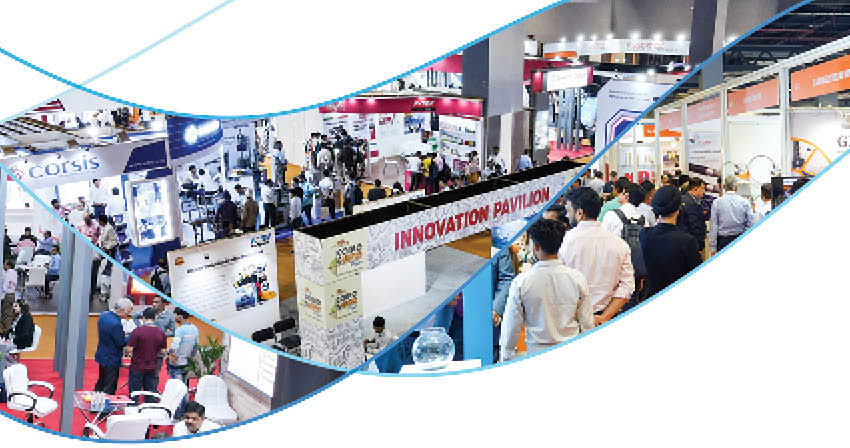
The Cable & Wire Fair (CWF) has, since its inception in 2015, evolved into one of the most important such platforms for the sector. From a modest 1,500 square meter launch, CWF 2025 now spans over 35,000 square meters and attracts more than 500 exhibitors and over 15,000 visitors from more than 25 countries. Its co-location in 2025 with the Tube & Pipe Fair and the inaugural Bharat Metal Expo reflects the increasing interdependence of the industries it serves, with cables, tubes, and metals forming the material backbone of energy, transport, and manufacturing systems. This convergence creates opportunities for buyers and suppliers to address interconnected procurement needs in a single venue, while also enabling cross-sector technology transfer.
Evidence from previous editions points to tangible commercial outcomes. Exhibitor surveys indicate that over 40 percent of participants secured confirmed orders during the event, while more than 30 percent of leads generated translated into business within the following year. For smaller and mid-tier companies, the fair offers cost-effective access to national and export markets; for larger players, it has become a strategic point for launching new products, reinforcing brand leadership, and, in some cases, pre-booking production slots for high-demand items months in advance. International buyers often use the event to assess Indian suppliers first-hand, a step that can lead to long-term contracts or joint ventures, particularly in markets such as Europe, the Middle East, and North America.
Beyond the transactional dimension, CWF serves as a setting for sector-wide dialogue on technology, regulation, and market direction. Its conferences and technical sessions have addressed issues ranging from evolving BIS norms and export compliance requirements to innovations in conductor and insulation technology. The introduction of new machinery, materials, and testing protocols at the fair has often accelerated the industry’s adoption of best practices, whether in extrusion line upgrades or enhanced fire safety measures.
As the sector enters a phase of consolidation and deeper integration with global supply chains, forums like the Cable & Wire Fair provide more than visibility; they function as mechanisms for aligning domestic capabilities with international benchmarks. In doing so, they help ensure that the industry’s projected growth is matched by parallel advances in quality, innovation, and competitiveness.