


In an exclusive interaction with Wire & Cable India, Mr. Guido Kellmann, Head of Global R&D, Application Engineering, Traxit (Klüber Lubrication GmbH), shares that India is one of their most important global growth market and that achieving lasting success in India requires close and collaborative partnerships between manufacturers, customers, and local partner- emphasizing on making production more effective and efficient using drawing lubricants.
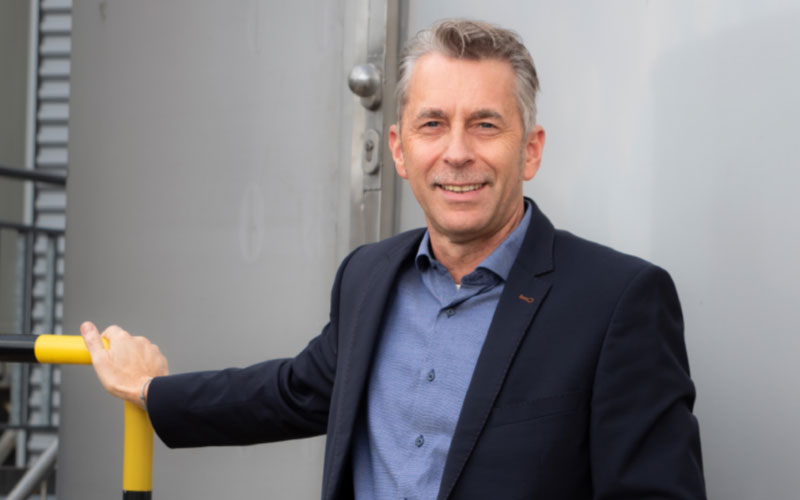
Wire & Cable India: Please briefly outline your company’s cable and wire industry product focus, including key technologies, product types, and principal end-use sectors.
Guido Kellmann: Traxit Wire Lubrication, a brand of Klüber Lubrication, is a global leader in the production of dry drawing lubricants for the wire industry. We supply all wire applications made from iron and steel wires, as well as stainless steels. Through our global sales network, consisting of distributors and agents, we are close to our customers and ensure short delivery routes.
Watch: Top Cable Companies in India
WCI: Within your core product segments, how would you characterise current demand conditions and order visibility?
GK: The demand in our core product segments reflects the current global economic environment and therefore remains challenging. However, in selected regions such as India, we are experiencing joint growth with our distribution partner Kemtree International. Customers particularly value our high product quality as well as the close, collaborative partnership between Traxit Wire Lubrication and Kemtree International. Our central topics include: How can production be made more effective and efficient using drawing lubricants.
WCI: Within your manufacturing offerings, how do you currently assess investment sentiment among wire and cable producers, particularly in emerging markets such as India?
GK: Investment activity among Indian wire manufacturers primarily focuses on process optimization and sustainability. The main question is how production can be further improved and made more efficient under existing manufacturing conditions. Our products are increasingly becoming the focus of attention and together with manufacturers, we work on improvements such as increasing production speed, reducing lubricant consumption, and lowering production waste to meet their demands.
India is one of our most important global growth markets. Achieving lasting success here requires close and collaborative partnerships between manufacturers, customers, and our local partner Kemtree International. Innovation and technological progress are essential to meeting rising quality expectations and ensuring long‑term competitiveness.
WCI: Which customer or application requirements are currently exerting the greatest pressure to improve productivity and quality within your product range?
GK: Ensuring consistently high lubricant quality is at the heart of our work, with the aim of sustainably improving our customers’ production processes over the long term. This includes higher production speeds, reduced die wear, optimized lubricant consumption, and in many cases shorter delivery times.
These requirements result in two key areas of action for us: product development and technical consulting; and delivery performance and international production.
We continuously analyze how to better tailor our products to the specific wire-drawing processes of our customers. A key component is our intensive consulting approach and close on-site collaboration with manufacturers. In product development, we combine the expertise of the research institutions and our own R&D department to ensure that new product solutions are perfectly aligned with current customer and market requirements.
Our customers’ core expectations include short and reliable delivery times. With our own plant in China, where our second R&D center is located, we are globally positioned.
Our production is closely aligned with our European plant, ensuring that all products meet international quality standards. This enables us to supply our products to the customers from both European and Chinese facilities.
WCI: Which manufacturing disciplines, automation measures, or quality-assurance practices have delivered the most tangible improvements in your yield or rework reduction?
GK: For our products, one aspect is central: direct feedback from our customers, particularly when a product does not deliver the expected results. In such cases, we react immediately and support the customer directly on site. Together, we analyze the situation within the specific production process and develop tailored solutions.
Close and continuous customer relationships are essential as it ensures consistent, high quality products over the long term, reduces waste, and drives targeted developments. In addition, we work closely with machine and die manufacturers that keep us up to date with the latest technological developments and market requirements.
WCI: How are sustainability and decarbonisation goals translating into practical changes at your company?
GK: Traxit Wire Lubrication, a brand of Klüber Lubrication, implements a wide range of targeted sustainability measures. Our European plant is fully powered by green electricity, and active water management that helps us reduce fresh water consumption and significantly cut wastewater.
Production residues are recycled in a resource-efficient manner. In our newest production hall, we are also able to manufacture dry drawing lubricants completely without the use of water. Additional waste-reduction measures are firmly anchored both in production and in our administrative processes.
Through our global sales network in the key regions of the wire industry, we significantly shorten transport routes. This leads to noticeable cost and CO₂ savings while also supporting more efficient customer supply.
The demand will increasingly shift from basic lubricants toward high-performance, premium-quality products. Manufacturers of drawing lubricants will therefore have to focus more strongly on premium grades and on close, collaborative partnerships with their customers.
WCI: How are cost pressures across raw materials, energy, or logistics being managed without compromising product reliability or compliance?
GK: Compliance, product quality, and product reliability are our highest priorities. We make no compromises in these areas. Our customers rely on us as a dependable and trustworthy partner, often for decades. This long-term trust confirms our commitment to always maintain the highest standards.
As a company, we follow a sustainable and responsible governance approach based on transparency and openness. We comply with all legal requirements and implement compliance consistently and without compromise.
Our pricing reflects market conditions for raw materials, energy, and logistics. This means our prices mirror developments in these areas while also representing our high product quality.
WCI: How has the wire and cable industry benefited, in practical terms, from automation or real-time digital control?
GK: From our perspective, automation and digitalization are key drivers for sustainable and future-oriented business management in the wire industry. We expect their importance to increase significantly in the coming years, with production control becoming even more efficient through digital and automated processes.
As a manufacturer of drawing lubricants, we are in close contact with our customers as well as with machine and die manufacturers. This close cooperation enables us to support customers both technically and in terms of process optimization, while also gaining early insights into developments in machinery, tooling, and production technologies. Through this continuous exchange, we can identify changes in production at an early stage and incorporate them into our product development, ensuring that we can continue to provide customers with tailored, modern solutions.
Also Read: NAVANK Cable B.V.: Global Manufacturers Expand in India; Serving Domestic and Neighbouring Markets
WCI: Looking ahead three to five years, which wire & cable segments or applications are most likely to drive the next investment cycle?
GK: In the iron and steel wire industry, significant investments will be required in the coming years, particularly in the segments of construction steel and tyre cord. Drivers include major infrastructure projects and developments in the mobility segment. Beyond these traditional core segments, applications involving copper and aluminium wire will also gain importance, driven by developments in the energy and mobility sectors.
WCI: How do you see India as a market?
GK: We consider the Indian market as one of the most important growth markets globally, as well as within the Asia-Pacific region. The market growth for the wire products will continue to rise and lead to a significant expansion of production capacities.
At the same time, we expect product quality requirements to evolve in the coming years. The demand will increasingly shift from basic lubricants toward high-performance, premium-quality products. Manufacturers of drawing lubricants will therefore have to focus more strongly on premium grades and on close, collaborative partnerships with their customers. Technological development, both in production and in process control, will play a central role and be a decisive factor in determining which suppliers will be sustainably successful in the market.