

For LAPP Gruppe, India was never “just another market”. In an exclusive interview with Wire & Cable India, Mr. Matthias Lapp, CEO, LAPP Gruppe, discusses how the company’s Bhopal facility has evolved from a cable manufacturing unit established in 2012 into the largest manufacturing facility in the LAPP Group’s global production network, with capabilities spanning single-core and multicore cables, solar cables, compounding, E-Beam processing and, most recently, power low voltage cables. Reflecting on the family’s long-term commitment to India, he explains how sustained investments in local manufacturing, technology and talent have strengthened the country’s strategic importance as LAPP’s second-largest market after Germany, and how Bhopal’s evolution reflects a consistent journey of growth rather than a standalone expansion decision.
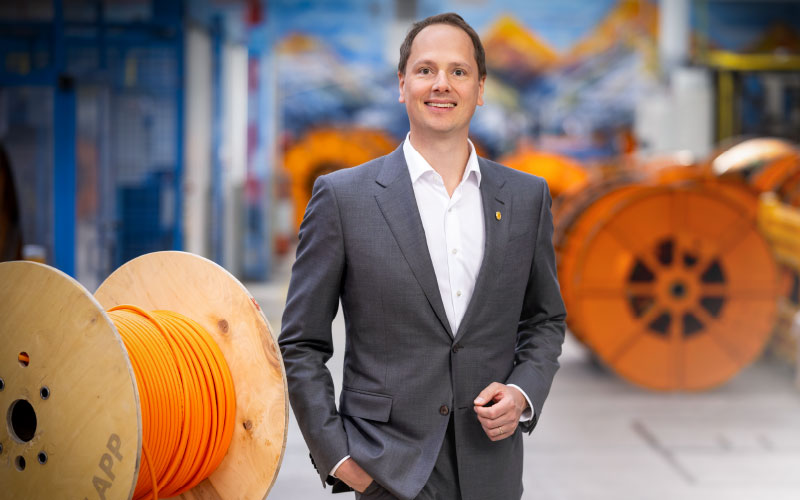
Wire & Cable India: Congratulations on this significant milestone. LAPP Cable Works Bhopal has now become the largest manufacturing facility in the LAPP Group’s global production network. What does this achievement mean for you and for LAPP’s long-term journey in India?
Matthias Lapp: It’s a truly significant milestone for us. On a symbolic level, it represents the culmination of a journey that began more than three decades ago: My grandmother, my father and my uncle decided to invest in India at a time when many international companies were focusing their attention on other opportunities across Asia. My family believed in India’s long-term potential and made a conscious decision to invest in local manufacturing, local talent and local customer relationships.
The development of Bhopal reflects exactly that approach. What started in 2012 as a facility focused on cable manufacturing has evolved step by step into the largest production site in our global network. New technologies, additional manufacturing capabilities and continuous investment have transformed the facility into an important part of the LAPP Group.
Most importantly, our success belongs to the people who have built LAPP India over the past three decades and to the customers and partners who have placed their trust in our company. It is also a reflection of India’s growing importance. Today, the country is our largest market after Germany and one of the most dynamic industrial markets in the world. The expansion of our Bhopal plant strengthens our ability to serve customers locally while supporting the country’s continued industrial growth.
Watch: Top Cable Companies in India
WCI: The latest expansion has added a state-of-the-art manufacturing facility for power low Voltage cables. Could you take us through the strategic thinking behind this expansion and the new manufacturing capabilities that have been added at the Bhopal plant?
ML: The strategic rationale behind the expansion is closely linked to how the Indian market is evolving. India is investing on a massive scale in manufacturing, infrastructure, transportation, renewable energy, urban development and electrification. All of these sectors depend on reliable power distribution. As a result, demand for power vow Voltage cables continues to grow strongly and we expect that trend to continue over the coming years.
From our perspective, customers increasingly prefer to work with trusted partners who can support a broader range of applications. Historically, LAPP has been strongly associated with connectivity, control, and automation solutions. As customer requirements evolved, we saw an opportunity to strengthen our position in Power LV cables and provide a more comprehensive offering for industrial and infrastructure projects. The expansion adds dedicated local manufacturing capabilities for Power LV cables and allows us to combine these products more closely with our existing control and instrumentation cable portfolio. By using our local compounding expertise and established manufacturing capabilities in Bhopal, we can serve a broader range of customer applications with greater speed, flexibility and local relevance.
Ultimately, this investment was driven by the belief that the market opportunity is substantial and that customers will increasingly value a partner who can provide the full range of connectivity solutions from a single source.
The strategic rationale behind the expansion is closely linked to how the Indian market is evolving. India is investing on a massive scale in manufacturing, infrastructure, transportation, renewable energy, urban development and electrification.
WCI: LAPP has described India as one of its most important growth markets and its second-largest market after Germany. What has driven India’s growing strategic importance within the Group, and why was the decision taken to make Bhopal LAPP’s largest manufacturing facility globally?
ML: India’s strategic importance is the result of several trends coming together at the same time. The country is going through one of the most significant industrial transformations anywhere in the world. And it combines market scale with industrial capability it’s not only a large market, but increasingly a sophisticated one. Customers are adopting advanced manufacturing technologies, automation systems and connectivity solutions at a rapid pace.
Lastly, for LAPP, India never was “just another market”. When we founded LAPP India in 1996, we also began to work on our local manufacturing plant in Bengaluru. The country’s strategic importance for LAPP Group is the result of consistent growth in local demand, consistent investment and the confidence we have developed in both the market and our local team. We never said, “hey, let’s make Bhopal our largest plant”. It was a consistent evolution.
WCI: The Bhopal facility has evolved since its establishment, progressing from cable manufacturing to advanced compounding and E-Beam capabilities, and now power low voltage cable production. How has this manufacturing journey shaped LAPP India’s role within the Group’s global technology and production network?
ML: The journey of Bhopal is a good example of how manufacturing capabilities can evolve over time. Many facilities begin by producing existing products. Over time, as experience grows and competencies expand, they take on more responsibility, more technologies and more complex applications. Bhopal has followed exactly that path. The site initially focused on single-core cable manufacturing. As customer requirements expanded, we added additional capabilities, including multicore cables, solar cables, and increasingly sophisticated manufacturing processes.
The next important steps were compounding and E-Beam technology. This was particularly significant because cable performance begins with materials. Compounding gives us greater control over the development and production of cable compounds. This strengthened our vertical integration and our ability to develop application-specific solutions. E-Beam processing allows us to improve cable sheathings on a molecular level, enhancing important material characteristics such as thermal resistance, durability and long-term performance. This is particularly relevant for demanding sectors such as infrastructure, rail, renewable energy and industrial applications.
Today, India houses some of LAPP’s most advanced manufacturing capabilities and knowhow. In many ways, the global LAPP team learns from India.

The country’s strategic importance for LAPP Group is the result of consistent growth in local demand, consistent investment and the confidence we have developed in both the market and our local team. We never said, “hey, let’s make Bhopal our largest plant”. It was a consistent evolution.
WCI: LAPP has highlighted its approach for investing, developing and manufacturing in India for the Indian market while drawing on the strength of its global network. How do you balance global technology and expertise with increasing localisation in India?
ML: We believe that customers are best served when manufacturing, engineering and decision-making are close to the market. At the same time, one of the strengths of LAPP is the fact that we are a global company. We can draw on expertise from different countries and different parts of the organization. Our engineering teams, product specialists, and manufacturing experts collaborate across borders every day. The result is that we combine global standards with local relevance.
A good example is product development. Indian customers often have requirements that differ from those in Europe or North America. Local teams understand those requirements, while global teams contribute technology expertise, application knowledge, and experience from other markets. Together they develop solutions that are both locally relevant and globally competitive.
The same principle applies to manufacturing. Facilities like Bhopal manufacture locally for local customers, but they also benefit from the knowledge, processes, and quality standards developed across the broader LAPP network. We believe this combination is one of our greatest strengths. It allows us to remain close to customers while benefiting from the capabilities of a truly global organisation.
WCI: India’s investments in infrastructure, manufacturing, transportation and renewable energy are creating new opportunities for the cable and connectivity industry. Which application areas do you expect to be the strongest growth drivers for LAPP in India over the coming years?
ML: We see several powerful growth drivers evolving simultaneously in India, which is one of the reasons why the market is so attractive from a long-term perspective.
Industrial automation remains a key area. Indian manufacturers are investing heavily in productivity, digitalisation, and smarter production environments. As factories become more connected, the demand for reliable power, control, and data communication solutions continues to increase.
Infrastructure is another major opportunity. Whether we talk about industrial facilities, commercial buildings, transportation projects, or urban development: connectivity and power distribution are fundamental requirements. As India’s infrastructure expands, so does the need for high-quality cable and connectivity systems.
We also expect strong growth from rail and metro projects. India continues to invest heavily in transportation infrastructure, and these applications require highly reliable solutions capable of performing in demanding environments over long operating lifecycles.
Renewable energy is another important area. The country’s investments in solar, energy storage, and grid modernisation are creating significant opportunities for specialised power and connectivity solutions.
Today, India houses some of LAPP’s most advanced manufacturing capabilities and knowhow. In many ways, the global LAPP team learns from India.
WCI: As Bhopal assumes a larger role in LAPP’s global manufacturing footprint, do you also see opportunities for the Indian operations to contribute more significantly to product development, technology innovation and potentially serve markets beyond India?
ML: Yes, very much so. India’s role within LAPP has evolved significantly over the years. Initially, the focus was naturally on building a strong local business and serving the domestic market. Today, India plays a much broader role within the Group.
One important development is the growing contribution of local teams to innovation and engineering. Markets like India often require solutions tailored to specific customer needs, operating conditions, and cost structures. That process of adaptation generates valuable expertise and insights that can benefit the broader organisation.
We already see increasing collaboration between local teams and colleagues across our global R&D and product management network. Engineers and specialists in India work closely with teams in Germany, Switzerland and other parts of the Group. Innovation has become far more collaborative than in the past.
Our primary focus remains serving the Indian market. Given the size and growth potential of India, there is ample opportunity locally. At the same time, as capabilities continue to expand, Indian operations will increasingly contribute knowledge, technology and manufacturing expertise to the wider LAPP network.
WCI: LAPP has maintained a long-term commitment to India, beginning its journey in the country around three decades ago. Looking back, what do you believe were the key decisions that enabled LAPP to build such a strong and deeply rooted manufacturing presence in India?
ML: The first and most important decision was to take a long-term view. My family’s belief in India was never based on short-term market conditions. They looked at the country’s long-term development potential and were willing to invest patiently over many years. Looking back today, that perspective was absolutely critical.
The second important decision was local commitment. We did not try to serve the market solely through exports. Instead, we invested in local manufacturing, local teams, and local customer relationships. That allowed us to understand the market much more deeply and build trust with customers.
A third factor was localisation. We learned early on that successful products in Europe are not automatically successful in India. Local customer requirements matter. Local engineering matters. Local market knowledge matters. Over the years, we invested significantly in building those capabilities.
Another important element was our willingness to adapt and learn. India is a complex and diverse market. Success requires understanding not only customer requirements but also local business practices, talent development, and long-term relationship building.
Also Read: Wire & Cable India Emagazine Nov-Dec Issue 2026
WCI: Following this landmark expansion, what is the next chapter for LAPP in India? Could we expect further investments in manufacturing capacity, new technologies, localisation, product development or expansion into new growth segments?
ML: India will continue to be one of the most important strategic markets for the LAPP Group, and we see considerable opportunities ahead. For example, we see significant opportunities in sectors that are benefiting from long-term structural trends, especially in semiconductors, battery energy storage systems, and data centres.
Naturally, we will continue to evaluate investments that strengthen our ability to serve customers and support market growth. Manufacturing capacity is one part of that equation, but it is not the only one. Equally important are engineering capabilities, technological expertise, product development, and sales power.
At the same time, our ambition is not simply to grow in size. We expect customer requirements to become increasingly sophisticated. As automation, digitalisation and electrification continue to advance, customers require more integrated solutions. This creates opportunities for continued innovation across our portfolio. Increasingly, customers are looking for complete connectivity solutions rather than individual products. Supporting that evolution will remain an important priority for us.
Today, India is our largest market after Germany and one of the most dynamic industrial markets in the world.