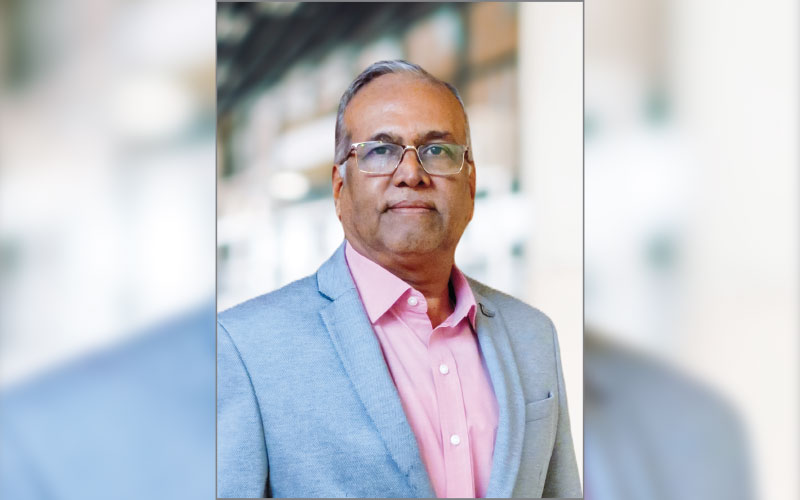
As OFC manufacturing becomes increasingly technology- and quality-intensive, the competitive equation is shifting from simply adding capacity to building greater control across the manufacturing value chain. Backward integration into fibre drawing and preforms, tighter quality assurance, application-specific engineering, and the ability to maintain supply continuity at scale are emerging as important differentiators for manufacturers seeking to serve increasingly demanding telecom and data communication projects. In an exclusive interaction with Wire & Cable India, Mr. Sunil Upmanyu, President – Operations, Finolex Cables Ltd., discusses the company’s four-pronged approach to strengthening its OFC manufacturing capabilities. He elaborates on Finolex’s focus on vertical integration, data-driven quality, engineering depth and supply-chain resilience, while highlighting its investments in fibre drawing, cabling and a newly commissioned preform facility.
4-Pronged Approach to Advancing OFC Manufacturing
• First, vertical integration – from fibre drawing through to finished, tested cable
• Second, consistent quality systems
• Third, engineering depth – the ability to customise cable design for specific applications
• Fourth, supply-chain resilience
Wire & Cable India: India’s fibre deployment is expanding across FTTH, 5G backhaul, data centres, BharatNet, enterprise networks and other segments. Which application segments are currently shaping product development and manufacturing priorities the most, and how do their technical requirements differ?
Sunil Upmanyu: Right now, three critical areas are influencing product development: FTTH, 5G backhaul, and data centres. Each pulls the design in a different direction. FTTH demands compact, bend-insensitive cables that can be installed quickly in congested urban ducts and building risers, so fibre count flexibility and ease of termination matter most. 5G backhaul requires cable solutions that can be deployed quickly and flexibly. Depending on the site and terrain, this could involve aerial or ADSS cables, or duct cables. Till now in India, telecom operators have not felt the need to install micro-duct solutions that make use of existing infrastructure. With towers and small cells being deployed rapidly, the ability to minimise extensive civil work is becoming increasingly important. Data centres are a newer but fast-growing priority: here the emphasis shifts to very high fibre density, low-loss ribbon, and MPO-compatible designs since space and connection speed inside a data hall are at a premium. BharatNet and rural connectivity projects add another layer – cables there need to manage harsher outdoor conditions and longer unsupported spans at a reasonable cost. While FTTH shapes our volume manufacturing, data centres and 5G shape our technology roadmap.
Watch: Top Cable Companies in India
WCI: Over the past three to five years, what manufacturing capabilities or process improvements have become commercially essential for OFC producers that were previously considered optional? Which market, technological, or customer requirements have made these capabilities increasingly critical?
SU: Backward integration into fibre drawing is becoming increasingly strategically important, and some manufacturers, including us, are now extending that further upstream into preforms. This isn’t necessarily a requirement for every OFC producer, but for those with the scale to justify it, controlling more of the upstream process helps protect both margins and delivery timelines against global fibre pricing swings and supply disruptions. Alongside that, customer testing and qualification requirements have become noticeably more rigorous over the past few years, which has pushed tighter process controls on fibre coating, colouring, and buffering across the industry. Telecom operators and EPC contractors now prefer to order on a single tender or turnkey basis.
WCI: Network operators today expect higher reliability, faster deployment, and longer service life. Which product attributes, quality parameters or qualification requirements have become significantly more demanding? How have manufacturers responded?
SU: Attenuation performance, mechanical strength under tensile and crush loads, and long-term water-blocking performance are all being tested far more rigorously than before. Operators are placing greater emphasis on long service life and want more robust, well-documented test data to back it up, rather than relying only on type-test certificates. OTDR and other detailed testing are increasingly important in qualification and quality verification, along with tighter geometry tolerances on the fibre itself and improved bend-loss performance across temperature extremes. Manufacturers have responded by investing in in-house testing infrastructure across the full chain – from fibre draw to finished cable – so that quality is verified at every stage rather than only at the final product.
WCI: From preforms and optical fibre to cable manufacturing and testing, where has the Indian industry made the most noteworthy progress towards technological self-reliance? Which critical gaps remain?
SU: Cable manufacturing is where India has achieved significant capability – Indian manufacturers today are increasingly competitive with global benchmarks on cable design, ruggedisation and testing. Fibre drawing capacity has also expanded meaningfully across the industry in the last few years. The bigger gap remains further upstream, at the preform stage – this is the critical upstream stage where the optical glass preform is produced and building that capability domestically continues to require deep R&D investment, huge capital investment and technology partnerships. At Finolex, our approach has been to invest in our own fibre drawing and cabling capacity, and we’ve now commissioned a state-of-the art preform facility of our own as part of that backward integration journey, in line with the broader industry’s efforts to close this gap over time.
WCI: Recent investments across the industry suggest a growing emphasis on automation, quality assurance, and manufacturing scale. In your view, which investments have now become standard expectations or industry necessities, and which continue to provide a tangible competitive advantage?
SU: Automated cabling lines, in-line quality checks, and ISO-aligned quality management systems are increasingly baseline expectations among major customers. What still separates leading manufacturers is scale combined with integration and quality: being able to go from fibre draw to finished, tested cable under one roof, with the capacity to serve large multi-year telecom or infrastructure orders without quality drift between batches. That combination of scale, vertical integration and consistency in manufacturing, quality and delivery is where the competitive advantage lies today.

At Finolex, our approach has been to invest in our own fibre drawing and cabling capacity, and we’ve now commissioned a state-of-the art preform facility of our own as part of that backward integration journey, in line with the broader industry’s efforts to close this gap over time.
WCI: The economics of OFC manufacturing are evolving with increasing investments in capacity, technology, and quality. In your view, which factors now have the greatest influence on the commercial viability and long-term competitiveness of OFC manufacturing?
SU: Capacity utilisation and backward integration are two of the most important levers. OFC manufacturing has high fixed costs in fibre drawing and preform infrastructure, so the ability to run plants at high utilisation – supported by a steady order book across domestic and export markets – is critical to long-term viability. Raw material and glass input costs, along with the ability to time capacity expansion ahead of demand cycles like data centre growth, also weigh heavily. Manufacturers who can balance domestic telecom demand with export opportunities tend to be better placed to absorb these cost pressures.
WCI: Beyond manufacturing capacity, what factors now determine a manufacturer’s ability to secure large telecom, infrastructure, or data communication projects? How have procurement expectations evolved?
SU: Track record on delivery timelines and consistency of quality across large order volumes now matter alongside price. Large telecom operators and EPC contractors are increasingly evaluating vendors on their testing documentation, traceability, and ability to scale supply quickly without compromising specification. Financial stability and ability to deliver timely with consistent quality have also become part of the evaluation, since these are long-term infrastructure commitments, not one-off purchases. Procurement has shifted from being largely price-led to being much more holistic – quality systems, certifications, and proven execution capability now carry real weight in vendor selection.
WCI: As fibre networks become denser and applications more diverse, how are cable designs evolving? In your opinion, which developments, whether in fibre count, cable construction, miniaturisation, bend performance, installation practices or other aspects, are becoming commercially important today?
SU: Higher fibre count in compact form factors is probably the clearest trend – networks need more fibre per duct or per building riser without increasing cable diameter. Bend-insensitive fibre has become increasingly mainstream rather than a premium feature, because it directly reduces installation time and space constraints, especially in FTTH and in-building deployments. Ribbon cable construction is gaining commercial relevance for data centre and high-density applications, and aerial, self-supporting designs continue to matter for faster rural and 5G rollout where duct infrastructure isn’t always available. Overall, the direction is towards cables that are easier and faster to install since deployment speed has become as important as the fibre specification itself.
Also Read: Wire & Cable India Emagazine Sep-Oct Issue 2026
WCI: Looking beyond demand growth, what do you believe will distinguish the most competitive OFC manufacturers over the next few years? Please draw upon broader industry developments and the capabilities that will matter most, such as manufacturing excellence, technology, quality systems, engineering expertise, and supply-chain resilience.
SU: I would point to four things. First, vertical integration – from fibre drawing through to finished, tested cable – because it gives control over both cost and quality. Second, consistent quality systems that can be demonstrated with data, not just certificates since operators are getting more technical in their evaluations. Third, engineering depth – the ability to customise cable design for specific applications like data centres or difficult terrain, rather than offering a one-size-fits-all product. And fourth, supply-chain resilience – manufacturers who can secure raw materials and scale output reliably, even with global supply disruptions, will be the ones telecom operators and infrastructure players trust with their largest projects.
At Finolex, this is exactly the direction we’re investing in – we’re expanding our fibre-drawing capacity and cabling capacity, alongside commissioning our own preform facility as part of deepening backward integration, to build the manufacturing depth needed to support India’s growing fibre requirements over the next several years.

Backward integration into fibre drawing is becoming increasingly strategically important, and some manufacturers, including us, are now extending that further upstream into preforms. This isn’t necessarily a requirement for every OFC producer, but for those with the scale to justify it, controlling more of the upstream process helps protect both margins and delivery timelines against global fibre pricing swings and supply disruptions.