In an exclusive interview with Wire and Cable India, Mr. Abhinav Goyal, Managing Director, Vidya Metal Manufacturing Company Pvt. Ltd., discusses the company’s transition from volume-led manufacturing to application-led scale. With a new aluminium winding-conductor unit commissioned in December 2025, approximate annual production of 25,000 tonnes, installed capacity of approximately 36,000 tonnes per annum and a nationwide distribution network, the company is positioning its VM Insulation brand in the organised winding-wire trade market for value-added growth, new applications and exports. He also highlights the company’s manufacturing flexibility, segment-specific production and quality protocols, application engineering, sustainability, R&D and focus on delivering value-added aluminium winding-conductor solutions across diverse markets.
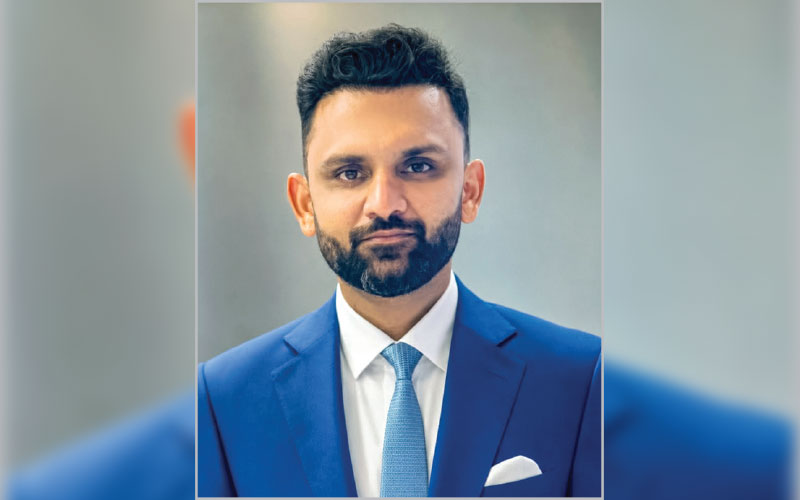
Wire and Cable India: VMI Group had announced plans to increase its aluminium winding-wire production capacity to 25,000 TPA. How far have you progressed, and what has the latest expansion enabled?
Abhinav Goyal: The expansion has progressed successfully. Before this phase of investment, our annual production was approximately 14,000-15,000 tonnes. Following the commissioning of our new manufacturing unit in December 2025, our current annualised production has increased to approximately 25,000 tonnes. Our installed capacity is now approximately 36,000 tonnes per annum, depending on the product mix, conductor dimensions, insulation construction and operating schedule.
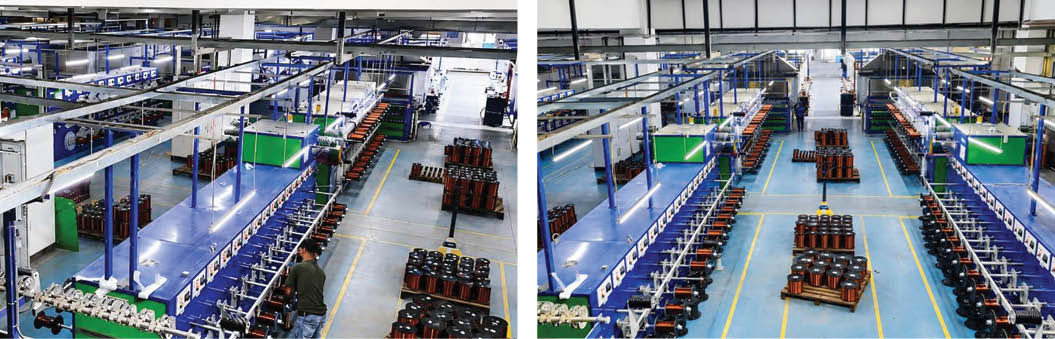
The importance of this investment goes beyond the headline capacity. Aluminium winding conductors are a high-mix product category – changes in conductor geometry, temper, insulation build, coil configuration or customer specifications alter the process window and production planning. The expanded facility gives us the flexibility to handle both large-volume programmes and specialised orders while maintaining dimensional accuracy, electrical consistency and reliable delivery.
It has also strengthened our ability to serve several markets simultaneously, including distribution and power transformers, fans, inverters, appliances and the organised trade channel. This scale, supported by application-specific manufacturing capability, has placed VM Insulation among India’s largest aluminium winding-conductor manufacturers. For us, the expansion represents a transition from volume-led manufacturing to application-led scale.
Watch: Top Cable Companies in India
WCI: How has VMI Group evolved from its traditional copper business into a major aluminium winding-wire manufacturer, and what does the present portfolio include?
AG: VMI Group was traditionally a manufacturer of copper rods, conductors, busbars and other related copper products. These operations have been running successfully for many years and continue to form an important part of the Group’s manufacturing base. The experience developed through non-ferrous metallurgy, wire drawing, annealing, profiling, process control and nationwide distribution created the technical and commercial foundation for our next phase of growth.
The aluminium winding-wire division was added in 2017 under the VM Insulation brand. It was a strategic addition to our established copper business, not a replacement for it. Since then, we have built a broad aluminium winding-conductor portfolio comprising super enamelled round winding wires, enamelled rectangular strips, bare round and rectangular conductors, aluminium DPC wires and strips, thermally upgraded paper-covered and Nomex-covered conductors, fibre-glass-covered conductors, aluminium busbars, and thin bare aluminium winding strips or foil. We also develop customised conductor dimensions, insulation constructions and winding formats to meet specific customer applications.
The wider Group combines complementary manufacturing businesses. Vidya Metal Mfg. Co. Pvt. Ltd. provides the Group’s long-established copper manufacturing base, while VM Insulation is focused on aluminium winding wires and related value-added conductors. Alliance Copper Concepts Pvt. Ltd. adds specialised conductor-processing and enamelling capabilities. VMI Plastic Pvt. Ltd., operating under the SUNLITE brand, manufactures a wide range of engineered plastic and polycarbonate products, including solid, corrugated, multiwall and multicell sheets and panels, roofing and ventilation products, polycarbonate tubes, bottles and jars, suitcase-frame components, and safety products such as shields and batons.
Although these businesses serve different markets, they share a common operating philosophy: disciplined materials processing, in-house technical capability, consistent quality and strong channel relationships. This combination gives the Group both industrial depth and market reach.
WCI: How are emerging sectors creating new growth opportunities for VM Insulation, and how are you aligning the portfolio with their requirements?
AG: The opportunity for aluminium is expanding, but each sector must be approached through application engineering rather than simple metal substitution. A transformer, a fan motor, an inverter magnetic component and an appliance motor have different electrical, thermal, mechanical and winding requirements. Our task is to engineer the appropriate conductor geometry, temper, insulation system, winding behaviour and termination method for each platform.
Transformers and grid infrastructure
Distribution and power transformers remain one of our core markets. We are a market-leading supplier of aluminium enamelled wires, rectangular strips and DPC conductors to the transformer industry, serving manufacturers across India according to their design and utility requirements. In this segment, dimensional tolerances, edge profile, conductor resistance, paper coverage and insulation build must remain consistent because they directly influence winding-window utilisation, losses and coil reliability.
The outlook for the transformer industry is positive. India is continuing to invest in distribution-system modernisation, renewable-energy integration, industrial capacity, urban infrastructure and replacement of ageing electrical assets. These developments support sustained demand for distribution and power transformers, while the focus on lower losses and greater reliability increases the importance of technically consistent winding conductors.
Fans and copper-to-aluminium conversion
We have recently entered the fan industry and have worked with manufacturers to convert selected motor platforms from copper to aluminium winding conductors. A successful conversion is not a one-to-one replacement. It requires optimisation of conductor cross-section, number of turns, winding resistance, slot-fill factor, I2R losses, temperature rise, enamel performance, high-speed windability and termination reliability. Our technical team supports customers through sampling, winding trials, electro-thermal evaluation and production validation.
The fan market is moving towards higher energy efficiency, better motor design, BLDC technology and tighter cost-performance targets. This creates an important opportunity for aluminium, provided the conductor and motor are engineered as a complete system. Our objective is to build a meaningful and long-term position in this division by working closely with OEMs rather than presenting aluminium merely as a lower-cost alternative.
Inverters, appliances and other electrical equipment
We have added thin bare aluminium winding strips, also referred to commercially as aluminium winding foil, for selected inverter and power-magnetic applications. For these products, width and thickness tolerance, soft temper, surface cleanliness, edge quality, burr control and coil build are critical. The addressable applications include inverter transformers, UPS systems, stabilisers, renewable-energy power-conversion equipment and other magnetic assemblies, subject to the customer’s design.
We have also started servicing the appliance industry. Fans, pumps, air coolers, washing-machine motors and other fractional-horsepower applications offer significant potential, but the market is technically fragmented. We therefore intend to qualify applications selectively, establish the required electrical and thermal performance, and then scale them in partnership with the customer.
We have also increased production of fibre-glass-covered winding strips for selected transformer, motor, generator and reactor applications. Renewable energy, smart infrastructure and automotive electrification present additional longer-term opportunities, although these sectors require rigorous qualification and application-specific R&D.
Aluminium winding conductors are a high-mix product category – changes in conductor geometry, temper, insulation build, coil configuration or customer specifications alter the process window and production planning.
WCI: Could you provide an overview of VMI Group’s market footprint and distribution strength?
AG: Our market footprint is built on two complementary channels: direct engagement with OEMs and a structured nationwide trade and distribution network. Over the years, we have progressively formalised and organised our distribution markets. Today, our dealer and trade-partner network reaches customers across all Indian states, giving us strong brand visibility, last-mile availability and regular market feedback.
VM Insulation has become a leader in the organised winding-wire trade market and one of the most recognisable brands in India. We have a particularly strong presence in major transformer and electrical-manufacturing clusters in Rajasthan, Maharashtra, Uttar Pradesh, Haryana and Gujarat, while our distribution network supports customers throughout the country.
Catering to so many segments under one manufacturing and commercial platform is inherently complex. An institutional transformer customer may require customised rectangular conductors, detailed technical documentation and a dedicated quality plan. A trade customer may require standardised sizes, dependable availability, consistent packaging and rapid replenishment. Fan, inverter and appliance OEMs require their own qualification cycles and process parameters.
We manage this complexity through segment-specific specifications, production planning, quality protocols, packaging formats and service levels, while retaining the benefits of a common metallurgical and manufacturing platform. This combination of manufacturing flexibility and nationwide distribution is one of our strongest competitive advantages.
Our export division is currently being developed. The immediate focus is on product documentation, target-market selection, international customer approvals, export packaging and dependable logistics. We want exports to become a recurring, technically qualified business rather than an occasional commodity shipment. Our objective is not merely to export metal, but to export approved winding solutions.
WCI: How do your manufacturing processes ensure consistent quality, performance and reliability?
AG: In winding conductors, small variations can create significant problems after thousands of turns have been wound into a transformer or motor. Quality therefore has to be built into the process and controlled at every stage, rather than checked only at final inspection.
Our control system begins with raw-material verification and continues through drawing, annealing, profiling, enamelling, paper covering, fibre-glass serving, rewinding and packaging. Depending on the product, the critical parameters include electrical conductivity and DC resistance, conductor diameter or cross-section, width and thickness, edge radius, tensile strength, elongation, temper, surface finish, enamel integrity, dielectric breakdown, paper overlap, insulation build and coil winding quality.
We use in-process measurement, laboratory testing, batch traceability and customer-specific inspection plans to control these parameters. For specialised products, the first-off sample and process settings are verified before sustained production. The emphasis is on process capability and repeatability: the objective is not only to pass a batch, but to maintain the same electrical, mechanical and insulation performance from batch to batch.
Our quality-management systems and product testing are aligned with applicable national and international standards, including relevant IS and IEC specifications, as well as customer-specific requirements. As we expand further into OEM applications and exports, we are strengthening statistical process control, digital traceability, inline monitoring and application-validation protocols.
Scale is meaningful only when it is supported by consistency. That principle remains central to every expansion and every new product we undertake.
WCI: How are sustainability, advanced technology and R&D being incorporated into VMI Group’s growth strategy?
AG: We see sustainability and cost competitiveness as mutually reinforcing. Drawing, annealing, enamelling and curing are energy-intensive processes, so a higher share of green electricity can reduce both our environmental footprint and our conversion cost.
Our roadmap includes increasing the use of renewable power, improving the efficiency of motors, drives and heating systems, optimising process cycles, monitoring energy consumption at line level, improving metal yield and reducing process scrap. The key business measures will be specific energy consumption per tonne, renewable energy share, first-pass quality, yield and conversion cost. Green energy must ultimately improve the competitiveness of Indian manufacturing, not remain only a branding initiative.
Technology will support this programme through better production traceability, inline dimensional monitoring, statistical process control, preventive maintenance and real-time visibility of energy and process performance. These systems help reduce variation, shorten development cycles and improve consistency across a diverse product mix.
R&D is another major priority. We want to identify more applications in which aluminium can offer a technically reliable and commercially attractive alternative to copper. This requires work on conductor geometry, annealing profile, temper, enamel adhesion, winding behaviour, thermal ageing, jointing and termination, corrosion management and the complete electro-thermal design of the customer’s product.
We are also establishing a structured annual product-development roadmap. Our goal is to introduce new value-added products or meaningful application-specific variations every year – whether through a new conductor size, profile, insulation construction, foil dimension, surface requirement, winding format or customer-specific grade. This disciplined product diversification will expand our addressable market while keeping us focused on our core capabilities in metallurgy, conductor processing and insulation technology.
Also Read: Wire & Cable India Emagazine Sep-Oct Issue 2026
VMI: What are VMI Group’s priorities for the next five to ten years, and what industry challenges require policy attention?
AG: Our next phase of growth will be driven by value addition, application development and market expansion rather than capacity alone. We intend to consolidate our leadership in distribution and power-transformer conductors, expand our presence in fans, inverters and appliances, and continue developing specialised aluminium solutions in partnership with OEMs.
We will continue adding technically differentiated products and variants every year, with greater emphasis on conductor geometry, insulation systems, processability and end-use performance. At the same time, green energy, better yield, automation and digital process control will help us reduce conversion costs and improve international competitiveness.
Starting exports is an important strategic objective. We are building the foundation through customer qualification, compliance documentation, testing, packaging and logistics. Over time, we want exports to become a meaningful and diversified part of the business, supported by recurring customers and value-added products.
One important challenge for the domestic industry is the pressure created by low-priced imports, particularly from China. Indian manufacturers are prepared to compete on productivity, quality, technology and service. However, imported products should be assessed against equivalent standards of quality, traceability, safety and regulatory compliance. When price becomes the only criterion and compliance is not enforced uniformly, domestic investment in technology, employment and capacity is placed at a disadvantage.
The Government can help the industry by ensuring strict and consistent implementation of applicable BIS and quality-control requirements, stronger customs valuation and rules-of-origin verification, timely trade-remedy action where evidence supports it, and greater support for domestic testing, R&D, green-energy adoption, export development and international certification. The industry is not seeking insulation from fair competition; it is seeking a level playing field.
Our long-term vision is to build VM Insulation into an internationally recognised aluminium winding-conductor brand known for scale, nationwide reach, application engineering, manufacturing consistency and customer-specific innovation. The next chapter of VMI Group will be about building on our manufacturing heritage, developing more aluminium applications and taking Indian manufacturing to a wider global market.
Scale is meaningful only when it is supported by consistency. That principle remains central to every expansion and every new product we undertake.