

As power grids become increasingly complex with the rapid integration of renewable energy, urbanization, and rising electricity demand, utilities are under growing pressure to improve network reliability while maximizing the performance of existing assets. This shift is accelerating the adoption of intelligent, data-driven infrastructure that provides real-time visibility into asset health, enables predictive maintenance, and enhances operational efficiency. Against this backdrop, Sterlite Electric has partnered with Spain-based RDT Lumiker to establish Sterlumiq, a joint venture focused on advancing cable asset monitoring through (CAMOS), an integrated fibre-optic sensing platform designed to transform conventional cable networks into intelligent, self-monitoring infrastructure. In an exclusive interview with Wire & Cable India, Mr. Frédéric Tréfois, CEO, Sterlite Electric, discusses the strategic vision behind Sterlumiq, the role of advanced sensing and analytics in modernising power networks, and how intelligent cable infrastructure is helping utilities transition from reactive maintenance to predictive, data-driven grid management while building smarter, more resilient power systems.
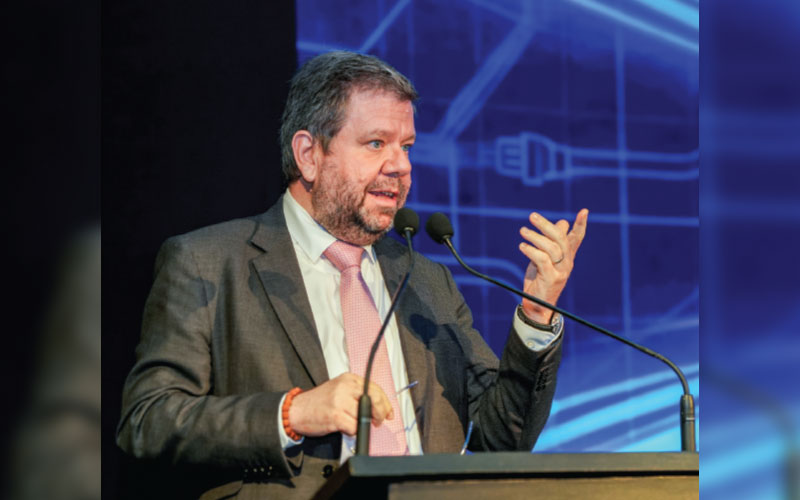
Wire & Cable India: Sterlite Electric recently announced the formation of Sterlumiq, a joint venture with Spain-based RDT Lumiker, focused on developing advanced (CAMOS). What strategic gap in the power infrastructure ecosystem is this partnership aiming to address?
Frédéric Tréfois: The formation of Sterlumiq is aimed at addressing a critical gap in today’s power infrastructure ecosystem, the disconnect between physical grid assets and real-time operational status.
As power networks become more complex with growing electricity demand, renewable energy integration, and increasing urbanisation, utilities are under pressure to maximise the performance of existing assets while maintaining reliability. However, most underground cable networks continue to operate with limited visibility into their real-time condition, forcing operators to rely on periodic inspections and corrective maintenance practices. This often leads to unplanned outages, inefficient asset utilisation, and higher operational costs.
Through Sterlumiq, we are bringing together Sterlite Electric’s expertise in power transmission infrastructure and RDT Lumiker’s photonics and sensing capabilities to embed intelligence directly into critical grid assets. At the core of this collaboration is CAMOS, an integrated cable monitoring platform that enables continuous visibility into asset health, electrical performance, fault conditions, and network behaviour throughout the cable lifecycle.
What this translates to is a fundamental shift in how utilities manage their infrastructure. Instead of reacting to failures after they occur, operators can proactively identify emerging issues, optimise network loading, improve maintenance planning, and enhance overall grid reliability. The technology also enables more efficient utilisation of existing infrastructure, reducing the need for premature capital investments while supporting the increasing complexity of modern power systems.
Ultimately, Sterlumiq is about transforming conventional cable networks into intelligent infrastructure, helping utilities build more resilient, efficient grids.
Watch: Top Cable Companies in India
WCI: Could you elaborate on how CAMOS transforms conventional cable infrastructure into intelligent, self-monitoring assets, and what differentiates the platform from traditional cable monitoring systems?
FT: CAMOS represents evolution in how cable infrastructure is managed and monitored. Traditionally, underground power cables have been treated as passive assets, with utilities relying on periodic inspections, maintenance schedules, and limited monitoring tools to assess their condition. While these approaches have served the industry for decades, they often provide only a partial view of asset health and leave operators reacting to issues after they occur.
What CAMOS does differently is embed intelligence directly into the cable system. Built on advanced fibre-optic current sensing technology, it enables continuous, real-time visibility into the operating condition of the asset throughout its lifecycle. Rather than monitoring a cable from the outside, CAMOS becomes an integral part of the infrastructure itself, continuously capturing and analysing critical operational data.
The key differentiator lies in what is being measured. Most conventional monitoring systems focus on indirect indicators such as temperature, vibration, strain, or acoustics. While these parameters provide useful information, they do not directly measure the electrical behaviour of the asset.
CAMOS is designed to measure the actual electrical variables that matter most, including load currents, sheath currents, capacitive currents, and insulation-related parameters. This provides utilities with understanding of cable health, transmission capacity, and network performance.
Combined with predictive analytics, fault location capabilities, dynamic cable rating, and integrated protection functions, CAMOS transforms conventional cables into intelligent, self-monitoring assets. The outcome is greater asset visibility, faster fault identification, improved reliability to grid management and operational decision-making.
“Through Sterlumiq, we are bringing together Sterlite Electric’s expertise in power transmission infrastructure and RDT Lumiker’s photonics and sensing capabilities to embed intelligence directly into critical grid assets.
WCI: What are some of the key operational challenges in power and cable networks today that solutions such as CAMOS are aiming to address?
FT: One of the biggest challenges facing power and cable networks today is the growing gap between network complexity and asset visibility. As grids expand and integrate larger volumes of renewable energy, utilities are expected to manage increasingly dynamic power flows while maintaining reliability, efficiency, and continuity of supply.
A significant portion of this challenge lies in underground cable networks. Unlike overhead assets, underground infrastructure is largely inaccessible, making it difficult to identify issues such as insulation degradation, localised overheating, joint failures, or abnormal current behaviour before they impact operations. In many cases, utilities continue to rely on periodic inspections and time-based maintenance practices, which often provide only a limited understanding of the actual condition of the asset
The operational impact can be substantial. Limited visibility can lead to conservative asset utilisation, delayed fault identification, longer restoration times, unplanned outages, and higher maintenance costs. As demand continues to grow, utilities need to extract greater performance from existing infrastructure while reducing operational risk.
This is where solutions such as CAMOS are creating shifts. By embedding advanced fibre-optic current sensing and real-time analytics directly into cable systems, CAMOS enables continuous monitoring of asset health, network conditions, and transmission performance. The technology allows operators to detect anomalies earlier, localise faults with precision, and move from reactive maintenance to a more predictive approach.
What this ultimately translates to is improved grid reliability, better utilisation of existing assets, faster operational decision-making, and a network capable of supporting the evolving demands of modern power systems.
WCI: How are advanced sensing, monitoring, and analytics technologies transforming the way utilities and industries manage critical cable infrastructure?
FT: Advanced sensing, monitoring, and analytics technologies are fundamenZtally changing how utilities and industries manage critical cable infrastructure. For us, this is about moving beyond traditional, reactive approaches to asset management and enabling a more intelligent, data-driven way of operating power networks.
Historically, operators have relied on periodic inspections and maintenance schedules, often with limited visibility into the actual condition of underground cable assets. Today, technologies such as fibre-optic sensing, real-time monitoring, and predictive analytics are helping bridge that gap by providing continuous visibility into asset performance throughout its lifecycle.
The impact is already becoming evident across power networks. By continuously monitoring critical parameters such as current, temperature, insulation health, and load conditions, utilities can identify anomalies much earlier, predict potential failures, and take corrective action before they escalate into major outages. This not only improves network reliability but also reduces maintenance costs, minimises downtime, and enhances operational safety.
When combined with advanced analytics and AI-driven insights, these technologies also enable operators to optimise asset utilisation and make more informed investment decisions. Rather than relying on conservative operating assumptions, utilities can manage assets based on real-time conditions, unlocking additional capacity while maintaining reliability.
What this translates to is a fundamental shift in infrastructure management – from periodic maintenance to continuous intelligence, from reactive interventions to predictive decision-making, and ultimately from static networks to smarter, more resilient and efficient power systems.
WCI: What role do real-time monitoring, predictive maintenance, and fault localization capabilities play in improving operational efficiency and reducing downtime across power networks?
FT: Real-time monitoring, predictive maintenance and accurate fault localisation are becoming fundamental to the efficient operation of modern power networks. As grids expand, integrate more renewable energy and operate under increasingly dynamic loading conditions due to the increasing electrification, utilities can no longer rely solely on periodic inspections or respond only after an asset has failed.
Continuous monitoring creates visibility into the actual operating condition of critical cable infrastructure. By tracking electrical and thermal behaviour in real time, operators can identify anomalies and early signs of deterioration before they develop into major faults. This enables maintenance to be planned based on asset condition and risk, rather than fixed schedules, reducing unnecessary interventions while helping prevent unplanned outages.
Predictive maintenance also improves the way utilities allocate resources. Remote diagnostics and data-led alerts allow engineering teams to focus attention on assets that genuinely require intervention, reducing inspection visits, emergency repairs and associated operating costs. At the same time, a clearer understanding of asset health can help extend cable life and support more confident utilisation of existing network capacity.
When a fault does occur, precise localisation is equally critical. Identifying the affected section quickly, including within underground or mixed overhead-underground networks, reduces the time spent searching for the problem and enables repair teams to respond with greater speed and accuracy. This can significantly shorten restoration times and limit the operational and economic impact of an outage.
Through Sterlumiq, we are bringing these capabilities together in CAMOS, an integrated fibre-optic sensing and analytics platform that transforms cables from passive infrastructure into intelligent, continuously monitored assets. Ultimately, the value lies in enabling utilities to see risks earlier, act faster and manage their networks with greater reliability, efficiency and precision.
Historically, operators have relied on periodic inspections and maintenance schedules, often with limited visibility into the actual condition of underground cable assets. Today, technologies such as fibre-optic sensing, real-time monitoring, and predictive analytics are helping bridge that gap by providing continuous visibility into asset performance throughout its lifecycle.
WCI: What are some of the key technology and manufacturing capabilities required to develop advanced, high-performance cable systems for critical infrastructure applications?
FT: The requirements for advanced cable systems are evolving rapidly as power networks become larger, more complex, and increasingly dependent on renewable energy. Between March and May 2026, several industry developments reinforced the need for next-generation cable technologies. India’s transmission planning roadmap for integrating more than 900 GW of non-fossil fuel capacity by 2035-36 has highlighted the growing importance of high-capacity, reliable, and digitally enabled transmission infrastructure.
To meet these requirements, manufacturers need strong capabilities in extra-high-voltage (EHV) and HVDC cable design, advanced insulation systems, precision conductor manufacturing, and rigorous testing and qualification processes. As utilities move more power over longer distances and through increasingly congested urban environments, cable systems must deliver higher efficiency, lower losses, and superior operational reliability. The recent commissioning of major HVDC infrastructure projects in India further demonstrates the growing role of advanced cable technologies in supporting large-scale power transfer and grid resilience.
Equally important is the integration of digital intelligence into physical infrastructure. With renewable energy curtailment and grid congestion emerging as industry challenges, utilities are seeking greater real-time visibility into asset performance. This is driving demand for fibre-optic sensing, predictive diagnostics, dynamic cable rating, and advanced analytics that enable operators to maximise asset utilisation and improve network reliability.
Ultimately, the future of critical cable infrastructure will be defined by the convergence of manufacturing excellence, advanced materials, and intelligent monitoring technologies—allowing utilities to build smarter, more resilient, and future-ready grids.
Also Read: Wired for the Future: The Unseen Infrastructure Powering India’s EV Revolution
WCI: With increasing focus on grid modernization and infrastructure resilience, how important is intelligent and data-driven cable infrastructure becoming for the future of India’s power ecosystem?
FT: The increasing focus on grid modernization and infrastructure resilience is fundamentally changing how utilities think about cable infrastructure. As India continues to expand its transmission network and integrate larger volumes of renewable energy, the conversation is no longer just about adding more capacity—it is about making existing assets smarter, more visible, and more efficient.
India’s power sector is undergoing a significant transformation, driven by rising electricity demand, rapid urbanisation, growing industrialisation, and ambitious renewable energy targets. While substantial investments are being made in transmission infrastructure, utilities are also facing the challenge of managing increasingly dynamic power flows and ensuring reliable electricity delivery across more complex networks.
What this means is that traditional cable infrastructure alone is no longer sufficient. Utilities need real-time visibility into asset health, loading conditions, and network performance to make faster and more informed operational decisions. This is where intelligent, data-driven cable systems can create significant value. By integrating advanced sensing, monitoring, and analytics capabilities directly into cable infrastructure, operators can identify potential issues earlier, optimise asset utilisation, and reduce the risk of unplanned outages.
The impact extends beyond reliability. Better visibility allows utilities to defer unnecessary capital investments, improve maintenance planning, and maximise the performance of existing infrastructure.
By embedding advanced fibre-optic current sensing and real-time analytics directly into cable systems, CAMOS enables continuous monitoring of asset health, network conditions, and transmission performance. The technology allows operators to detect anomalies earlier, localise faults with precision, and move from reactive maintenance to a more predictive approach.