As Indian cities become increasingly connected, digital infrastructure has emerged as a critical enabler of urban development. Intelligent traffic systems, integrated command centres, public surveillance, smart utilities and citizen services all rely on resilient, high capacity fiber networks. Yet for most urban authorities, creating this digital backbone requires significant capital investment, long term operational expertise and continuous maintenance often stretching already constrained public budgets.
The challenge is therefore no longer just about building digital infrastructure but about developing commercially sustainable models that allow cities to accelerate digital transformation without increasing public expenditure. One of India’s earliest and most successful examples of this approach emerged in Gurugram through a pioneering Public Private Partnership between the Gurugram Metropolitan Development Authority (GMDA) and Sterlite Electric.
Watch: Top Cable Companies in India
As Gurugram rapidly evolved into one of India’s foremost business and technology hubs, GMDA envisioned a city wide fiber backbone capable of supporting its ambitious Smart City programme. Beyond enabling digital governance, the network needed to provide the foundation for intelligent traffic management, CCTV surveillance, public Wi Fi, integrated command centres and future digital applications.
The challenge, however, was delivering this infrastructure without significant upfront capital investment while ensuring that the network remained operationally reliable and financially sustainable over the long term. Sterlite Electric’s Convergence team addressed this challenge through an innovative DBFOOT (Design-Build-Finance-Own-Operate-Transfer) model that fundamentally reimagined how urban digital infrastructure could be developed.
GMDA’s approach to building Gurugram’s digital backbone was structured around competitive, zone-based allocation rather than a single-vendor award. The city was divided into zones based on density, existing infrastructure and development priorities, with each zone put out for competitive bidding.
Three operators were awarded contracts across these zones, including Sterlite Electric Limited, which secured its allocation through the same contested bidding process as the other two. Each operator was responsible for designing, building and financing the optical fiber network within its awarded zone, in line with GMDA’s unified technical and commercial framework.
GMDA’s partnership with Sterlite Electric leveraged an asset swap framework. GMDA provided Right of Way access across the city, while Sterlite Electric assumed responsibility for designing, financing, building, operating and maintaining a four duct underground optical fiber network. Two dedicated ducts were transferred to GMDA for exclusive Smart City applications, while the remaining two ducts were commercially monetized by Sterlite Electric, creating a self-sustaining revenue model that financed long term network operations and maintenance. As part of the arrangement, Sterlite Electric also committed to maintaining GMDA’s dedicated network for 21 years without any additional operational cost to the authority.
This execution model by Sterlite Electric’s Convergence Team was bought to life with on-ground expertise in operating shared digital infrastructure at scale. A capability built over years of managing multi-tenant fiber networks and enabling seamless, non-discriminatory access for telecom operators and ISPs. In Gurugram specifically it architected a carrier-neutral access framework handling multi-operator provisioning while maintaining service-grade reliability across a dense, high-demand urban network all without disrupting the dedicated Smart City ducts reserved for GMDA.
The result was far more than a fiber deployment and it established a commercially viable framework through which public infrastructure and private investment could jointly accelerate urban digital transformation.
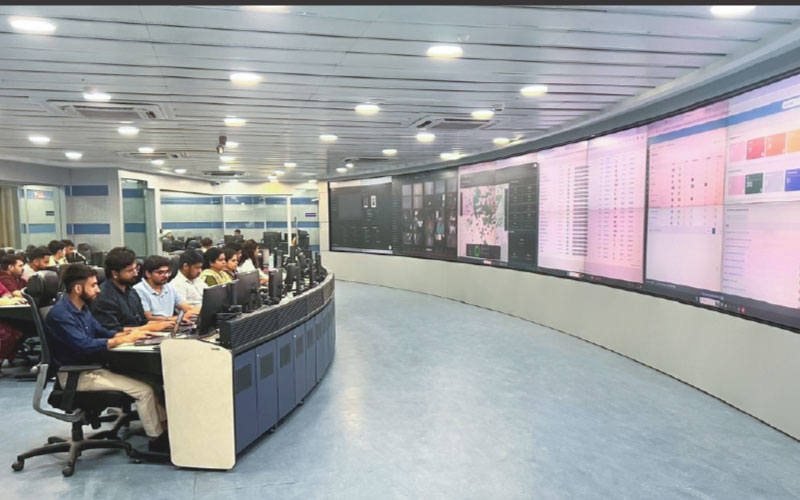
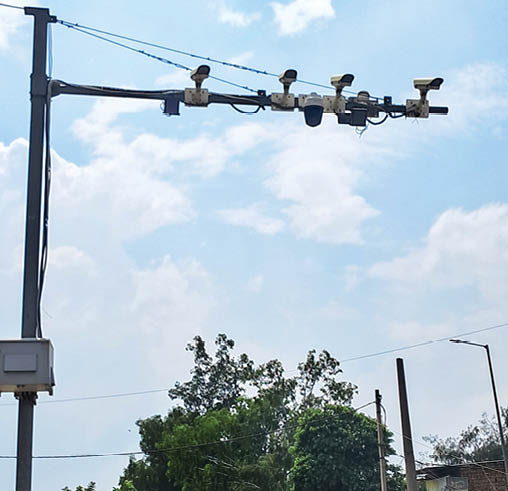
Today, the network spans approximately 138 kilometres across Gurugram and serves as the city’s digital backbone, supporting critical Smart City infrastructure including intelligent traffic management systems, CCTV surveillance, public Wi-Fi and the Integrated Command and Control Centre. The platform has consistently delivered 99.98% network uptime while attracting more than 20 telecom operators and internet service providers, demonstrating both its technical robustness and commercial viability.
Beyond creating a reliable digital network, the project fundamentally changed the economics of urban infrastructure development. GMDA secured ownership of a world class fiber backbone without incurring significant capital expenditure while eliminating long-term operations and maintenance responsibilities. Sterlite Electric, in turn, demonstrated how commercial monetization of shared infrastructure can create a financially sustainable model that benefits both public institutions and private stakeholders.
For telecom operators and internet service providers, the project created access to high-quality carrier-grade infrastructure without duplicating network investments. This was made possible by Sterlite Electric’s proven track record of enabling ISP onboarding in Gurugram, from streamlined last-mile access to responsive network management, this allowed operators to scale their footprint in the city faster and more cost-effectively than building independent infrastructure. It is this operational depth, as much as the underlying fiber asset, that has sustained the network’s growing base of 20+ operators over time.
The GMDA and Sterlite Electric partnership remains a benchmark for urban digital infrastructure in India. More than a successful fiber deployment, it proved that Public-Private Partnerships can transform existing public assets such as Right of Way into commercially sustainable digital infrastructure. As cities continue to invest in smart urban ecosystems while balancing fiscal priorities, the model offers a scalable blueprint for accelerating digital connectivity without increasing the burden on public finances.
Also Read: Wire & Cable India Emagazine Sep-Oct Issue 2026
By combining innovative commercial structuring with long-term operational expertise, Sterlite Electric demonstrated that the future of smart city infrastructure lies not only in technology, but in creating sustainable business models that unlock long-term value for governments, industry and citizens alike.
The Gurugram partnership is not intended as a one-off. Sterlite Electric views the DBFOOT model as a replicable, scalable framework and it plans to extend to other cities where similar conditions exist: high digital infrastructure demand and monetization potential for shared duct/fiber assets. Each new city partnership will be structured around the same core principle that made Gurugram successful — long-term ownership aligned with public infrastructure goals, built on genuine, durable partnerships rather than one-time contracts.