In an exclusive interview with Wire & Cable India, Mr. Sandip Bhuva, CEO, Rajoo Bausano Extrusion Private Limited, discusses the evolving requirements of wire and cable compounding amid the use of diverse polymers, rising production speeds and higher performance demands. With its Granulex line, advanced twin-screw technology, optimised screw and die geometries, precise thermal management, automated process control and patented MULTIDRIVE system, Rajoo Bausano focuses on productivity, consistent granule quality and energy efficiency. Its approach also extends to digitalisation, with real-time monitoring and AI-based systems supporting process stability. Mr. Sandip highlights the company’s material- and application-specific machine design and SPHERA digital ecosystem, comprising Pharos, Scout and Ranger, to enable more intelligent and connected extrusion operations.
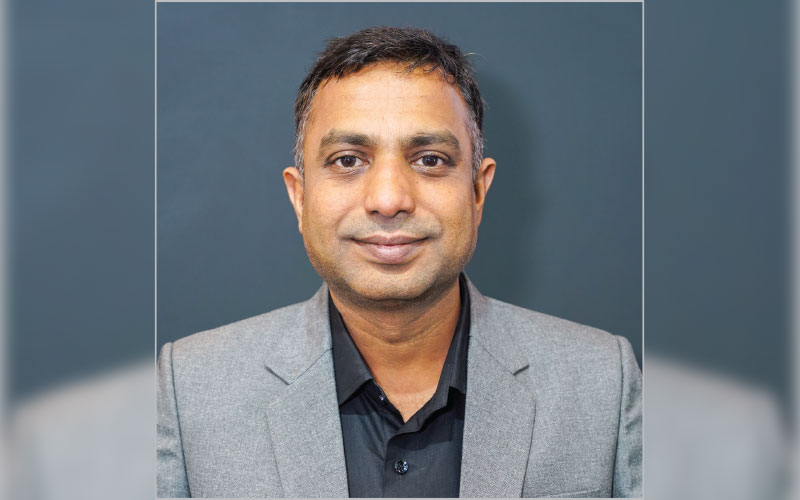
Wire and Cable India: Cable manufacturers today produce an increasingly diverse range of products using different polymers, performance requirements and production speeds. Which developments are placing the greatest demands on modern extrusion systems, and why?
Sandip Bhuva: The growing use of different polymers, higher performance requirements and increasing production speeds are placing greater demands on compounding extrusion systems. Today, manufacturers require higher output, excellent mixing and dispersion, precise temperature control, consistent melt quality, lower energy consumption, and reliable continuous operation. For wire and cable compounds, particularly PVC and other specialty materials, uniform dispersion and consistent granule quality are critical because any variation can directly influence the performance of the final cable.
At Rajoo Bausano, our Granulex line is designed to address these requirements through advanced twin-screw technology, efficient mixing and homogenisation, precise process control, optimised die heads, automatic screen changing, and efficient cooling systems. The patented MULTIDRIVE system is specifically designed to improve energy efficiency, helping reduce energy consumption while ensuring reliable operation and stable processing. This contributes to consistent granule quality for demanding wire and cable applications.
Watch: Top Cable Companies in India
WCI: Compared with five years ago, which aspects of the extrusion process have become technically more difficult to control consistently? How have machinery design and process engineering evolved to address these challenges?
SB: Compared with five years ago, the industry has moved towards higher production rates, tighter quality specifications, and greater material complexity in compounding extrusion lines. The need for higher production rates is mainly driven by increasing demand for wire and cable, the pressure to improve manufacturing efficiency, and the need to achieve higher output within the same production time. At the same time, wire and cable manufacturers are facing stricter quality requirements, as their products are being used in increasingly demanding applications where consistent electrical, mechanical, and thermal properties are critical. The growing use of different materials and application-specific formulations has also increased material complexity, making precise processing and uniform dispersion more important.
To address these challenges, we have introduced several technological advancements in our compounding extrusion lines, including advanced screw geometries for improved mixing and dispersion, more precise temperature control, efficient heating and cooling systems, high-performance drive technology, automated process control, online monitoring and improved pelletising and cooling systems.

As cable manufacturers expand into renewable energy, automotive, EV charging, data communication, railway and other specialty applications, extrusion lines need to become more application-specific and configurable.
WCI: Customers increasingly expect higher line speeds together with tighter quality tolerances. In practice, where do machinery builders encounter the greatest trade-offs between productivity, process stability and product quality, and how are these being addressed?
SB: The main challenge is to achieve higher production speeds without compromising granule quality and process stability. As throughput increases, the process window becomes narrower. Small variations in feeding, melt temperature, pressure, or cooling can influence final granule quality. For wire and cable applications, even small variations in granule quality can affect the performance of the final product. Therefore, modern compounding extrusion systems need to balance productivity with precise process control and reliable operation.
We address this through a combination of optimised screw and die geometries, precise thermal management, high-torque drive technology, and advanced process control. Our twin-screw extrusion technology is designed to maintain consistent material flow and melt quality at higher throughputs, while the downstream pelletising and cooling systems help maintain uniform granule characteristics. Digital monitoring further allows critical parameters such as temperature, pressure, screw speed, torque, and energy consumption to be monitored in real time, helping operators identify process deviations early and maintain stable production. Together, these features help maintain stable processing, uniform cooling and consistent granule quality while achieving higher productivity.
WCI: Energy efficiency, automation, digital monitoring and process control are widely discussed across the industry. Which of these developments are delivering the greatest measurable operational benefits today, and where do you still see a noticeable gap between industry expectations and practical implementation?
SB: Energy efficiency and intelligent process control are delivering some of the most measurable operational benefits today. Energy consumption directly affects production costs, so technologies that reduce specific energy consumption while maintaining the required output are becoming increasingly important. Rajoo Bausano’s approach combines optimised machine design with energy monitoring, allowing manufacturers to track consumption in real time and identify areas where efficiency can be improved. The patented MULTIDRIVE system, for example, distributes torque across multiple drive shafts, reducing mechanical losses and energy consumption at equivalent performance levels. The system can deliver energy savings of up to 30% compared with traditional drive systems at equivalent performance levels. By distributing the mechanical load across multiple drive units, MULTIDRIVE also reduces stress on shafts, gears and other transmission components, improving reliability and extending component life. We also offer induction heating technology, which can reduce energy consumption by up to 30–35% compared with conventional heating methods.
Digitalisation is also becoming increasingly valuable because it turns process data into actionable information. Through Rajoo Bausano’s digital systems, parameters such as temperature, pressure, screw speed, torque and energy consumption can be monitored in real time, while IIoT and AI-based analysis can help identify process deviations, predict maintenance requirements and reduce unplanned downtime.
A noticeable gap still exists in the availability of skilled operators who can fully utilise technologically advanced extrusion systems. Modern machines offer advanced automation, digital monitoring and process control, but their full potential can only be achieved when operators have the right technical knowledge and training to use these features effectively.
WCI: With cable manufacturers placing increasing emphasis on productivity, quality and operating costs, which factors now have the greatest influence on the investment value of an extrusion line, and how are they shaping machine design and development?
SB: Customers increasingly evaluate an extrusion line based on its Total Cost of Ownership (TCO) rather than just the initial machine price. Key factors influencing investment value include output capacity, specific energy consumption, product quality and consistency, machine availability and reliability, ease of operation, changeover time, maintenance requirements, automation, raw-material utilisation and process flexibility. After-sales service, technical support and expected machine life also play an important role in determining the long-term value of the investment.
These requirements are shaping machine design towards higher productivity with lower operating and lifecycle costs. Our modern extrusion lines increasingly incorporate automation and AI-based systems, which help reduce the possibility of human error and improve process consistency. By continuously monitoring and controlling critical parameters, these technologies help maintain stable and consistent product quality while reducing process variations. AI-based monitoring can also identify deviations and support timely corrective actions, helping manufacturers achieve more reliable production with less wastage and downtime. This combination of automation, intelligent control, and real-time monitoring is making our extrusion lines more precise, reliable, and efficient.
Modern compounding extrusion systems need to balance productivity with precise process control and reliable operation.
WCI: As cable manufacturers diversify into sectors such as renewable energy, automotive, EV charging, data communication, railway and specialty cables, how are these applications influencing extrusion line configuration, tooling and overall machine design?
SB: As cable manufacturers expand into renewable energy, automotive, EV charging, data communication, railway and other specialty applications, extrusion lines need to become more application-specific and configurable. Each application can demand different material characteristics, dimensional tolerances, insulation or protection requirements, and long-term performance. This is influencing the selection of the extruder, screw configuration, die, and downstream equipment rather than relying on a standardised line for every application. Rajoo Bausano’s approach is to develop the line around the material, product geometry and specific production requirements, supported by rheological analysis and process testing.
The machine design is therefore moving towards modular and highly configurable systems, where tooling, cooling, calibration and cutting can be adapted to the application. This flexibility allows the same engineering approach to be adapted to increasingly specialised wire and cable-related applications while maintaining process stability and consistent quality.
WCI: From your interactions with cable manufacturers, what are the most common misconceptions about extrusion that often lead to avoidable quality issues, inefficiencies or higher production costs? Conversely, what operational practices consistently distinguish high-performing plants?
SB: One common misconception is that higher extrusion speed automatically means higher productivity. In practice, excessive speed without proper control of temperature, pressure, material flow, and cooling can lead to defects, dimensional variations, and inconsistent product quality. In reality, productivity depends on the combination of output, quality, machine availability and energy efficiency. A higher production rate is only truly productive when it is achieved while maintaining consistent quality, minimising downtime and controlling energy consumption. Similarly, assuming that a stable process does not require continuous monitoring can result in avoidable downtime and higher production costs.
High-performing plants typically follow a more data-driven and disciplined approach. They continuously monitor critical process parameters, maintain proper material and temperature control, carry out preventive maintenance, and optimize the process based on actual production data. Advanced AI-based systems can further detect process deviations and potential anomalies early, helping maintain stable quality, reduce waste, and avoid unplanned downtime.
Another common misconception is that a high-performing extrusion line alone can ensure high productivity and consistent quality. In practice, skilled operators also play an important role in achieving the full potential of the machine. Proper understanding of process parameters, timely adjustments, and effective monitoring can help maintain stable production, consistent quality, and efficient machine operation. The combination of advanced technology and skilled operators is therefore important for achieving the best overall performance.
Also Read: Wire & Cable India Emagazine Sep-Oct Issue 2026
WCI: Looking ahead, which engineering capabilities do you believe will define the next generation of extrusion machinery? Please elaborate from an industry perspective, focusing on the underlying technological and process developments rather than individual product launches.
SB: Looking ahead, the next generation of extrusion machinery will build further on intelligent automation, artificial intelligence and real-time data-driven process control – technologies that are already part of our advanced extrusion systems today. A strong example of this direction is our SPHERA ecosystem, an integrated digital platform combining Industrial IoT, AI and advanced automation.
Within our SPHERA ecosystem, Pharos, Scout and Ranger are three digital tools, each designed to address a different aspect of extrusion operations. Pharos enables real-time monitoring of critical parameters such as temperature, pressure, RPM, energy consumption and alarms, along with KPI and OEE analysis. Scout is a digital spare-parts management tool that provides interactive 2D exploded views, compatibility checks and access to technical documentation, helping reduce identification errors and maintenance-related downtime. Ranger is the next-generation virtual assistant offering continuous, intelligent support for operators, technicians and supervisors. More than a chatbot, Ranger delivers precise answers, contextual help and predictive guidance through a natural language interface. Together, these tools connect machines, data and people, helping improve process visibility, reduce downtime and support more efficient and consistent extrusion operations.
In reality, productivity depends on the combination of output, quality, machine availability and energy efficiency. A higher production rate is only truly productive when it is achieved while maintaining consistent quality, minimising downtime and controlling energy consumption.