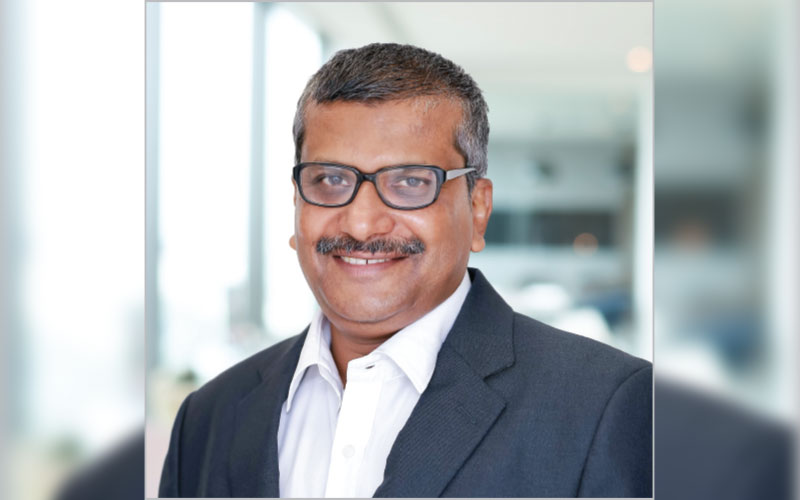
In an exclusive interaction with Wire & Cable India, Mr. Reji Koshy Daniel, Executive Director, Royle Extrusion Systems Private Limited, a wholly owned subsidiary of Royle Systems Group (USA), discusses evolving extrusion demands, material challenges, process stability, AI-driven control and the technologies shaping next-generation machinery. He highlights the growing need for precise thermal management and process stability as manufacturers handle demanding compounds such as EPR, silicone, highly filled and thermosetting materials. With higher line speeds narrowing the process window, maintaining consistency in melt temperature, pressure, wall thickness and concentricity remains critical. He also underscores the need for AI-driven processes to evolve alongside changing compounds, while emphasising flexibility, advanced process control and energy efficiency as key future capabilities.
Wire and Cable India: Cable manufacturers today produce an increasingly diverse range of products using different polymers, performance requirements and production speeds. Which developments are placing the greatest demands on modern extrusion systems, and why?
Reji Koshy Daniel: Royle’s directors (Chairman, Mr. John C. Ramsey, in particular) and executives have seen the global wire and cable industry from the middle of the 20th century through the first quarter of the 21st century, with all its highs and lows. As we transition to the second quarter of the 21st century, the immediate challenge is the necessity to deliver cables that fulfill the demand to improve the performance in hostile environments or that require increased flexibility to meet the more stringent international regulatory requirements, defined by IEC, ICEA, NEMA, BIS and others. To fulfill the new regulatory standards, it will be necessary to process thermosetting materials, as thermoplastic materials often do not meet the new standards. This is increasing the demand for extrusion systems designed to continuously process thermosetting materials. There are several types of systems that fulfill this requirement, such as water systems to cure MV sioplas PE, IR systems to cure silicone rubber, and steam and drycure CV systems that process all types of rubber and thermosetting PE materials. Cable manufacturers may be wise to discuss their requirements with extrusion system manufacturers who offer all types of curing system solutions and have the experience to recommend the best system to provide process stability, flexibility and repeatability across the complete product range.
Watch: Top Cable Companies in India
WCI: Compared with five years ago, which aspects of the extrusion process have become technically more difficult to control consistently? How have machinery design and process engineering evolved to address these challenges?
RKD: Highly filled flame-retardant compounds (ATH- and MDH-based, used in HFFR and LSZH constructions) carry a higher percentage of filler, which raises melt viscosity and shear heating and accelerates screw/barrel wear; these new materials require narrower, more repeatable temperature windows than PVC or PE.
Solar- and EV-driven XLPO, EVA and EPR compounds add another level of complexity, as they must be processed close to their cross-linking threshold and must not cure prematurely in the barrel. Holding melt temperature, screw speed and residence time within a tight band has become more difficult simply because more material types now need to run on the same extrusion lines. The equipment design response includes finer control of barrel temperature zones, screws designed for highly filled compounds, and use of IE3-class motors, which give tighter speed control in addition to improved efficiency.
WCI: Modern cable compounds such as HFFR, LSZH, XLPE, specialised elastomers and engineering polymers each present unique processing characteristics. Which material-related challenges are driving the most significant innovations in extrusion equipment today?
RKD: Rubber-based compounds, especially EPR and silicone, have made a real comeback, driven by demand for renewable energy, EV and specialty cables, as their thermal and flexibility properties are difficult to challenge with thermoplastics. These materials can require high shear during processing, which generates significant heat and makes precise temperature control more challenging. The Royle Alurobe Extruder addresses this through a fluid-based heating and cooling system, allowing tighter and more responsive temperature control throughout the extrusion process. This helps maintain stable processing conditions even with demanding compounds such as EPR and silicone, supporting consistent output and melt quality.
WCI: Customers increasingly expect higher line speeds together with tighter quality tolerances. In practice, where do machinery builders encounter the greatest trade-offs between productivity, process stability and product quality, and how are these being addressed?
RKD: The core trade-off is speed against process stability. As speed rises, the acceptable window for melt temperature and the pressure of the extrudate as it flows in the barrel and head narrows, and small variations may cause variations in wall thickness, concentricity or surface finish. The equipment design response has been on two fronts: improvements in screw design and tighter thermal control of the extruder screw itself, since screw temperature directly drives melt consistency. Also, improved crosshead cooling (oil, water or electrical) to maintain the stability of the temperature of extrusion tooling independent of upstream fluctuations. Together, these improvements allow lines to run faster without operators having to manually chase temperature drift.

The immediate challenge is the necessity to deliver cables that fulfill the demand to improve the performance in hostile environments or that require increased flexibility to meet the more stringent international regulatory requirements.
WCI: Energy efficiency, automation, digital monitoring and process control are widely discussed across the industry. Which of these developments are delivering the greatest measurable operational benefits today, and where do you still see a noticeable gap between industry expectations and practical implementation?
RKD: The gap is in AI-driven process control and analytics, as customers often ask for. There’s a lot of talk about using collected process data to predict quality issues or auto-optimize settings, but most plants are still at the stage of gathering and organizing data rather than acting on it in real time. The tools exist; plant-floor adoption is behind the conversation. In addition, the industry does not have enough data or experience to feed into AI for the emerging compounds, to define and trust AI-based systems. AI-driven processes need to evolve with the changing compound scenario, so that such adoption will be safer for the future.
WCI: With cable manufacturers placing increasing emphasis on productivity, quality and operating costs, which factors now have the greatest influence on the investment value of an extrusion line, and how are they shaping machine design and development?
RKD: Reliability remains the biggest factor – high MTBF and low MTTR minimize unplanned downtime, which improves productivity and directly lowers operating cost. Improved methods of cleaning crossheads and head design improvements that reduce the time to refit tools for product changes also help reduce start-up scrap. DTU improvements simplify the crossover from full to empty reel and changing of reels, while new CV splice-box designs (easier opening/closing, seal replacement) further improve efficiency. Payoff and take-up accumulators all contribute to increased line uptime. Energy efficiency matters too – wider adoption of IE3/IE4 motors and efficient drives lowers lifetime energy cost. Spare-parts availability and ease of maintenance directly affect uptime. A line that can handle multiple products with minimal downtime provides the best ROI for cable manufacturers who must market a wide product mix.
The next generation of extrusion machinery will be defined by advanced process control, flexibility of equipment design to fulfill changing applications, and energy efficiency.
WCI: As cable manufacturers diversify into sectors such as renewable energy, automotive, EV charging, data communication, railway and specialty cables, how are these applications influencing extrusion line configuration, tooling and overall machine design?
RKD: Growth in renewable energy, automotive, EV charging, data communication, railway and specialty cables is driving the adoption of lines designed specifically for each special application. Steam CV lines are required for many specialty applications, as this process is capable of processing all types of rubber materials. IR curing for silicone is one specific development for some types of specialty cables. Solar cable commonly needs tandem extrusion for several types of constructions, and triple extrusion is seeing growing use for certain applications. Specialty cables require lines to be configurable rather than built around one standard design.
WCI: From your interactions with cable manufacturers, what are the most common misconceptions about extrusion that often lead to avoidable quality issues, inefficiencies or higher production costs? Conversely, what operational practices consistently distinguish high-performing plants?
RKD: One common misconception we encounter is the assumption that Drycool is a “better and necessary” configuration for MV and HV cables rather than water cooling, which is the normal and more efficient process supplied on a conventional CCV line, regardless of the product. Drycool isn’t always an improvement – for most standard constructions, a well-run Drycure/water cool CV line delivers perfectly consistent quality, and adding Drycool adds cost and reduces cooling efficiency without a matching benefit unless the cable specification actually demands it. What separates high-performing plants is experienced process and operating personnel, who are less dependent on having the “latest and greatest” or most advanced machine as may be claimed by an equipment supplier.
Also Read: Wire & Cable India Emagazine Sep-Oct Issue 2026
WCI: Looking ahead, which engineering capabilities do you believe will define the next generation of extrusion machinery? Please elaborate from an industry perspective, focusing on the underlying technological and process developments rather than individual product launches.
RKD: The next generation of extrusion machinery will be defined by advanced process control, flexibility of equipment design to fulfill changing applications, and energy efficiency. More precise thermal management will become increasingly important as manufacturers process a wider range of demanding materials, including highly filled and thermosetting compounds. Advanced monitoring and process control will also help plants use production data to improve quality, stability and efficiency in real time. Since Royle was established in 1855, we have seen and facilitated the transitions from Industry 2.0 to Industry 5.0 and dealt with all of the intriguing challenges. From this perspective, we can testify that the industry will surge ahead with the technologies needed for the future.
AI-driven processes need to evolve with the changing compound scenario, so that such adoption will be safer for the future.