In an exclusive interaction with Wire & Cable India, Mr. Davide Costabile, Area Manager (Wire & Cable Division), MFL Group, discusses how the growing diversity of polymers and cable applications is reshaping extrusion machinery design. He emphasises that equipment can no longer be designed around a single “standard” material, making flexible extrusion platforms essential for maintaining process stability across a wider range of compounds. The discussion also highlights the growing importance of energy efficiency, thermal management and long-term reliability, along with MFL Group’s approach to integrating machinery, production data and digital tools through the MFL X ecosystem. Looking ahead, he envisions more adaptable, autonomous, connected and energy-efficient extrusion systems.
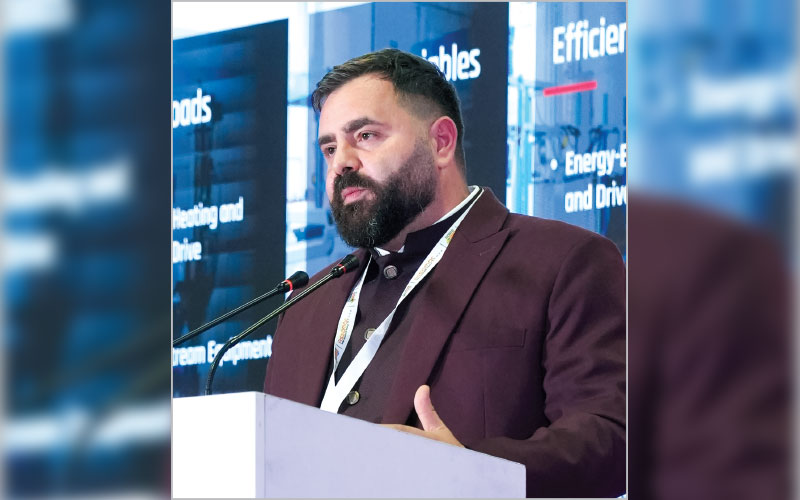
Wire and Cable India: Cable manufacturers today produce an increasingly diverse range of products using different polymers, performance requirements and production speeds. Which developments are placing the greatest demands on modern extrusion systems, and why?
Davide Costabile: Today, cable manufacturing involves a wide range of polymers, so machine manufacturers like MFL Group need to consider all of them when designing an extrusion line.
The material itself increasingly determines how the extrusion process must be designed.
HFFR and LSZH compounds are a good example. Their formulations can be highly filled and therefore place very different demands on melting, pressure management and thermal control compared with conventional PVC or PE.
Then there are materials such as TPE, PUR or high-performance engineering polymers, which can require different temperature windows, residence times and mechanical conditions.
For us, this means that extrusion equipment can no longer be designed around a single “standard” material. The processing window of the material has to be considered at the engineering stage, from screw and extruder design through to tooling, temperature control, cooling and line configuration.
The evolution we see is therefore towards highly flexible extrusion platforms, capable of handling a broader range of compounds without compromising process stability. MFL’s current extrusion portfolio, for example, covers materials ranging from PVC, PE and XLPE to HFFR, LSZH, PP, PUR, TPE and other specialised materials.
Watch: Top Cable Companies in India
WCI: Compared with five years ago, which aspects of the extrusion process have become technically more difficult to control consistently? How have machinery design and process engineering evolved to address these challenges?
DC: As operators’ technical knowledge is gradually declining, our role in supporting customers is becoming increasingly important, not only in selecting the right technology, but also in addressing production challenges and solving production issues. At the same time, we are continuously upgrading our machines to minimise operator intervention and make their operation simpler and more intuitive.
WCI: Modern cable compounds such as HFFR, LSZH, XLPE, specialised elastomers and engineering polymers each present unique processing characteristics. Which material-related challenges are driving the most significant innovations in extrusion equipment today?
DC: Processing XLPE requires excellent dispersion of all components throughout the extruder, as well as controlled and gradual cooling of the cable to ensure that the material develops the required mechanical properties.
One of the most significant developments is the increasing use of halogen-free flame-retardant materials, particularly HFFR and LSZH compounds. Their adoption is being driven by increasingly stringent safety requirements, especially in building and infrastructure applications, where smoke generation, flame propagation and the absence of halogens are becoming increasingly important considerations.
From a processing perspective, these materials are considerably more demanding than conventional polymers. They require very precise thermal management and stable processing conditions to achieve consistent output and cable quality, due to the combination of material formulation, high filler content and sensitivity to processing conditions.
To address these challenges, MFL Group has developed extrusion solutions in collaboration with leading global polymer manufacturers.
Our systems are engineered to deliver up to 40% higher throughput compared to leading market benchmarks (EXB 120/25, 60 RPM), while maintaining stable quality and full compliance with CPR requirements. Fast compound changeovers without barrel disassembly, combined with stable processing conditions, help reduce downtime and improve operational efficiency.
A patented extruder design, precise thermal management, and long-term mechanical reliability ensure repeatable results and prevent material degradation even at high production speeds, making the system suitable for demanding processes.
Extrusion equipment can no longer be designed around a single “standard” material. The processing window of the material has to be considered at the engineering stage, from screw and extruder design through to tooling, temperature control, cooling and line configuration.
WCI: Customers increasingly expect higher line speeds together with tighter quality tolerances. In practice, where do machinery builders encounter the greatest trade-offs between productivity, process stability and product quality, and how are these being addressed?
DC: The real challenge for cable manufacturers is to achieve the highest sustainable production speed while maintaining a stable process and consistent product quality.
This is where engineering becomes critical. Extruder design, thermal management, tooling, cooling, cable tension and automation all have to work together to ensure process stability, particularly as production speeds increase.
This is also an area where MFL Group is continuously pushing the boundaries, developing extrusion solutions capable of achieving benchmark production speeds even with demanding materials, while maintaining a stable, repeatable process and consistent product quality.
WCI: Energy efficiency, automation, digital monitoring and process control are widely discussed across the industry. Which of these developments are delivering the greatest measurable operational benefits today, and where do you still see a noticeable gap between industry expectations and practical implementation?
DC: Today, we see the most tangible benefits coming from automation and process control combined with digital monitoring.
Energy efficiency is obviously important, but reducing energy consumption is most valuable when it is connected to the overall production process. Improving thermal efficiency, reducing unnecessary machine load, minimising start-up losses and maintaining stable processing conditions can deliver benefits simultaneously in terms of energy consumption, productivity and scrap.
This is also where the MFL X ecosystem can add value by connecting machinery, production data and digital tools. Acumen provides continuous monitoring of production performance, helping manufacturers track key indicators such as OEE, identify inefficiencies and understand where productivity losses occur. Eagle, with its AI-based cable quality analysis capabilities, adds a further layer by supporting the identification and analysis of quality deviations.
The value comes from bringing these capabilities together – monitoring what is happening, understanding why it is happening and using that information to improve the process.
The gap we still see is not really a lack of technology. It is the ability to turn data into operational decisions. Many manufacturers already collect large amounts of production data, but not all of them have integrated systems, clear KPIs or processes that allow operators and managers to use that data effectively.
The next step is therefore less about collecting more data and more about making existing data actionable and connecting it to the decisions made on the production floor.
A patented extruder design, precise thermal management, and long-term mechanical reliability ensure repeatable results and prevent material degradation even at high production speeds, making the system suitable for demanding processes.
WCI: With cable manufacturers placing increasing emphasis on productivity, quality and operating costs, which factors now have the greatest influence on the investment value of an extrusion line, and how are they shaping machine design and development?
DC: The investment value of an extrusion line increasingly has to be evaluated in terms of total cost of ownership rather than simply the purchase price of the equipment.
Productivity is fundamental, but customers are also looking closely at scrap rates, energy consumption, downtime, maintenance requirements, changeover times and long-term reliability.
We are seeing greater emphasis on high-efficiency components, faster and more repeatable changeovers, improved process stability, easier maintenance, digital monitoring and upgradeability.
In our view, the best investment is a line that consistently delivers high output and high-quality products, while keeping operating costs under control and providing the flexibility to adapt to future production requirements.
WCI: As cable manufacturers diversify into sectors such as renewable energy, automotive, EV charging, data communication, railway and specialty cables, how are these applications influencing extrusion line configuration, tooling and overall machine design?
DC: The growing diversification of applications is driving the demand for increasingly flexible extrusion lines. Different sectors require different materials and process conditions, so the same line must be able to adapt to each application through the appropriate process configuration and operating parameters.
At MFL Group, our extrusion technology covers a broad range of applications, from power and low-voltage cables to wind power and highly specialised automotive applications, including high-performance PEEK-insulated cables.
Also Read: Wire & Cable India Emagazine Sep-Oct Issue 2026
WCI: Looking ahead, which engineering capabilities do you believe will define the next generation of extrusion machinery? Please elaborate from an industry perspective, focusing on the underlying technological and process developments rather than individual product launches.
DC: We believe the next generation of extrusion machinery will be defined by the ability to combine mechanical engineering, process engineering, automation and digital technologies into one integrated system.
First, machines will need to become increasingly capable of handling a wider range of advanced materials while maintaining a stable and well-defined processing window.
Second, process control will become more autonomous. Instead of simply monitoring parameters, future systems will increasingly be capable of detecting deviations, identifying their causes, and automatically adjusting the process within predefined limits. This will become increasingly important as the availability of skilled operators becomes more limited. By embedding more process knowledge into the machinery, automation can support operators, reduce the need for highly specialised intervention and make production more consistent and repeatable.
Third, digital technologies will play a larger role in turning production data into operational intelligence. This includes predictive maintenance, real-time performance monitoring, recipe management and a better understanding of the relationship between process parameters and final cable quality.
Finally, energy efficiency, durability and long-term reliability will become increasingly important. Customers will need machinery that uses resources as efficiently as possible, while being designed to operate reliably over a long service life with reduced maintenance requirements. Longer-lasting components, lower wear and easier maintenance can help reduce downtime and total operating costs, making the machine a stronger long-term investment.
Overall, we see the next generation of extrusion machinery evolving towards systems that are more adaptable, autonomous, connected and energy-efficient, making production more stable, consistent and sustainable.
In our view, the best investment is a line that consistently delivers high output and high-quality products, while keeping operating costs under control and providing the flexibility to adapt to future production requirements