

As India’s infrastructure, industrial automation, electric mobility, renewable energy, and digital ecosystems continue to expand, demand for high-performance specialty cables is accelerating across a wide range of critical applications. From data centres and railways to defence, shipbuilding, and EVs, these sectors require cable solutions that deliver superior reliability, safety, and long-term performance under demanding operating conditions. In an exclusive interview with Wire & Cable India, Mr. Anurag Agarwal, CEO – Global Exports & New Businesses, Polycab India Limited, discusses the evolving specialty cable landscape, emerging technology trends, increasing qualification and traceability requirements, the push for localisation under Atmanirbhar Bharat, and the company’s strategic focus on developing advanced, application-specific cable solutions for India’s next phase of industrial growth.
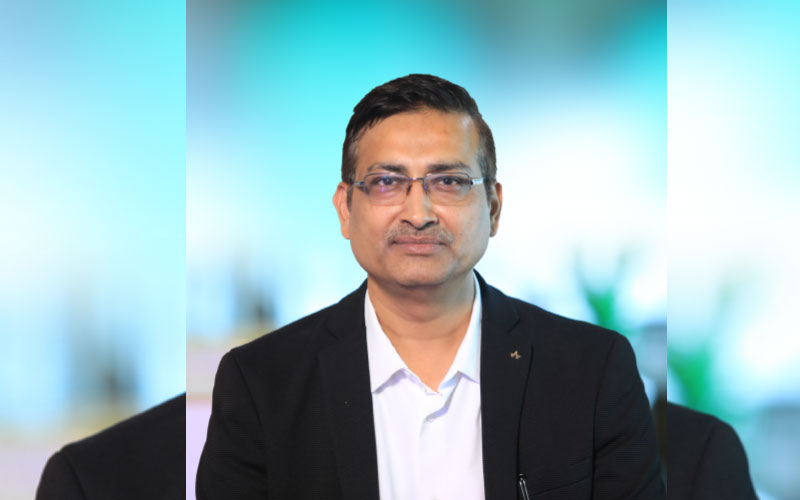
Wire & Cable India: How do you currently define the specialty cable segment within your organization, and which application areas are presently driving the strongest business momentum for you?
Anurag Agarwal: At Polycab, we define specialty cables as highly engineered products designed for niche and critical applications that operate in challenging environments and require performance levels beyond conventional cable systems. We manufacture a wide range of specialty cables for sectors such as railways, renewable energy, oil & gas, shipbuilding & navy, Automotive & EV, Data Centres, Defence, and Industrial Automation. Each of these segments has unique operating conditions and requires complex cable constructions designed to meet stringent Indian and international standards.
We are currently witnessing strong demand from Data Centres, Railways, EVs, Shipbuilding & Navy, and Renewable Energy projects. These sectors represent some of India’s key sunrise sectors and are driving the need for high-performance, application-specific cable solutions that deliver reliability, safety, and long operational life.
Watch: Top Cable Companies in India
WCI: Among automation, railways, renewables, data centers, EVs, oil & gas, mining, marine, or defense, which end-use sectors are generating the most meaningful demand today, and how do their technical expectations differ?
AA: Demand is currently strongest from data centres, railways, renewable energy, EVs, shipbuilding & navy, and defence applications. While all these sectors require high levels of reliability and safety, their technical expectations differ significantly depending on the operating environment.
For example, data centres prioritise fire performance, signal integrity, and uninterrupted operations. Railways require enhanced fire safety, durability, and compliance with stringent transportation standards. Renewable energy projects demand superior weatherability and long-term outdoor performance. EV and automation applications require high flexibility, compact designs, and thermal endurance, while marine, naval, and defence applications require resistance to harsh environmental conditions, vibration, corrosion, and mechanical stress. As applications become increasingly specialised, customers are looking for customised solutions tailored to their specific operational requirements.
WCI: What major shifts are you observing in customer expectations regarding performance, reliability, lifecycle requirements, qualification standards, and application-specific engineering?
AA: Customers today have significantly higher expectations compared to a few years ago. Specialty cable applications involve stringent qualification procedures, compliance requirements, and homologation processes before products are approved for use. In many cases, regular audits are conducted not only by customers but also by end users to assess manufacturing systems, quality controls, and process consistency.
There is also a stronger emphasis on lifecycle performance, traceability, and application-specific engineering. Customers increasingly expect manufacturers to collaborate closely during product development and qualification. At the same time, India’s growing focus on self-reliance is creating opportunities for indigenous development of advanced cable solutions. Polycab continues to work closely with both Indian and global companies to develop specialised and import-substitute products that support complex applications while contributing to the Government of India’s Atmanirbhar Bharat vision.
WCI: Which performance parameters are becoming increasingly critical in specialty cable design today, including flexibility, thermal endurance, fire performance, EMI shielding, chemical resistance, weatherability, or signal integrity?
AA: The importance of specific performance parameters depends on the application, but all of these characteristics are becoming increasingly critical in specialty cable design. For example, long-term thermal endurance is a key requirement for naval shipbuilding applications and plays a major role in product qualification. In submarine applications, cables may be required to withstand pressure testing up to 72 bars. Enhanced fire performance is critical for railways, data centres, and oil & gas installations where safety and operational continuity are essential.
High flexibility is particularly important for automation and robotics, automotive and EV applications, railway rolling stock, mining, and material handling systems where cables are exposed to continuous movement and mechanical stress. We are also seeing growing interest in lighter-weight cable solutions that can meet or exceed existing performance requirements without compromising reliability, safety, or durability.
WCI: How are industrial automation, robotics, high-flex applications, and the growing convergence of power, control, and data systems influencing product development and cable architecture?
AA: Industrial automation and digitalisation are significantly influencing cable design and architecture. One of the most notable developments is the growing adoption of composite cables that combine power, control, and data transmission functions, including fibre, within a single cable system.
These solutions are increasingly being used in both dynamic applications such as automation, robotics, and automotive sensor systems, as well as fixed applications such as EHV underground and subsea power-data transmission systems. The growth of EV technology has further accelerated this trend, as charging cables today are essentially composite cables integrating power, earth, control, and signalling cores within a single design. As systems become more integrated and intelligent, cable architecture is evolving to support higher functionality, improved efficiency, and simplified installation.
WCI: What manufacturing and process challenges are most significant in specialty cable production compared to conventional cable systems, particularly in areas such as precision extrusion, shielding, testing, qualification, and consistency control?
AA: While the basic manufacturing processes may appear similar, specialty cable production is significantly more complex than conventional cable manufacturing. Challenges begin with metallurgy and conductor design, including the use of copper, aluminium, alloys, specialised shielding materials, fibres, advanced insulation and sheathing compounds, and application-specific tapes and fillers.
Cable design and process engineering are critical stages because they define all performance parameters required for production, testing, and qualification. Maintaining consistency across electrical, mechanical, thermal, and environmental performance characteristics requires highly controlled manufacturing processes and specialised testing infrastructure. Qualification and homologation procedures often involve extensive testing witnessed by customers or approving authorities, followed by rigorous audits. In this environment, strong research and development capabilities form the backbone of specialty cable manufacturing and are essential for both innovation and long-term competitiveness.

Industrial automation and digitalisation are significantly influencing cable design and architecture. One of the most notable developments is the growing adoption of composite cables that combine power, control, and data transmission functions, including fibre, within a single cable system.
WCI: How important have certification, traceability, and customer qualification requirements become in sectors such as railways, offshore, infrastructure, industrial automation, and critical installations?
AA: Certification, traceability, and qualification requirements have become absolutely critical across all specialty cable segments. In sectors such as railways, offshore energy, industrial automation, defence, and critical infrastructure, product acceptance depends as much on compliance and traceability as it does on technical performance.Customers
increasingly expect complete transparency across manufacturing processes, testing records, material traceability, and quality assurance systems. Any lapse in qualification, certification, or compliance can have significant business implications and may affect long-standing customer relationships. As applications become more critical and safety standards continue to evolve, maintaining robust qualification and traceability systems is no longer optional but a fundamental requirement for participating in these markets.
WCI: To what extent does India still remain dependent on imports for advanced specialty cable categories, and where do you see the strongest opportunities for deeper localization?
AA: Indian cable manufacturers have made considerable progress in developing specialty cables that meet international standards across several application segments. However, the country continues to depend on imports in certain advanced categories such as aerospace, automation, offshore oil & gas, offshore wind, subsea applications, railway rolling stock, automotive & EV, and electronics.
At the same time, localisation opportunities remain significant. We expect to see strong progress in segments such as railway rolling stock, automotive & EV, and shipbuilding over the next few years. Growing investments in infrastructure, manufacturing, defence, transportation, and clean energy are creating favourable conditions for domestic capability development, while initiatives such as Atmanirbhar Bharat are accelerating the localisation of advanced technologies and specialised cable solutions.
WCI: How do you assess the present competitive landscape in specialty cables, particularly in relation to pricing pressure, qualification costs, customization demands, and margin sustainability?
AA: The specialty cable segment requires long-term commitment, continuous investment in research and development, and deep technical expertise. It is a business that demands significant effort in product development, qualification, testing, and customer approvals before commercial success can be achieved.
While competition has increased in areas such as railway rolling stock, automotive & EV, and shipbuilding & navy, leading to some pricing pressure, we believe this is a natural phase of market evolution. Over the long term, success will depend less on pricing and more on quality, reliability, innovation, and the ability to consistently meet customer expectations. Specialty cables remain a highly technical segment where serious, quality-focused players with strong engineering and R&D capabilities are best positioned to succeed.
Also Read: RR Kabel Sees Specialty Cables Driving Growth Amid Automation, Digitalisation Push
WCI: Looking ahead, which specialty cable applications or technology areas do you believe will define the next phase of growth and development for the industry in India?
AA: The next phase of growth for the specialty cable industry will be driven by India’s expanding sunrise sectors and advanced infrastructure requirements. We expect strong opportunities in offshore wind and hybrid energy projects, airports and baggage handling systems, shipbuilding including large vessels, offshore rigs, naval vessels and submarines, aerospace applications spanning commercial aviation, defence aircraft, drones and space vehicles, high-speed rail and rolling stock, and robotics and industrial automation.
In addition, emerging sectors such as data centres, semiconductor manufacturing, advanced power infrastructure, and electric mobility will continue to create demand for increasingly sophisticated cable solutions. As these industries evolve, specialty cables will play a critical role in supporting safety, reliability, connectivity, and operational efficiency across next-generation infrastructure and industrial ecosystems.