As cable manufacturers move towards more demanding materials, tighter tolerances and increasingly diverse applications, extrusion machinery is being challenged to deliver flexibility, process stability and consistent quality at higher speeds. In an exclusive interaction with Wire and Cable India, Mr. Vivek Mehta, Managing Director, Sai Extrumech Pvt. Ltd., discusses the evolving demands on extrusion systems, material-specific screw and tooling design, in-line measurement, energy efficiency and total cost of ownership. Drawing on Sai Extrumech’s over 25 years of experience in wire, cable and tubing extrusion machinery, with machines installed across India and international markets, he highlights the importance of matching machinery to specific compounds and applications while balancing productivity, quality, reliability and operating costs.
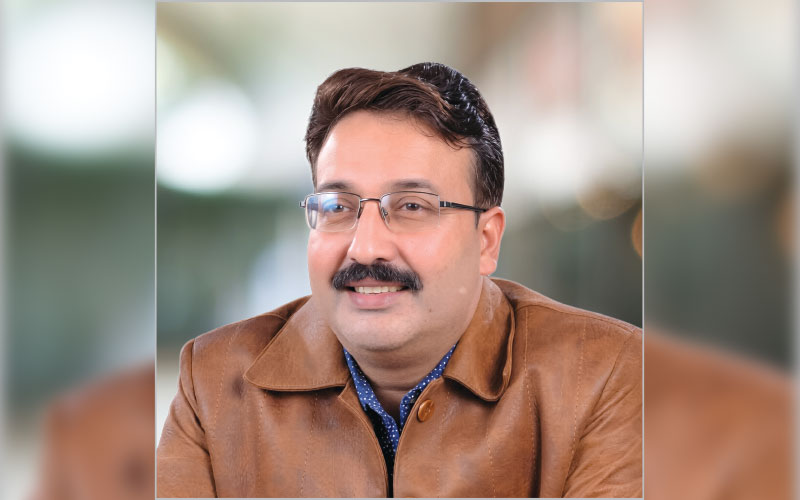
Wire and Cable India: Cable manufacturers today produce an increasingly diverse range of products using different polymers, performance requirements and production speeds. Which developments are placing the greatest demands on modern extrusion systems, and why?
Vivek Mehta: The hardest demand is not raw speed; it is running different compounds on the same line without long stoppages in between. A plant that once made mostly PVC building wire now wants to switch between PVC, HFFR and XLPE in a week. Each of these materials behaves differently in the barrel, so the screw, temperature profile and the tooling all have to cope with a much wider window than before. In addition, walls are getting thinner while tolerances get tighter, so the crosshead has to hold concentricity that we would have called laboratory-grade ten years ago. The machine that survives this is the one built around flexibility and measurement, not the one with the biggest motor.
Watch: Top Cable Companies in India
WCI: Compared with five years ago, which aspects of the extrusion process have become technically more difficult to control consistently? How have machinery design and process engineering evolved to address these challenges?
VM: Filled compounds are the honest answer. HFFR and LSZH carry heavy mineral loading; they are abrasive and can scorch if you push shear too hard. Five years ago, most of our customers ran forgiving PVC. Now they run materials that punish a poorly matched screw within weeks. Holding the melt temperature steady at higher output is genuinely harder, because the faster you run, the less time the melt has to settle before the die. We have answered it with better zone temperature control, gravimetric feeding so the throughput does not drift, bimetallic screws and barrels for the abrasive grades, and closed-loop control, where a laser gauge on the line corrects the process instead of an operator noticing an hour later.
WCI: Modern cable compounds such as HFFR, LSZH, XLPE, specialised elastomers and engineering polymers each present unique processing characteristics. Which material-related challenges are driving the most significant innovations in extrusion equipment today?
VM: HFFR and LSZH are pushing the most change, because they combine three awkward traits: high filler content that wears the screw and barrel, weak melt strength that makes a clean surface difficult, and sensitivity to moisture. That has moved bimetallic barrels and carefully designed mixing screws from optional to normal, and it has made drying and degassing part of the conversation rather than an afterthought. XLPE pulls in a different direction, where the whole game is controlling scorch and getting the cure right, which is why curing lines matter so much for medium and high voltage. Elastomers need cold-feed screw designs that have little in common with a thermoplastic screw. The equipment is specialising because the materials refuse to be treated the same. In our own work with these compounds, we treat drying and a properly matched mixing screw as non-negotiable, because we have seen what a generic screw does to a filled grade within weeks.
WCI: Customers increasingly expect higher line speeds together with tighter quality tolerances. In practice, where do machinery builders encounter the greatest trade-offs between productivity, process stability and product quality, and how are these being addressed?
VM: You cannot cheat physics. When you raise line speed, the melt spends less time in the barrel, so melt quality is the first thing to suffer if the screw is not designed for it. More speed also means more shear heat, which is dangerous with XLPE and filled compounds that can scorch. And the faster the conductor moves, the harder it is to keep the insulation centred. We deal with this in two ways. First, screw geometry and a longer L/D so the melt is properly prepared even at speed. Second, in-line measurement of diameter, wall and eccentricity feeding back into the line so a drift is corrected before it becomes scrap. What I tell customers is simple: a line built for 33 kV cable should not be flogged to make thin building wire at maximum speed and expected to hold quality. Match the line to the job.
WCI: Energy efficiency, automation, digital monitoring and process control are widely discussed across the industry. Which of these developments are delivering the greatest measurable operational benefits today, and where do you still see a noticeable gap between industry expectations and practical implementation?
VM: The measurable wins today are unglamorous. Efficient AC drives and a screw designed for the actual compound cut the energy used per kilogram of output, and you can see it on the meter. Gravimetric control and in-line measurement cut scrap, which, on a copper cable line, is real money saved every shift. That part works. The gap is in the digital story. A lot of plants now collect data they never look at. They buy sensors and dashboards, and the predictive maintenance screen sits in a corner while the line runs to failure anyway. The technology is ahead of the habit of using it. Monitoring only pays when someone acts on what it shows, and that is a training and discipline problem more than a hardware one.

At Sai Extrumech, we design and build our screws, barrels and crossheads in-house and keep the spares moving, because a line down for three weeks waiting for a part has wiped out whatever it saved at purchase.
WCI: With cable manufacturers placing increasing emphasis on productivity, quality and operating costs, which factors now have the greatest influence on the investment value of an extrusion line, and how are they shaping machine design and development?
VM: Total cost of ownership, not the headline speed on the brochure. A cheaper line that scraps more copper and compound is an expensive line by the end of the year. What decides real value is uptime, scrap rate, energy per kilogram, how quickly you can change over between products, and whether spares and service are actually available when a part wears. This is why, at Sai Extrumech, we design and build our screws, barrels and crossheads in-house and keep the spares moving, because a line down for three weeks waiting for a part has wiped out whatever it saved at purchase. Buyers who have been burned once understand this. The ones buying their first line often learn it the hard way.
WCI: As cable manufacturers diversify into sectors such as renewable energy, automotive, EV charging, data communication, railway and specialty cables, how are these applications influencing extrusion line configuration, tooling and overall machine design?
VM: Every one of these sectors comes with its own material and its own tolerance, and that changes the line. Solar and EV cable push XLPO and HFFR compounds and tighter specs, and they often need dual- or triple-layer construction, which means more extruders and the right crosshead rather than a single insulation head. Data cable lives and dies on wall consistency and foam-skin control. Railway and building cables are about fire performance, so LSZH dominates. Medium- and high-voltage work for power and renewable projects needs proper XLPE curing. We already build across this spread at Sai Extrumech, from cable and building-wire lines to medical tubing and lab extruders, so we see first-hand how differently each application treats tooling and control. That last point on curing is where we are investing next. We are planning to build a Catenary Continuous Vulcanisation (CCV) line for cables up to 66 kV in the coming years to serve the growing medium- and high-voltage demand that the power and renewable sectors are creating. The application decides the machine, and the applications are multiplying.
WCI: From your interactions with cable manufacturers, what are the most common misconceptions about extrusion that often lead to avoidable quality issues, inefficiencies or higher production costs? Conversely, what operational practices consistently distinguish high-performing plants?
VM: The most expensive misconception is that a screw is a generic part, that any screw will run any compound if you adjust the temperature. It will not, and forcing it shows up as scrap and premature wear. The second is buying on price and headline speed alone, then wondering why the numbers never match on real material. The third is ignoring screw and barrel wear until output quietly drops, by which point you have been paying for it for months. The plants that run well do the boring things properly. They match the screw and tooling to the compound they actually run, they maintain on a schedule instead of waiting for failure, they use their in-line measurement to correct in real-time rather than filing the data away, and they keep their operators trained. None of that is exotic. It is just done consistently.
Also Read: Wire & Cable India Emagazine Sep-Oct Issue 2026
WCI: Looking ahead, which engineering capabilities do you believe will define the next generation of extrusion machinery? Please elaborate from an industry perspective, focusing on the underlying technological and process developments rather than individual product launches.
VM: The direction I believe in is the line that corrects itself. Measurement and control are still too often bolted on as separate boxes. The next generation ties them together so the line holds wall and concentricity on its own, and the operator supervises rather than chases. Alongside that, screw and barrel engineering will keep getting more material-specific because the compounds are only getting more demanding. Real energy reduction will matter more as power costs rise, and I mean measured reduction, not marketing. And predictive maintenance will finally earn its place when it is built to be acted on rather than displayed. We try to stay close to that curve by working with engineering institutions such as IIT Delhi and BITS Pilani alongside our own shop-floor experience. The machinery that wins will be the one that is reliable, serviceable and honest about what it can do, built by people who still work on the shop floor.