

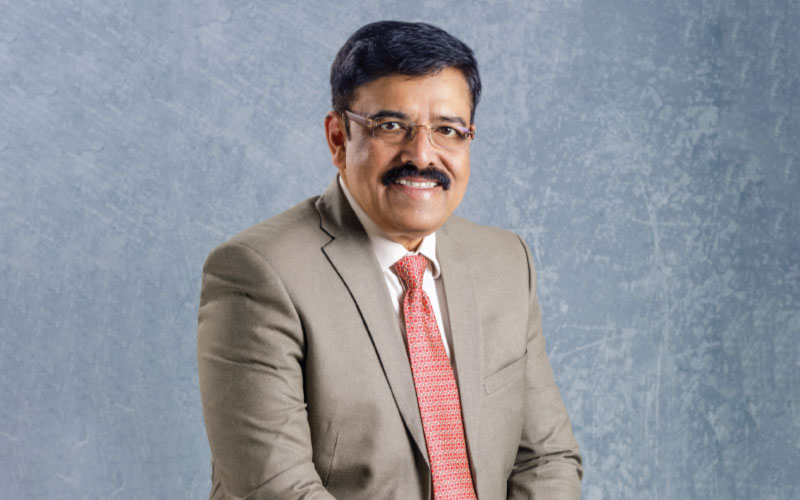
India’s wire and cable industry is witnessing a structural growth phase, driven by infrastructure development, renewable energy, digitalisation and rising industrial demand. With its five-year strategic roadmap, Project Spring, Polycab India is looking to strengthen its leadership in wires and cables while expanding its presence across emerging applications and diversified electrical solutions. The company plans to invest INR 60–80 billion over the next five years towards capacity expansion, backward integration, automation and technology upgrades. In an exclusive interview with Wire & Cable India, Mr. Shashi Amin, Director & CEO B2B Channel & Corporate Communication, Polycab India Limited, discusses the nuances of India’s evolving demand cycle, the growing requirements for application-specific cables in data centres, renewable energy and electric mobility, and the increasing importance of quality, reliability and lifecycle performance.
Wire & Cable India: Polycab has recently been expanding its capabilities across cables, wires and related electrical products. What are the key developments shaping the company’s growth strategy at this stage?
Shashi Amin: Our growth strategy is centred on strengthening our leadership in wires and cables while building a more diversified electrical solutions business. India’s evolving infrastructure and industrial landscape presents significant opportunities, and our focus is on developing the capabilities and market reach needed to address them.
Project Spring, our five-year strategic roadmap, provides the framework for this next phase of growth. In our core wires and cables business, we are focused on deepening our presence across industry segments, strengthening customer relationships and addressing evolving infrastructure requirements.
Operational efficiency, innovation and manufacturing capabilities are central to executing these priorities. We are also looking to expand our international presence by leveraging our product capabilities and identifying opportunities across markets.
Ultimately, our objective is to build on our established strengths while developing new capabilities that support sustainable growth and contribute to India’s infrastructure development and manufacturing ambitions.
Watch: Top Cable Companies in India
WCI: The Indian wire and cable industry is witnessing a strong upturn, supported by infrastructure, renewable energy, urbanisation, digitalisation and data-centre investments. How do you assess the current demand cycle?
SA: We see the current demand cycle as being supported by structural factors rather than any single investment trend. India’s infrastructure development, urbanisation, industrial expansion and rising electricity requirements are creating sustained demand for wires and cables across public and private sector projects.
Power transmission and distribution will remain important drivers as the country expands generation capacity and strengthens the grid to integrate renewable energy. Investments in real estate, manufacturing and digital infrastructure are further broadening the demand base. NITI Aayog’s recently released Data Centre Evaluation Framework notes that India’s data-centre capacity has grown from approximately 375 MW in 2020 to 1.5 GW, underscoring the growing importance of reliable power infrastructure as AI and digital applications expand.
India’s ambition to achieve 500 GW of non-fossil fuel energy capacity by 2030 further reinforces the need for investment in transmission, distribution and associated electrical systems.
While demand momentum may vary across sectors, the medium- to long-term outlook remains encouraging. The opportunity for manufacturers lies in matching capacity with evolving demand while delivering the quality, technical capabilities and reliability required to support India’s infrastructure ambitions.
We are also looking to expand our international presence by leveraging our product capabilities and identifying opportunities across markets.
WCI: With the industry entering a new phase of expansion, which segments and applications do you see emerging as the strongest growth drivers for Polycab over the next three to five years?
SA: Over the next three to five years, we see significant opportunities across power transmission and distribution, renewable energy, real estate, industrial manufacturing and digital infrastructure. These segments are aligned with India’s broader development priorities, including energy security, infrastructure creation and the Viksit Bharat vision.
The expansion of renewable energy will drive demand for cables used in power evacuation and grid connectivity, while investments in transmission and distribution will be critical to strengthening the country’s electricity infrastructure. Urbanisation and real estate development will continue to support demand for building wires and electrical products.
We also see emerging opportunities in data centres, electric mobility and advanced manufacturing, where specialised cables must meet more demanding technical and operational requirements. Under Project Spring, Polycab is sharpening its focus on these sunrise sectors through industry-specific strategies and customised solutions. Our opportunity lies in leveraging our established manufacturing capabilities and diversified portfolio to address these evolving requirements.
WCI: New entrants such as Praneetha EcoCables and Ultravolt are entering the wire and cable market with differentiated offerings. What does the emergence of these players indicate about the opportunities in the industry, and how do you see competition evolving?
SA: The entry of new players reflects the attractiveness of India’s wires and cables market, supported by infrastructure development, electrification and evolving customer needs. Investments by large business groups also indicate confidence in the sector’s long-term growth potential.
As competition intensifies, differentiation will become increasingly important. While pricing and distribution will remain key considerations, customers also place significant value on product quality, safety, reliability and consistent performance. In specialised applications, technical capabilities, product certifications and the ability to meet demanding specifications are equally critical.
For established players like Polycab, the priority is to continue strengthening these fundamentals while improving operational efficiency, expanding market reach and investing in product development. We believe a growing market creates opportunities for multiple players, but sustainable competitiveness will depend on the ability to deliver quality at scale, build customer trust and respond to evolving requirements.

As competition intensifies, differentiation will become increasingly important. While pricing and distribution will remain key considerations, customers also place significant value on product quality, safety, reliability and consistent performance.
WCI: Beyond established cable and wire applications, how is demand evolving for specialised products for data centres, renewable energy, EVs and other emerging infrastructure segments?
SA: As infrastructure becomes more complex, demand is growing for cables designed around the specific operating conditions of each application. Data centres require reliable power distribution, high-speed data transmission and fire-retardant solutions to support continuous operations. Renewable energy installations need cables that can withstand prolonged exposure to heat and UV radiation, while wind applications require products suited to demanding environmental and mechanical conditions.
Electric mobility is creating opportunities in EV charging infrastructure, including charging cables and associated electrical connections. Industrial automation and advanced manufacturing are also increasing the need for specialised cables that meet precise technical and performance specifications.
At Polycab, we serve these requirements through a diversified portfolio spanning power, control, communication, optical fibre, solar and special-purpose cables. Our focus is on developing application-specific solutions that deliver reliability, safety and performance under demanding conditions. As India expands its digital infrastructure and transitions towards cleaner energy, these capabilities will become increasingly important.
WCI: As customers increasingly look beyond price towards reliability, energy efficiency, certifications and lifecycle performance, how is Polycab strengthening its product development and manufacturing capabilities to meet these changing expectations?
SA: As customers increasingly evaluate electrical products on reliability, safety and lifecycle performance, quality must be built into every stage of the product journey, from material selection and design to manufacturing and final testing.
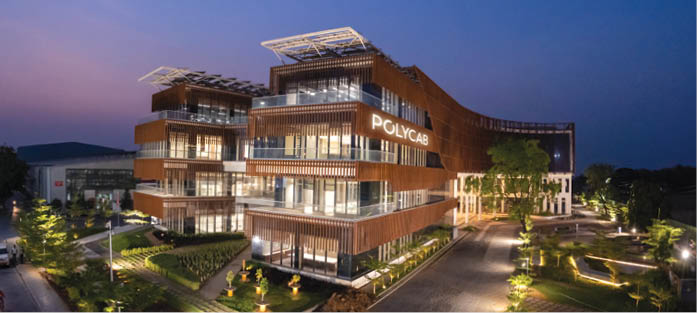
At Polycab, our DSIR-accredited Polymer R&D Centre, established in 2016, drives material innovation for wires and cables, developing advanced polymer compounds that meet evolving application requirements and national and international standards. Our quality assurance framework extends from raw-material selection to finished products, helping ensure consistent performance and reliability.
We are also leveraging technology to strengthen manufacturing quality, including AI-powered defect detection in cable production. Across our broader electricals portfolio, automated manufacturing and testing systems support precision, consistency and product validation. These capabilities are particularly important as electrical products serve increasingly demanding applications.
Our focus is on combining product innovation, rigorous testing and manufacturing excellence to deliver solutions that meet customer expectations while upholding the safety and reliability standards essential to India’s expanding electrical infrastructure.
In FY 2025–26, we invested INR 14.8 billion in capital expenditure, focusing on capacity expansion, backward integration, automation and technology upgrades. Under Project Spring, we plan to invest INR 60–80 billion over five years to support long-term growth and strengthen our capabilities.
WCI: With the industry witnessing capacity additions and increasing investments across the value chain, what role will scale, technology, backward integration and supply-chain efficiency play in determining competitiveness?
SA: Scale alone will not determine competitiveness as the industry expands. Manufacturers must combine capacity with productivity, technology, backward integration and disciplined capital allocation to deliver reliably while managing costs.
Technology and automation can improve manufacturing precision, process control and operational efficiency. Backward integration gives greater control over critical inputs, helping strengthen supply reliability, maintain quality and reduce dependence on external suppliers. Equally, an efficient supply chain is essential to managing raw-material volatility, meeting delivery commitments and responding to changing demand.
At Polycab, these priorities are reflected in our manufacturing investments. In FY 2025–26, we invested INR 14.8 billion in capital expenditure, focusing on capacity expansion, backward integration, automation and technology upgrades. Under Project Spring, we plan to invest INR 60–80 billion over five years to support long-term growth and strengthen our capabilities.
Ultimately, competitiveness will depend on how effectively manufacturers integrate scale, technology and operational discipline to deliver quality products consistently and efficiently.
Also Read: Wire & Cable India Emagazine Nov-Dec Issue 2026
WCI: Looking ahead, what are Polycab’s key priorities in terms of capacity expansion, product innovation, market penetration, new applications and technology as the Indian wire and cable industry enters its next phase of growth?
SA: We envisage the next phase of our growth being propelled by our ability to consolidate our leadership in wires and cables, augment our consumer electricals portfolio and harness emerging opportunities across domestic and international markets. Project Spring serves as our strategic blueprint, guiding our focus on market penetration, portfolio expansion, innovation and operational excellence.
In wires and cables, we will continue to align capacity expansion with evolving market opportunities while strengthening our capabilities in high-growth segments such as renewable energy, data centres and electric mobility. In consumer electricals, we are focused on premiumisation, deeper distribution and a differentiated portfolio that anticipates changing consumer preferences. Internationally, we aim to broaden our footprint through targeted market development and offerings tailored to regional requirements.
Technology, automation and R&D will remain pivotal to enhancing productivity and strengthening our competitive position. As India advances towards its Viksit Bharat ambitions, we are committed to translating these opportunities into sustainable growth through manufacturing excellence, product innovation and customer-centricity.
Project Spring, our five-year strategic roadmap, provides the framework for this next phase of growth. In our core wires and cables business, we are focused on deepening our presence across industry segments, strengthening customer relationships and addressing evolving infrastructure requirements.