

In an exclusive interview with Wire & Cable India, Mr. Anil Gupta, Chairman and Managing Director, KEI Industries Limited, discusses the company’s ambitious expansion plans, rising investments in manufacturing, backward integration, and its strategy to strengthen its position in India’s evolving wire and cable industry. With INR 700 crore earmarked for its Salarpur facility in Rajasthan, alongside ongoing developments at Sanand, KEI is scaling up its production capabilities across cables and GI wires. He also shares his perspective on the industry’s growth drivers, emerging opportunities in EHV and specialised cables, new entrants, and the company’s priorities in capacity expansion and exports in the industry.
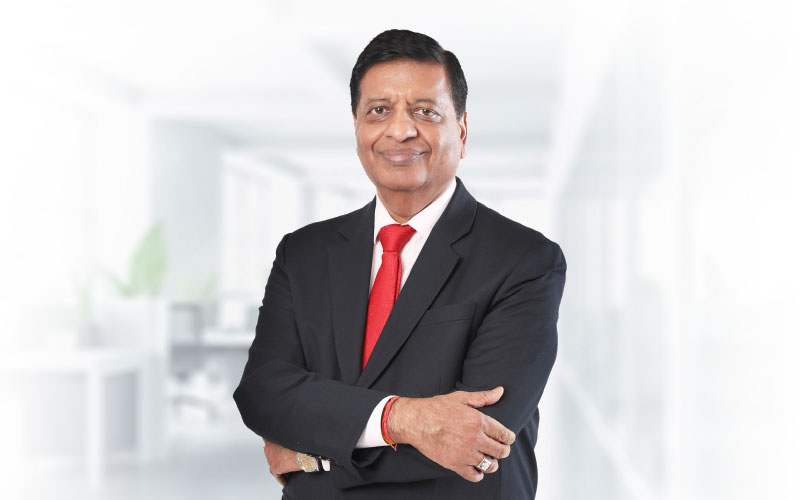
Wire & Cable India: KEI has approved INR 700 crore for its Salarpur, Rajasthan expansion, including 50,000 km of cable and 40,000 MT of GI wire capacity. What are the key milestones and timelines for this project?
Anil Gupta: KEI Industries has approved an investment of approximately INR 700 crore for its proposed manufacturing facility at Salarpur, Rajasthan. The project will add 50,000 km of annual cable manufacturing capacity and 40,000 MT of annual GI wire capacity, strengthening our manufacturing footprint and backward integration.
The facility is expected to be commissioned in phases by September 2028. The investment will be funded through internal accruals, reflecting our focus on expanding capacity while maintaining financial discipline.
Our immediate priorities are project development, installation of manufacturing equipment, operational readiness and quality assurance. Phased commissioning will allow us to progressively bring capacity online and align production with market demand. The expansion will complement our existing facilities and support our ability to serve retail, institutional and infrastructure customers.
Watch: Top Cable Companies in India
WCI: With Sanand also being developed as a major manufacturing hub, how will the two facilities complement KEI’s existing manufacturing network and product portfolio?
AG: Sanand and Salarpur will play complementary roles in KEI’s long-term manufacturing strategy. Sanand is a major investment in expanding our capabilities across LT, HT and EHV cables, including specialised cable applications. Its first phase, covering LT and HT cables, was commissioned in December 2025, while the second phase, focused on EHV and additional HT cable capacity, is scheduled for commissioning by March 2027.
Salarpur will further expand our cable manufacturing capacity while adding GI wire production to strengthen backward integration. Together with our existing manufacturing facilities, these investments will help us address demand across a wider range of applications and improve our ability to respond to customer requirements.
Our objective is to build a balanced manufacturing network that combines scale, specialised capabilities, operational efficiency and supply-chain resilience. This will support growth across domestic retail, institutional and export markets while enabling us to serve both established and emerging applications in the wire and cable industry.
WCI: The Indian wire and cable industry is witnessing a strong upturn. What are the key drivers of the current demand cycle, and how sustainable is this growth?
AG: India’s wire and cable industry is benefiting from several structural growth drivers, including investment in power transmission and distribution, renewable energy, infrastructure, real estate and industrial development. Rising electricity demand, grid modernisation, urbanisation and increasing electrification are also contributing to demand.
Renewable energy is an important growth area, as solar and wind installations require reliable cable systems for power generation, connectivity and evacuation. At the same time, residential and commercial construction continues to support demand for house wires and low-voltage cables, while industrial expansion is creating opportunities for specialised products.
We believe the industry’s medium- to long-term outlook remains positive because these demand drivers are closely linked to India’s infrastructure development and energy requirements. However, growth will not be uniform across all segments, and market conditions may be influenced by commodity prices, project execution, capacity utilisation and competitive intensity.
For the industry, sustainable growth will depend on aligning capacity additions with actual demand, maintaining product quality, improving operational efficiency and developing solutions that meet evolving technical and safety standards.
WCI: With capacity additions accelerating across the industry, which wire and cable segments do you expect to see the strongest growth over the next three to five years?
AG: Over the next three to five years, we expect opportunities across several segments, particularly power cables, EHV cables, renewable-energy cables and house wires.
Power transmission and distribution investments will support demand for HT and EHV cables as utilities expand networks and strengthen grid infrastructure. Renewable-energy projects will create opportunities for specialised cables, including solutions for solar power installations. Industrial development, infrastructure projects and data centres will also require reliable power and control cable systems.
House wires and LT cables should continue to benefit from housing, commercial construction, urbanisation and increasing awareness of electrical safety. Specialised cables for railways, transportation and industrial applications also offer opportunities as technical requirements evolve.
At KEI, our focus is on expanding relevant manufacturing capacities and strengthening our presence in these segments. We will continue to evaluate opportunities based on demand visibility, technical requirements, customer needs and the long-term potential of each market.
We view the entry of new players as part of a developing market. For established manufacturers, the priority will be to continue improving operational efficiency, strengthening product capabilities and delivering long-term value to customers.
WCI: KEI is strengthening backward integration through GI wire manufacturing at Salarpur. How important will greater integration be for cost efficiency, quality and supply-chain resilience?
AG: Backward integration is an important step towards improving manufacturing efficiency and strengthening control over critical inputs. The proposed GI wire capacity at Salarpur will provide greater control over the availability and quality of this material for relevant applications, including cable armouring where applicable.
In-house manufacturing can improve production planning, reduce dependence on external suppliers for the relevant input and support better coordination between procurement and manufacturing. It can also help strengthen quality consistency and provide greater flexibility in responding to changing production requirements.
The actual benefits will depend on capacity utilisation, manufacturing efficiency, input costs and market conditions. Therefore, our approach will be to integrate operations in a commercially disciplined manner while maintaining stringent quality standards.
For KEI, the broader objective is to build a more efficient and resilient manufacturing ecosystem that supports reliable deliveries, consistent product performance and sustainable business growth.
WCI: New entrants such as Praneetha EcoCables and Ultravolt are entering the market. What does this indicate about the opportunity in the sector, and how do you expect competition to evolve?
AG: The entry of new manufacturers indicates that the wire and cable sector continues to offer opportunities across a broad range of products and customer segments. India’s infrastructure development, electrification, construction activity and industrial growth are creating demand for different types of wire and cable solutions.
We expect competition to evolve across product categories, pricing, distribution, technical capabilities and customer service. Some companies may focus on specific product segments or regional markets, while others may pursue broader manufacturing capabilities and wider distribution networks.
As the industry expands, the ability to manufacture at scale will remain important, but it will not be the only determinant of success. Consistent quality, compliance with applicable standards, dependable delivery and the ability to meet customer-specific requirements will also be critical.
We view the entry of new players as part of a developing market. For established manufacturers, the priority will be to continue improving operational efficiency, strengthening product capabilities and delivering long-term value to customers.
WCI: As new players enter with focused product and pricing propositions, what will differentiate established manufacturers such as KEI in the coming years?
AG: In the coming years, established manufacturers will need to differentiate themselves through product quality, manufacturing capabilities, distribution reach, technical expertise and customer trust.
KEI has an established presence across house wires, LT and HT cables, EHV cables, control and instrumentation cables, and other specialised products. Our experience across retail, institutional and infrastructure markets enables us to address varied customer requirements.
In the wire and cable industry, reliability and safety are fundamental. Customers need products that meet required specifications and applicable standards, perform consistently and are delivered on time. Technical support, product availability and after-sales responsiveness are also important considerations, particularly for large infrastructure and industrial projects.
We will continue to focus on manufacturing excellence, quality assurance, product development and distribution strength. Our capacity expansion plans are intended to support demand while enabling us to serve a wider range of applications.
Ultimately, our differentiation will come from combining dependable products, a broad portfolio and consistent customer service with the operational capabilities required to compete effectively over the long term.
Also Read: Wire & Cable India Emagazine Nov-Dec Issue 2026
WCI: Looking ahead, what are KEI’s key priorities in terms of capacity, product diversification, specialty cables, exports and new applications?
AG: Our priorities are to expand manufacturing capacity in line with demand, strengthen our product portfolio, develop specialised cable capabilities and increase our reach in domestic and international markets.
Capacity expansion remains central to this strategy. Sanand will strengthen our capabilities across LT, HT and EHV cables, while Salarpur will add cable capacity and GI wire manufacturing. These investments will support our ability to serve growing requirements across power infrastructure, renewable energy, construction and industrial applications.
Product diversification is another important priority. We are strengthening our capabilities in specialised cable applications, including electron-beam cables, and developing our readiness for higher-voltage technologies such as HVDC. These capabilities will support opportunities in renewable energy, transportation, industrial applications and advanced power transmission networks.
Exports will also remain an important growth area. We will continue to develop international market opportunities through relevant certifications, product compliance, customer relationships and dependable supply capabilities.
Across these priorities, our focus is on disciplined investment, manufacturing efficiency, product quality and customer satisfaction. By combining capacity expansion with technical development and market access, we aim to build a stronger platform for sustainable long-term growth.