

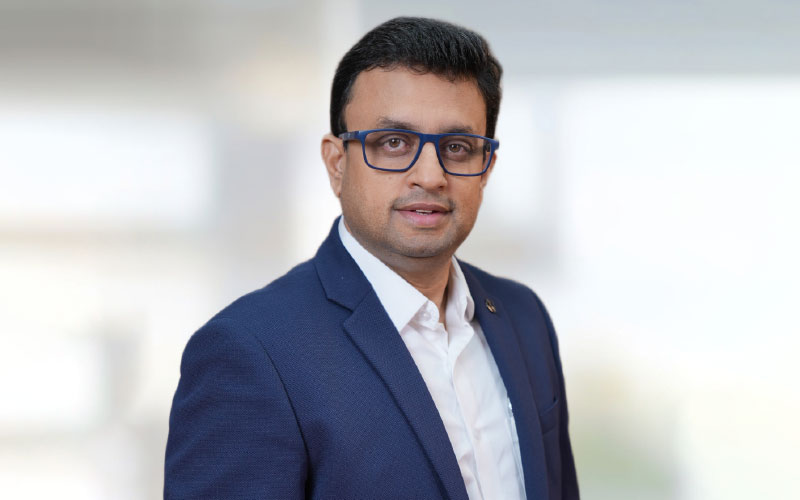
As the Indian wires and cables industry evolves on the back of infrastructure expansion, energy transition, and rising quality consciousness, Finolex Cables is sharpening its strategic focus to stay ahead of the curve. The company is not only strengthening its presence in core segments like real estate and industrial applications but also expanding into high-growth areas such as renewables, specialty cables, and emerging infrastructure needs. With a clear emphasis on distribution expansion, operational efficiency, and value-added product development, Finolex is aligning its capabilities with changing market dynamics. In an exclusive interview with Wire & Cable India, Mr. Amit Mathur, President (Sales and Marketing), Finolex Cables Ltd., shares insights into Finolex’s growth priorities, innovation roadmap, and how it is positioning itself for the next phase of industry transformation.
Wire & Cable India: Finolex Cables has maintained a strong market position in a competitive industry. What have been the key strategic priorities and growth-focused areas for the company over the past year?
Amit Mathur: Over the past year, our focus has been on strengthening core fundamentals while aligning with emerging demand trends. This has meant deepening our presence in high-growth segments such as infrastructure, real estate, and industrial applications, while also ensuring that our product portfolio remains relevant to evolving customer needs.
A key priority has been expanding distribution reach and improving last-mile availability, particularly in underpenetrated markets. At the same time, we have been equally focused on enhancing operational efficiency, ensuring that scale is supported by consistent quality and reliability. Another important area has been building stronger engagement across the value chain — from electricians and contractors to institutional buyers — as their influence on product choice continues to grow.
Overall, the approach has been to balance growth with discipline, ensuring that expansion is both sustainable and aligned with long-term industry shifts.
Watch: Top Cable Companies in India
WCI: Could you highlight any recent investments, capacity expansions, or product developments that are shaping Finolex’s next phase of growth?
AM: The next phase of growth is being shaped by a combination of capacity augmentation and portfolio strengthening. We have been investing in expanding manufacturing capabilities to cater to rising demand across both retail and institutional segments. This is particularly important as the industry moves towards higher quality and compliance standards.
On the product side, there has been a clear emphasis on expanding our presence in value-added and specialised cables. These include products designed for more demanding applications, where performance, safety, and durability are critical.
At the same time, investments are also being directed towards process improvements and technology adoption within manufacturing, which helps enhance consistency and efficiency. The focus is not just on scaling capacity, but on building capability that can support the next level of industry requirements.

The energy transition presents a significant opportunity for the wires and cables industry, as it fundamentally increases the need for reliable and efficient power transmission and distribution. We are seeing growing demand from segments such as solar installations, renewable energy projects, and associated infrastructure.
WCI: Energy transition is the future. How is Finolex preparing itself to contribute to the renewable transformation of India? How are you currently positioned in the segment?
AM: The energy transition presents a significant opportunity for the wires and cables industry, as it fundamentally increases the need for reliable and efficient power transmission and distribution. We are seeing growing demand from segments such as solar installations, renewable energy projects, and associated infrastructure.
Our approach has been to align our product offerings with these requirements, ensuring that they meet the performance and safety standards needed for renewable applications. This includes cables that can withstand varying environmental conditions and deliver long-term reliability.
From a positioning standpoint, we see ourselves as an enabler of this transition rather than just a supplier. As renewable energy capacity expands, the need for robust electrical infrastructure will only increase, and that is where we continue to focus our efforts.
A key priority has been expanding distribution reach and improving last-mile availability, particularly in underpenetrated markets.
WCI: Specialty cables are seeing rising demand across sectors like railways, data centres, and industrial applications. How is Finolex strengthening its presence in these high-growth segments?
AM: Specialty cables represent a natural progression for the industry as applications become more complex and performance driven. Sectors like railways, data centres, and industrial automation require products that go beyond standard specifications, with greater emphasis on safety, durability, and efficiency.
We are strengthening our presence in these segments by expanding our product portfolio and aligning it with the specific requirements of each application. This also involves working closely with customers to understand evolving needs and ensuring that our offerings remain relevant.
In addition, there is a strong focus on building technical capabilities and ensuring that our manufacturing processes can support these higher standards. As these sectors continue to grow, specialty cables will play an increasingly important role in overall industry dynamics.
We had earlier introduced our premium FinoUltra wires that are designed to deliver unmatched safety, durability and performance. The product leverages advanced Electron Beam (E-beam) technology to enhance mechanical and thermal properties, allowing it to sustain higher voltages with reduced radial thickness and extending their lifespan to over 50 years. The wires’ advanced E-beam cross-linking technology delivers 75% higher current capacity, compared to standard wires, thus reducing energy loss, minimizing overheating and optimizing performance. It also maintains operational integrity at temperatures up to 125°C, making it ideal for use in outdoor and extreme environments.
WCI: Material innovation is becoming critical, particularly in compounds, insulation, and fire-safety standards. What advancements is Finolex focusing on in this area?
AM: Material innovation is central to improving both product performance and safety. As regulatory standards evolve and end-user expectations rise, there is a growing need for better insulation materials, improved fire resistance, and enhanced durability.
Our focus has been on developing and adopting materials that meet these requirements while also ensuring consistency in performance. This includes advancements in insulation compounds that offer better resistance to heat and environmental stress, as well as products that adhere to stricter fire-safety norms.
The direction is clear — innovation in materials is no longer optional, but essential for staying relevant in a market that is increasingly quality-conscious.
In the OFC space, we are shifting our product mix toward specialized solutions such as high-density ribbon cables (IBR technology) and micro-duct cables, specifically designed for the space constraints of urban 5G deployments.
WCI: The Indian wire and cable industry is witnessing strong momentum. What are the key trends currently shaping the sector?
AM: The industry is currently being shaped by a combination of structural and behavioural shifts. On the demand side, infrastructure development, urbanisation, and electrification continue to be strong drivers. At the same time, there is a visible shift towards organised players, as consumers and institutional buyers place greater emphasis on quality and compliance.
Another important trend is the increasing demand for specialised and value-added products, driven by sectors such as renewables, data centres, and industrial automation. This is gradually changing the composition of the market.
Additionally, there is a growing focus on safety and standards, which is pushing the industry towards better products and more responsible practices. Overall, the sector is moving towards higher quality, greater consolidation, and more structured growth.
WCI: Which end-user segments — such as infrastructure, real estate, renewables, or telecom — are emerging as the biggest demand drivers?
AM: Demand is currently being driven by a mix of traditional and emerging segments. Infrastructure remains a key contributor, supported by government-led investments in roads, railways, and urban development. Real estate continues to play an important role, particularly with steady demand in residential and commercial construction.
At the same time, renewables are emerging as a significant growth area, given the scale of investment in solar and other clean energy projects. Industrial applications and manufacturing are also contributing, as capacity expansion and modernisation continue across sectors.
What is notable is that demand is becoming more diversified, which provides a more stable growth environment for the industry.
Also Read: Resonia Powering India to Win the ‘Race Against Time’ in T&D Sector with Tech-led Solutions
WCI: In the coming 5–10 years, where do you see Finolex innovating the most, and in which sectors?
AM: Over the next 5–10 years, innovation is likely to be driven by the intersection of performance, safety, and sustainability. We see significant opportunities in areas such as specialty cables, renewable energy applications, and products designed for emerging infrastructure needs. For example, in the OFC space, we are shifting our product mix toward specialized solutions such as high-density ribbon cables (IBR technology) and micro-duct cables, specifically designed for the space constraints of urban 5G deployments.
There will also be a strong push towards improving material efficiency and enhancing product life cycles, which aligns with broader sustainability goals. As applications become more demanding, the need for customised and high-performance solutions will increase.
At a broader level, innovation will not be limited to products alone, but will also extend to manufacturing processes, supply chain efficiency, and customer engagement. The focus will be on building capabilities that can adapt to a rapidly evolving industry landscape.