

As the steel wire industry transitions toward performance-driven demand, manufacturers are increasingly prioritizing value-added and application-specific solutions. In an exclusive interview with Wire & Cable India, Mr. Radha Raman Saraf, Director, Nirmal Wires Pvt. Ltd. (Group Nirmal), highlights the company’s transition toward application-specific, high-performance steel wire solutions driven by evolving industry requirements. He points to strong demand from infrastructure, automotive, and power sectors, where durability, corrosion resistance, and precision are critical. Flagship offerings like NIZNAL® zinc-aluminium coated wires underscore the shift toward longer-life, value-added products. Mr. Saraf emphasizes that future growth will be led by product specialization, technology adoption, and deeper alignment with high-growth, performance-driven end-use segments.
Wire & Cable India: Steel wire manufacturers today cater to a wide range of end-use industries through both conventional commodity and specialized products. Could you briefly describe your company’s specialty or application-specific steel wire portfolio and the key industries they serve?
Radha Raman Saraf: At Nirmal Wires, we prioritize creating steel wire solutions tailored to specific applications, moving beyond standard commodity products. Our steel wire portfolio includes a wide range of offerings, such as hot-dip galvanized wires available in both bare and PVC-coated variants, ensuring versatility for various industrial needs. We also manufacture high-quality black steel wires, recognized for their strength and durability. Among our standout products is the advanced NIZNAL® wire, coated with a zinc-aluminium alloy. This innovative product significantly enhances longevity, offering up to 6 times the lifespan compared to conventional GI wires. These advancements make NIZNAL® wires an excellent choice for applications that require exceptional durability and performance.
Our products cater to the specific performance requirements of key sectors, including power and transmission, automotive and auto components, infrastructure and construction, agriculture, and general engineering. As the needs of each sector evolve, factors like durability, consistency, and reliability become paramount. We take pride in providing solutions that meet and exceed these critical demands, ultimately contributing to the efficiency and effectiveness of the industries we serve.
Watch: Top Cable Companies in India
WCI: A large portion of steel wire production has traditionally consisted of general-purpose, commodity products such as binding wire, fencing wire, and low-carbon drawn wire. In your view, how does application-specific (specialty) steel wire differ from these commodity products in terms of metallurgy, performance requirements, and manufacturing precision?
RRS: Application-specific or specialty steel wires differ significantly from commodity products in terms of metallurgy, performance and manufacturing tolerances. For commodity wires, manufacturers typically use low-carbon steel with standard properties suited for general use. In contrast, specialty wires use carefully controlled chemical compositions, sometimes with added alloys to achieve specific mechanical characteristics. From a performance standpoint, commodity wires meet basic strength requirements, whereas specialty wires are designed for higher tensile strength, better fatigue resistance, improved corrosion protection and a precise balance between strength and ductility, depending on the application. Manufacturing precision is also far more critical for specialty wires. They require controlled multi-stage processing, heat treatment and stringent quality checks to ensure uniformity in dimensions, surface quality, and overall performance. In essence, specialty wires are engineered to deliver consistent results in demanding, application-specific environments.
WCI: As end-use industries evolve, their performance requirements increasingly influence wire design. Which sectors today are exerting the strongest influence on steel wire development and demand for specialized products?
RRS: Today, demand for specialized steel wires is being shaped by sectors that are not only growing rapidly but also evolving in terms of performance requirements. In India, the steel wire market is expanding at around 6.8% CAGR, driven largely by construction, automotive, and power applications. Infrastructure and construction remain the largest contributors, accounting for over 50% of total steel consumption and projected to grow at 9–10% CAGR. This growth is driven by highways, metro rail, and urban housing projects, where applications like prestressed concrete and reinforcement require wires with high strength, consistency, and long-term durability. The automotive sector is another key driver, growing at around 7.7% CAGR, with increasing focus on lightweighting, safety, and efficiency. The transition toward electric vehicles is further accelerating demand for high-strength, fatigue-resistant wires used in critical components. The power and energy sector is also becoming increasingly important, with India targeting 500 GW of non-fossil fuel capacity by 2030 and already crossing 180 GW of renewable capacity. In parallel, transmission infrastructure is expanding rapidly, with investments exceeding INR 2.4 lakh crore planned to strengthen and extend the national grid. This is driving demand for high-performance, corrosion-resistant wires that can handle higher loads and ensure long-term reliability.
The transformation in the steel wire industry is clear. Demand is now driven by performance requirements across high-growth sectors rather than just volume. Manufacturers need to focus on tailored solutions to address the specific needs of various applications. Key parameters like tensile strength, flexibility, and corrosion resistance are increasingly critical for specialized steel wire applications.
WCI: Different applications require specific mechanical and physical properties. What key technical parameters (such as tensile strength, fatigue resistance, surface quality, or dimensional tolerance) are becoming most critical for these specialized steel wire applications?
RRS: In specialized steel wire applications, the focus today has moved beyond simply achieving high strength to delivering reliable, application-specific performance over the entire service life of the product and this shift is clearly reflected in how end-use industries are evolving.
While tensile and yield strength remain fundamental, modern applications demand a much more comprehensive performance profile. For instance, in prestressed concrete, wires typically operate at tensile strengths of 1500–1800 MPa(Megapascal), where even small deviations can directly impact structural integrity. However, high strength alone is not sufficient as fatigue resistance has become equally important, as many applications involve millions of stress cycles over their service life, making durability under repeated loading a key requirement. Surface quality has also emerged as a defining factor. Industry experience shows that micro-level surface defects can reduce fatigue life by 20–30% or more, especially in high-stress conditions. This makes controlled descaling, proper lubrication, and uniform coating essential parts of the manufacturing process. In corrosion-prone environments, coating consistency directly influences service life, with advanced zinc-aluminium systems offering significantly longer protection compared to conventional galvanization.
Dimensional accuracy and consistency are increasingly important with the rise of automated processing. Even minor variations in diameter or roundness can disrupt downstream operations and affect overall performance. At the same time, achieving the right balance between strength and ductility remains critical, ensuring that wires can withstand high loads while retaining enough flexibility to avoid brittle failure. Overall, the industry is moving toward a more integrated definition of quality—where mechanical properties, surface integrity, and consistency are all tightly controlled to meet the demands of modern, performance-driven applications.
WCI: Does producing high-performance specialized wires often require advanced processing capabilities? If yes, what types of manufacturing technologies or specialized equipment are essential for producing such high-performance steel wires?
RRS: Producing high-performance specialized steel wires is a complex process requiring advanced processing capabilities, as the acceptable margin for variation is much narrower compared to standard wire products.
At the core of this process is precision-controlled wire drawing, which utilizes intricate multi-stage drawing machines. These machines ensure a uniform reduction of the wire’s diameter while maintaining consistent mechanical properties throughout the material. Achieving the desired microstructure, a balance between strength and ductility depends heavily on meticulously executed heat treatment processes such as patenting and annealing. These treatments are crucial for altering the internal structure of the metal to enhance its performance characteristics. Surface preparation is another vital aspect that should not be overlooked. Techniques such as pickling, where the wire is treated with acid to remove impurities, phosphating, and controlled lubrication are implemented to ensure smooth drawing operations. These processes not only improve the wire’s surface quality but also enhance the adhesion of any coatings that may be applied later. For wires that require coating, advanced galvanizing lines become important. In particular, zinc-aluminium systems necessitate strict control over various parameters, including temperature, coating thickness, and uniformity. This precision is essential for delivering consistent corrosion resistance, which is a critical performance criterion for specialized applications.
In addition to these core processing techniques, modern manufacturing plants increasingly incorporate automation and real-time monitoring systems. The use of inline measurement tools, such as laser-based diameter control, along with comprehensive process monitoring systems, helps maintain tight tolerances and ensures that each batch meets stringent quality standards. The manufacturing of specialized wire relies on maintaining a delicate balance of precise control throughout the entire production process, which is necessary to consistently meet the demanding performance requirements that characterize high-performance steel wires.

Manufacturers need to focus on tailored solutions to address the specific needs of various applications. Key parameters like tensile strength, flexibility, and corrosion resistance are increasingly critical for specialized steel wire applications.
WCI: Steel wire production depends heavily on the quality and availability of wire rods. How do variations in raw material quality or fluctuations in input prices influence downstream wire manufacturing?
RRS: Steel wire production is closely linked to the quality and consistency of input wire rods, making raw material control a critical factor in overall performance. From a quality standpoint, variations in material chemistry and cleanliness can directly impact process stability and end performance. Issues like inclusions or surface defects are among the primary causes of wire breakages during drawing and can significantly reduce fatigue life, making consistency in raw material essential for high-performance applications.
On the pricing side, volatility has become increasingly pronounced. In India, steel wire rod prices were around USD 0.55–0.56 per kg in early 2026, after fluctuating through late 2025 with movements of over 5% within a single quarter depending on demand and supply conditions. At a more granular level, market data shows weekly price corrections of INR 600–INR 1,000 per tonne in early 2026, reflecting short-term demand-supply imbalances. Over a slightly longer horizon, prices have moved in a band of roughly INR 44,500 to INR 47,500 per tonne during 2025, highlighting the degree of fluctuation manufacturers must manage.
These fluctuations are further amplified by broader steel market dynamics. India’s crude steel production reached around 154 million tonnes in 2025 (up ~10%), while demand is expected to grow by another ~9% in 2026, putting continuous pressure on raw material availability and pricing. Such volatility directly impacts downstream wire manufacturers by compressing margins and complicating pricing decisions, especially in contracts with fixed delivery cycles.
To manage this, manufacturers are increasingly focusing on tighter supplier integration, stricter incoming quality checks, and more dynamic procurement and inventory strategies. Ensuring consistency at the raw material stage not only improves product reliability but also helps stabilize operations in an otherwise highly variable cost environment.
WCI: Across the industry, manufacturers are investing in process improvements and automation. Which recent technological or operational upgrades have had the greatest impact on product quality and manufacturing efficiency?
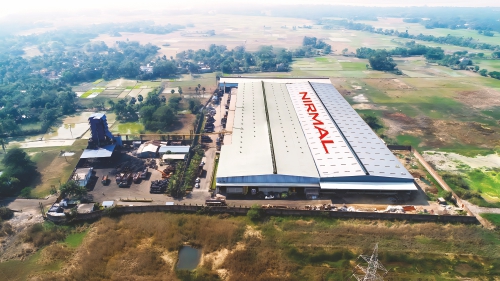
RRS: Across the steel wire industry, the most impactful upgrades have come not from changing the core drawing process, but from how it is controlled, monitored, and integrated.
One of the biggest shifts has been toward automation and smart production lines. Modern multi-wire drawing systems today deliver up to 40% higher throughput while reducing operator dependency by around 30%, compared to older single-stage machines. Additionally, over 30% of existing production lines globally are now being upgraded with automation retrofits, sensors, and digital controls, reflecting the scale of this transition.
Equipment itself has also evolved significantly. Earlier systems relied heavily on manual control and batch processing, whereas modern machines use CNC/PLC-based control systems with real-time monitoring of speed, tension, and diameter, ensuring far tighter process control. This has enabled precision levels of up to ±0.01 mm tolerance, which is critical for high-performance and downstream automated applications. In terms of productivity, newer high-speed drawing lines now operate at speeds exceeding 15 m/s, with continuous operation capabilities that significantly reduce downtime and improve output consistency.
Many of the modern manufacturers have already adopted SCADA driven process control under Industry 3.0 and are now moving to AI driven process control under Industry 4.0 and creating a base to reach Industry 5.0. This denotes a major trend is digitalization and data-driven manufacturing. Inline sensors for diameter measurement, surface inspection, and tension monitoring are becoming standard, helping reduce scrap rates and stabilize quality. Smart monitoring and predictive maintenance systems have further helped reduce downtime by around 20% while improving product quality by up to 25% in upgraded facilities. Energy efficiency has also improved noticeably. Modern systems incorporating optimized lubrication, variable speed drives, and heat recovery are delivering energy savings of up to 25%, which is critical in an energy-intensive process like wire drawing.
Overall, the transition is clear- from manually controlled, labor-intensive operations to automated, data-driven, and precision-controlled manufacturing systems. The result is not just higher output, but more consistent quality, lower waste, better traceability, and improved cost efficiency, especially for high-performance, application-specific wire products.
WCI: India’s steel wire industry has historically been fragmented, but larger organized manufacturers are steadily expanding their presence. How do you see the competitive structure of the industry evolving in the coming years?
RRS: India’s steel wire industry is gradually transitioning from a highly fragmented structure to a more organized and quality-driven market.
At present, a large portion of the industry still comprises small and mid-sized players operating in the commodity segment, where competition is largely price-driven. However, this structure is steadily evolving. Organized manufacturers are expanding their presence, particularly in the specialized and high-performance wire segments, where consistency, certification, and technical capability are critical. This shift is also reflected in market trends. India’s steel demand is expected to grow at around 8–9% annually, and as end-use industries become more quality-conscious, there is a clear preference for reliable suppliers who can meet stringent specifications. Larger players are better positioned here due to their ability to invest in advanced manufacturing, maintain tighter quality control, and comply with global standards. At the same time, consolidation is gradually increasing, with more customers, especially OEMs and infrastructure projects—preferring long-term partnerships with established manufacturers rather than sourcing from multiple smaller suppliers.
Going forward, the industry is likely to see a clearer divide: commodity segments may remain competitive and fragmented, while the value-added and specialty segments become increasingly dominated by organized, technology-driven players.
Also Read: Mukand Sumi Driving High-Performance Steel Wire Solutions for Precision Industries
WCI: Looking ahead, what will be the key strategic priorities for steel wire manufacturers—whether in terms of product specialization, capacity expansion, technology investments, or exploring new application segments?
RRS: Looking ahead, the key strategic priority for steel wire manufacturers will be a clear shift from volume-driven growth to value-driven expansion.
Product specialization will be central to this transition. As end-use requirements become more demanding, there will be a stronger focus on developing application-specific, solution driven, high-performance wires with enhanced strength, durability, and corrosion resistance, rather than competing in commoditized segments. At the same time, capacity expansion will need to be more strategic. Instead of adding volume alone, manufacturers will increasingly invest in technology-led capacity to integrate advanced drawing, heat treatment, coating capabilities and well equipped-improved testing labs to support higher-value quality products.
Technology and process upgrades will remain a major focus area, particularly in automation, real-time quality monitoring, and data-driven manufacturing. These investments not only improve consistency and efficiency but also enable manufacturers to meet the tighter tolerances required by modern applications. Exploring new and emerging application segments will also be important. Growth in areas such as renewable energy, electric mobility, and advanced infrastructure is creating demand for more specialized wire solutions.
Finally, sustainability is becoming an important consideration. Energy-efficient processes, optimized material usage, and lower emissions will increasingly influence both operations and customer preferences. Overall, the future will favor manufacturers who can combine technical capability, product innovation, and operational efficiency to move up the value chain.