

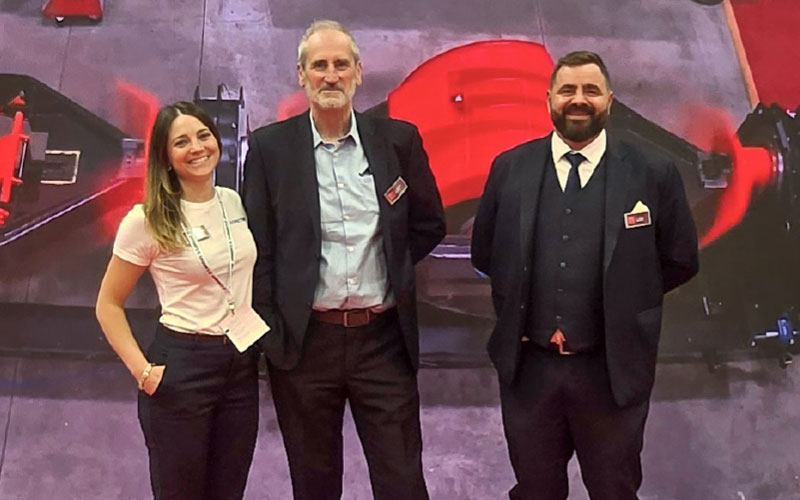
As India’s wire and cable industry evolves towards higher quality, export competitiveness, and smarter manufacturing, demand is rising not just for advanced machinery but also for integrated digital solutions. In an exclusive interaction with Wire & Cable India, Mr. Davide Costabile, Area Manager – Wire & Cable Division, MFL Group and Mr. Martino Castelli, Area Manager – Wire & Rope Division, MFL Group, highlighted the company’s latest developments, including aluminium-focused machinery, real-time quality inspection systems like Eagle, and its digital ecosystem through MFL X in collaboration with 40factory. They emphasised the ongoing shift from copper to aluminium, growing demand for high-performance machinery, and the need for faster service support amid a rapidly expanding installed base. With strong relationships across leading Indian players and plans to strengthen its local footprint, MFL sees India not only as a high-growth domestic market but also as a key hub in the global wire, cable and rope value chain.
Wire & Cable India: Please tell us what’s new at MFL.
Davide Costabile: We are continuously improving our existing machines. Recently, we have introduced and soldin the Indian market our new Rod Breakdown- TS2, specifically designed for aluminium applications. In addition, in the MFL X ecosystem we have developed a new system called “Eagle,” an AI-based computer vision platform which enables real-time inspection of wire quality and surface. The system can immediately provide feedback or trigger alarms to the operator or machine, ensuring better quality control and supporting stable and consistent output.
On the extrusion side, we have also introduced developments related to payoff and take-up systems. Most of these innovations are already available in the market, enabling us to further expand our customer base.
In terms of demand trends, we are seeing strong traction across segments, particularly in double twist machines. The aluminium segment, in particular, is growing significantly, with increasing investments driven by the rising cost of copper. Additionally, with the support of Mr. Kanchan Dogra, who brings over 20 years of market experience, we have been able to open many new doors in India, although we are already working with several major players.
Martino Castelli: From our side, particularly for the ferrous segment, we are continuously integrating more advanced technology into our solutions. We have strong relationships with major groups, to whom we continuously provide new lines, and we have also started working with new customers. It is very satisfying to see the results—for instance, a customer, that was a new player in LRPC, recently confirmed that they have achieved their targeted monthly production. This clearly demonstrates the performance capability of our lines.
While the initial capex for such machines may be higher, they deliver strong returns even in the short term. However, this performance depends on having good-quality rod and a proper production plan. With the right inputs, the machines perform exceptionally well.
A similar example is a large rope manufacturer, where we installed a new production line and the results in terms of quality, performance, and especially safety have been very strong. Safety is a key priority for us. Although operators may initially take time to adapt to these advanced solutions, the level of technology integrated into our machines today is significantly high and makes the work of the operator much easier.
On the digital side, we have introduced systems to enhance customer experience and to leverage the full potential of our machines. For example, customers can now access spare parts online through a platform, Scout, similar to e-commerce, where they can view 3D drawings, identify components, and place orders directly.
Additionally, we are strongly promoting MFL X Acumen in collaboration with 40factory. This platform is being positioned as a leading system for machine analytics, providing an Industrial IoT solution that transforms data acquired from any type of industrial machine into valuable insights.
Overall, we are progressing strongly across multiple fronts, and we believe the Indian market increasingly requires this level of quality and technological advancement.
We have also seen strong performance at long term customer, where a second automotive suspension spring line has been running successfully since six months. These examples highlight the capability of our solutions in delivering high-quality output. Looking ahead, there will be new wire and rope manufacturers entering the market, including producers from abroad. Today, scale is critical, and Indian large companies are leading because of their global production presence. We expect more entrants and we are already in touch with some of them.
In terms of product development, in bead wire lines, in galvanizing or in place of oil tempering for large diameters, we now offer a new large production lines with induction technology. In addition, we provide complete support across the entire process—from mechanical descaling to the finished product—ensuring consistently high quality. We also collaborate with experienced consultants to strengthen our offerings.
While India has strong local manufacturers for smaller machines, we are clearly positioned as a leader in turn-key solutions, large machines, and customized units.
Watch: Top Cable Companies in India
WCI: Are there plans to expand your footprint in India?
MC: Yes, we are moving in that direction, although at a relatively measured pace. Internally, we are evaluating new decisions for the near future, and together with Davide, we are working towards establishing a stronger presence in India, including expanding our team.
Given the large installed base of our machines in the country, it is essential for us to strengthen our local footprint. While I cannot commit to a specific timeline, this is certainly a priority and something that will materialise. In the meantime, we are already very active in the market—both Davide and I travel frequently to India. In fact, I spend a significant amount of time here, often more than at home.

If companies are aiming to export and are ready to use the good quality rod, they can achieve the highest speeds and performance with our machines. If the focus is on quality and productivity—from mechanical descaling to the finished product—our solutions can deliver exceptional results.
WCI: You are already working with most of the large players in India, but there are still many companies that could benefit from your machines and technology. Given that advanced technology comes at a price, what would you say to such companies—why should they consider MFL?
MC: If companies are also looking to export and are ready to use good quality rod, they can achieve the highest speed and performance with our machines. I am very clear about this—if you are working with low-quality rod, then our machines are not the right choice, as you will not achieve the expected return on investment. However, if the focus is on quality and productivity—from mechanical descaling to the finished product—our solutions can deliver exceptional results. We can guarantee a very high-quality output, although this comes at a cost, which is not always readily accepted in the Indian market, but is compensated by the higher performance of our lines.
This situation is similar to the shift towards ecological solutions. For instance, in regions like Gujarat, acid usage is restricted. We offer in-line electrolytic phosphating solutions that let operate the drawing line at around 85% of the speed of conventional processes, while reducing the environmental impact of the process.
This is not just about cost—it is about mindset. Moving towards ecological solutions is a necessity today. It is about protecting essential resources like water, which is fundamental for life and agriculture.
In Europe and the US, there is already strong acceptance of such environmentally responsible solutions. In India, however, this acceptance is still evolving and needs to become a priority rather than a luxury, , especially for companies facing challenges in obtaining environmental approvals.
Ultimately, the mindset needs to shift towards valuing quality. As the saying goes, “I am too poor to afford cheap things,” which perfectly reflects the long-term value of investing in better technology. In India, there is often a preference for premium products in personal consumption, but in manufacturing, there is still a tendency to prioritise low-cost solutions. There needs to be greater emphasis on respecting both people and machines, which in turn will benefit the entire ecosystem.
In addition to our first Sustainability Report, ISO 14001 and ISO 45001 certifications, the installation of solar panels at our headquarters, and other initiatives, we have also obtained our first EPD (Environmental Product Declaration). This represents a tangible example of what sustainability means for our Group. All these voluntary initiatives are driven by our commitment to the planet. We are happy to see that this approach is a common ground with the largest Indian rope manufacturer, and we foresee it becoming a shared commitment with more Indian companies in the future, as it already is with European and American companies.
WCI: What are the latest product and market trends you are observing?
DC: The market is currently witnessing a clear shift from copper to aluminium.
Customers are increasingly seeking Rod Breakdown machines along with Multi-wire drawing solutions for aluminium,. In addition, there is strong demand for large double twist machines—typically in the 2000–2500 range—capable of producing conductors up to 400 sq. mm, including sector-shaped configurations.
Over the next five years, we expect strong growth in the Indian market, driven not only by domestic demand but also by increasing export potential as product quality reaches global standards. With this anticipated growth, we aim for MFL Group to capture a significant share of the market.
WCI: How do you see the Indian market growing?
DC: Over the next five years, we expect strong growth in the Indian market, driven not only by domestic demand but also by increasing export potential as product quality reaches global standards. With this anticipated growth, we aim for MFL Group to capture a significant share of the market.
Customer preferences are also evolving. Earlier, the market was highly price-sensitive, but there is now a growing recognition of the value of quality, with customers increasingly willing to invest in better technology. At the same time, competition has also strengthened, with other players becoming more capable and better prepared than before. Overall, this is a positive development for the industry.
WCI: How do you foresee your footprint growing in the Indian market, particularly in terms of setting up facilities, assembly units, or expanding service capabilities?
DC: We will soon be strengthening our service capabilities, with dedicated service engineers expected to be in place in the coming months. Earlier, when our installed base in India was limited, the need was not as critical. However, with a significant increase in the number of machines now in operation, the market requires much faster and more efficient support. Quick response to customer requirements has become essential, and we are aligning our service infrastructure accordingly. Beyond this, we will continue to evaluate further steps as the market evolves.
Also Read: TROESTER Sees Record Year 2025, Stays Optimistic on India and Global Cable Demand Growth
WCI: What broader trends do you see shaping the Indian market?
DC: The Indian market is clearly evolving, with a stronger focus on quality and demand for new products that were previously not widely available. Safety standards are also becoming more important. For instance, HFFR (Halogen free, flame retardant) cables, which were not mandatory earlier, are expected to become mandatory in India. At the same time, the country is witnessing significant infrastructure development across sectors such as railways, highways, data cables, and data centres. This indicates substantial growth opportunities and a large volume of work ahead.
India is also experiencing an overall improvement in quality of life, driven by a large and growing population. With increasing access to the internet, automobiles, and modern infrastructure, the market today is vastly different from what it was 20 years ago. Overall, India is entering a phase of strong expansion across multiple sectors.
MC: Globally, India is increasingly being seen as a strong alternative to China, attracting attention as a key manufacturing and growth hub.
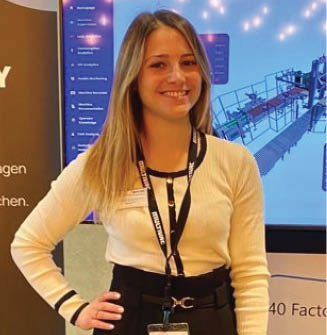
Ms. Francesca Margherita Chifari, Head of Sales, 40Factory
We are a provider of digital solutions for the manufacturing industry, primarily working with OEMs, including machine builders like MFL. Our technology is designed to enable advanced services for end customers. Traditionally, customers rely on reactive support such as spare parts and technician intervention. Our objective is to transform this into a more proactive and data-driven approach, thereby redefining the relationship between OEMs and end users.
We offer three products under our Industry 4.0 factory platform. The first solution, called MAT, enables data collection directly from the PLCs of machines or production lines, transforming raw data into actionable insights and presenting them through intuitive dashboards. This allows users to analyse operations across multiple parameters, such as production performance, scrap levels, maintenance, and energy consumption, helping them optimise efficiency and improve overall line performance. Secondly, Wilson.AI Conversational is a virtual assistant generator that leverages generative AI to process any type of document and deliver relevant answers based on company documentation in just a few seconds and in any language. Finally, Wilson.AI Agents bridges data analysis with generative AI technology, automating repetitive data-analysis tasks and generating reports based on a specific mission.