

At a time when India’s transmission network is rapidly expanding to support 500 GW of non-fossil capacity, newly appointed Mr. Prashant Sinha, CEO, Resonia Limited, in an exclusive interaction with Wire & Cable India, shares a sharp execution-led vision to the role. He emphasises technology-driven delivery through drones, AI, and advanced mechanisation to enhance speed, safety, and predictability. Highlighting the growing role of HVDC corridors, digital grid management, and storage integration, he outlines how Resonia is building a smarter, more flexible network. He also underscores the importance of synchronising transmission with renewable capacity, strengthening project governance, and driving capital efficiency. Backed by a high-performance, ownership-driven culture, Mr. Sinha aims to deliver reliable, future-ready infrastructure aligned with India’s clean energy ambitions.
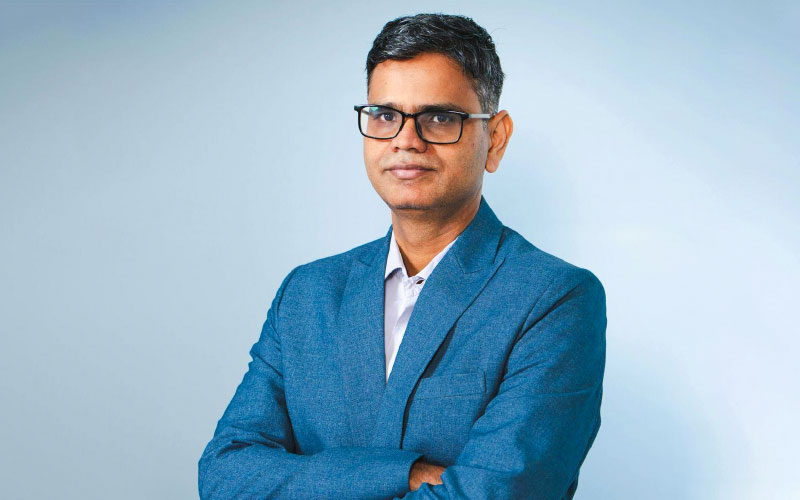
Wire & Cable India: As you take on this role, what excites you most about this leadership, and what are your immediate priorities?
Prashant Sinha: I am thrilled to lead Resonia at this pivotal juncture, as transmission infrastructure becomes the backbone of India’s energy transition. With the nation’s massive shift toward renewables, Resonia is uniquely poised to architect the grid of the future. My focus is clear -driving execution excellence through technology-led delivery and disciplined value-driven growth. By institutionalising mechanisation and digital planning tools, we will enhance project speed, safety and predictability across our portfolio.
Equally important is maintaining a strong emphasis on capital efficiency and robust project governance ensuring that growth is sustainable and aligned with long-term value creation. My focus will be on building a high-performance, empowered leadership culture—one that promotes ownership, collaboration, and continuous improvement.
By combining strong execution, technology adoption, and a people-centric approach, our priority is to build reliable, future-ready transmission infrastructure that supports India’s clean energy ambitions and delivers enduring value to all stakeholders.
Watch: Top Cable Companies in India
WCI: With India’s energy transition accelerating, how do you see transmission infrastructure evolving to support large-scale renewable integration?
PS: India’s transmission infrastructure is undergoing a rapid transformation as the energy transition accelerates, with a clear shift towards building a grid that can support large-scale renewable integration. India’s national power transmission network has recently achieved a significant milestone, crossing over 5 lakh circuit kilometres (ckm) of transmission lines along with 1,407 GVA of transformation capacity (220 kV and above).
While significant progress has been made through green energy corridors and ISTS expansion under the National Electricity Plan, but a lot needs to be done to strengthen the grid infrastructure in India to avoid decongestion and delays in evacuation.
The inter-regional power transfer capacity, which now stands at 1,20,340 MW, has enabled seamless transfer of electricity across regions, successfully realising the vision of “One Nation – One Grid – One Frequency.” The Inter State Transmission projects presently under implementation, will add approximately 40,000 ckm of transmission lines and 399 GVA of transformation capacity. The addition to the transmission capacity will help to evacuate the increasing non-fossil power generation which is targeted at 500 GW by 2030.
At the same time, the grid is evolving to become more flexible and technology-driven. With the increasing share of variable renewable energy, there is a growing focus on advanced forecasting tools, AI-enabled grid management and real-time monitoring systems to manage intermittency and ensure stability. The deployment of HVDC corridors and high-capacity transmission systems is also gaining momentum to efficiently move power from renewable-rich regions to demand centres.
Another important shift is the integration of storage and hybrid systems into transmission planning. Battery storage and pumped hydro are becoming critical to balance supply variability and support round-the-clock renewable power, moving the grid towards a more dispatchable and reliable framework.
Geographic imbalances are further driving the need for robust long-distance transmission infrastructure, as renewable energy hubs are often located far from consumption centres. This is accelerating investments in high-voltage networks that minimise losses and improve system efficiency. Lastly, transmission infrastructure is evolving into a larger, smarter and more resilient network, supported by digitalization, storage integration and policy push.

My focus is clear -driving execution excellence through technology-led delivery and disciplined value-driven growth. By institutionalising mechanisation and digital planning tools, we will enhance project speed, safety and predictability across our portfolio.
WCI: With transmission projects becoming more complex and time-sensitive, how is Resonia Limited leveraging mechanisation, digital tools, and emerging technologies to improve execution speed, safety, and cost efficiency?
PS: At Resonia, mechanisation is central to how we improve both speed and cost efficiency in project execution. We are actively deploying drones, AI and robotics across the project lifecycle from surveying and route planning to construction and inspection which allows us to significantly compress timelines and improve accuracy.
We are pioneers in transforming power transmission through technology leadership. Our project management and execution capabilities, coupled with our technological edge and solutioning expertise, have enabled us to establish a track record of early commissioning. In our transmission business, we integrate advanced technology and mechanization across every phase of our operations. By leveraging a high-tech ecosystem—from pre-bid surveys to long-term asset management—we ensure precision, safety, and efficiency.
For advanced foundation and erection our specialised capabilities include Helical Pile, Mono Pile, and Bell Bottom foundations to suit diverse terrains, utilization of Double Arm Gin Poles, crane-based tower erection, 4×4 telescopic mobile cranes for rapid deployment, use of hydraulic rock splitters to minimize environmental impact and enhance safety.
We have achieved a significant operational milestone through drone-assisted stringing, revolutionising how we deploy transmission lines. By integrating helicopter-based logistics and advanced aerial material handling, we seamlessly navigate the most challenging terrains. Furthermore, our use of real-time aerial progress tracking ensures that every project remains precisely on schedule. Drones-based surveys and LiDAR mapping for high-accuracy topographical data and AI-driven monitoring and smart aerial inspections to maintain the health and longevity of our transmission assets are Intelligent digital tools that we use in surveying work.
We also pioneered the use of Sirkosky S64 helicrane technology for transmission line material logistics and tower erection in the adverse terrains, revolutionised drone assisted pre-piloting in TL stringing through aerial technologies, used Intelligent Asset Planning & Monitoring through unmanned aerial vehicles, deployed robotics solutions like Skyrob for safe and efficient OPGW stringing.
WCI: With India’s power demand rising rapidly, how critical is timely execution of transmission projects, and what are the key bottlenecks impacting delivery? How is Resonia addressing these challenges?
PS: Addressing transmission bottlenecks will require a more decisive and execution-focused policy push. Today, delays in approvals especially around right-of-way and land acquisition continue to slow down transmission projects. Streamlining these processes is critical to accelerating capacity build-out and keeping pace with India’s renewable energy growth.
At policy level, strengthening the pre-qualification requirements in TBCB transmission tenders is the need of the hour. Transmission project development is witnessing rapid expansion, with a significant volume of projects being bid out each year. While encouraging wider market participation is important, it is equally critical to retain a balanced qualification framework to ensure that large-value and system-critical transmission projects are not awarded to entirely inexperienced entities. Introducing a technical qualification criterion that mandates demonstrable experience in power/ transmission project development could help strike the right balance, promoting healthy competition while safeguarding execution reliability and long-term system outcomes.
From an industry standpoint, one of the key gaps is the lack of synchronisation between generation and transmission. Renewable capacity is often commissioned ahead of the supporting grid, which leads to congestion and underutilisation. A more integrated approach to planning can help ensure that transmission infrastructure is ready as new capacity comes online.
There is also a clear need to enable faster adoption of advanced technologies across the network. High-capacity systems, digital solutions, and energy storage will be essential in building a grid that is flexible enough to handle renewable variability while maintaining reliability.
Deployment of high-performance conductors and advanced grid systems enhances transmission efficiency, lowering technical losses and contributes to a reduced carbon footprint across the power delivery value chain.
WCI: How have recent government interventions strengthened the T&D sector, and what additional policy or structural support does the industry need to achieve the country’s renewable energy targets?
PS: India has seen a strong policy push in early 2026 to strengthen the T&D sector and support renewable integration. Measures such as the Draft National Electricity Policy 2026 and refinements in connectivity and GNA frameworks are improving planning visibility and easing grid access for renewable and hybrid projects. Continued expansion through TBCB mechanisms and a focus on interstate transmission are also accelerating capacity addition and enhancing private participation. Execution momentum has improved, supported by regulatory flexibility for delayed projects and market reforms like market coupling, which aim to enhance efficiency and grid stability.
However, structural challenges persist. Transmission expansion continues to lag renewable capacity addition, leading to congestion and evacuation delays. Issues around land acquisition, multi-agency approvals and discom health further impact system efficiency.
Going forward, the sector requires faster and more synchronised transmission build-out, supported by streamlined approvals and stronger coordination. Enhancing grid flexibility through digitalisation, forecasting tools and storage integration will also be critical, alongside distribution network modernisation.
Additionally, access to low-cost financing, development of domestic manufacturing, and a skilled workforce will be key enablers. Overall, while policy interventions have strengthened the sector, aligning transmission readiness with renewable growth will be crucial to building a resilient, future-ready grid.
WCI: Sustainability is becoming central to infrastructure development. How is Resonia balancing rapid execution with environmental and social responsibility?
PS: As India scales up its renewable energy ambitions, sustainability has become central to how transmission infrastructure is developed. At Resonia, the focus is on ensuring that rapid execution goes hand-in-hand with responsible and future-ready practices aligned to sustainability goals.
The company adopts a design-led approach, using tools like LiDAR and drone mapping to optimise routes, minimise land disruption, and avoid ecologically sensitive areas. During execution, technologies such as helicopter stringing and modular construction help reduce on-ground impact to the environment.
Execution practices are equally aligned with sustainability goals. The use of technologies like helicopter stringing and modular construction significantly reduces on-ground intervention, particularly in difficult terrains. At the same time, deployment of high-performance conductors and advanced grid systems enhances transmission efficiency, lowering technical losses and contributes to a reduced carbon footprint across the power delivery value chain.
Further, the integration of digital technologies and predictive maintenance systems is helping optimise asset performance while reducing the need for frequent physical interventions—supporting both operational efficiency and environmental conservation over the lifecycle of assets. Ultimately, Resonia’s role extends beyond building transmission lines.
By enabling the seamless evacuation of renewable energy at scale, the company is contributing directly to India’s decarbonisation journey. Its approach reflects a clear balance—leveraging technology and innovation to deliver infrastructure at speed, while ensuring that sustainability and responsibility remain central to growth.
Also Read: SPM Group: Advances into EHV Cable League with Supermac’s 132 kV CCV Line
WCI: Looking ahead, what are the biggest opportunities and challenges in India’s transmission sector over the next 5–10 years?
PS: India’s power transition is gaining massive momentum, but its success hinges on a transmission network that can keep pace with 24/7 renewable demands. The opportunity is vast: building high-capacity networks that link renewable-rich zones to industrial hubs via smart, AI-enhanced infrastructure. However, the sector faces a ‘race against time’ to align transmission build-out with generation capacity to prevent energy curtailment. By embracing technology-led transformation—from digital monitoring to advanced storage integration—and fostering a workforce skilled in digital grids, we can bypass traditional execution bottlenecks like land acquisition and supply chain lags. A future-ready grid is within reach if we prioritize faster deployment and synchronised policy frameworks.