

As the Indian steel wire sector transitions from fragmented to organised with technology-driven manufacturers and clients with custom demands, the era of specialty steel wire has arrived and is here to stay. In an exclusive interaction with Wire & Cable India, Mr. Mahesh Poddar, Chairman, Miki Wire Works Pvt. Ltd., shares nuanced insights into the custom requirements of specialty steel wire. He emphasizes that high-performance wire solutions– enabled by advanced metallurgy and precision manufacturing– are becoming indispensable across sectors. He further outlines the company’s strategic focus on capacity expansion and product specialization to meet evolving demands in automotive and advanced infrastructure.
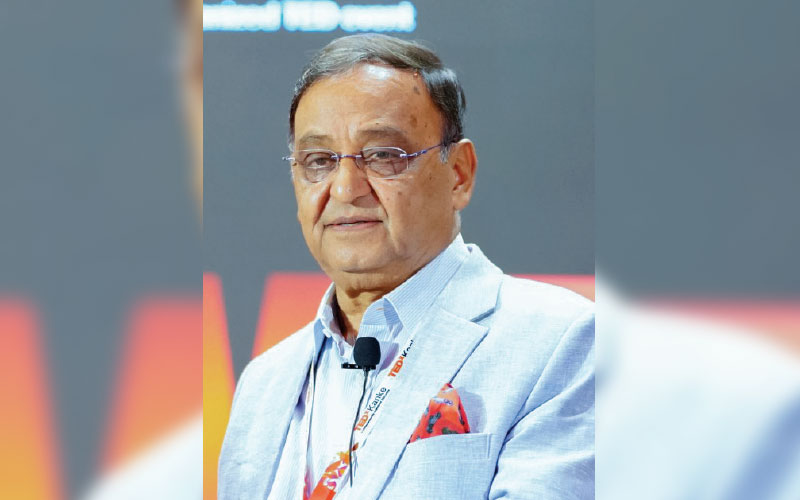
Wire & Cable India: Steel wire manufacturers today cater to a wide range of end-use industries through both conventional commodity and specialized products. Could you briefly describe your company’s specialty or application-specific steel wire portfolio and the key industries they serve?
Mahesh Poddar: At Miki Wire Works, we recognized early on that India’s growth would require specialized, high-strength foundations. Our core specialty lies in high-carbon steel wire products, primarily Pre-Stressed Concrete (PC) Wires, PC Strands, Low Relaxation Pre-Stressed Concrete (LRPC) strands, and spring steel wires. We deliberately opted to have minimum products, to ensure cost and operational efficiency.
We cater extensively to heavy infrastructure and transportation. For example, we are a leading supplier to the Indian Railways, catering to roughly 25% of their concrete sleeper wire requirements. We also supply critical components for Dedicated Freight Corridors (DFC), Metro projects (Delhi, Chennai, Kolkata), highways, etc. and the pre-cast construction industry.
Watch: Top Cable Companies in India
WCI: A large portion of steel wire production has traditionally consisted of general-purpose, commodity products such as binding wire, fencing wire, and low-carbon drawn wire. In your view, how does application-specific (specialty) steel wire differ from these commodity products in terms of metallurgy, performance requirements, and manufacturing precision?
MP: The difference is night and day. General-purpose commodity wires (like fencing or binding wire) are relatively forgiving in their manufacturing and quality expectations; they do not carry structural loads.
Specialty steel wire, on the other hand, requires tailor-made chemistry at the steel melting stage and there onwards. In terms of metallurgy, we are dealing with high-carbon grades that must possess precise microstructures. From a performance standpoint, specialty wires cannot fail—they hold up bridges and railway tracks. This demands extreme manufacturing precision to achieve narrow dimensional tolerances, uniform surface finish, and exact breaking loads that simply aren’t necessary for commodity products. Yes it’s true that these segments have much lower volumes, and are catered by many manufacturers across the country.
Currently, the strongest influence comes from government-led macro-infrastructure initiatives—specifically, the National Infrastructure Pipeline (NIP), Gati Shakti, ambitious rail track renovations, automobile sector, etc.
WCI: As end-use industries evolve, their performance requirements increasingly influence wire design. Which sectors today are exerting the strongest influence on steel wire development and demand for specialized products?
MP: Currently, the strongest influence comes from government-led macro-infrastructure initiatives—specifically, the National Infrastructure Pipeline (NIP), Gati Shakti, ambitious rail track renovations, automobile sector, etc.
Transportation: The rapid expansion of high-speed rail, metro rail networks, and expressways requires highly specialized LRPC strands that can handle dynamic, high-stress environments. While the normal rail tracks use Normal Relaxation variety.
Power & Energy: Upgrades to power transmission networks are driving the need for advanced conductor core wires, concrete poles, pillars, using PC wires for reinforcement.
WCI: Different applications require specific mechanical and physical properties. What key technical parameters (such as tensile strength, fatigue resistance, surface quality, or dimensional tolerance) are becoming most critical for these specialized steel wire applications?
MP: The input wire rods and output wires, which we make are totally covered by mandatory BIS certification. For structural and infrastructure applications, the margin for error is zero.
The most critical parameters we test for include:
Tensile Strength & Yield Strength: The fundamental ability to bear immense loads without deforming.
Relaxation Limits: Vital for LRPC strands, ensuring the wire does not lose its pre-stress over decades of use.
Fatigue Resistance / Elongation: Essential for railway sleepers and bridge suspensions subjected to constant, cyclic loading.
Modulus of Elasticity & Uniform Surface Finish: To ensure consistent bonding with concrete.
Physical Properties: And of course, the size, surface conditions, straightness, and packing.
At Miki Wire, a cornerstone of our advanced processing is acid-free wire drawing via mechanical descaling—a sustainable practice we pioneered in India back in the 1990s.
WCI: Does producing high-performance specialized wires often require advanced processing capabilities? If yes, what types of manufacturing technologies or specialized equipment are essential for producing such high-performance steel wires?
MP: Absolutely. You cannot produce high-performance wires on legacy commodity equipment. Producing specialty wire requires continuous, multi-stage, high-speed wire drawing machines with robust cooling systems to prevent metallurgical degradation during drawing.
At Miki Wire, a cornerstone of our advanced processing is acid-free wire drawing via mechanical descaling—a sustainable practice we pioneered in India back in the 1990s. We also rely on advanced stranding machines and thermal stabilization lines to produce low-relaxation properties in our PC strands. Our entire wire drawing machines are straight line machines, with suitable controls, while the heat treatment lines are electrical with automated control.
WCI: Steel wire production depends heavily on the quality and availability of wire rods. How do variations in raw material quality or fluctuations in input prices influence downstream wire manufacturing?
MP: This remains one of the most serious challenges for the steel wire industry. High-carbon specialty wires require premium-grade wire rods with highly controlled chemical compositions, which limits our pool of viable primary steel suppliers and availability.
When input prices and availability fluctuate wildly, it significantly impacts our competitiveness. It often leads to lower utilization of installed capacities across the industry, because while domestic demand is strong, unpredictable raw material costs make long-term contract pricing and export forecasting highly challenging. Therefore the exports are bare minimum.
Historically, the Indian wire industry was highly fragmented and dominated by the unorganized sector. However, the future belongs to organized, technology-driven manufacturers. Clients executing mega-projects demand strict quality assurances (like ISO 9001:2015), reliable supply chains, and large-scale capacities.
WCI: Across the industry, manufacturers are investing in process improvements and automation. Which recent technological or operational upgrades have had the greatest impact on product quality and manufacturing efficiency?
MP: The integration of Industry 4.0 technologies—specifically IoT and real-time monitoring systems—has been transformative. By automating our drawing lines and continuously monitoring parameters like line speed, drawing tension, and temperature, we have drastically minimized defects and improved product consistency.
Furthermore, our continued push toward green manufacturing (like the mechanical descaling I mentioned earlier, which allows us to produce close to a lakh ton of high-carbon wire annually without acid pickling) has vastly improved operational efficiency while keeping us fully compliant with strict environmental regulations. A good part of our electricity needs are met through solar power.
WCI: India’s steel wire industry has historically been fragmented, but larger organized manufacturers are steadily expanding their presence. How do you see the competitive structure of the industry evolving in the coming years?
MP: Historically, the Indian wire industry was highly fragmented and dominated by the unorganized sector. However, the future belongs to organized, technology-driven manufacturers.
Clients executing mega-projects demand strict quality assurances (like ISO 9001:2015), reliable supply chains, and large-scale capacities. Larger organized players who have a pan-India presence—much like our strategic plants in Ranchi, Visakhapatnam and Bangalore—will continue to consolidate the market because they have the economies of scale and the capital to invest in essential R&D and automation. The motto is to “satisfy the customer”.
Also Read: Asahi Ropes on Specialised Steel Wire Ropes Driving Performance and Market Shift
WCI: Looking ahead, what will be the key strategic priorities for steel wire manufacturers—whether in terms of product specialization, capacity expansion, technology investments, or exploring new application segments?
MP: For Miki Wire Works, and the organized sector at large, our strategic priorities are threefold:
Capacity Expansion & Specialisation: We are continually increasing our SKU portfolio with more specialty-use wire products to cater to emerging needs in automotive and advanced infrastructure.
Sustainability & Innovation: Investing further in R&D to drive smart factory initiatives and sustainable manufacturing processes. Innovation must align with environmental responsibility.