

Mukand Sumi Special Steel Ltd. is strengthening its position in the specialty steel segment with a clear focus on application-specific, high-performance steel wires for demanding industries. With a portfolio of over 400 alloy steel grades, the company serves critical sectors such as automotive, bearing, and engineering, where precision, durability, and reliability are essential. At the same time, the company is advancing capacity expansion through a greenfield integrated steel plant in Karnataka, with an investment of around INR 2,345 crore. The facility is expected to nearly double production capacity to ~0.7 MTPA. In an exclusive interaction with Wire & Cable India, Mr. Vipul Mashruwala, President, Mukand Sumi Special Steel Ltd., highlights how integrated sourcing, modern manufacturing technologies, and robust quality systems ensure consistent performance.
Wire & Cable India: Steel wire manufacturers today cater to a wide range of end-use industries through both conventional commodity and specialized products. Could you briefly describe your company’s specialty or application-specific steel wire portfolio and the key industries they serve?
Vipul Mashruwala: At Mukand Sumi Special Steel, our focus is firmly on application-specific, high-performance alloy steel long products, with a strong emphasis on wire rods and wires engineered for demanding end-use applications. Our portfolio spans over 400 grades of alloy steel, including carbon steel, alloy steel, spring steel, bearing quality steel, free-cutting steel, and micro-alloyed grades, each designed to meet precise functional requirements across industries. We offer wire rods and wires in a wide range of sizes and supply conditions, such as soft annealed, spheroidised annealed, pickled & phosphate coated, and normalised, enabling us to cater to highly specific downstream processing and performance needs.
A significant portion of our specialty portfolio is geared towards critical automotive applications, where our steels are used in components such as transmission systems, engine parts, steering mechanisms, bearings, and high-tensile fasteners. This segment continues to be a key demand driver, especially with evolving requirements around safety, lightweighting, and performance.
Beyond automotive, we cater to a wide spectrum of engineering and industrial sectors, including bearing and fastener industries, capital goods etc. What differentiates Mukand Sumi is our ability to move beyond standard offerings and work closely with customers to deliver customised steel solutions tailored to specific applications. Backed by advanced manufacturing capabilities, stringent quality systems, and strong metallurgical expertise, we are well-positioned to support our customers in increasingly performance-driven markets.
Watch: Top Cable Companies in India
WCI: A large portion of steel wire production has traditionally consisted of general-purpose, commodity products such as binding wire, fencing wire, and low-carbon drawn wire. In your view, how does application-specific (specialty) steel wire differ from these commodity products in terms of metallurgy, performance requirements, and manufacturing precision?
VM: Commodity steel wires, such as binding or low-carbon drawn wires, are largely designed for high-volume, general-purpose applications, where the emphasis is on cost efficiency and basic functional performance. In contrast, application-specific or specialty steel wires are engineered to meet highly demanding and precise end-use requirements.
From a metallurgical perspective, specialty wires involve carefully designed chemistries and tighter control over alloying elements to achieve specific properties such as high strength, fatigue resistance, wear resistance, and enhanced machinability.
In terms of performance, specialty wires are used in critical applications, particularly in the automotive and engineering sectors – where consistency, reliability, and durability are essential. These applications demand strict adherence to parameters such as tensile strength, microstructural uniformity, surface integrity, and fatigue life, often tailored to customer-specific requirements.
The difference is equally pronounced in manufacturing precision. Specialty wire production requires advanced process control across stages such as steelmaking, rolling, heat treatment, and drawing. This includes maintaining tight dimensional tolerances, superior surface finish, and controlled processing conditions, supported by robust quality systems and traceability.
At Mukand Sumi, our focus on value-added alloy steel products, strong metallurgical capabilities, and close customer engagement enables us to deliver such application-specific solutions, moving beyond commodity offerings to meet the evolving needs of high-performance industries.
WCI: As end-use industries evolve, their performance requirements increasingly influence wire design. Which sectors today are exerting the strongest influence on steel wire development and demand for specialized products?
VM: As end-use industries become more technology-driven and performance-focused, the demand for specialized steel wire products is being significantly influenced by a few key sectors.
The automotive industry continues to be the primary driver, especially with evolving requirements around safety, lightweighting, and durability. With the gradual shift towards electric mobility, there is an increasing need for advanced materials that offer higher strength, improved fatigue performance, and precision, particularly for critical components such as fasteners, springs, and transmission systems.
The bearing and engineering industries are also exerting strong influence, where applications demand high cleanliness levels, superior wear resistance, and consistent mechanical properties. These sectors require steels that can perform reliably under high stress and dynamic conditions.
From a global perspective, emerging areas such as renewable energy and advanced manufacturing are also shaping material requirements, driving the need for specialty steels with enhanced performance characteristics and longer service life.
WCI: Different applications require specific mechanical and physical properties. What key technical parameters (such as tensile strength, fatigue resistance, surface quality, or dimensional tolerance) are becoming most critical for these specialized steel wire applications?
VM: As applications become more performance-driven and precision-oriented, tight control over key technical parameters has become critical in specialized steel wire manufacturing.
Among the most important is the balance between tensile strength and ductility, ensuring that the material can withstand high loads while remaining formable for downstream processing. This is particularly relevant for automotive and engineering applications.
Fatigue performance is another crucial parameter, especially for components subjected to cyclic stresses such as springs and fasteners, engine components and transmission systems etc. Achieving this requires not only high strength but also clean steel with controlled microstructure and minimal inclusions.
Surface quality has gained significant importance, as even minor imperfections can impact performance during drawing or end use. Customers expect defect-free surfaces with consistent finish, especially for precision applications.
Equally critical is dimensional accuracy, with tighter tolerances required to ensure seamless processing in automated, high-speed manufacturing environments. In addition, depending on the application, properties such as wear resistance, machinability, and heat treatment response are becoming increasingly important.
WCI: Does producing high-performance specialized wires often require advanced processing capabilities? If yes, what types of manufacturing technologies or specialized equipment are essential for producing such high-performance steel wires?
VM: Yes, the production of high-performance, specialized steel wires is inherently technology-intensive and requires advanced processing capabilities across multiple stages of manufacturing. A critical starting point is modern wire rod rolling, where mills equipped with controlled cooling systems help achieve the desired microstructure and consistency, which are essential for downstream performance. Heat treatment processes, such as annealing and spheroidising, play a vital role in delivering the required combination of strength, ductility, and machinability, tailored to specific applications.
In the wire conversion stage, high-precision drawing equipment is used to achieve tight dimensional tolerances and superior surface quality. This is complemented by surface preparation processes, including pickling, coating, and lubrication, which enhance drawability and ensure defect-free performance.
Equally important are advanced inspection and testing systems, including non-destructive evaluation and metallurgical analysis, to ensure consistency, reliability, and compliance with stringent customer specifications.
At Mukand Sumi, our focus on process control, modern manufacturing infrastructure, and continuous capability enhancement enables us to deliver high-performance, application-specific steel wire solutions aligned with evolving industry requirements.
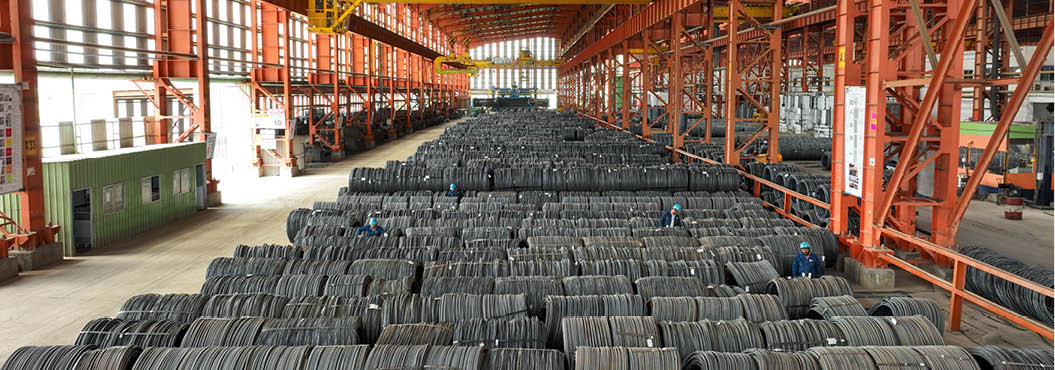
The specialty wires produced by Mukand Sumi caters mainly to the bearing steel industry for highly critical ball & rollers applications, automotive two wheeler transmission and high tensile fasteners. Mukand Sumi has installed state-of-the-art facility for wire making including spheroidised annealing , automated pickling & phosphating, Japanese wire drawing machines equipped with online German eddy current testing (ECT) equipment to deliver high quality defect free wires for stringent applications. Many such wires developed by Mukand Sumi are import substitution products and our efforts towards the “Atmanirbhar Bhart” initiative by our Prime Minister.
WCI: Steel wire production depends heavily on the quality and availability of wire rods. How do variations in raw material quality or fluctuations in input prices influence downstream wire manufacturing?
VM: Wire rod quality is a critical determinant of downstream wire performance, and any variation at this stage can have a direct impact on process efficiency, product quality, and end-use reliability.
From a quality standpoint, inconsistencies in parameters such as chemistry, surface condition, and internal cleanliness can lead to challenges during wire drawing, including increased breakages, surface defects, and variability in mechanical properties. This becomes particularly critical for specialty applications, where tight tolerances and consistent performance are essential.
Fluctuations in input prices, especially driven by volatility in raw material markets, also have a significant influence. They impact cost structures, pricing strategies, and inventory planning, requiring manufacturers to adopt a more agile and responsive approach.
At Mukand Sumi, our products are meticulously crafted from carefully sourced blooms and billets exclusively procured from Mukand Limited, ensuring unrivaled quality, consistency, and reliability across our offerings. This integrated sourcing approach significantly reduces variability and strengthens our ability to deliver superior downstream performance.
A critical starting point is modern wire rod rolling, where mills equipped with controlled cooling systems help achieve the desired microstructure and consistency, which are essential for downstream performance. Heat treatment processes, such as annealing and spheroidising, play a vital role in delivering the required combination of strength, ductility, and machinability, tailored to specific applications.
WCI: Across the industry, manufacturers are investing in process improvements and automation. Which recent technological or operational upgrades have had the greatest impact on product quality and manufacturing efficiency?
VM: Across the industry, investments in advanced process technologies and automation have had a significant impact on both product quality and manufacturing efficiency.
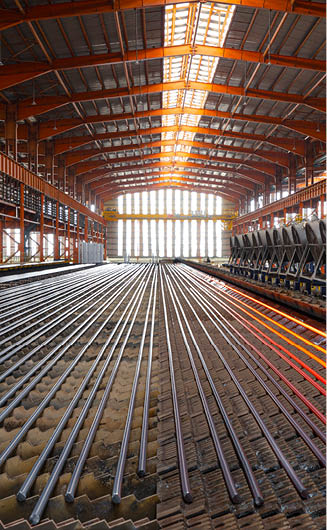
At Mukand Sumi, one of the key enablers has been our state-of-the-art SBQ (Special Bar Quality) bar and wire rod mill, designed to deliver high precision and consistency. The mill is equipped with a walking beam reheating furnace, which ensures uniform temperature control and consistent product quality.
In addition, the integration of online size measurement systems and advanced surface quality inspection, along with an automatic bar and coil handling system, has significantly improved dimensional accuracy, surface integrity, and overall process efficiency.
Another critical area of advancement is in heat treatment, where our state-of-the-art spheroidised annealing furnaces- sourced from global technology leaders- enable us to achieve uniform microstructure, enhanced ductility, and superior machinability, which are essential for high-performance applications.
Overall, such technological and operational upgrades have enabled us to enhance process reliability, product consistency, and manufacturing efficiency, positioning Mukand Sumi as a competitive supplier of high-quality, application-specific alloy steel solutions in both domestic and global markets.
Also Read: Systematic Group Driving Innovation in Application-Specific Steel Wire Solutions
WCI: Looking ahead, what will be the key strategic priorities for steel wire manufacturers – whether in terms of product specialization, capacity expansion, technology investments, or exploring new application segments?
VM: One of the key priorities will be the continued move towards application-specific and high-performance steel solutions, particularly for sectors such as automotive, engineering, railways, and emerging areas like energy and advanced manufacturing. Customers today are increasingly seeking tailor-made materials with consistent quality and performance, rather than standard commodity products.
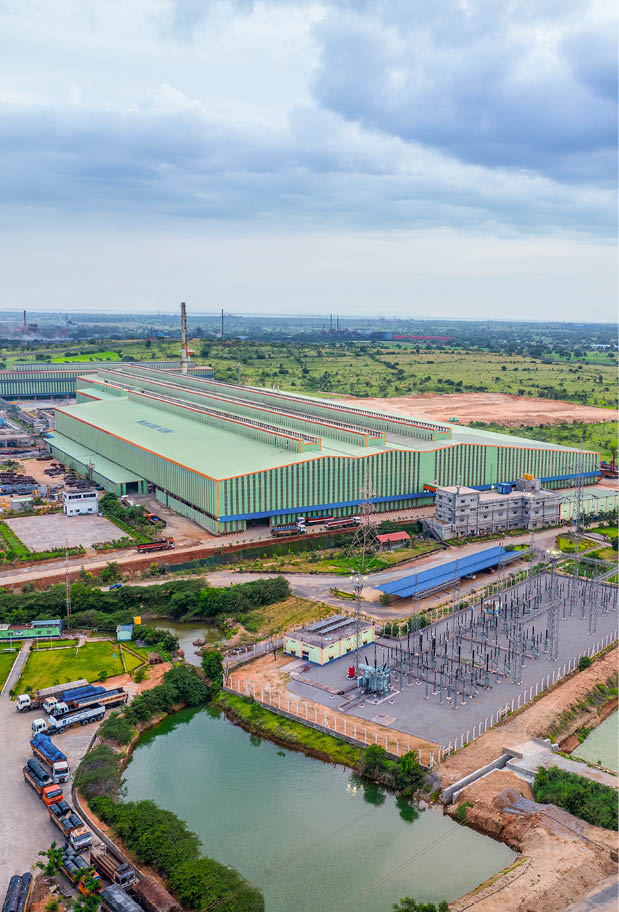
At the same time, capacity expansion with integrated capabilities will play a crucial role in ensuring supply reliability and cost competitiveness. In this context, Mukand Sumi is undertaking a significant step with the development of a greenfield integrated steel plant in Karnataka, with an investment of around INR 2,345 crore.
This upcoming facility is expected to nearly double our production capacity to ~0.7 million tonnes per annum, strengthening our ability to serve growing domestic and global demand. The plant will include integrated operations and is being designed with a strong focus on sustainability, including high reliance on renewable energy and environmentally responsible manufacturing practices.
Another key priority will be technology investments, including automation, digitalization, and advanced process control systems, which are essential to ensure consistency, traceability, and efficiency in high-performance steel production.
In a rapidly evolving industry landscape, the ability to combine metallurgical expertise, advanced manufacturing, and customer-centric innovation will define long-term success. At Mukand Sumi, we remain committed to strengthening our capabilities, expanding our footprint, and delivering high-performance steel solutions that meet the changing needs of our customers. As we move forward, our focus will continue to be on quality, reliability, and sustainable growth, while contributing meaningfully to the progress of the industries we serve.
The automotive industry continues to be the primary driver, especially with evolving requirements around safety, lightweighting, and durability. With the gradual shift towards electric mobility, there is an increasing need for advanced materials that offer higher strength, improved fatigue performance, and precision, particularly for critical components such as fasteners, springs, and transmission systems.