

As India’s steel wire industry pivots toward high-performance and application-driven demand, Tata Steel’s Wire Division is aligning its strategy around the 3C formula—capacity, capability and customer needs. In an exclusive interview with Wire & Cable India, Mr. Satyajit Maity, Chief Marketing and Sales, Wire division, Marketing & Sales GWI, Tata Steel Limited and Mr. Chandan Arunachalam, Head Marketing, Marketing & Sales GWI, Tata Steel Limited, share how the company is steadily moving beyond commodity offerings toward advanced, value-added wires engineered for critical sectors such as automotive, infrastructure, and energy. This transition, however, brings its own set of challenges—ranging from raw material price volatility to tighter quality standards and the need for continuous technological upgradation. Tata Steel addresses these through strong upstream integration, process innovation, and increasing adoption of automation and digital monitoring. By combining metallurgical expertise with customer-centric product development, the company is not only enhancing performance reliability but also positioning itself as a long-term solutions partner in India’s evolving steel wire landscape.

From Tata Steel’s perspective, the future of specialised steel wire lies in engineering reliability—not just achieving high strength, but ensuring consistent, safe, and long-term performance across demanding applications.


Wire & Cable India: Steel wire manufacturers today cater to a wide range of end-use industries through both conventional commodity and specialized products. Could you briefly describe your company’s specialty or application-specific steel wire portfolio and the key industries they serve?
Satyajit Maity: Our product range is broadly categorised into low-carbon steel wires and high-carbon steel wires, designed to meet the needs of multiple industries and applications:
Conventional (Commodity) Steel Wire Offerings
In the agriculture segment, we offer poultry wire, galvanized (GI) wire, and Tata Steel’s patented Ayush Wire, engineered for durability and ease of use. For fencing applications, our portfolio includes barbed wire, chain-link wire, knotted fencing, 3D welded mesh, and solar fencing wire. In general engineering and infrastructure, we supply MIG wire, shutter wire, crimp wire, and spring wire catering to fabrication, construction, and engineering requirements.
Specialised and Value-Added Steel Wire Solutions
Driven by advanced metallurgy and precision manufacturing, Tata Steel’s value-added wire portfolio serves critical, high-performance applications. In the automotive segment, this includes tyre bead wire, tyre cord wire, automotive spring wire, IHT spring wire, and spoke wire—designed to meet stringent safety, fatigue, and performance standards. Tata Steel Wires division has partnership portfolio with all tyre manufacturers in India.
For infrastructure, railway, and building applications, we offer low relaxation pre-stressed concrete (LRPC) strands and PCSR wires, widely used for structural reinforcement in buildings, railway sleepers, electric spun poles, water pipelines, elevated roadways, bridges, metros, bullet trains, windmills, LNG storage tanks, and nuclear power facilities.
This breadth of offerings underscores Tata Steel Wire Division’s capability to support India’s growth story—from rural livelihoods and industrial manufacturing to next-generation infrastructure and mobility systems.
Watch: Top Cable Companies in India
WCI: A large portion of steel wire production has traditionally consisted of general-purpose, commodity products such as binding wire, fencing wire, and low-carbon drawn wire. In your view, how does application-specific (specialty) steel wire differ from these commodity products in terms of metallurgy, performance requirements, and manufacturing precision?
Chandan Arunachalam: Commodity steel wires are metallurgically designed for formability, ease of processing, and cost efficiency. The steel chemistry is relatively simple, tolerances are broad, and microstructural consistency is adequate rather than critical.
In contrast, specialty steel wires are engineered at the metallurgical level for specific applications and performance outcomes. At Tata Steel Wires division, this involves precisely controlled chemistry with low levels of sulphur and phosphorus, along with enhanced steel cleanliness and automation in casting. State-of-the-art rolling processes ensure uniform microstructure and minimal variation in physical properties, while advanced wire drawing techniques provide precise control over critical-to-quality parameters. These include optimized drawing reduction patterns, the use of specially designed (and patented) dies, and tailor-made drawing lubricants to achieve superior performance.
Be it, tyre bead wire, suspension spring wire or LRPC strands, the manufacturing processes are optimised over years of fine tuning and experience for imparting superior fatigue life and consistent performance over life cycles measured in decades.
Commodity wires typically perform non-critical roles. They are expected to bend, tie, or fence — in an event of failure, while inconvenient, rarely leads to catastrophic outcomes.
Specialty wires, however, operate in mission-critical environments—from steelmaking to wire drawing—where performance failure is unacceptable. Tata Steel’s application-specific wires are therefore designed to meet stringent requirements, including precise physical properties such as minimal ovality, tensile strength, and yield strength. They deliver excellent fatigue life through clean steel, a smooth defect-free wire surface, and a uniform microstructure, critical for applications like automotive springs and PC strands. These wires also feature superior surface quality with uniform coatings, such as bronze for improved rubber adhesion in tyre bead wire and zinc for galvanized wire. Our patented coating “Aayush” (which means long life) is an additional barrier protection over zinc for superior life and improved customer experience.
Additionally, they adhere to rigorous safety-critical standards required in sectors like railways, nuclear infrastructure, and elevated urban transport. For us, quality is not just meeting the desired standard but ensuring an experience of lifetime for the end user.
For specialty wires, manufacturing precision becomes the key differentiator. From Tata Steel’s global wire operations standpoint, this involves maintaining stricter control over diameter and ovality, often keeping the diameter on the lower side of tolerance to deliver more wire length per unit weight. It also requires consistent mechanical properties across batches, supported by advanced process controls through automation in wire drawing, heat treatment, and surface coating. Additionally, rigorous end-use-specific testing and certification ensure that the wires meet exact application requirements.
WCI: As end-use industries evolve, their performance requirements increasingly influence wire design. Which sectors today are exerting the strongest influence on steel wire development and demand for specialized products?
SM: The evolution of end-use industries is fundamentally reshaping how steel wire is designed, processed, and delivered. Demand today is increasingly driven by performance-critical sectors, where wire is no longer a commodity input but an engineered component with a direct bearing on safety, durability, and lifecycle cost. Our institutional customers, including automotive and infrastructure are continuously looking for avenues towards development of specialty features and differentiation including light weighting and moving towards high strength steel.
Following are some examples:
PC Strands used in construction: So far, PC strands with tensile strength of 1860 Mpa were in vogue in India. However, Tata Steel took the lead towards addressing the latent need of high strength reinforcing steel for pre-stressing agencies and developed 1960 Mpa high strength PC strands, which is now approved by BIS.
Spring Steel wires: Two-wheeler manufacturers are in a continuous quest to reduce weight of bikes and improve fuel efficiencies. Understanding this verbatim, we introduced the concept of “Super Tensile” spring wires with much higher strength and fatigue life compared to normal hard drawn suspension spring wires. There is a weight reduction up to 10% with use of super tensile spring wires.
The evolution of end-use industries is fundamentally reshaping how steel wire is designed, processed, and delivered. Demand today is increasingly driven by performance-critical sectors, where wire is no longer a commodity input but an engineered component with a direct bearing on safety, durability, and lifecycle cost.
WCI: Different applications require specific mechanical and physical properties. What key technical parameters (such as tensile strength, fatigue resistance, surface quality, or dimensional tolerance) are becoming most critical for these specialized steel wire applications?
CA: Different applications today demand a sharper focus on a combination of mechanical precision, lifecycle performance, and process consistency.
Tensile Strength and Strength Consistency: While tensile strength remains fundamental, the emphasis has shifted toward consistency across coils, batches, and production runs. Automotive and tyre reinforcement wires require very high tensile strength within extremely tight tolerances, while PC wires and strands for infrastructure must deliver high strength with sustained long-term performance. At Tata Steel, the focus is on ensuring process capability that reliably delivers consistent strength every time.
Fatigue Resistance – Performance Over Lifecycle: Fatigue resistance has emerged as a key differentiator for specialty steel wires. Applications such as automotive springs, tyre cords, bead wires, and infrastructure systems like bridges and metros operate under millions of load cycles. Failures are often fatigue-driven rather than strength-related, making clean steel metallurgy, controlled microstructure, and minimal surface defects critical.
Dimensional Tolerance and Geometric Precision: With increasing automation in customer processes, dimensional accuracy has become a defining requirement. Parameters such as diameter tolerance, ovality control, coil uniformity, and lay consistency are critical. Even minor variations can disrupt downstream processing or impact performance, reinforcing the need for advanced drawing controls, in-process inspection, and statistical process control (SPC).
Surface Quality: Surface quality is now a functional and safety-critical parameter. Surface imperfections can initiate cracks in fatigue-sensitive applications, while in welding wires, cleanliness directly affects arc stability and weld quality. In coated wires, surface uniformity determines coating adhesion and durability. Strong emphasis is therefore placed on defect control, lubrication management, and coating consistency.
Low Relaxation Properties: In pre-stressed concrete applications, relaxation behaviour is as critical as tensile strength. Requirements include low relaxation under sustained loads, long-term stability, and consistent performance across environmental conditions. Meeting these demands requires precise heat treatment, controlled microstructure, and rigorous validation.
From Tata Steel’s perspective, the future of specialised steel wire lies in engineering reliability—not just achieving high strength, but ensuring consistent, safe, and long-term performance across demanding applications.
WCI: Does producing high-performance specialized wires often require advanced processing capabilities? If yes, what types of manufacturing technologies or specialized equipment are essential for producing such high-performance steel wires?
SM: Yes—producing high‑performance, application‑specific steel wires unequivocally requires advanced processing capabilities. Below are the key manufacturing technologies and equipment that Tata Steel Wires views as essential for delivering high-performance wire solutions.
Wire rod surface preparation: The very first stage of wire manufacturing involves removing hot rolled scale from wire rod and pre-coat it with lubricant carrier coatings. This is achieved through either batch pickling process or mechanical de-scaling process. At Tata Steel, we have state-of-the art pickling facilities which are fully automated with minimum operator intervention. This helps in achieving a completely oxide free smooth surface with consistent lubricant carrier coatings. We are also progressively adopting acid free and sustainable ways of wire rod surface preparation including techniques like sand belt grinding and shot blasting.
Multi-pass wire drawing: The wire drawing process is very critical, as it imparts the necessary dimensional requirement to wire including diameter, length, surface finish and other mechanical properties like tensile strength and torsional & bend ductility. With years of experience and technical know-how, each and every process is carefully designed in terms of drawing die reduction patterns and use of optimum die geometry for achieving consistent physical properties and minimum residual stresses. With use of superior lubrication techniques including pressure dies, long lubricating dies and tailor-made combination of drawing lubricants, the surface achieved is smooth and free from drawing defects. Special care is taken in ensuring superior cooling of wire during drawing for minimum strain ageing.
Advanced Heat-Treatment Technologies: Engineering the microstructure – Heat treatment is the cornerstone of specialty wire performance. Key processes include wire patenting for bead and duct wires, induction hardening and tempering for automotive and industrial spring wires, spheroidizing annealing for enhanced formability of general engineering wire.
Surface Treatment and Coating Technologies: Key surface technologies include – galvanizing lines with automated zinc wiping techniques for precise control of coating thickness, bronze coating for tyre bead wires for achieving desired & consistent adhesion with rubber.
In process and end product inspection: Stringent process inspection using the concept of “Quality Gates”, it is ensured that if at all a defect is produced, it is not cascaded to the next process. The testing equipment include wire tensile testing machines, torsion and bend testing platforms, fatigue and relaxation testing equipment, XRF for chemical composition and metallography lab for microstructure evaluation, including micro hardness testing.
Process monitoring through automation: We are endeavouring towards real time monitoring and control of critical-to-quality process parameters involved in wire manufacturing for a transition from “arresting defects” to “preventing defects”. Some examples include real time monitoring of die wear, wire temperatures, vibration level, temperatures involved in heat treatment, use of AI based surface quality monitoring systems, use of machine learning for real time adjustments etc.
WCI: Steel wire production depends heavily on the quality and availability of wire rods. How do variations in raw material quality or fluctuations in input prices influence downstream wire manufacturing?
CA: We are sourcing 100% wire rods from our own source i.e. Tata Steel Long Products.
Influence of Input Price Fluctuations – Margin Pressure vs. Performance Commitments
Steel wire manufacturing operates with a strong linkage to raw material prices (wire rods), but the ability to pass on these fluctuations varies significantly by product category. Commodity wire products are highly price-sensitive, with limited ability to absorb or pass through cost increases. In contrast, specialized wires, while higher-margin, are often supplied under long-term contracts, fixed or formula-based pricing, or OEM cost-down expectations. This creates a complex challenge of managing volatility while maintaining strict performance and delivery commitments.
Inventory, Working Capital, and Planning Complexity
Rapid fluctuations in wire-rod prices influence inventory strategies, working capital requirements, production planning and order prioritization. For Tata Steel Wires, balancing price risk, supply assurance & customer service levels becomes particularly critical in specialty segments where supply continuity and qualification approvals limit sourcing flexibility.
Strategic Advantage of Integration and Supply Assurance
One of Tata Steel Wires’ key structural strengths lies in its integration with Tata Steel’s upstream wire-rod production. This enables assured availability of critical wire-rod grades, Custom-designed chemistries aligned with downstream wire applications, Better insulation from short-term market disruptions, Faster response to evolving customer requirements.
Such integration is especially valuable for automotive, infrastructure, railways, and energy sectors, where Re-qualification cycles are long, Alternate sourcing is difficult & Reliability and traceability are mandatory.
Quality Variability vs. Customer Risk
In specialized applications, variability in wire-rod quality does not just create internal inefficiencies, it introduces customer risk. Potential downstream consequences include, Processing issues at customer plants, inconsistent component performance, increased rejection rates, safety or durability concerns in service.
From Tata Steel’s perspective, protecting customers from this risk is central to the value proposition. This means tighter incoming material standards, close steel-to-wire process alignment, continuous feedback between wire-rod and wire manufacturing teams.
Shifting from Cost Optimisation to Value Optimisation
While input price management remains important, Tata Steel Wires increasingly views wire-rod quality through the lens of total cost of ownership, not just purchase price. High-quality, consistent wire rods result in higher productivity, lower scrap and rework, superior wire performance, stronger customer confidence and long-term relationships.
For specialised steel wires, quality variability often costs more than price volatility.
WCI: Across the industry, manufacturers are investing in process improvements and automation. Which recent technological or operational upgrades have had the greatest impact on product quality and manufacturing efficiency?
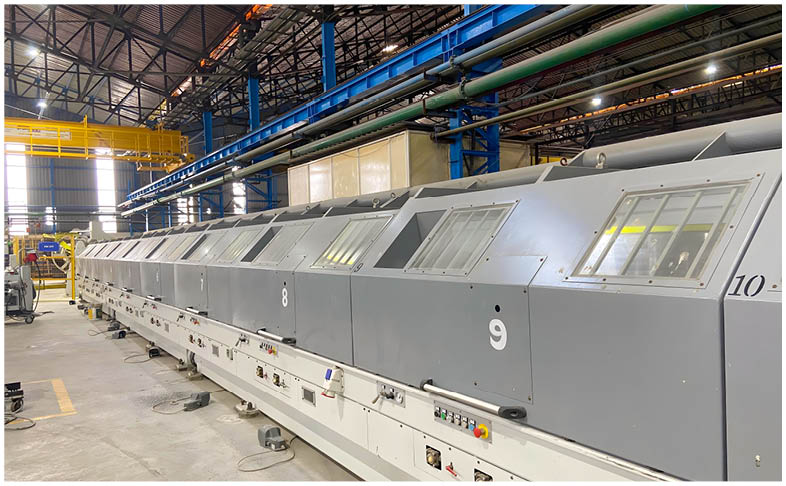
SM: Acid pickling plants with completely automated wire rod movement, along with monitoring and control of bath parameters, have significantly improved process consistency and quality. In addition, sustainable wire rod surface preparation techniques—such as surface scrapping, grinding, and shot blasting technologies for low- to high-carbon wires—have enhanced surface integrity. Further, in-house designed wire drawing machines, equipped with superior cooling drums, online diameter and length measurement systems, and online eddy current inspection for detecting surface imperfections, have played a key role in improving overall product quality and manufacturing efficiency.
WCI: India’s steel wire industry has historically been fragmented, but larger organized manufacturers are steadily expanding their presence. How do you see the competitive structure of the industry evolving in the coming years?
CA: For decades, the industry has been dominated by a large number of small and mid‑scale players, primarily focused on commodity wire products. While these players will continue to serve local and price‑sensitive demand, the coming years are likely to see steady consolidation, driven by:
- Tightening of compliance, safety, and environmental norms
- Increasing customer preference for reliability and consistency
- Higher capital requirements for modern equipment and automation
As a result, organized manufacturers with scale, financial strength, and process discipline are expected to increase their market share.
Shift from Price‑Led to Capability‑Led Competition: Competitive differentiation is increasingly moving away from price alone to technology, quality consistency, and application expertise. Large organized players are investing in advanced wire drawing and heat‑treatment facilities, automation and digital process control, application‑specific product development. This trend favors manufacturers who can deliver predictable, certified performance, particularly for automotive, infrastructure, railways, energy, and engineering applications/segments where failures have high safety and financial consequences.
Rising Share of Specialized and Value-Added Wires: As India’s economy evolves, demand is increasingly shifting toward automotive and mobility solutions, metro and high-speed rail, urban infrastructure, and renewable energy and critical power systems. These sectors require specialized steel wires with high performance and reliability standards. Smaller, unorganized units often lack the metallurgical capability, testing infrastructure, and customer qualification credentials needed to serve such applications, creating natural entry barriers and accelerating the transition toward organized producers.
Importance of Integration and Supply Assurance: Integrated players with access to consistent, high‑quality wire rods enjoy a distinct competitive advantage. In an environment of raw‑material volatility and rising performance expectations, supply assurance and metallurgy control become critical differentiators. From Tata Steel Wires’ viewpoint, customers are increasingly valuing long‑term partnerships over transactional sourcing—particularly in sectors with long approval cycles and strict traceability requirements.
Organized Growth Without Elimination of Fragmentation: Fragmentation in the industry is expected to persist, particularly in commodity segments such as agriculture, fencing, and basic construction, where smaller producers will continue to operate. However, value growth—rather than just volume growth—is likely to increasingly accrue to organized manufacturers. As a result, the industry is expected to evolve into a two-tier structure: a consolidated, organized segment catering to high-performance, specification-driven applications, and a fragmented segment focused on cost-driven, standardized products.
Also Read: A Fully-Integrated Steel Plant Gives ESL Quality Edge in Wire Rods
WCI: Looking ahead, what will be the key strategic priorities for steel wire manufacturers—whether in terms of product specialization, capacity expansion, technology investments, or exploring new application segments?
SM: The key strategic priorities are as follows:
Deeper Product Specialisation and Application Engineering: Product specialization will be the foremost strategic priority. Demand growth is increasingly coming from application‑specific, high‑performance wires rather than generic commodities. Manufacturers will focus on:
- Automotive and mobility solutions (Tyre reinforcement, Spring wires, EV‑related applications)
- Pre‑stressed concrete wires and strands for infrastructure, railways, Pre-cat & Pre-fab segment
- Energy, renewables, and safety‑critical applications
Success will depend not just on producing wire, but on co‑engineering solutions with customers, backed by metallurgy expertise, testing capability, and performance validation.
Capacity Expansion with a Clear Quality Bias: While capacity expansion remains important, it can no longer be indiscriminate. Future investments will prioritise- dedicated capacities for specialty and value‑added wires, flexible lines capable of handling multiple grades and tight tolerances and brownfield expansions with automation embedded by design. The emphasis will be on right‑sized, high‑capability capacity, rather than simply increasing tonnage.
Technology and Automation as Core Differentiators: Technology investment will be central to competitiveness. Key focus areas include- digital process control and Industry 4.0 integration, advanced drawing, heat‑treatment, and surface‑coating technologies and automated inspection, testing, and traceability systems. At Tata Steel Wires division, automation is viewed not just as a cost lever but as a quality and consistency enabler, especially for customers operating automated downstream processes.
Strengthening Raw‑Material Integration and Supply Assurance: Control over wire‑rod quality and availability will remain a strategic priority, particularly for manufacturers serving high‑performance segments. Integrated players with assured access to consistent wire‑rod chemistries, clean steel and tight metallurgical control, aligned steelmaking and wire processing capabilities will be best positioned to manage volatility while delivering reliable performance. From Tata Steel’s perspective, integration is a competitive advantage, not merely a sourcing convenience.
Expanding into Emerging and Adjacent Application Segments: Steel wire manufacturers will increasingly explore new and adjacent applications, including Renewable energy (wind, solar, power transmission), urban infrastructure and smart cities, specialized construction and pre‑fabrication solutions. These segments require long service life, certification, and performance predictability, favoring organized players with strong technical and quality systems.
Sustainability, Compliance, and Responsible Manufacturing: Sustainability is becoming a strategic necessity rather than a differentiator. Priorities include, energy‑efficient processes and lower emissions, responsible sourcing and waste reduction, compliance with evolving environmental and safety regulations. Customers, especially global OEMs and EPC players, are increasingly factoring sustainability credentials into supplier selection.
Moving from Supplier to Partner: Finally, the most important strategic shift is relational. Steel wire manufacturers will increasingly be expected to act as Technology partners, reliability providers, long‑term collaborators rather than transactional suppliers.
In summary, the future of steel wire manufacturing lies at the intersection of specialization, technology, integration, and partnership. Manufacturers who align capacity, capability, and customer needs—while investing in process excellence and sustainability—will shape the next phase of growth.