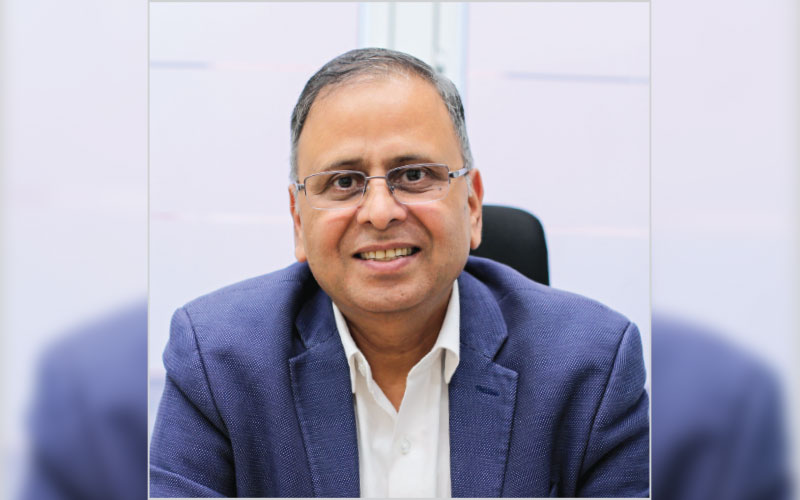
The optical fibre cable market is no longer being shaped by a single dominant application or a straightforward capacity expansion cycle. As fibre moves deeper into data centres, AI infrastructure, enterprise networks, defence and utility applications, the definition of a competitive OFC manufacturer is changing with it. In an exclusive interview with Wire & Cable India, Mr. Pramod Kumar Srivastava, CEO, West Coast Optilinks, points to this transition as a move from a capacity game to a capability game – one where vertical integration, application-specific engineering, high-fibre-density designs, faster product qualification and consistent long-term network performance are becoming central to how manufacturers create value. In this interaction with Wire & Cable India, he discusses what this shift means for product development, manufacturing investments and the evolution of India’s OFC ecosystem.
Wire & Cable India: India’s fibre deployment is expanding across FTTH, 5G backhaul, data centres, BharatNet, enterprise networks and other segments. Which application segments are currently shaping product development and manufacturing priorities the most, and how do their technical requirements differ?
Pramod Kumar Srivastava: At West Coast Optilinks (WCO) we believe that OFC grows where data consumption grows. The OFC industry is moving from a predominantly telecom-led market to a multi-demand environment. 5G, FTTH and BharatNet have been the traditional drivers and remain important, but hyperscale data centres, AI infrastructure, enterprise networks and various utilities are changing the way data is consumed.
The biggest change is the increasing diversity of fibre demand. We are moving from one cable architecture serving multiple applications to application specific network architectures. For example the requirement for data centres is higher fibre count with lower latency vs 5G networks.
Watch: Top Cable Companies in India
WCI: Over the past three to five years, what manufacturing capabilities or process improvements have become commercially essential for OFC producers that were previously considered optional? Which market, technological or customer requirements have made these capabilities increasingly critical?
PKS: A few years ago, scale and basic quality were sufficient to compete in the industry. Today, automation, process consistency, high-speed production, advanced testing capabilities and ability to manufacture high-fibre-count and faster turnaround for specialised cables are becoming important.
For WCO specifically, vertical integration into optical fibre is an important differentiator because it improves control over quality, supply and development specially in uncertain market conditions.
We believe that the significant increase of fibre requirement in hyperscale data centres, defence applications and others has led to the need for faster turnaround in product development. How consistently, quickly and flexibly can one manufacture exactly what the customer needs is becoming increasingly important.
WCI: Network operators today expect higher reliability, faster deployment and longer service life. Which product attributes, quality parameters or qualification requirements have become significantly more demanding? How have manufacturers responded?
PKS: Customers are no longer looking only at whether the cable meets the specification at the time of delivery. They are increasingly concerned about how the cable will perform over 20–25 years in the field, how consistently it can be installed and how it behaves under different environmental and mechanical conditions. Performance lifecycle is becoming increasingly important in buying decisions specially considering the high deployment timeline and criticality of online services. Reliability, performance stability, mechanical and bend performance are becoming increasingly important.

The manufacturers that understand the customer’s application and can respond quickly are likely to have a significant advantage.
WCI: From preforms and optical fibre to cable manufacturing and testing, where has the Indian industry made the most significant progress towards technological self-reliance? Which critical gaps still remain?
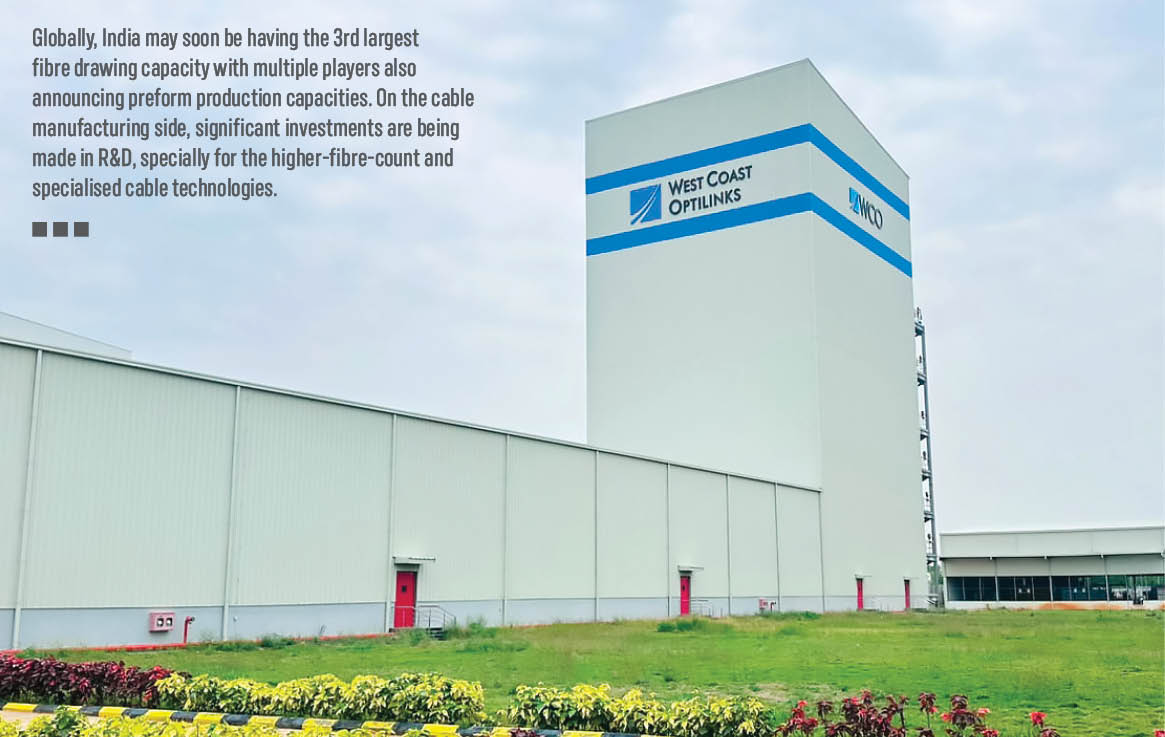
PKS: Today India can be viewed as a significant turnaround story for the progress we are making across the OFC value chain. Globally, India may soon be having the 3rd largest fibre drawing capacity with multiple players also announcing preform production capacities. On the cable manufacturing side, significant investments are being made in R&D, specially for the higher-fibre-count and specialised cable technologies.
Today, Indian manufacturers are comfortably able to meet the global quality expectations. At the same time, there are still gaps in some advanced optical components, specialised fibres, active connectivity and certain high-end technologies. The opportunity for India is to build strength in the strategically important parts of the optical ecosystem while remaining globally integrated for technologies where global scale makes more sense.
WCI: Recent investments across the industry suggest a growing emphasis on automation, quality assurance and manufacturing scale. In your view, which investments have now become standard expectations or industry necessities, and which continue to provide a tangible competitive advantage?
PKS: The biggest mistake is to invest only in capacity. The industry needs to invest simultaneously in technology, people and process automation which is aimed to deliver consistent performance in the networks over its lifetime.
In my view, investments in basic automation, quality systems, testing and manufacturing scale have now become the entry ticket for a serious OFC manufacturer. They are no longer necessarily differentiators. Real competitive advantage emerges through vertical integration, advanced R&D, specialised product capability and the ability to take a product from customer requirement to qualification and commercial production quickly. Therefore, these are investments that allow you to participate in the market and differentiate you.
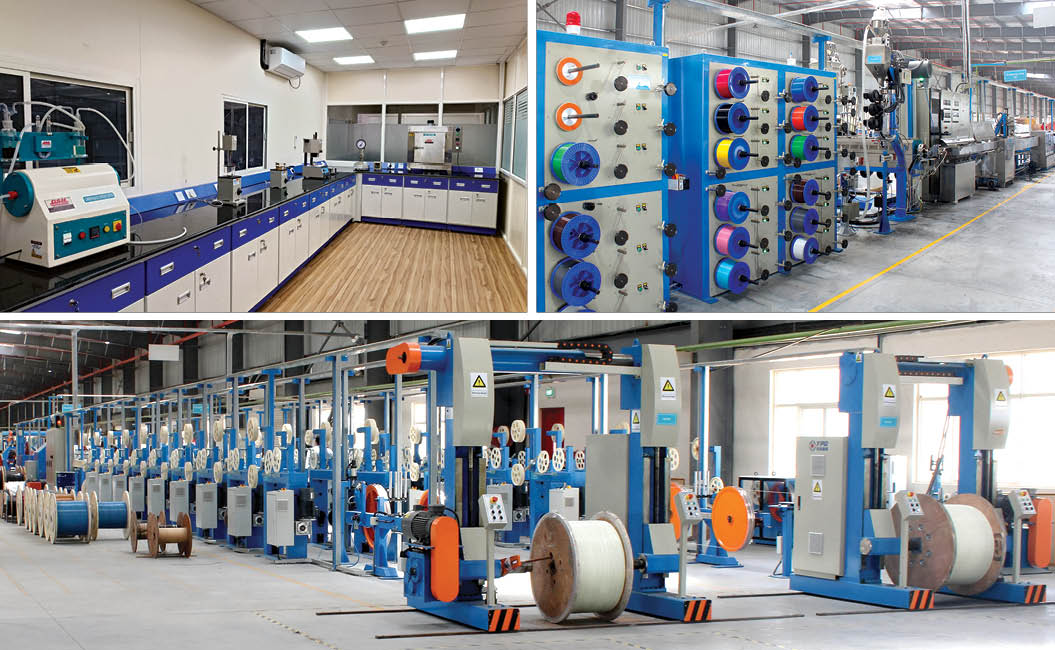
At WCO we are continuously enhancing our testing capabilities, automation, systems & process capabilities and increasing our investments towards R&D.
WCI: The economics of OFC manufacturing are evolving with increasing investments in capacity, technology and quality. In your view, which factors now have the greatest influence on the commercial viability and long-term competitiveness of OFC manufacturing?
PKS: Earlier the focus had been to manufacture at scale and compete on cost advantage. Over a period of time, this has evolved to optimising the entire value chain and offer application focussed, differentiated products. In today’s volatile environment, vertical integration and product differentiation win.
WCI: Beyond manufacturing capacity, what factors now determine a manufacturer’s ability to secure large telecom, infrastructure or data communication projects? How have procurement expectations evolved?
PKS: Manufacturing capacity may get you to the conversation table, but it doesn’t necessarily win you the business. Large customers want confidence on quality, supply continuity, delivery performance, technical support and the financial ability to support large projects. They want to see how fast can a manufacturer customize and respond to changes in applications.
They want suppliers who understand their network architecture and help them solve deployment problems. I therefore see the relationship moving from a traditional buyer-seller relationship towards a strategic supply partnership. The manufacturers that understand the customer’s application and can respond quickly are likely to have a significant advantage.
WCI: As fibre networks become denser and applications more diverse, how are cable designs evolving? In your opinion, which developments, whether in fibre count, cable construction, miniaturisation, bend performance, installation practices or other aspects, are becoming commercially important today?
PKS: We see three major directions in cable evolution, one is higher fibre density, smaller size and more application-specific designs.
We are already seeing increasing interest in 288F, 864F and 1728F solutions, particularly where duct space and deployment efficiency are important. Technologies such as IBR are interesting because they address not simply the requirement for more fibre, but the requirement to put more fibre into the same infrastructure and deploy it faster. Micro-cables, bend-optimised designs and specialised fibres are also becoming increasingly relevant. Looking ahead, we expect data centres and AI infrastructure to accelerate this shift towards high-density and high-performance optical solutions.
Also Read: Wire & Cable India Emagazine Sep-Oct Issue 2026
WCI: Looking beyond demand growth, what do you believe will distinguish the most competitive OFC manufacturers over the next few years? Please draw upon broader industry developments and the capabilities that will matter most, such as manufacturing excellence, technology, quality systems, engineering expertise and supply-chain resilience.
PKS: The OFC industry is moving from a capacity game to a capability game. India has built a tremendous manufacturing scale; the next opportunity is to combine that scale with technology, vertical integration, application engineering and global market access.
The industry has therefore moved from machines that were primarily mechanically controlled to integrated electromechanical and digital process systems. Modern extrusion lines increasingly incorporate recipe-based operation, online diameter measurement, automatic process adjustments, improved communication between machines and remote diagnostics.