India has spent the past few years building scale in optical fibre cable manufacturing; the more important question now is what the industry does with that capacity. As applications become more differentiated and customers place greater emphasis on consistency, traceability, lifecycle performance and application-specific designs, the competitive equation is moving beyond installed capacity. In an exclusive interview with Wire & Cable India, Mr. Sandeep Aggarwal, Managing Director, Paramount Communications Ltd., sees the next phase of the Indian OFC industry being shaped by its ability to combine manufacturing scale with process control, cost efficiency, product development and technological depth. He examines how automation and data-driven quality systems are changing manufacturing, why high-density and compact cable designs are gaining relevance, and how Indian manufacturers can translate their established production base into a stronger position in global OFC markets.
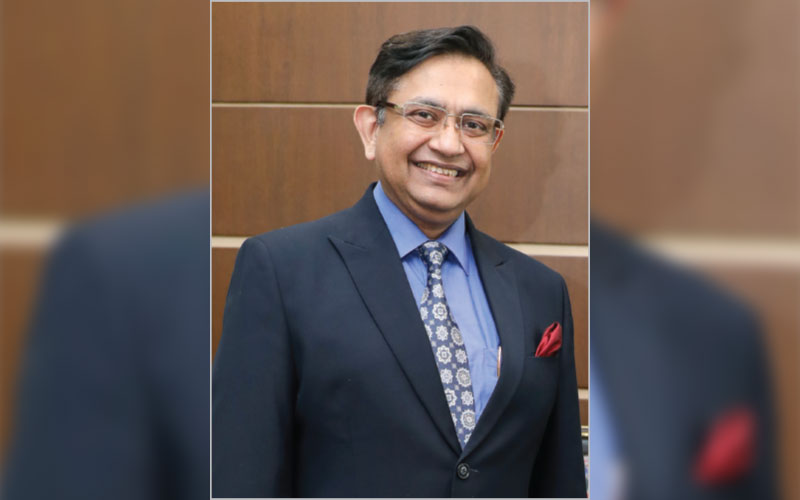
Wire & Cable India: India’s fibre deployment is expanding across FTTH, 5G backhaul, data centres, BharatNet, enterprise networks and other segments. Which application segments are currently shaping product development and manufacturing priorities the most, and how do their technical requirements differ?
Sandeep Aggarwal: FTTH, 5G backhaul, BharatNet and data centres are currently among the key demand drivers. However, their requirements are quite different. FTTH and rural connectivity are more focused on cost, ease of installation and deployment efficiency, while 5G and data centres demand higher fibre counts, compact designs, better bend performance and very high reliability. This is pushing manufacturers towards more application-specific products.
WCI: Over the past three to five years, what manufacturing capabilities or process improvements have become commercially essential for OFC producers that were previously considered optional? Which market, technological or customer requirements have made these capabilities increasingly critical?
SA: Automation, online process monitoring and advanced testing have become much more important than they were a few years ago. With larger volumes and tighter delivery schedules, manufacturers need to maintain consistent quality with minimal process variation. Customers are also increasingly looking for traceability and reliable performance across every batch, making process control a commercial necessity rather than just a manufacturing advantage.
Watch: Top Cable Companies in India
WCI: Network operators today expect higher reliability, faster deployment and longer service life. Which product attributes, quality parameters or qualification requirements have become significantly more demanding? How have manufacturers responded?
SA: The focus has shifted from simply meeting specifications to ensuring consistent performance throughout the product’s service life. Parameters such as attenuation, tensile strength, crush resistance, bend performance and environmental durability are receiving greater attention. Manufacturers are responding through tighter raw-material controls, improved production processes and more rigorous testing at different stages of manufacturing.
WCI: From preforms and optical fibre to cable manufacturing and testing, where has the Indian industry made the most significant progress towards technological self-reliance? Which critical gaps still remain?
SA: India has built strong capabilities in optical fibre cable manufacturing, product development and testing, and Indian manufacturers are increasingly capable of serving both domestic and international markets. The larger opportunity now is to strengthen the upstream ecosystem—particularly specialised materials, equipment and certain advanced optical technologies. Greater investment in R&D and indigenous technology development will be important for achieving deeper self-reliance.
WCI: Recent investments across the industry suggest a growing emphasis on automation, quality assurance and manufacturing scale. In your view, which investments have now become standard expectations or industry necessities, and which continue to provide a tangible competitive advantage?
SA: Basic automation, modern testing facilities, quality systems and production traceability are now essential for any large-scale manufacturer. The real advantage comes from how effectively these systems are integrated. Data-driven quality monitoring, flexible production lines, process optimisation and the ability to develop new cable constructions quickly can provide meaningful differentiation in a competitive market.
WCI: The economics of OFC manufacturing are evolving with increasing investments in capacity, technology and quality. In your view, which factors now have the greatest influence on the commercial viability and long-term competitiveness of OFC manufacturing?
SA: OFC manufacturing is a scale-sensitive business, but capacity alone does not determine competitiveness. Raw-material efficiency, production yield, automation, energy consumption, capacity utilisation and logistics all have a direct impact on margins. Equally important is supply-chain resilience, because disruptions in critical inputs can affect both cost and delivery commitments. The ability to consistently deliver quality at the right cost will remain fundamental.
WCI: Beyond manufacturing capacity, what factors now determine a manufacturer’s ability to secure large telecom, infrastructure or data communication projects? How have procurement expectations evolved?
SA: Large customers today evaluate the complete capability of a manufacturer—not just its installed capacity. Quality credentials, certifications, product qualification, manufacturing consistency, delivery track record, technical support and financial reliability all matter. Procurement has also become more technically driven, with greater emphasis on documentation, traceability, testing and long-term reliability.
WCI: As fibre networks become denser and applications more diverse, how are cable designs evolving? In your opinion, which developments, whether in fibre count, cable construction, miniaturisation, bend performance, installation practices or other aspects, are becoming commercially important today?
SA: The clear direction is towards higher fibre density in smaller and more installation-friendly cable designs. High-fibre-count, compact and bend-optimised constructions are becoming increasingly relevant, particularly in dense urban networks and data-intensive applications. At the same time, cable design has to consider the complete installation process—handling, jointing, splicing and maintenance—not just fibre capacity.
Also Read: Wire & Cable India Emagazine Sep-Oct Issue 2026
WCI: Looking beyond demand growth, what do you believe will distinguish the most competitive OFC manufacturers over the next few years? Please draw upon broader industry developments and the capabilities that will matter most, such as manufacturing excellence, technology, quality systems, engineering expertise and supply-chain resilience.
SA: The next phase of competition will be less about capacity and more about capability. Manufacturers that combine scale with strong quality systems, engineering expertise, product innovation and supply-chain resilience will be better positioned. For Indian manufacturers, the opportunity is particularly strong: we can compete globally not only on cost, but increasingly on quality, technology, reliability and the ability to develop solutions for diverse markets.