

With over INR 700 crore invested in cable capacity expansion over the past two years, Havells is strengthening its manufacturing footprint at Tumakuru and Alwar while advancing its capabilities in extra-high voltage (EHV) cables, E-beam technology and specialised cable solutions. The company plans to increase annual cable manufacturing capacity from 4,59,600 km to 7,34,640 km by December 2027, backed by an additional investment of INR 255 crore. In an exclusive interview with Wire & Cable India, Mr. Manjit Singh Sethi, President & SBU Head Cables, Havells India Ltd., discusses the progress of these initiatives, emerging demand opportunities across data centres, renewable energy and electric mobility, the evolving competitive landscape, and Havells’ strategic priorities for the next three to five years.
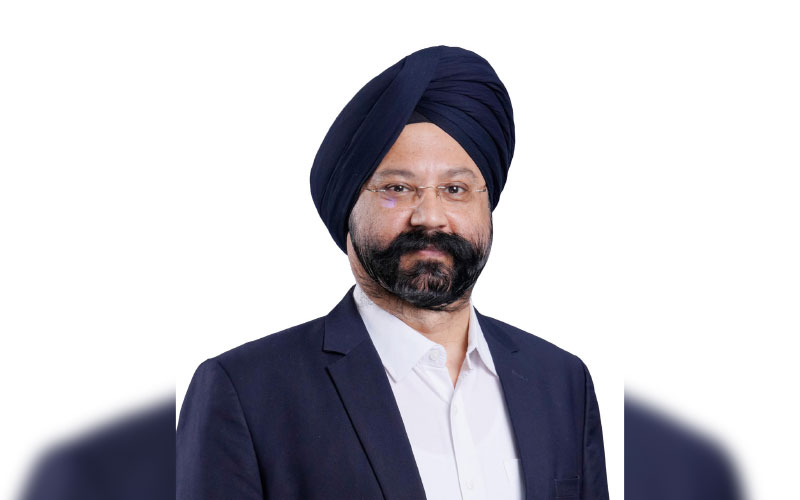
Wire & Cable India: Havells had outlined the commissioning of HT cable manufacturing at Tumakuru and the upcoming EHV facility. What is the latest progress on these two projects, and what capacities will they add?
Manjit Singh Sethi: We have been steadily strengthening our manufacturing footprint to address the growing demand for cables and expand our presence across key markets. Our Tumakuru facility is a strategic investment that enables us to establish a stronger manufacturing base in southern India, improve delivery timelines and enhance operational efficiency. The facility has been developed with advanced manufacturing technologies and automation, supporting our focus on quality and productivity.
We have also announced an additional investment of INR 255 crore to increase the plant’s annual cable manufacturing capacity from 4,59,600 km to 7,34,640 km, with completion expected by December 2027. This forms part of our broader capacity expansion programme across Tumakuru and Alwar. Over the past two years, we have invested more than INR 700 crore in capital expenditure towards expanding our cables capacity, with further capex planned for FY27.
On the technology front, our existing manufacturing capabilities extend up to 132 kV, and we are progressing towards 220 kV and higher extra-high voltage (EHV) cables. These investments will help us address increasingly complex requirements across infrastructure, industrial and other power-intensive applications.
Watch: Top Cable Companies in India
WCI: The company had also planned E-beam capability at Alwar and investments in rubber cable manufacturing. What is the current status of these initiatives, and what new applications will they address?
MSS: We have already invested in E-beam technology at our Alwar facility, with plans to operationalise the capability by the end of 2026. This will strengthen our competitiveness in the solar cable segment while enabling the development of cables with higher current-carrying capacity, enhanced thermal endurance and improved safety. In parallel, we are investing in rubber cable manufacturing to address the growing demand for highly flexible cables, particularly in data centres, where increasingly compact infrastructure requires specialised cabling solutions. These investments are aligned with our broader strategy to strengthen our specialty cable portfolio and address evolving industry requirements.
WCI: The Indian wire and cable industry is witnessing a strong upturn. What are the key drivers behind the current demand cycle, and how sustainable is it?
MSS: We see strong long-term growth potential for the cables industry, driven by sustained investments in infrastructure, power transmission and distribution, industrial development, data centres and renewable energy. Data centres, in particular, are emerging as a key demand driver, with increasingly compact and complex infrastructure creating the need for specialised, high-performance and flexible cables. Beyond volume growth, rising expectations around safety, reliability and efficiency are accelerating demand for advanced cable technologies. At Havells, our focus is on expanding manufacturing capacity, strengthening R&D and developing specialised solutions to capitalise on these emerging opportunities.

We have also announced an additional investment of INR 255 crore to increase the plant’s annual cable manufacturing capacity from 4,59,600 km to 7,34,640 km, with completion expected by December 2027. This forms part of our broader capacity expansion programme across Tumakuru and Alwar.
WCI: Which wire and cable segments will see the strongest growth over the next three to five years, and where does Havells see the biggest opportunities?
MSS: We see attractive opportunities across power cables, higher-voltage cable solutions and specialised cables catering to emerging infrastructure requirements. Continued investments in power transmission and distribution, industrial infrastructure and renewable energy are expected to support demand for power cables, while the development of data centres is creating additional requirements for reliable electrical infrastructure.
We also see opportunities in specialised applications such as EV charging infrastructure and export-oriented cable solutions. Our work on EV AC charging cables, URD and SER cable families, along with our progression towards 220 kV and higher EHV cables, reflects our focus on building capabilities for these evolving requirements.
Within the domestic market, we continue to see opportunities in flexible cables, where safety, product quality and brand trust are becoming increasingly important. We are strengthening our manufacturing footprint and expanding our portfolio to address a broader range of applications, while also developing capabilities to serve international markets.
WCI: New entrants such as Praneetha EcoCables and Ultravolt are entering the market. What does this say about the opportunity in the sector, and how will competition evolve?
MSS: The entry of new players reflects the opportunity that exists in India’s wires and cables sector, supported by investments in infrastructure, industrial development and the broader electrification of the economy. As demand expands, the market will also evolve in terms of customer expectations, product requirements and the capabilities needed to serve different applications.
We believe competition will increasingly be shaped by a combination of manufacturing scale, consistent quality, technological capabilities, product range and the ability to serve customers reliably. In applications where safety and performance are critical, adherence to standards and confidence in product quality will remain particularly important.
In parallel, we are investing in rubber cable manufacturing to address the growing demand for highly flexible cables, particularly in data centres, where increasingly compact infrastructure requires specialised cabling solutions.
WCI: With capacity additions accelerating across the industry, what will matter most in winning customers — scale, technology, quality, brand or distribution?
MSS: I believe winning customers will require a combination of all these factors, but technology, quality and reliability will be the key differentiators. As customer requirements become more sophisticated, particularly across infrastructure, data centres and renewable energy, the ability to deliver high-performance, application-specific solutions will be critical. At Havells, we are strengthening our manufacturing capabilities through automation, backward integration and R&D investments, while leveraging our established brand and distribution network. Ultimately, scale creates capacity, but consistent quality, technological innovation and the ability to deliver on customer commitments will drive long-term competitiveness and trust.
WCI: Data centres, renewables and mobility are creating new cable requirements. Which emerging applications do you see gaining the most traction?
MSS: We see significant growth opportunities across data centres, renewable energy, electric mobility and infrastructure, driving demand for both conventional and specialised cables. Data centres, in particular, are creating demand for thinner, more flexible and high-performance cables as infrastructure becomes increasingly compact. Renewable energy and EV charging are also driving demand for specialised cable solutions. At Havells, we are strengthening our EHV capabilities, expanding our product portfolio and investing in advanced materials, manufacturing and R&D to address these evolving requirements while ensuring superior safety, reliability and quality.
Also Read: Wire & Cable India Emagazine Nov-Dec Issue 2026
WCI: What are Havells’ key priorities for its wires and cables business in terms of capacity, products, technology and market expansion over the next three to five years?
MSS: Our priorities are focused on expanding manufacturing capacity, strengthening technological capabilities, diversifying our product portfolio and improving operational efficiency.
Over the past two years, we have invested over INR 700 crore in cable capacity expansion, with further investments planned for FY27. At Alwar and Tumakuru, we are advancing EHV cable capabilities of 220 kV and above, E-beam technology, automation and testing infrastructure, alongside developing specialised solutions for EV charging and export markets.
We are also expanding our presence in semi-urban and rural markets through a multi-brand strategy. These initiatives will strengthen our ability to address evolving customer requirements and enhance our competitiveness across domestic and international markets.
We believe competition will increasingly be shaped by a combination of manufacturing scale, consistent quality, technological capabilities, product range and the ability to serve customers reliably.