

In an exclusive interaction with Wire & Cable India, Mr. Nirmal Saraf, Director, Nirmal Wires Pvt. Ltd. (Group Nirmal), says India is well positioned to deliver customized wire grades, tailored alloy coatings, application-specific fencing and protection systems, and aluminium conductors optimized for power networks—backed by technical guidance, documentation, and long-term supply assurance, providing end-to-end solutions. He adds that the company is strengthening India’s image as a global engineering hub through a strong focus on product innovation, disciplined quality systems, and customer-led improvement. Group Nirmal’s adherence to internationally recognised ASTM and JIS standards underscores its commitment to global benchmarks, while structured customer feedback and redressal mechanisms ensure that market insights are systematically translated into product and process enhancements.
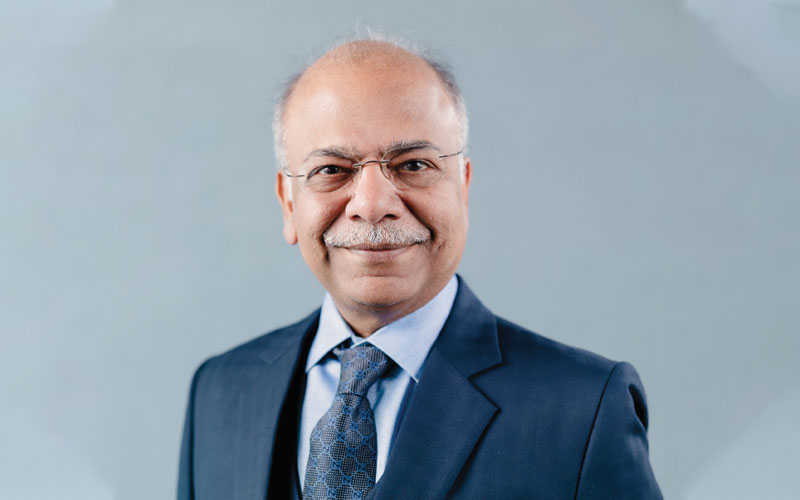
Director, Nirmal Wires Pvt. Ltd. (Group Nirmal)
Wire & Cable India: What will you showcase at WIRE Düsseldorf to highlight India’s technological capabilities and manufacturing excellence to a global audience?
Nirmal Saraf: At Wire Düsseldorf 2026, Nirmal Wires (Group Nirmal) will showcase how India has transformed into a reliable, technology-driven manufacturing hub. We will present our diverse portfolio, which includes galvanized and black steel wires, advanced Zn-Al alloy-coated NIZNAL® wires, fencing and rockfall protection systems, nylon-coated wires, and AL59 aluminum conductors for power transmission.
With an annual capacity exceeding 216,000 MT, our exhibits will emphasize consistency at scale, process control, and global compliance. Interactive technical presentations will highlight corrosion-resistance performance, lifecycle benefits, and stringent quality assurance systems aligned with international standards. Our goal is to demonstrate that Indian manufacturing combines engineering expertise, reliability, traceability, and sustainability, meeting global expectations not only in terms of cost but also in long-term performance and supply-chain confidence.
Watch: Top Cable Companies in India
WCI: International trade fairs play a crucial role in shaping industry collaborations. How do platforms like WIRE Düsseldorf help Indian manufacturers connect with global markets and customers?
NS: International trade fairs such as WIRE Düsseldorf help Indian manufacturers integrate with global markets and build meaningful industry collaborations. Such platforms bring together manufacturers, raw material suppliers, equipment makers and buyers on a neutral, focused stage, making it easier to establish supply relationships and access larger procurement networks.
For many Indian companies, especially mid-sized and emerging players, this direct exposure provides an efficient route to connect with utilities, EPC contractors, renewable energy developers, and government-linked agencies worldwide. Such exhibitions also enable companies to showcase new technologies while gaining first-hand insight into global innovations that encourage domestic producers to upgrade products and processes.
International delegations create export and trade opportunities, helping Indian manufacturers better understand certification, compliance, and quality benchmarks required for overseas projects. Additionally, conferences alongside exhibitions foster dialogue on standards, regulations, and policy priorities, supporting long-term alignment with global infrastructure and energy transition goals.

Rather than one-way technology transfer, partnerships today are increasingly co-development driven, where Indian manufacturing scale combines with global engineering inputs to deliver robust, compliant solutions.
WCI: From your participation at WIRE Düsseldorf, what key global market insights are you hoping to gain and bring back to strengthen India’s wire and cable manufacturing ecosystem?
NS: Over the last decade, India’s representation at international trade fairs has evolved significantly. From being seen largely as a cost-competitive sourcing base to being recognised as a serious engineering and manufacturing partner, India has made substantial strides in showcasing its technological advancements and capabilities.
Participation from the Indian wire and cable industry has grown steadily in scale and sophistication, with Indian manufacturers engaging buyers across Europe, North America, the UK, the GCC, Australia, and Southeast Asia.
Today, discussions at these platforms are less about price and more about compliance, international certifications, product performance, lifecycle durability, and supply reliability. This shift has been reinforced by global geopolitical realignments, supply chain diversification away from single-country dependence, Europe’s accelerated grid expansion driven by energy security concerns, and tightening trade frameworks around sustainability and carbon disclosures.
Aligned with this broader industry evolution, we are contributing to strengthening India’s image as a global engineering hub by focusing on product innovation, disciplined quality systems, and customer-led improvement. Our adherence to internationally recognised ASTM and JIS standards reflects a commitment to global benchmarks, while structured customer feedback and redressal mechanisms ensure that market insights are systematically translated into product and process enhancements. Engaging global customers on technical capability, reliability, and long-term value, we are helping reinforce the perception of Indian manufacturing as quality-driven, technology- capable, and globally dependable.
Looking ahead, as infrastructure investments, renewable integration, and grid modernisation accelerate worldwide, India’s wire and cable industry is well placed to move from an alternative supplier to a preferred global partner, and we see ourselves playing an active role in that transition.
WCI: What core Indian manufacturing strengths differentiate you on the global stage? For what turnkey solutions is the world looking at India?
NS: India’s key manufacturing advantage lies in its ability to deliver scale with discipline—large volumes produced under rigorous quality systems. Group Nirmal reflects this strength through seven modern facilities, integrated testing, and a workforce skilled in precision wire drawing and coating technologies. We are the only integrated conductor manufacturers in India. Our manufacturing process starts with aluminium ingots and galvanized steel wire cores, enabling us to produce finished products entirely in-house.
Globally, customers are increasingly seeking turnkey solutions, not just products. India is well-positioned to deliver complete offerings: customized wire grades, tailored alloy coatings for corrosion resistance, application-specific fencing and protection systems, and aluminium conductors optimized for power networks. Beyond manufacturing, customers value India’s capability to provide technical guidance, documentation, and long-term supply assurance. This combination of engineering customization, cost-efficient production, and end-to-end support enables Indian manufacturers to integrate seamlessly into infrastructure, energy, agriculture, and industrial projects worldwide.
As infrastructure investments, renewable integration, and grid modernisation accelerate worldwide, India’s wire and cable industry is well placed to move from an alternative supplier to a preferred global partner.
WCI: Technology partnerships and acquisitions are critical today. How are Indo-global collaborations helping reinforce India’s engineering leadership?
NS: Indo-global collaborations are accelerating India’s transition from a cost-driven supplier to a technology-aligned manufacturing partner. Through exposure to international standards, testing protocols, and application requirements, Indian manufacturers are strengthening product validation and process sophistication.
Group Nirmal, global customer engagement and technical exchanges have influenced advancements in coating technologies, corrosion-resistance performance, and lifecycle optimization. These collaborations improve alignment with European and international norms, enhance traceability systems, and elevate quality assurance practices.
Rather than one-way technology transfer, partnerships today are increasingly co-development driven, where Indian manufacturing scale combines with global engineering inputs to deliver robust, compliant solutions. This reinforces India’s leadership as a dependable engineering base capable of supporting long-term infrastructure and energy projects across multiple regions.
WCI: Which international regions do you see as strategic growth markets, and how is India positioned as your global manufacturing base to support these expansions?
NS: Europe, the Middle East, Africa, and Southeast Asia are strategic growth regions driven by infrastructure renewal, power transmission expansion, and urban development. Europe, in particular, demands high-performance, certified, and sustainable wire solutions requirements,well aligned with Indian manufacturing maturity. India’s strong domestic raw-material ecosystem, skilled workforce, and scalable infrastructure position it as a stable global manufacturing base.
For Group Nirmal, India enables phased, long-duration project supplies without specification drift, critical for large fencing, power, and infrastructure programs. Additionally, India’s logistical connectivity and expanding trade frameworks strengthen its role as an export hub. From a single manufacturing base, we can reliably serve diverse regional standards while maintaining consistency, cost control, and compliance.
Also Read: Laser Power & Infra Limited: India Powers Ahead with Value-Engineered Transmission Solution
WCI: How are cost pressures across raw materials, energy, or logistics being managed without compromising product reliability or compliance?
NS: Managing cost pressures today requires process efficiency rather than specification dilution. Group Nirmal focuses on optimizing zinc and aluminium usage, improving yield efficiency, and deploying energy-efficient production systems to control input costs.
Long-term supplier partnerships help stabilize raw material sourcing, while integrated planning reduces logistics variability. More importantly, cost management is embedded within strict quality frameworks, ensuring mechanical properties, coating thickness, and dimensional accuracy remain fully compliant with international standards.
By emphasizing lifecycle value instead of upfront pricing, we deliver products with longer service life and reduced replacement frequency, which lowers total cost of ownership for customers. This approach allows us to absorb volatility while preserving reliability, certification integrity, and performance consistency.
WCI: How are sustainability expectations from customers or regulators translating into changes in product design, manufacturing practices, or material choices?
NS: Sustainability expectations are increasingly shaping both product engineering and manufacturing discipline. At Group Nirmal, this translates into designing longer-life products such as our NIZNAL® Zn–Al alloy–coated wires that outperform conventional GI Wires by 6 times, reducing material consumption over time.
Manufacturing practices emphasize energy-efficient operations, optimized metal usage, and responsible sourcing. For aluminium conductors and steel wires, focus has shifted toward durability, recyclability, and reduced maintenance cycles. Rather than symbolic compliance, sustainability is treated as a performance metric, where extended service life, lower replacement rates, and efficient resource use deliver measurable environmental benefits. This aligns closely with global regulatory expectations and customer procurement criteria, particularly in Europe and other regulation-intensive markets.
India’s strong domestic raw-material ecosystem, skilled workforce, and scalable infrastructure position it as a stable global manufacturing base.