Supermac Industries is advancing cable extrusion technology through process engineering, automation, digital monitoring and flexible machine design, with a focus on process stability, efficient production and application-specific solutions. In an exclusive interaction with Wire & Cable India, Mr. Vivek Kohli, Director, Supermac Industries (India) Limited, talks about how the company integrates screw and barrel design, cross-head technology, tooling, cooling, line control and online measurement to achieve consistent extrusion processes. He also discusses the growing role of Industry 4.0, IoT-enabled systems, remote diagnostics, online diameter control and modular, upgradeable machinery in improving productivity and extending equipment life. Looking ahead, Supermac Industries sees intelligent process control, data-driven manufacturing, material flexibility and energy-conscious systems shaping the next generation of extrusion machinery.
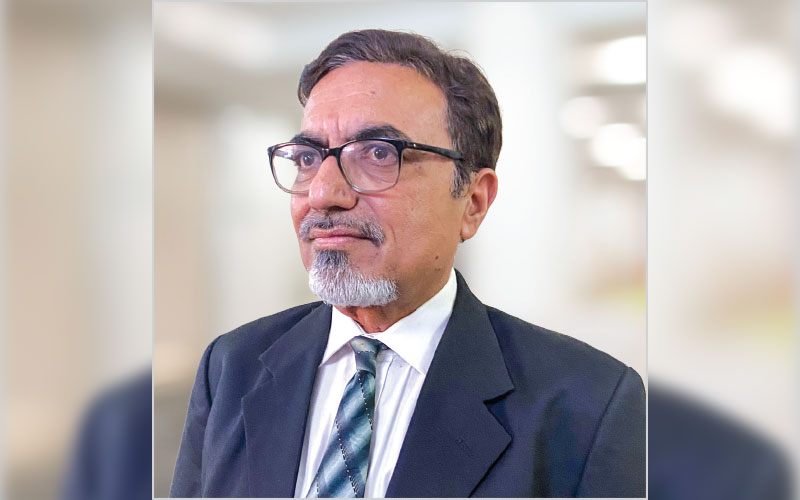
Wire and Cable India: Cable manufacturers today produce an increasingly diverse range of products using different polymers, performance requirements and production speeds. Which developments are placing the greatest demands on modern extrusion systems, and why?
Vivek Kohli: The biggest change we see is that cable manufacturers are no longer looking for machines designed around one product or one material. They increasingly want flexible platforms capable of handling a wider range of materials, cable constructions, diameters and production speeds without compromising consistency.
The growth of renewable energy, EVs, automotive, data communication and higher-performance power cables is bringing more demanding materials and tighter dimensional requirements. At the same time, manufacturers expect higher output and faster changeovers.
This places greater demands on the complete extrusion system—not just the extruder. Screw and barrel design, temperature control, cross-head flow distribution, tooling, cooling, line tension and online measurement all have to work as one integrated system.
At Supermac, we therefore see process stability and flexibility as equally important as maximum line speed. Our lines are designed with configurable single, dual and triple extrusion arrangements, depending on the product and customer requirement.
Watch: Top Cable Companies in India
WCI: Compared with five years ago, which aspects of the extrusion process have become technically more difficult to control consistently? How have machinery design and process engineering evolved to address these challenges?
VK: The principal challenge is maintaining consistent product quality at increasingly higher speeds and with increasingly narrow tolerances.
Melt temperature stability, pressure variation, wall-thickness consistency, eccentricity, cooling conditions, line tension, and synchronization between different sections of the line become more critical as speed increases.
The industry has therefore moved from machines that were primarily mechanically controlled to integrated electromechanical and digital process systems.
Modern extrusion lines increasingly incorporate recipe-based operation, online diameter measurement, automatic process adjustments, improved communication between machines and remote diagnostics. Supermac’s systems incorporate Industry 4.0/IoT capabilities and online remote service, while our machine-upgrade programs can also bring newer control and drive technologies to existing equipment.
The objective is not simply automation for its own sake. The objective is to make the process less dependent on operator intervention and more repeatable from one production run to another.

One common misconception is that a higher machine speed automatically means higher productivity. In reality, productivity is determined by the amount of conforming products produced efficiently and consistently.
WCI: Modern cable compounds such as HFFR, LSZH, XLPE, specialised elastomers and engineering polymers each present unique processing characteristics. Which material-related challenges are driving the most significant innovations in extrusion equipment today?
VK: Material technology is probably one of the strongest drivers of extrusion-machine development.
Materials such as HFFR and LSZH can have very different flow, thermal and shear characteristics compared with conventional PVC compounds. XLPE and silane-based systems introduce their own processing and curing requirements, while specialised elastomers and engineering polymers can demand precise temperature and residence-time control.
The challenge is therefore to achieve homogeneous melting and mixing without excessive shear, degradation or temperature variation.
This is driving improvements in screw and barrel geometry, temperature-control systems, melt-flow distribution and cross-head design. Tooling has become particularly important because the melt has to be distributed uniformly around the conductor while maintaining very tight wall-thickness tolerances.
Supermac’s triple-extrusion technology for silane-XLPE, for example, uses a dedicated cross-head and melt distributors matched to the different insulation and semiconductive layers.
Going forward, we expect material-specific process engineering rather than one-size-fits-all extrusion design to become increasingly important.
WCI: Customers increasingly expect higher line speeds together with tighter quality tolerances. In practice, where do machinery builders encounter the greatest trade-offs between productivity, process stability and product quality, and how are these being addressed?
VK: The fundamental issue is that speed alone does not represent productivity. Increasing line speed can reduce production time, but if it creates higher scrap, dimensional variation, frequent stops or difficult changeovers, the real productivity gain can disappear.
The most important engineering challenge is therefore to increase speed while maintaining stable melt conditions, precise wall thickness and eccentricity, consistent cooling, stable cable tension, reliable take-up and pay-off, accurate synchronization between line components, and fast response to process disturbances.
Modern systems address this through better screw and cross-head design, improved drives, closed-loop measurement, online diameter control and better coordination between the different sections of the line.
Our philosophy is to optimise output per hour of good-quality cable, rather than simply maximising nominal machine speed. Supermac’s equipment incorporates online diameter control and precision pay-off/take-up systems for this reason.
WCI: Energy efficiency, automation, digital monitoring and process control are widely discussed across the industry. Which of these developments are delivering the greatest measurable operational benefits today, and where do you still see a noticeable gap between industry expectations and practical implementation?
VK: The greatest measurable benefits are currently coming from a combination of efficient drives, process optimisation, automation and reduced downtime.
Energy efficiency is important, but manufacturers should look beyond the electrical consumption of the extruder alone. A more efficient machine is one that also reduces start-up waste, improves changeover time, reduces rejected cable and minimizes unplanned downtime.
Digital monitoring and remote diagnostics are also becoming increasingly valuable. They allow manufacturers and machinery suppliers to identify problems faster and reduce the time required for troubleshooting.
Supermac already incorporates IoT-enabled systems, Industry 4.0-compatible controls and online remote service capabilities.
The gap we still see is between what digital technology can technically deliver and what plants are operationally prepared to use. Installing sensors is relatively easy; converting the data into useful process decisions, predictive maintenance and measurable productivity improvements requires disciplined implementation and trained personnel.
WCI: With cable manufacturers placing increasing emphasis on productivity, quality and operating costs, which factors now have the greatest influence on the investment value of an extrusion line, and how are they shaping machine design and development?
VK: Customers are increasingly evaluating an extrusion line on its total cost of ownership, rather than simply its purchase price. The important parameters include production output, material utilization and low scrap, energy consumption, changeover time, reliability and uptime, maintenance requirements, availability of spare parts and service, operator requirements, the ability to handle future products, and machine life and upgradeability.
This is changing machine design significantly. Equipment needs to be easier to operate, easier to maintain and capable of being upgraded as technology develops.
Supermac has specifically focused on machine upgrades because existing equipment can often be improved through new screw-and-barrel designs, drives, servo systems and communication technologies rather than being completely replaced. Therefore, we believe upgradeability and long-term service support are becoming as important as the initial machine specification.
The future of extrusion is not simply about making machines faster. It is about making the complete process more intelligent, stable, flexible, energy-efficient and repeatable.
WCI: As cable manufacturers diversify into sectors such as renewable energy, automotive, EV charging, data communication, railway and specialty cables, how are these applications influencing extrusion line configuration, tooling and overall machine design?
VK: Diversification is creating a much greater need for application-specific extrusion solutions. For automotive and EV cables, manufacturers require high productivity combined with precise insulation dimensions and reliable material processing. Renewable-energy cables can require specialized insulation and sheathing systems, as well as long continuous production capability.
Data cables are a different challenge altogether because dimensional accuracy, eccentricity and electrical characteristics become extremely sensitive to the extrusion process. Supermac’s high-speed tandem data-cable systems, for example, incorporate online diameter control and capacitance monitoring.
For power cables, particularly higher-voltage products, the emphasis shifts toward multi-layer extrusion, precise cross-head design, cleanliness and process stability.
Consequently, the future is not one universal extrusion line. It is modular machine architecture combined with application-specific screw, barrel, cross-head and tooling design.
WCI: From your interactions with cable manufacturers, what are the most common misconceptions about extrusion that often lead to avoidable quality issues, inefficiencies or higher production costs? Conversely, what operational practices consistently distinguish high-performing plants?
VK: One common misconception is that a higher machine speed automatically means higher productivity. In reality, productivity is determined by the amount of conforming products produced efficiently and consistently. Another misconception is that extrusion quality is primarily determined by the extruder. In reality, the complete line—from pay-off through extrusion and cooling to take-up—including the right selection of materials, has to be properly balanced.
We also see situations where manufacturers try to process different materials using the same screw, barrel and tooling configuration without sufficient consideration of material behaviour. This can lead to instability, excessive waste or inconsistent quality.
High-performing plants typically have disciplined process parameters, well-maintained tooling, properly calibrated measurement systems, consistent raw-material handling, controlled start-up and changeover procedures, trained operators, preventive maintenance, and effective use of process data. The best plants also treat the machinery supplier as a technology and process partner, rather than simply as an equipment vendor.
Also Read: Wire & Cable India Emagazine Sep-Oct Issue 2026
WCI: Looking ahead, which engineering capabilities do you believe will define the next generation of extrusion machinery? Please elaborate from an industry perspective, focusing on the underlying technological and process developments rather than individual product launches.
VK: We believe the next generation of extrusion machinery will be defined by intelligent process control, flexibility, energy efficiency and the ability to continuously optimise production.
The machine of the future will increasingly understand the relationship between material, process parameters, line speed and final product quality.
The key developments will include:
- Closed-loop process control: Online measurement will increasingly feed directly into machine controls, allowing the system to automatically correct process deviations and maintain consistent product quality.
- Data-driven manufacturing: Production data will be used not only for monitoring but also for process optimisation, predictive maintenance and quality analysis.
- Greater material flexibility: Machines will need to process a wider range of modern compounds while maintaining stable output and product quality.
- Faster and more intelligent changeovers: Recipe management and automated settings will reduce operator dependence and production losses.
- Modular and upgradeable machinery: Customers will increasingly seek modular and upgradeable equipment that can evolve with their products and technology rather than becoming obsolete.
- Energy-conscious process engineering: Energy consumption will be considered at the complete-line level, together with scrap, downtime and productivity.
- Remote technical support and connectivity: Remote diagnostics and service will become standard expectations, particularly for globally distributed manufacturing operations.
Ultimately, the next generation of extrusion machinery will not be defined simply by higher RPM or higher line speed. It will be defined by how intelligently the machine converts raw material into consistent, high-quality cable with minimum waste, energy consumption and downtime. That is where we see the real evolution of extrusion technology.
“The future of extrusion is not simply about making machines faster. It is about making the complete process more intelligent, stable, flexible, energy-efficient and repeatable.”
The industry has therefore moved from machines that were primarily mechanically controlled to integrated electromechanical and digital process systems. Modern extrusion lines increasingly incorporate recipe-based operation, online diameter measurement, automatic process adjustments, improved communication between machines and remote diagnostics.