
In an exclusive interview with Wire & Cable India, Mr. Pranav Bansal, MD & CEO, Bansal Wire Industries Limited, outlines the company’s transition toward high-performance, application-driven steel wire solutions as end-use industries demand greater precision and reliability. He points to strong momentum from automotive, power transmission, and infrastructure sectors, where advanced products like tyre bead wire, LRPC strands, and galvanized wires are gaining traction. The company is strengthening capabilities through automation, digital process control, and advanced surface treatment technologies to ensure consistency and efficiency. Emphasizing quality of wire rods, process discipline, and customer collaboration, Bansal Wire Industries is aligning its strategy to capture opportunities in a gradually consolidating and technology-driven steel wire market.

Wire & Cable India: Steel wire manufacturers today cater to a wide range of end-use industries through both conventional commodity and specialized products. Could you briefly describe your company’s specialty or application-specific steel wire portfolio and the key industries they serve?
Pranav Bansal: At Bansal Wire Industries, our focus has been on evolving from a conventional, volume-driven manufacturer to a more application-oriented and value-added solutions provider. While commodity products remain part of our portfolio, a growing share of our business is driven by specialty steel wires tailored to specific end-use applications.
We cater to key sectors such as power transmission, automotive, construction & infrastructure, agriculture, and general engineering. In power transmission, for instance, we supply mild steel galvanized wires and cable armouring wires & strips, which are critical for durability and protection in transmission systems. In the automotive segment, our portfolio includes tyre bead wire, steel tyre cord, IHT wires, and spring wires, all of which require high precision and performance consistency.
For infrastructure, we manufacture LRPC strands, used in prestressed concrete applications, while in agriculture, we provide galvanized wires for fencing, poultry and farming applications. Our approach is centered on customization, performance reliability, and consistency, ensuring that each product aligns closely with the operational demands of the sector it serves.
Watch: Top Cable Companies in India
WCI: A large portion of steel wire production has traditionally consisted of general-purpose, commodity products such as binding wire, fencing wire, and low-carbon drawn wire. In your view, how does application-specific (specialty) steel wire differ from these commodity products in terms of metallurgy, performance requirements, and manufacturing precision?
PB: The distinction between commodity and specialty steel wire lies in the level of engineering precision and performance expectations. Commodity wires are largely standardized products, designed for general-purpose applications with a primary focus on cost efficiency and scale.
In contrast, specialty steel wires such as tyre bead wire, steel tyre cord, or LRPC strands are application-engineered products. The differentiation begins at the metallurgy level, where chemical composition, heat treatment, and microstructural control are tailored to meet specific performance requirements.
These products must deliver high tensile strength, fatigue resistance, corrosion protection, and tight dimensional tolerances. For example, automotive wires like spring wires and IHT wires must withstand repeated stress, while infrastructure products like LRPC strands require long-term structural reliability.
Manufacturing such wires involves advanced processing technologies, precise process control, and stringent quality systems. Even minor deviations can impact end-use performance, making specialty wire production significantly more precision-driven and technically demanding compared to commodity wire manufacturing.
WCI: As end-use industries evolve, their performance requirements increasingly influence wire design. Which sectors today are exerting the strongest influence on steel wire development and demand for specialized products?
PB: We are seeing strong demand from sectors that are undergoing structural growth and increasing performance expectations. The power transmission and distribution sector is a key driver, where products like galvanized wires and cable armouring wires & strips are required to deliver durability and long-term reliability.
The automotive sector continues to be a major influence, particularly with products such as tyre bead wire, steel tyre cord, IHT wires, and spring wires, which must meet stringent safety, performance, and fatigue requirements. As vehicle performance standards evolve, so does the demand for more advanced wire solutions.
Additionally, construction and infrastructure are driving demand for products like LRPC strands, which are critical for prestressed concrete and long-life structural applications. The agriculture sector also contributes through steady demand for galvanized wires used in poultry and farming applications.
Overall, these sectors are pushing the industry towards application-specific, high-performance wires, where consistency, durability, and lifecycle performance are becoming key decision factors.

We are seeing strong demand from sectors that are undergoing structural growth and increasing performance expectations. The power transmission and distribution sector is a key driver, where products like galvanized wires and cable armouring wires & strips are required to deliver durability and long-term reliability.
WCI: Different applications require specific mechanical and physical properties. What key technical parameters (such as tensile strength, fatigue resistance, surface quality, or dimensional tolerance) are becoming most critical for these specialized steel wire applications?
PB: As applications become more demanding, the focus has shifted towards performance consistency and lifecycle reliability. Customers today expect products to maintain performance under continuous stress and varying environmental conditions. Key parameters include tensile strength and uniformity, which are critical for applications such as LRPC strands used in infrastructure. Fatigue resistance is especially important in automotive products like spring wires and tyre bead wire, where repeated stress cycles are common.
Surface quality and coating integrity are essential for corrosion resistance, particularly in galvanized wires and cable armouring wires used in power transmission and outdoor environments. Additionally, dimensional accuracy and tight tolerances are crucial for precision applications such as steel tyre cord and IHT wires, where even minor variations can affect performance.
Increasingly, customers are also focusing on long-term durability and reduced maintenance, making parameters like consistency, reliability, and extended service life central to product development and selection.
WCI: Does producing high-performance specialized wires often require advanced processing capabilities? If yes, what types of manufacturing technologies or specialized equipment are essential for producing such high-performance steel wires?
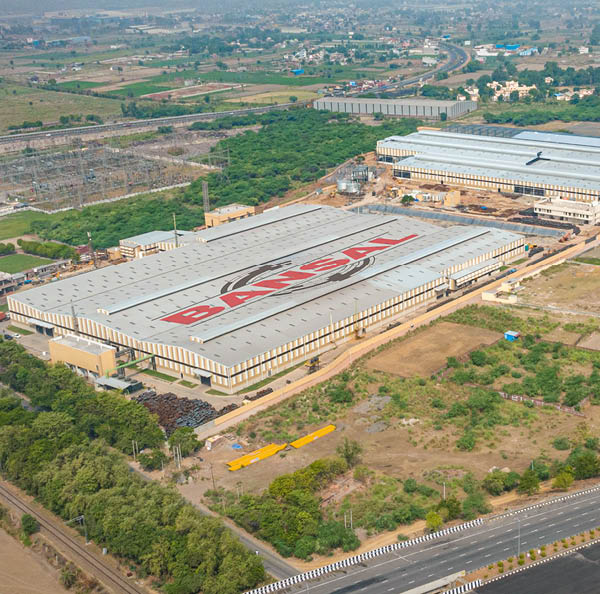
PB: Yes, producing high-performance specialized wires requires significant investment in advanced manufacturing technologies and process control systems. These products demand high precision, consistency, and adherence to stringent performance standards.
We have invested in advanced wire drawing technologies that enable precise control over mechanical properties required for products such as tyre bead wire, steel tyre cord, and LRPC strands. We also operate state-of-the-art galvanizing and coating lines to enhance corrosion resistance in products like mild steel galvanized wires and cable armouring wires. Our focus on surface engineering ensures improved durability and performance across applications. In addition, the integration of automation and digital process controls helps minimize variability and ensures consistent output at scale.
We also maintain strong testing, certification, and traceability systems, which are essential for meeting both domestic and global standards. These capabilities collectively enable us to deliver high-performance, application-specific wire solutions with reliability and consistency.
WCI: Steel wire production depends heavily on the quality and availability of wire rods. How do variations in raw material quality or fluctuations in input prices influence downstream wire manufacturing?
PB: From our standpoint, wire rod quality is absolutely foundational to the performance of the final product. Even minor inconsistencies in chemistry, surface condition or dimensional tolerances can translate into significant challenges during drawing, coating and finishing stages. This can impact tensile strength, fatigue life and surface integrity parameters that are critical for high-performance applications like power transmission or automotive components.
On the pricing side, volatility in steel and allied inputs creates pressure across the value chain. However, the response cannot be purely reactive. At Bansal Wire Industries, we focus on building a resilient procurement strategy through long-term supplier partnerships, improved forecasting and a diversified sourcing ecosystem. Equally important is process discipline—optimizing material yield, reducing rework and ensuring consistent process control so that input variability does not disproportionately affect output quality.
Ultimately, the ability to manage both quality variability and cost fluctuations comes down to operational maturity. Strong testing systems, traceability and process standardization allow us to absorb these fluctuations without compromising on reliability, which is what customers value most in the long run.
Over the past few years, the most meaningful gains in our industry have come from a combination of automation, precision process control and advanced surface engineering technologies. In our case, investments in next-generation galvanizing and surface treatment lines have significantly enhanced corrosion resistance and product consistency especially for applications exposed to harsh environments.
WCI: Across the industry, manufacturers are investing in process improvements and automation. Which recent technological or operational upgrades have had the greatest impact on product quality and manufacturing efficiency?
PB: Over the past few years, the most meaningful gains in our industry have come from a combination of automation, precision process control and advanced surface engineering technologies. In our case, investments in next-generation galvanizing and surface treatment lines have significantly enhanced corrosion resistance and product consistency especially for applications exposed to harsh environments.
Automation has also played a transformative role. Digitally controlled wire drawing machines, inline monitoring systems and data-driven quality checks have reduced human dependency in critical stages, thereby minimizing variability. This not only improves product quality but also enhances throughput and equipment utilization.
Another key area is testing and validation infrastructure. As customer expectations evolve particularly in global markets—there is a growing need for rigorous testing, traceability and certification readiness. Strengthening these capabilities ensures that quality is built into the process rather than inspected at the end.
What we are seeing now is a shift from isolated upgrades to integrated manufacturing ecosystems, where machines, data and quality systems work in sync. This integrated approach is what truly drives both efficiency and consistency at scale.
WCI: India’s steel wire industry has historically been fragmented, but larger organized manufacturers are steadily expanding their presence. How do you see the competitive structure of the industry evolving in the coming years?
PB: The industry is clearly transitioning from a fragmented landscape to a more organized and capability-driven structure. Historically, a large part of the market operated on cost competitiveness and localized supply. However, with increasing demand from sectors like infrastructure, automotive and renewable energy, the emphasis is shifting toward quality, reliability and application-specific performance.
This naturally favours organized players who have the ability to invest in technology, scale operations and maintain consistent quality standards. Larger manufacturers are also better positioned to meet evolving regulatory, compliance and traceability requirements, which are becoming increasingly important—especially for export markets.
Going forward, we expect the gap between organized and unorganized players to widen. The industry will likely see fewer, but more capable participants, with a stronger focus on technology, integration and global competitiveness rather than just pricing.
Also Read: Tata Steel Champions the 3C Formula- Capacity, Capability and Customer Needs
WCI: Looking ahead, what will be the key strategic priorities for steel wire manufacturers—whether in terms of product specialization, capacity expansion, technology investments, or exploring new application segments?
PB: Looking ahead, the industry’s strategic direction will be shaped by a combination of product sophistication, capacity readiness and technology adoption. One of the primary priorities will be moving up the value chain from commodity-grade wires to high-performance, application-specific solutions that cater to sectors like energy, infrastructure and mobility.
Capacity expansion will continue, but it has to be aligned with flexibility. Modular and scalable manufacturing setups will be critical to respond to project-based demand and evolving global supply chains. At the same time, investments in automation, digital manufacturing and energy-efficient processes will be essential to remain competitive while managing cost pressures.
Another important area is deeper customer collaboration. Co-developing products, supporting qualification processes and aligning with application requirements will become key differentiators. This shifts the role of manufacturers from suppliers to solution partners.
Finally, exploring new application segments, particularly those linked to energy transition and advanced industrial use will open up growth opportunities. The companies that can combine scale, engineering depth and agility will be best positioned to lead the next phase of growth in this industry.