

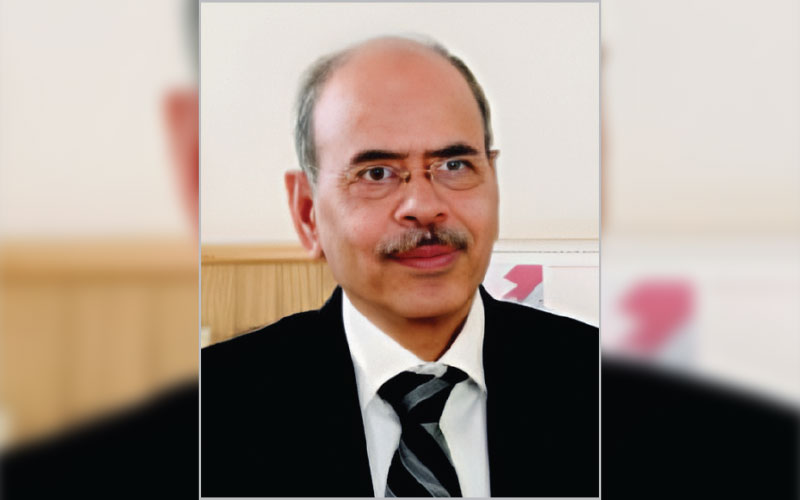
Cords Cable Industries shares that specialty cable manufacturing is ultimately about understanding the customer’s application and delivering a reliable solution for that operating environment. As India’s infrastructure, industrial, transportation, and digital sectors continue to expand, the demand for customized and high-performance cable solutions will continue to grow. The focus remains on engineering excellence, product reliability, and building long-term partnerships with customers by consistently delivering solutions that meet their evolving requirements. In an exclusive interview with Wire & Cable India, Mr. Naveen Sawhney, Managing Director, Cords Cable Industries Ltd., shares how understanding customer applications has become the foundation of specialty cable manufacturing. He discusses the sectors driving demand, evolving performance expectations, the growing importance of engineering excellence and opportunities for localisation.
Wire & Cable India: How do you currently define the specialty cable segment within your organization, and which application areas are presently driving the strongest business momentum for you?
Naveen Sawhney: At Cords Cable Industries, we see specialty cables as application-specific solutions for environments where standard cables are not sufficient. These are cables built to meet particular performance, safety, environmental, and operational requirements, and in many cases they are developed for a specific project or end use.
Our portfolio includes instrumentation, control, thermocouple, railway signalling, power, and other customized cable solutions used across critical sectors. At present, we are seeing good traction from oil & gas, industrial automation, metro rail, renewable energy, power, and infrastructure projects. Across these segments, customers are increasingly looking for cables that are designed around the application rather than standard off-the-shelf products.
Watch: Top Cable Companies in India
WCI: Among automation, railways, renewables, data centers, EVs, oil & gas, mining, marine, or defense, which end-use sectors are generating the most meaningful demand today, and how do their technical expectations differ?
NS: The strongest demand today is coming from oil & gas, industrial automation, renewable energy, metro rail projects, and data centres, both in the domestic market and in exports.
Each of these sectors has its own technical priorities. Automation applications call for flexibility, good signal integrity, and effective EMI protection. Renewable energy projects need cables that can perform reliably outdoors over long periods, with resistance to UV exposure, temperature variation, and moisture. Oil & gas, mining, and marine environments require cables that can withstand mechanical stress, chemicals, and harsh operating conditions. Metro-Rail projects place a strong emphasis on fire safety and reliability, while defence applications demand robust performance and compliance with strict qualification norms. Data centres are also becoming increasingly important, where uninterrupted operation, fire performance, and reliability are critical.
WCI: What major shifts are you observing in customer expectations regarding performance, reliability, lifecycle requirements, qualification standards, and application-specific engineering?
NS: One of the biggest changes we have seen is that customers are no longer looking only at the initial purchase price. They are paying much more attention to reliability, lifecycle performance, and the overall value the product delivers over time. This is especially true in critical applications, where a cable failure can lead to downtime, safety issues, or project delays. There is also a much stronger focus today on qualification, traceability, documentation, and compliance with project specifications.
WCI: Which performance parameters are becoming increasingly critical in specialty cable design today, including flexibility, thermal endurance, fire performance, EMI shielding, chemical resistance, weatherability, or signal integrity?
NS: The importance of these parameters depends on the application, but overall, we are seeing greater emphasis on flexibility, thermal endurance, fire performance, EMI shielding, chemical resistance, weatherability, and signal integrity.
As industrial systems become more connected and more complex, customers expect cables to perform reliably under tougher operating conditions. Fire safety requirements have become stricter across many sectors, while automation and communication-heavy applications place greater importance on signal integrity and electromagnetic compatibility.
At the same time, there is a clear preference for compact cable designs that can serve multiple functions while still being easy to install and dependable in service.
WCI: How are industrial automation, robotics, high-flex applications, and the growing convergence of power, control, and data systems influencing product development and cable architecture?
NS: Industrial automation and digitalization are having a direct impact on cable design. Modern manufacturing facilities increasingly need cables that can handle continuous movement, repeated flexing, and reliable transmission of both power and signals.
We are also seeing more integration of power, control, and communication functions within industrial systems. This is encouraging the development of more compact and efficient cable constructions that reduce installation complexity while maintaining performance and reliability.
As operating environments become more demanding, application-specific engineering is becoming even more important in product development.
WCI: What manufacturing and process challenges are most significant in specialty cable production compared to conventional cable systems, particularly in areas such as precision extrusion, shielding, testing, qualification, and consistency control?
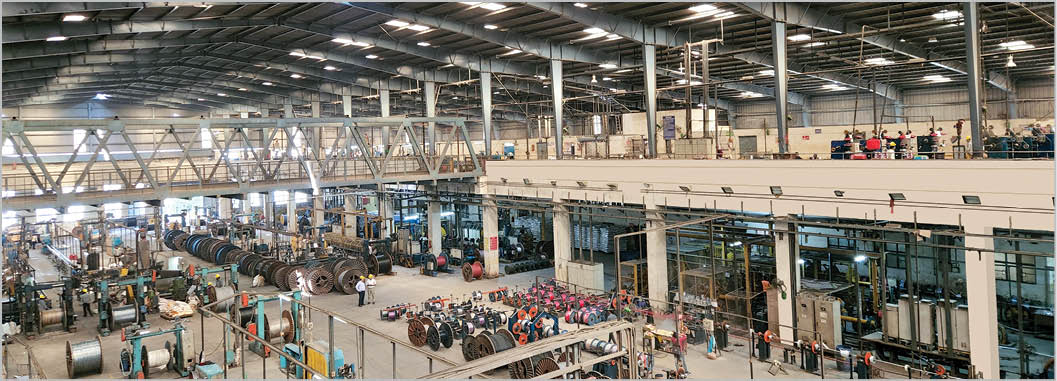
NS: Compared with conventional cable manufacturing, specialty cable production requires a much higher level of precision and process control. Many of these products are made to specific customer requirements, which means there is greater variation in materials, constructions, and manufacturing parameters.
Maintaining consistency from batch to batch is critical, especially when dealing with complex shielding, tight dimensional tolerances, and demanding performance specifications. Testing and validation requirements are also more extensive, often involving customer-specific qualification procedures and project approvals.
To meet these requirements consistently, strong process discipline, reliable testing facilities, and a continuous focus on quality are essential throughout the manufacturing cycle.
WCI: How important have certification, traceability, and customer qualification requirements become in sectors such as railways, offshore, infrastructure, industrial automation, and critical installations?
NS: Certification, traceability, and qualification requirements have become extremely important across sectors such as railways, offshore installations, industrial automation, power, and infrastructure.
Today, customers expect full transparency on materials, manufacturing processes, testing, and compliance with applicable standards. Vendor approvals, project-specific qualifications, and third-party certifications are increasingly becoming mandatory for participation in major projects.
In many critical installations, documentation and traceability are almost as important as technical performance because they give customers confidence in long-term reliability and compliance.
WCI: To what extent does India still remain dependent on imports for advanced specialty cable categories, and where do you see the strongest opportunities for deeper localization?
NS: India’s specialty cable industry has made good progress over the last decade, and many products that were earlier imported can now be manufactured domestically.
That said, there are still opportunities in highly specialized segments such as subsea systems, certain defence-related applications, and select advanced communication cable categories. These areas offer scope for further investment, technology development, and localization.
We believe the strongest opportunities will continue to come from Oil & Gas, renewable energy, transportation, industrial automation, and infrastructure development, supported by the broader push toward self-reliance and local value creation.
WCI: How do you assess the present competitive landscape in specialty cables, particularly in relation to pricing pressure, qualification costs, customization demands, and margin sustainability?
NS: The market has become more competitive, with customers expecting higher performance, greater customization, and strong technical support, while at the same time keeping a close eye on cost.
Qualification requirements, compliance costs, and customer expectations are also rising. In this environment, sustainable growth depends less on competing only on price and more on delivering consistent quality, engineering support, reliable performance, and long-term customer relationships.
Manufacturers that can combine technical capability with operational discipline are likely to be better placed over the long term.
Also Read: Sterlite Electric: Transforming Cable Infrastructure into Intelligent Grid Assets
WCI: Looking ahead, which specialty cable applications or technology areas do you believe will define the next phase of growth and development for the industry in India?
NS: We believe growth will continue to be driven by oil & gas, metro rail expansion, renewable energy projects, industrial automation, defence modernization, and the continued growth of digital infrastructure.
The expansion of data centres, smart manufacturing facilities, and intelligent infrastructure will create demand for cable solutions that offer higher reliability, better safety, and stronger performance. At the same time, the energy transition will continue to support demand for specialized cable systems.
Going forward, customers will increasingly look for solutions that offer long service life, operational reliability, safety, and compliance while meeting the changing needs of modern infrastructure and industry.