As India’s industrial and infrastructure sectors become increasingly automated and digitally connected, demand is shifting from conventional power cables to high-performance, application-specific specialty cables. Manufacturers are responding to rising customer expectations for reliability, longer lifecycle, fire safety, signal integrity and compliance with stringent qualification standards across industries such as renewable energy, railways, industrial automation, data infrastructure and process manufacturing. In an interaction with Wire & Cable India, Mr. Rajesh Kabra, Joint Managing Director, RR Kabel, discusses the evolving specialty cable market, the growing emphasis on customised engineering, localisation opportunities, changing competitive dynamics and the technologies expected to shape the industry’s next phase of growth.
Wire & Cable India: How do you currently define the specialty cable segment within your organization, and which application areas are presently driving the strongest business momentum for you?
Rajesh Kabra: At RR Kabel, specialty cables are defined as application-engineered solutions designed to meet specific electrical, mechanical, thermal, environmental, and communication requirements beyond conventional power distribution. These cables are developed to deliver reliable performance in demanding operating environments where safety, precision, and operational continuity are critical.
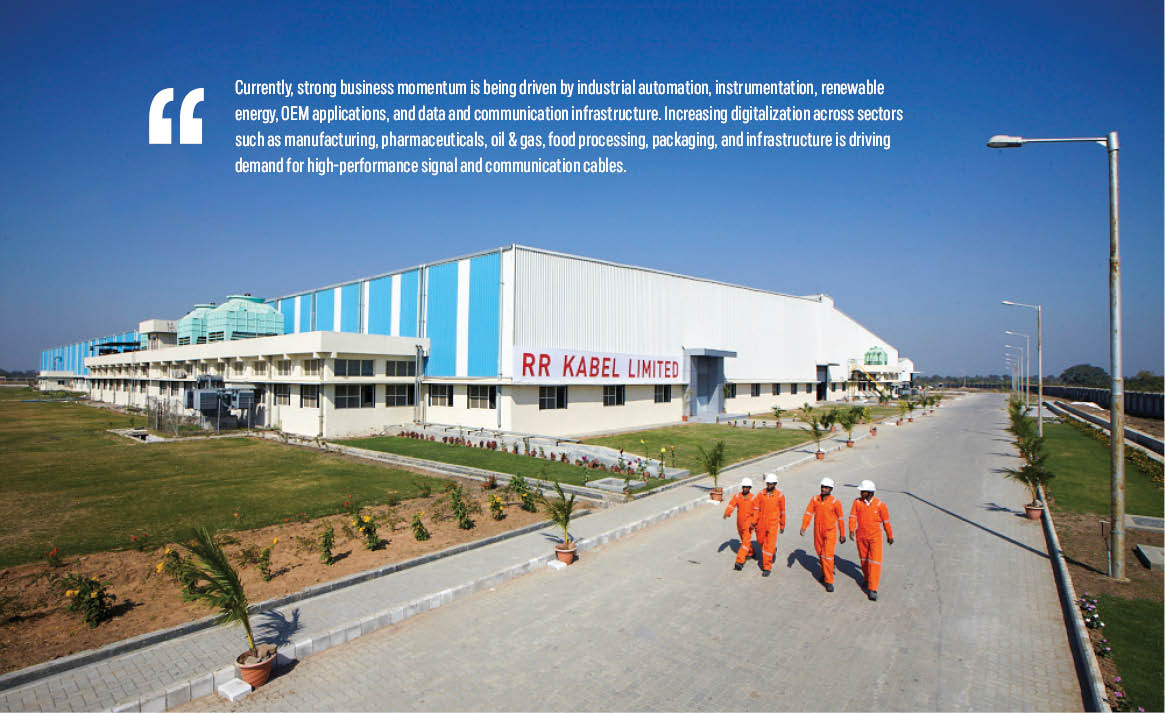
Our specialty cable portfolio includes instrumentation, control, communication, data, servo, solar, fire survival, and industrial automation cables. Currently, strong business momentum is being driven by industrial automation, instrumentation, renewable energy, OEM applications, and data and communication infrastructure. Increasing digitalization across sectors such as manufacturing, pharmaceuticals, oil & gas, food processing, packaging, and infrastructure is driving demand for high-performance signal and communication cables. Increasing automation and digitalization across manufacturing environments are also creating greater demand for advanced communication and control cable solutions.
Watch: Top Cable Companies in India
WCI: Among automation, railways, renewables, data centers, EVs, oil & gas, mining, marine, or defense, which end-use sectors are generating the most meaningful demand today, and how do their technical expectations differ?
RK: Currently, some of the strongest demand is emerging from industrial automation, renewable energy, railways, process industries, infrastructure projects, and increasingly digital infrastructure applications. These sectors are undergoing rapid modernization and require highly reliable cable solutions capable of supporting increasingly sophisticated systems and operating conditions.
Each application brings distinct technical requirements. Renewable energy projects demand superior UV resistance, weatherability, and long service life. Industrial automation requires flexibility, durability, and resistance to continuous mechanical movement. Digital infrastructure applications place significant emphasis on signal integrity, network reliability, and uninterrupted performance. Railways demand stringent fire safety characteristics, mechanical robustness, and compliance with rigorous qualification standards. As end-use industries become more specialized, the need for application-specific cable design and engineering continues to increase across the specialty cable segment.
WCI: What major shifts are you observing in customer expectations regarding performance, reliability, lifecycle requirements, qualification standards, and application-specific engineering?
RK: Customer expectations have evolved considerably over the past few years, with decision-making increasingly centered on lifecycle value rather than upfront procurement costs. End users are seeking cable solutions that can deliver consistent performance, operational reliability, and long service life under increasingly demanding operating conditions
Modern applications often require cables to perform in harsher environments, withstand elevated temperatures, and tolerate greater mechanical stress while maintaining electrical and communication integrity. There is also growing demand for higher ampacity, compact cable designs, improved flexibility, and optimized space utilization. At the same time, customers increasingly prefer application-specific solutions tailored to their operational requirements. Qualification standards, performance testing, and documented validation have gained greater importance as industries place stronger emphasis on proven reliability, compliance, and long-term performance.

There is also growing demand for higher ampacity, compact cable designs, improved flexibility, and optimized space utilization. At the same time, customers increasingly prefer application-specific solutions tailored to their operational requirements.
WCI: Which performance parameters are becoming increasingly critical in specialty cable design today, including flexibility, thermal endurance, fire performance, EMI shielding, chemical resistance, weatherability, or signal integrity?
RK: Specialty cable design today is increasingly driven by application-specific performance requirements, making evaluation criteria more multidimensional than ever before. As industrial systems become more connected and technologically advanced, multiple performance characteristics must work together to ensure reliable operation.
Mechanical robustness, flexibility, abrasion resistance, and extended flex-life have become critical for automation and continuously moving applications. Thermal endurance and chemical resistance remain important in industrial and process environments where cables are exposed to harsh operating conditions. Fire performance continues to gain importance in infrastructure and critical installations where safety requirements are becoming more stringent.
Additionally, EMI shielding is increasingly important due to higher automation levels and sensitive electronic systems. Signal integrity is now one of the most critical requirements for data, communication, SCADA, Ethernet, and industrial networking applications. At RR Kabel, we continue to strengthen our testing and quality validation capabilities to ensure these critical performance requirements are consistently met across diverse specialty cable applications.
WCI: How are industrial automation, robotics, high-flex applications, and the growing convergence of power, control, and data systems influencing product development and cable architecture?
RK: Industrial automation and smart manufacturing are fundamentally changing the way specialty cables are designed and engineered. As factories become increasingly connected through sensors, robotics, intelligent controls, and real-time monitoring systems, cables must support both power transmission and seamless data communication.
This is driving demand for highly flexible cable constructions capable of withstanding continuous movement, repetitive bending, and demanding operating cycles. At the same time, the convergence of power, control, and data functions is encouraging more integrated cable solutions that support power, control, and communication requirements within a single installation environment. Enhanced shielding, signal integrity, compact designs, and improved mechanical performance are becoming essential requirements. As industrial automation adoption continues to expand, cable solutions will evolve to support increasingly connected and efficient manufacturing environments.
WCI: What manufacturing and process challenges are most significant in specialty cable production compared to conventional cable systems, particularly in areas such as precision extrusion, shielding, testing, qualification, and consistency control?
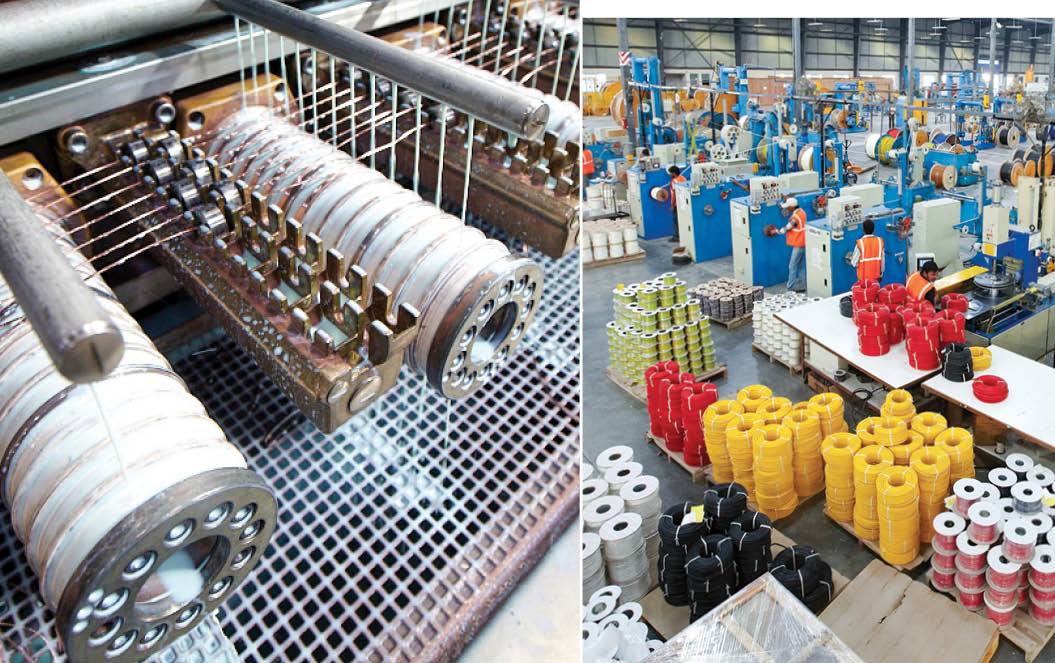
RK: Specialty cable manufacturing involves significantly higher levels of engineering precision, process control, and validation compared to conventional cable production. The complexity of these products often requires tighter tolerances, specialized material selection, and precise manufacturing processes to ensure consistent performance across diverse applications.
Achieving uniform insulation properties, maintaining shielding effectiveness, and ensuring dimensional accuracy are critical manufacturing considerations. Testing and qualification requirements are also more extensive, with products often subjected to electrical, thermal, mechanical, environmental, and fire-performance evaluations. Maintaining consistency across production batches becomes especially important in mission-critical applications where reliability cannot be compromised. As performance expectations continue to increase, manufacturers are investing in advanced testing infrastructure, process automation, and quality systems to ensure reproducibility and long-term product reliability.
WCI: How important have certification, traceability, and customer qualification requirements become in sectors such as railways, offshore, infrastructure, industrial automation, and critical installations?
RK: Certification, traceability, and qualification requirements have become fundamental prerequisites across sectors such as railways, infrastructure, industrial automation, offshore installations, and other critical applications. Today, certifications are no longer viewed as differentiators but as basic qualification requirements that demonstrate compliance, performance, and reliability.
Customers increasingly demand complete product traceability throughout the manufacturing process, along with visibility into quality systems, testing capabilities, and validation procedures. Qualification processes have become more comprehensive, with customer audits extending beyond product specifications to include manufacturing practices, process controls, and quality assurance frameworks. There is also growing emphasis on consistency, reproducibility, and documented performance validation. In parallel, sustainability considerations and responsible manufacturing practices are becoming increasingly influential in vendor selection and long-term partnership decisions.
WCI: To what extent does India still remain dependent on imports for advanced specialty cable categories, and where do you see the strongest opportunities for deeper localization?
RK: India has made significant progress in strengthening its domestic cable manufacturing capabilities, supported by growing investments in infrastructure, technology, and quality systems. While domestic manufacturers have expanded their capabilities considerably, opportunities remain to further localize certain advanced specialty cable technologies, specialized materials, and application-specific solutions.
The opportunity for localization is substantial. Continued investments in manufacturing infrastructure, testing facilities, research and development, and quality systems are enabling Indian manufacturers to address a broader range of specialty cable requirements. Areas such as industrial automation, communication networks, renewable energy, instrumentation, transportation systems, and advanced infrastructure applications present strong opportunities for deeper localization. As India’s manufacturing ecosystem continues to mature, the country is well positioned to strengthen self-reliance while also emerging as a globally competitive supplier of high-value cable solutions.
WCI: How do you assess the present competitive landscape in specialty cables, particularly in relation to pricing pressure, qualification costs, customization demands, and margin sustainability?
RK: The specialty cable market continues to evolve toward a more technology-driven and performance-focused competitive landscape. While pricing remains an important consideration,ustomers increasingly recognize the importance of reliability, compliance, lifecycle performance, and application suitability.
At the same time, manufacturers face rising qualification costs, increasing certification requirements, and growing demand for customized solutions tailored to specific applications. These factors require sustained investments in engineering, testing infrastructure, product development, and quality systems. As a result, successful competition is increasingly determined by technical capabilities, manufacturing excellence, and the ability to deliver consistent performance rather than price alone. Companies that focus on innovation, quality, and customer-centric engineering are likely to be better positioned to achieve sustainable growth and long-term value creation.
Also Read: APAR Industries Strengthens Focus on Application-Specific Specialty Cable Solutions
WCI: Looking ahead, which specialty cable applications or technology areas do you believe will define the next phase of growth and development for the industry in India?
RK: The next phase of growth for India’s specialty cable industry will be closely linked to the country’s ongoing infrastructure, digitalization, and industrial transformation initiatives. Several high-growth sectors are expected to drive demand for advanced cable technologies over the coming years.
Digital infrastructure, telecom networks, and high-speed communication systems will remain important growth areas. Renewable energy projects, energy storage systems, and grid modernization initiatives will continue generating demand for specialized cable solutions designed for durability and long-term reliability. Industrial automation and smart manufacturing will further accelerate the need for advanced control, communication, servo, and integrated cable systems. Emerging opportunities are also expected in defence, critical infrastructure, intelligent transportation, and advanced mobility applications. Continued localization of advanced specialty cable technologies will play an important role in strengthening India’s manufacturing ecosystem and supporting future industry growth.