

Havells is entering its next phase of manufacturing expansion and product diversification. In an exclusive interaction with Wire & Cable India, Mr. Manjit Singh Sethi, President & SBU Head – Cables, Havells India Ltd., discusses the strategic significance of the Tumkur plant, ongoing capacity enhancement at the Alwar facility, and Havells’ plans to expand into extra-high-voltage (EHV) cables. He also outlines the company’s roadmap for introducing E-beam technology, scaling up its rubber cable portfolio, and aligning manufacturing investments with rising demand from infrastructure, industrial, renewable energy, mobility and data centre projects.
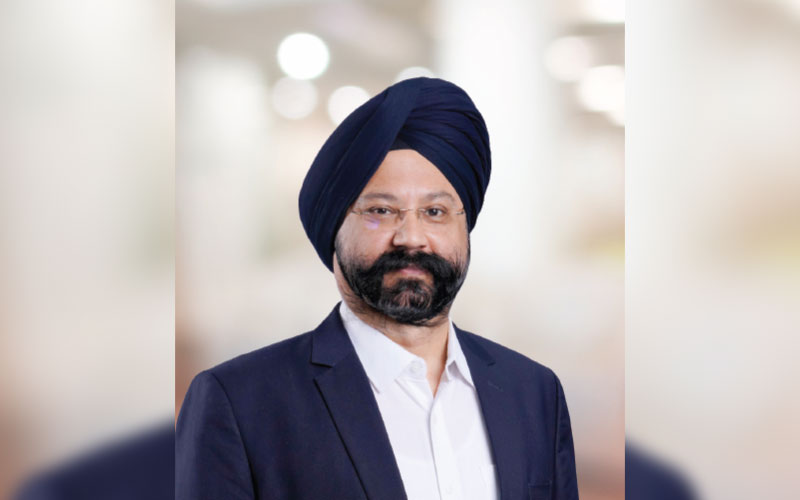
Wire & Cable India: Congratulations on the inauguration of the new HT cable manufacturing facility at Tumkur. Could you share the strategic vision behind setting up this facility and the role it will play in strengthening Havells’ cables business?
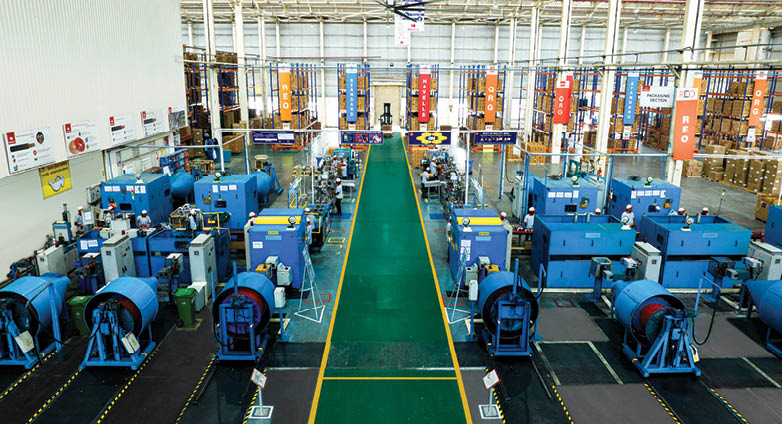
Manjit Singh Sethi: It’s a very strategic investment. If you look at the southern part of India, there are very few good cable manufacturers. We wanted to establish a strong presence in the South with our full product range and capture the market there. So, this investment is driven by the large market potential of the southern region. This is a state-of-the-art factory—fully automated, equipped with Manufacturing Execution System (MES), robotics, and several new technologies and machines. We’ve invested significantly in advanced manufacturing capabilities.
Earlier, our Alwar factory was catering to North, South and East India. Demand had grown so much that it became difficult to service every region efficiently. Having a manufacturing base in the South allows us to deliver faster, reduce logistics costs and become much more competitive. That was the strategic thinking behind this investment.
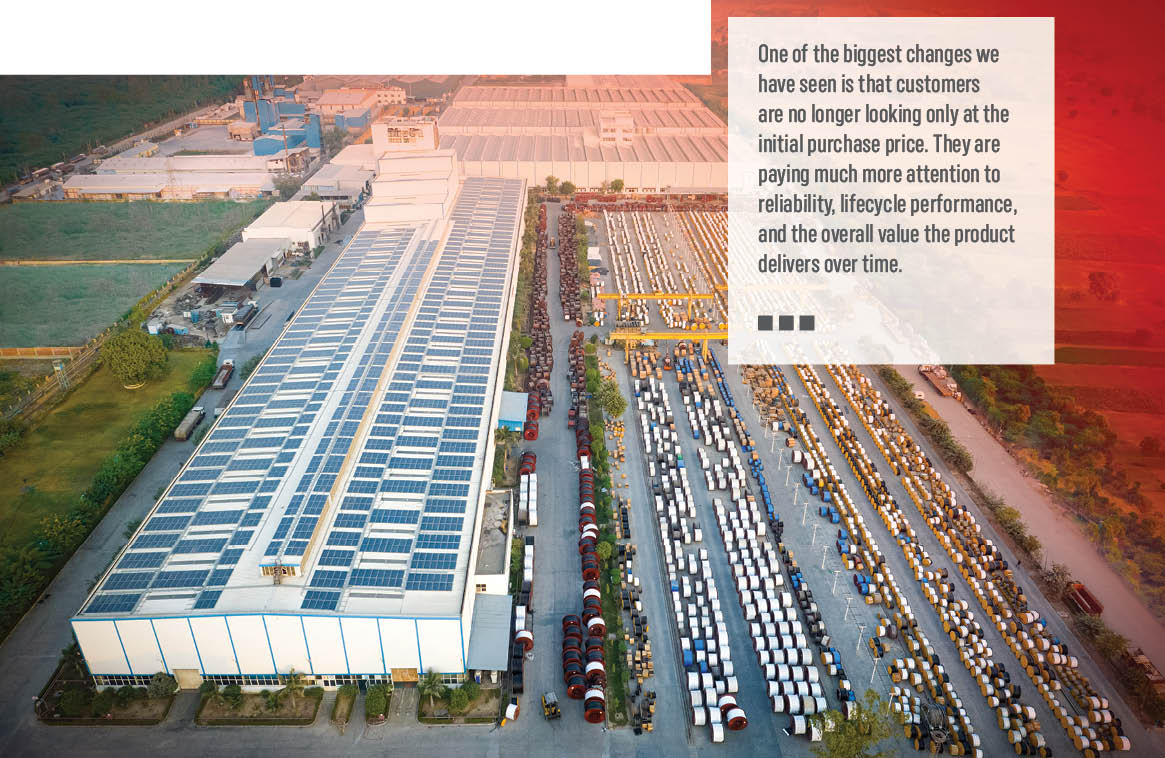
We’ve expanded wire manufacturing capacity in both Tumkur and Alwar. The Tumkur wire plant is fully robotic, including packaging and stacking operations. At Alwar, we’re transforming the existing plant. It began as a five-acre facility in 1996 and has now expanded to around 140 acres. Extensive renovation is underway, and by the end of this year it will be a completely transformed factory. Since Alwar is an operating plant generating significant revenues, these upgrades are being implemented in phases.
Watch: Top Cable Companies in India
WCI: You recently visited the Alwar plant and spoke about focusing on people and mindset rather than just numbers. Could you elaborate?
MSS: Yes. What we’re trying to do is change the mindset of people. With the same machines, we’re trying to extract much higher productivity. But productivity isn’t only dependent on workers. We’ve created cross-functional teams involving sales, planning and factory personnel. Together they plan production in a way that maximises machine utilisation. For example, if similar conductor sizes are scheduled together for an entire month, the machines run continuously with minimal changeovers. As a result, we’ve improved our operational efficiency (OE) by around 10%(variable figure) over the last five to six months, and we’re still improving. Ten percent is a significant improvement.
What’s encouraging is that it’s the same people delivering these results. They’re highly motivated. Every two weeks we conduct reviews at the factory, and the teams themselves present what they’ve achieved and share their best practices. That ownership has made a big difference.
WCI: Could you elaborate on the scale of investment, manufacturing capabilities, product range and technological features integrated into the new facility?
MSS: The Tumkur facility is one of the key projects under the broader investment programme, and investments there are still ongoing. We initially started with LT, control and instrumentation cables. Those were the first factories we commissioned, and we operated them for about a year before moving into HT cables, which were recently inaugurated by our Chairman at Tumkur. We also have an EHV cable plant coming up at the Tumkur facility, which should be operational by the end of this year. That will be another significant milestone for us, and you’ll see another inauguration when the plant is ready.
We are also investing in E-beam technology, which will make us much more competitive in the solar cable segment. We are not present in E-beam specialised cables today, but by the end of the year that capability should be available at our Alwar facility.
WCI: Which customer segments and application areas are driving the strongest demand for HT and specialty cables today?
MSS: We’re seeing very strong demand from data centres and renewables.
In data centres, virtually every type of cable is required—from 1.1 kV to 33 kV—including flexible cables, normal cables, control cables and HT cables. What’s changing is the architecture of data centres. They are increasingly becoming modular. The modules where data is housed are becoming smaller but far more complex. I recently visited one of the data centres in Hyderabad, and they explained how these units will continue to become more compact while handling significantly larger volumes of data.
As these modules become smaller, cable requirements increase. Greater flexibility becomes essential, and demand shifts towards specialised cables. Our R&D teams are already working on solutions to cater to those future requirements. Renewables continue to see steady growth. Most of the demand there is for conventional DC and AC cables rather than specialised products.
WCI: How are customer expectations evolving in terms of performance, reliability, s afety and lifecycle requirements for specialty cables?
MSS: The biggest change is the growing demand for fire-retardant cables. We’re seeing more fire incidents these days, largely because poor-quality wires and cables are being used. Even the government is looking at legislation to improve cable quality. Fire-retardant cables will become mandatory. Low-smoke, halogen-free (LSZH) cables are also becoming increasingly important.
Fundamentally, the conductor doesn’t change very much. Most innovation is happening in compounds. Even in HT cables, globally there’s movement from XLPE towards polypropylene-based compounds such as PP. So a lot of R&D today is centred around compounding. Specifications will become increasingly stringent, particularly from a fire safety perspective.
Green cables are also gaining traction due to regulatory requirements. These use environmentally friendly compounds with lower lead content and reduced hazardous materials. Again, most of the innovation is happening in the compound itself.
WCI: Havells has been investing significantly in research and development. Could you tell us more about your R&D priorities?
MSS: We have around 900 people in R&D and invest roughly 2-2.5% of our revenues into research and development. Historically, because Havells has a large consumer durables business, much of our R&D focused there. But now we’ve significantly increased our focus on cables and wires. We’re hiring global talent to work on new compounds and improvements in metals used within cables. Very few companies make these kinds of investments. Our promoters are extremely passionate about R&D. They’re constantly encouraging new initiatives.
Our teams are working across multiple areas—from new materials for air conditioners and fire-resistant materials to plasticisers and even artificial intelligence. For example, we’re using AI for quality inspection in cables and wires. These are very diverse research areas.
WCI:Which performance characteristics are becoming increasingly critical in specialty cable development today, including fire performance, flexibility, thermal endurance, EMI shielding, weatherability, chemical resistance, and signal integrity?
MSS: Every area is evolving. Take flexibility, for example. That’s again largely a compounding challenge. As data centres become more compact, cables need to become thinner, more flexible and capable of twisting without breaking. Similarly, enormous investments are happening in fire-retardant technologies such as LSZH and ZFFR compounds. Five or six different technologies have emerged over the last two to three years.
We’re also investing heavily in backward integration. We already manufacture PVC in-house. XLPE compounds for cables up to 33 kV will also move in-house. Once our E-beam facility becomes operational, we’ll have our own compounds as well. We’re investing substantially in imported European equipment and modern factories. Over the next three years, I believe you’ll see Havells make a significant leap.
We are also investing in E-beam technology, which will make us much more competitive in the
solar cable segment.
WCI: As Havells expands its cable manufacturing operations, what are the key manufacturing challenges you are focusing on, and how are you addressing them?
MSS: Our focus is to automate as many processes as possible. For example, in extrusion, maintaining a perfectly consistent diameter is critical. At the new Tumkur plant we’ve installed digital instruments that continuously measure and automatically control the extrusion diameter. In older facilities, however, this depends much more on operator skill because automated measurement and control systems aren’t available. We’re exploring ways to retrofit external measurement and control systems onto older machines. At the same time, we’re investing in worker training, especially at Alwar where experienced manpower is available.
Tumkur presents different challenges because it’s located in a relatively remote area, making skilled manpower harder to find. That’s why we’re introducing greater automation there. Infrastructure also matters. Reliable power supply is extremely important because if electricity fails during extrusion, the PVC freezes inside the machine and cleaning takes considerable time.
Power quality in South India is excellent, which is another advantage for Tumkur. Alwar is improving as well, and we’re upgrading our electrical infrastructure to reduce interruptions. Initially, there were challenges with raw material logistics and transportation in Tumkur, but these are gradually getting resolved. Talent attraction is another challenge. To address that, we’re building guest houses and dormitories for workers, providing transportation and creating better living facilities. Today’s workforce values quality of life, and if you provide good facilities, people become much more effective. Supervisors have already relocated from western India with their families, and we’re ensuring they have the infrastructure needed to settle comfortably. At Alwar, we’ve acquired another 40 acres, and discussions are ongoing for more land. The current 140-acre campus will eventually be fully utilised over the next four years.
WCI: How important have certification, traceability and customer qualification requirements become across infrastructure and industrial applications?
MSS: Certification is absolutely critical for any technical product. Without certification, nobody will buy it. Even globally, certification is mandatory. In India, certifications like BIS are compulsory. Without BIS certification, you can’t manufacture or sell the product.
When we launched HT cables, the factory first had to begin production, manufacture the product and complete all testing before certification was granted. Until then, we couldn’t even invoice customers. These are positive developments because they ensure product quality. I also feel that, similar to consumer products where government star ratings have significantly improved energy efficiency, a comparable concept for cables could help improve quality across the industry.
WCI: Looking ahead, which specialty cable technologies and applications will drive the next phase of growth for the Indian cable industry, and how is Havells positioning itself?
MSS: E-beam technology will be one of the biggest growth drivers. We’ve already invested in it, and the facility should be operational within about six months. We’re also investing in rubber cable manufacturing, although that project will take a little longer.
E-beam significantly improves current carrying capacity and safety. Since the cable can withstand higher temperatures, it performs better from a fire safety perspective. That’s why every cable manufacturer is investing in it. I believe house wiring will increasingly move towards E-beam technology.
Flexible rubber cables will also witness strong demand because data centres are becoming increasingly compact. As equipment shrinks, connectors and cables must become much more flexible.
India’s future data centre requirements will be enormous, but land availability is limited. Compact designs will become essential, and cable flexibility will become a major differentiator. Efficiency will also become increasingly important. Today, very few people in India measure cable efficiency, but in the future that will certainly change.
That’s precisely why we’re strengthening our R&D capabilities by hiring talent to work on improving metal performance, increasing current carrying capacity, enhancing efficiency and developing advanced compounds. These are the two areas where we’ll be investing very heavily.
Also Read: Paramount Communications Focuses on Performance, Precision & Reliability
WCI: Finally, what is one observation you’ve made about Havells and one goal you have for the future?
MSS: One thing I’ve really appreciated is the passion of the promoters. They give people tremendous freedom to work, while naturally expecting results. The culture is open, friendly and collaborative. That’s something I’ve genuinely liked. My hope is that this passion continues across generations as leadership transitions in the future. From what I see today, that culture is continuing, and I hope it remains that way.
The company has a very clear vision regarding where it wants to go, which product lines it wants to strengthen and how investments will be made. Every year, the investments are aligned with that roadmap. The review systems are also extremely strong.
During FY2025-26, the cables division registered net revenues of INR 8,677 crores and is a tremendous strength to the overall business. The brand image must be fully utilised, but equally important is customer confidence. If we’ve committed something to a customer, we must deliver it on time. Those are probably the two most important principles we work by.