
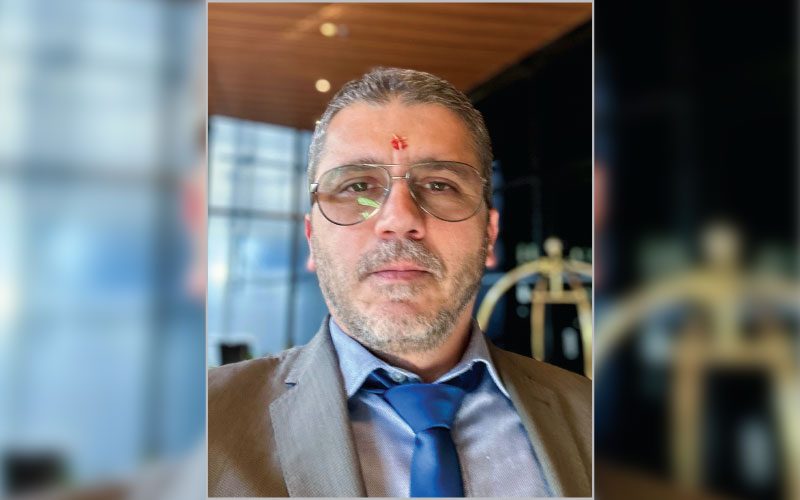
In an exclusive interview with Wire & Cable India, Mr. Joshua Bruni, Foreign Sales Manager, Fainplast, shares that the company is witnessing increasing demand for specialty cable compounds in the renewable energy, data, and OFC sectors, with LSZH materials accounting for the highest demand. Looking ahead, he believes LSZH compounds will continue to capture a significant market share and also sees strong potential for polypropylene (PP) compounds as the primary insulation material in certain cable applications, owing to its high performance, thermoplastic nature and easier recyclability.
Wire & Cable India: Which specialty cable applications are presently generating the strongest demand for advanced compounds, additives, masterbatches, and specialty material systems?
Joshua Bruni: In the last few months, we have seen an increasing demand for PV cable insulation and sheathing materials probably as a consequence of crude oil cost and a renewed interest in alternative sources of energy. Additionally, last year, we saw a constant growing demand from data and OFC sectors.
WCI: What major changes are you observing in cable manufacturers’ material requirements in areas such as flame performance, flexibility, thermal endurance, UV stability, chemical resistance, and long-term reliability?
JB: We see an increasing demand for LSZH material, with significant fire performance to fulfill more demanding fire classifications.
Watch: Top Cable Companies in India
WCI: How are automation, robotics, renewable energy, EV infrastructure, and other high-performance applications influencing compound development and formulation strategies?
JB: The markets mentioned above are among the fastest-growing and most dynamic, generating strong interest from customers. As a result, we are focusing most of our efforts on developing new materials tailored to these markets.
WCI: What technical challenges arise while balancing performance, processability, compliance requirements, durability, and commercial viability within specialty cable compounds?
JB: The main challenge within the specialty cable compound is to improve fire performance of the material and at the same time guarantee good mechanical properties, thereby ensuring high cable productivity and low materials costs.

Indian market is much less dependent on imported polymers, with many new players strongly focusing on the domestic market while also expanding their presence in international market.
WCI: How has demand evolved for HFFR/LSZH, XLPO, silicone, elastomeric, and other advanced material systems across specialty cable applications?
JB: In sectors where such materials were once limited to niche demand, they are now becoming widely adopted.
WCI: To what extent does the Indian specialty cable material ecosystem still depend on imported polymers, additives, stabilizers, or formulation technologies, and where do you see localization opportunities emerging?
JB: Today, the Indian market is much less dependent on imported polymers, with many new players strongly focusing on the domestic market while also expanding their presence in international markets.
WCI: How important have testing, certification, consistency control, and application-specific customization become in today’s specialty cable material environment?
JB: For those who cannot always offer the lowest price to the customers, the guarantee of high quality or deeper customization of products represents a key for success, especially in markets like India, that are price sensitive.
WCI: Looking ahead, which material technologies, compound systems, or performance requirements do you believe will shape the next phase of development within the specialty cable segment?
JB: I believe LSZH compounds will continue to capture a significant share of the market from PVC as demand increases and prices become more competitive. Additionally, I see strong potential for polypropylene (PP) to replace XLPE compounds as the primary insulation material in certain cable applications, owing to its high-performance and thermoplastic nature, which makes it easier to recycle.
For those who cannot always offer the lowest price to the customers, the guarantee of high quality or deeper customization of products represents a key for success.