

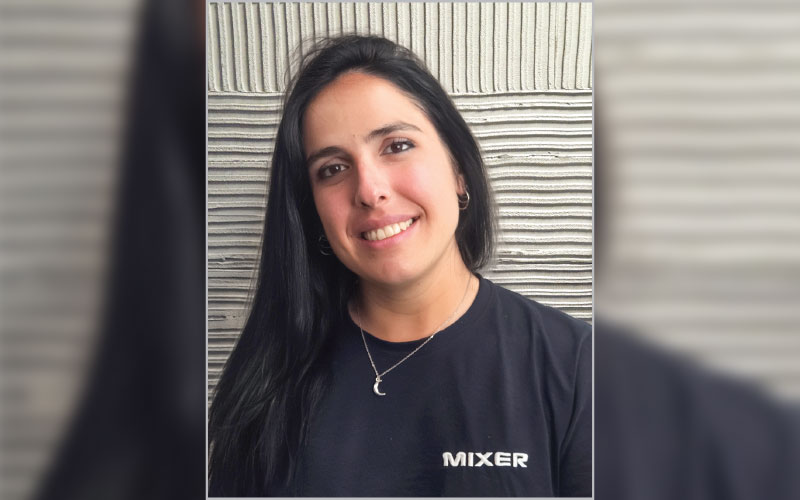
In an exclusive interview with Wire & Cable India, Ms. Martina Serafini, PhD, Technical Customer Support, shares that the cable manufacturers are increasingly looking for compounds that offer flexibility, long-term reliability, and UV stability. To address these evolving demands, MIXER S.p.A. leverages its advanced stabilizer and elastomers to develop high-performance specialty compounds with enhanced safety, environmental compliance, and application-specific functionality, supporting the continued growth of the energy, mobility, and digital infrastructure sectors.
Wire & Cable India: Which specialty cable applications are presently generating the strongest demand for advanced compounds, additives, masterbatches, and specialty material systems?
Martina Serafini: Medium voltage cable applications are generating the strongest demands for advanced compounds and specialty material systems.
WCI: What major changes are you observing in cable manufacturers’ material requirements in areas such as flame performance, flexibility, thermal endurance, UV stability, chemical resistance, and long-term reliability?
MS: Cable manufacturers are increasingly looking for flexibility, long-term reliability, and UV stability in cable materials/ compounds.
Watch: Top Cable Companies in India
WCI: How are automation, robotics, renewable energy, EV infrastructure, and other high-performance applications influencing compound development and formulation strategies?
MS: Renewable energy, EV infrastructure, and other high performance sectors are focusing on advanced stabilizers and high-performance elastomers for better quality cable products.
WCI: What technical challenges arise while balancing performance, processability, compliance requirements, durability, and commercial viability within specialty cable compounds?
MS: Improving functional performance typically requires the use of high filler loadings or specialized polymers. For instance, enhancing cable durability often involves using more robust materials, which may reduce flexibility or make processing more difficult.
WCI: How has demand evolved for HFFR/LSZH, XLPO, silicone, elastomeric, and other advanced material systems across specialty cable applications?
MS: There has been strong growth in HFFR/LSZH materials, primarily due to stricter fire safety and environmental regulations.
WCI: To what extent does the Indian specialty cable material ecosystem still depend on imported polymers, additives, stabilizers, or formulation technologies, and where do you see localization opportunities emerging?
MS: The Indian specialty cable material ecosystem remains partially dependent on imported inputs, particularly in high-performance polymers, advanced additives, stabilizers, and specialized formulation technologies.
Also Read: Melos GmbH Shapes Future-Ready Cable Compounds to Meet Evolving Needs
WCI: How important have testing, certification, consistency control, and application-specific customization become in today’s specialty cable material environment?
MS: Testing is now essential throughout the entire material lifecycle, not only to validate basic properties but also to ensure long-term performance under demanding conditions such as mechanical stress, high temperatures, and exposure to chemicals or harsh environments
WCI: Looking ahead, which material technologies, compound systems, or performance requirements do you believe will shape the next phase of development within the specialty cable segment?
MS: Going forward there will be a need for materials that combine higher performance, improved safety, environmental compliance, and application-specific functionality, supporting the ongoing evolution of energy, mobility, and digital infrastructure sectors.