

In an exclusive interaction with Wire & Cable India, Mr. K.G. Chandan, Managing Director, KK Kompounding Tech Giant Limited, shares that today’s wire & cable manufacturers require an intricate balance of high mechanical performance, processing efficiency, and environmental sustainability. To meet these evolving needs, forward-thinking compound manufacturers are moving beyond traditional crosslinked polyethylene. KK Kompounding is leading this transition with K-Prene HTPE, an advanced non-crosslinked alternative that delivers 100% recyclability, production efficiency and optimized dimensions, designing the next generation of energy infrastructure.
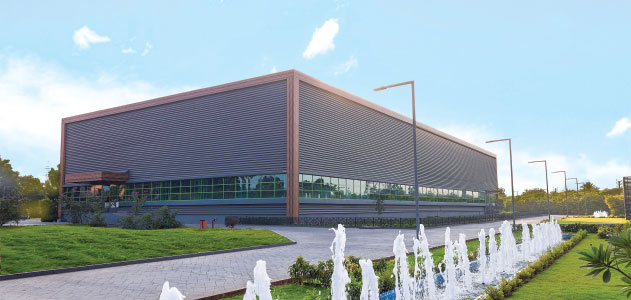
As global electrification accelerates and regulatory bodies tighten environmental frameworks, the power distribution sector finds itself at a critical crossroads. Medium Voltage (MV) power cables (typically operating in the 1–36 kV range) remain the backbone of modern energy infrastructure—powering utilities, massive industrial installations, renewable energy grids, and major infrastructure projects.
Yet, for wire and cable manufacturers, the modern landscape demands more than just electrical reliability. Today’s market requires an intricate balance of high mechanical performance, processing efficiency, and true environmental sustainability.
To meet these evolving challenges, forward-thinking manufacturers are moving beyond traditional crosslinked polyethylene (XLPE) and EPR/HEPR systems. KK Kompounding’s offering provides the industry shift toward a highly innovative, non-crosslinked alternative.
Watch: Top Cable Companies in India
K-Prene HTPE: The Strategic Shift; Moving from XLPE to Thermoplastic Innovation
For decades, crosslinking was viewed as a necessary step to achieve the thermal and mechanical endurance required for MV insulation. However, the crosslinking process inherently introduces production bottlenecks, consumes massive amounts of energy, and results in a material that is notoriously difficult to recycle at the end of its lifecycle. By eliminating the need for crosslinking entirely, this technology- ‘K-Prene HTPE’ delivers a swift, streamlined manufacturing alternative while unlocking significant design advantages such as:
100% Recyclability: Unlike thermoset materials, K-Prene HTPE is fully recyclable, seamlessly aligning your product line with circular economy objectives.
Production Efficiency: Manufacturers can experience a drastic reduction in both energy consumption and processing time by removing the continuous vulcanization (CV) line from the equation.
Optimized Dimensions: The material allows for potentially smaller cable dimensions and higher power density, providing a competitive edge in material savings and handling.
Anatomy of a High-Performance TPE MV Cable
Architecturally, a K-Prene HTPE insulated cable mirrors the reliable, multi-layered geometry of standard XLPE designs. The primary, transformative distinction lies in the transition to TPE-based insulation and semiconductive screen materials;
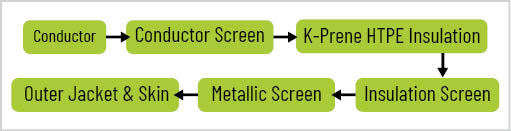
An engineered TPE system breaks down into these fundamental layers:
The Core Components: The current is typically carried by a cost-effective, weight-optimized aluminum or copper conductor, utilizing either a stranded (IEC 60228 Class 2) or solid (IEC 60228 Class 1) design.
Advanced Semiconductive Layers: Applied directly over the conductor (mandatory for cables rated 6 kV and above) and over the insulation layer, these semiconductive compounds ensure electrical stability. They smooth out strand irregularities, maintain a uniform radial electric field, and minimize electrical stress concentrations to prevent partial discharges. For the outer screen, manufacturers can choose between bonded or strippable formulations to facilitate effortless jointing and termination in the field.
The K-Prene HTPE Insulation Layer: The heart of the system. This layer withstands demanding operating and transient voltages while maintaining excellent thermo-mechanical strength and reliable electrical performance at elevated temperatures. It introduces enhanced flexibility to the cable, making installation easier while remaining completely non-crosslinked.
Robust Metallic Screening & Outer Protection: A metallic screen (utilizing copper wires, copper tapes, or longitudinally applied overlapped aluminum foil bonded to a PE sheath) provides a secure ground plane and a path for fault currents. The system is finalized with high-performance polyolefin jacketing materials that offer low water absorption, exceptional weather resistance, and high abrasion defense. Manufacturers can also co-extrude a thin semiconductive skin layer over the jacket to streamline post-installation integrity testing.
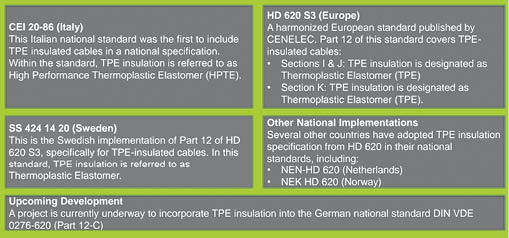
Global Compliance and Harmonization
Adopting an innovative raw material requires absolute certainty regarding international standards. K-Prene HTPE systems are already recognized and deeply integrated into prominent national and regional specifications.
An Integrated Approach to Seamless Adoption
Transitioning to a new material compound can feel daunting. Recognizing this, a truly impactful raw material provider doesn’t just ship compounds—they provide an integrated tech stack.
By combining advanced materials (semiconductive compounds, insulation, and jacketing) with precise compounding and processing know-how, manufacturers gain a one-stop technical partner from development through to full-scale production.
This collaborative approach stabilizes the extrusion process, accelerates product qualification timelines, enhances supply chain security, and ensures your operation successfully meets modern regulatory and sustainability expectations.
The future of medium voltage power distribution relies on smarter, cleaner, and faster production methods. By adopting K-Prene HTPE based MV cable systems, wire and cable manufacturers are not simply adapting to market changes—they are actively designing the next generation of energy infrastructure.